Method for Producing Aromatic Compound Polymer
a polymer and aromatic compound technology, applied in the direction of organic chemistry, organic chemistry, organic chemistry, etc., can solve the problems of hardly promoting a polymerization reaction, and rarely advancing polymerization, etc., and achieve good yield
- Summary
- Abstract
- Description
- Claims
- Application Information
AI Technical Summary
Benefits of technology
Problems solved by technology
Method used
Image

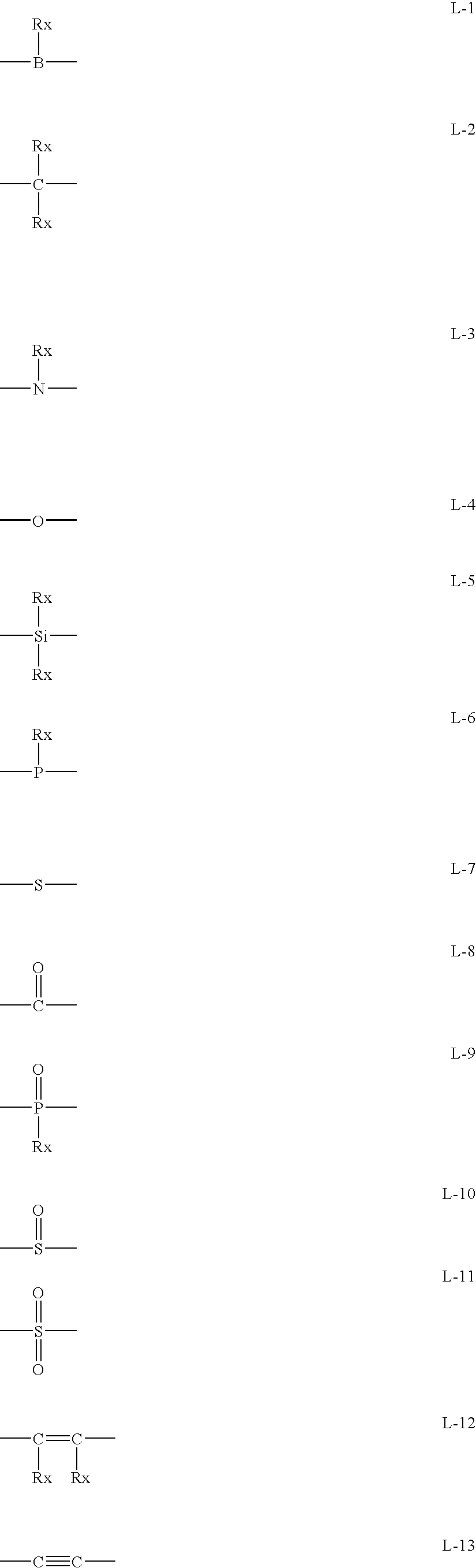
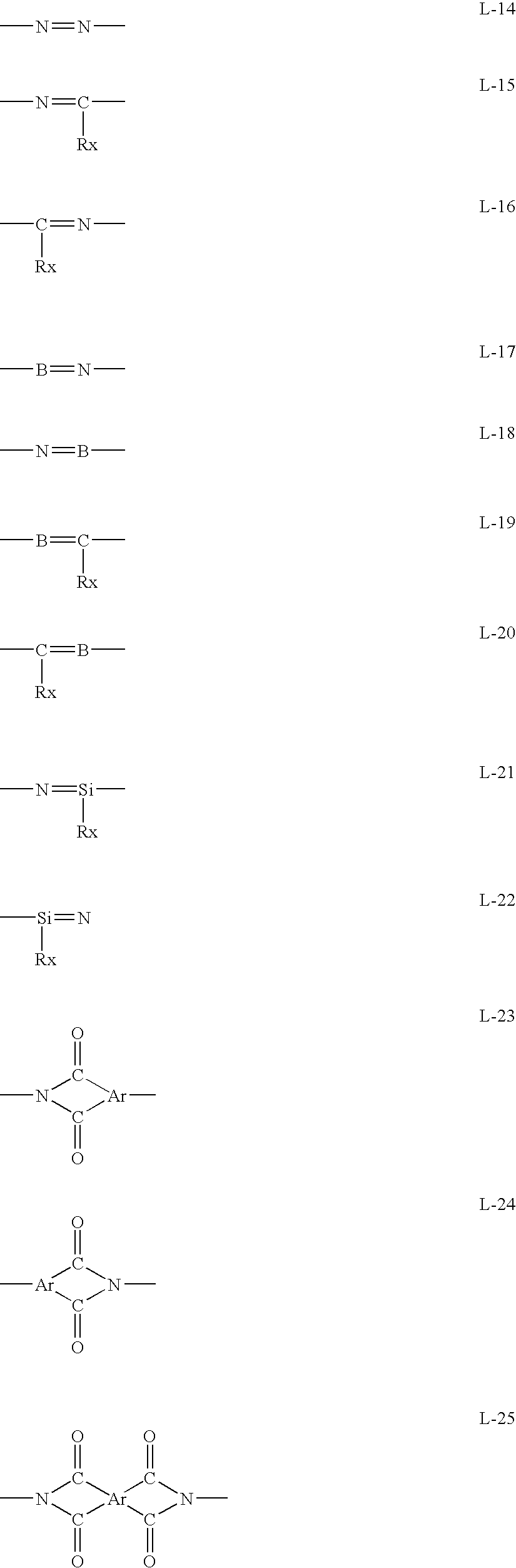
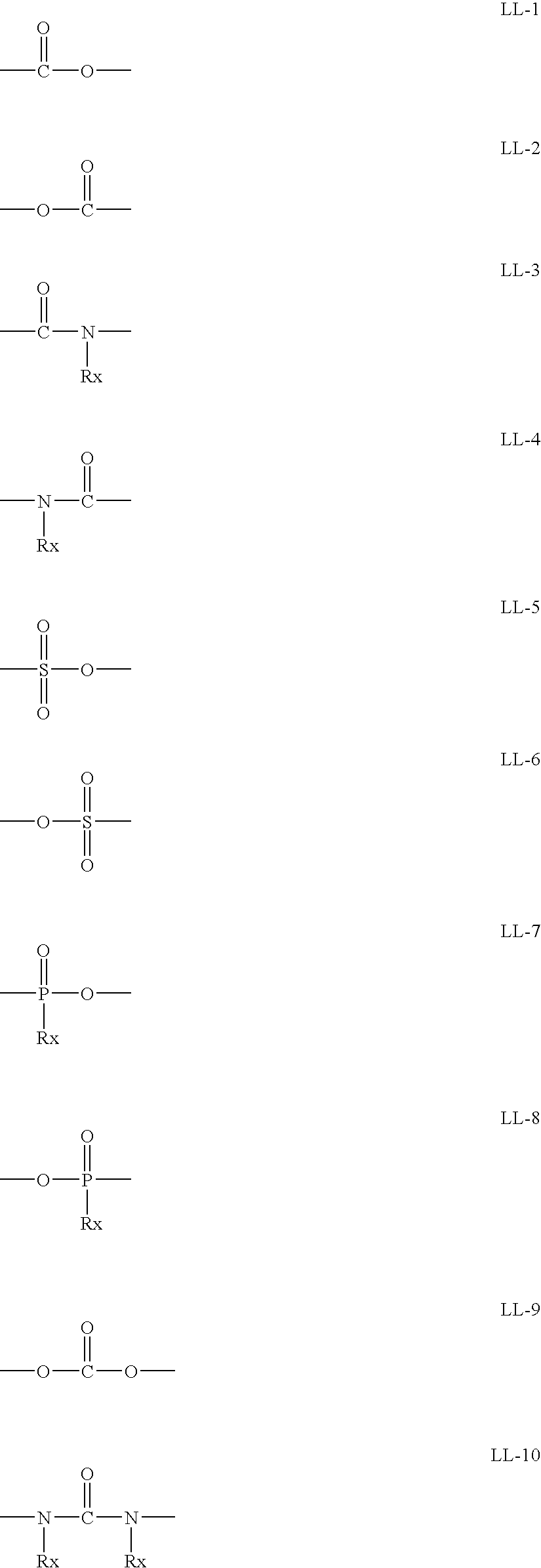
Examples
example 1
Polymerization of 1,4-dibutoxybenzene
Parameter P: 0.93, Parameter Eo: 0.90
[0138]
(1,4-dibutoxybenzene) Oxidation side peak potential 0.86 (V Fc / Fc+standard)
[0139]31.02 mg (0.042 mmol) of bis-μ-(3,3′-(1,3-phenylenebis(methylene))bis(2,4-pentanedionato))divanadium(IV)oxide was dissolved in 0.34 mL of nitrobenzene and 0.019 mL (0.21 mmol) of trifluoromethanesulfonic acid, and then agitated under an oxygen atmosphere at 25° C. for 1 hour. The solution obtained above was added with a solution composed of 250.2 mg (1.13 mmol) of 1,4-dibutoxybenzene and 0.79 mL of nitrobenzene, and then agitated under the oxygen atmosphere at 25° C. for 55 hours. When a water content was measured after elapsing 1 hour from the commencement of the agitation, the water content in the reaction solution was 3.6 mg (0.20 mmol) and 1.2 equivalent of water per mole of the metal contained in the catalyst was detected. Thereafter, the reaction solution was dropped into a hydrochloric acidic methanol, followed by sub...
example 2
Polymerization of 1,4-dibutoxybenzene
Parameter P: 0.58, Parameter Eo: 1.05
[0144]44.69 mg (0.167 mmol) of vanadyl acetylacetonato was dissolved in 0.67 mL of nitrobenzene and 0.037 mL (0.418 mmol) of trifluoromethanesulfonic acid, and then agitated under an oxygen atmosphere at 25° C. for 1 hour. The solution obtained above was added with a solution composed of 500.2 mg (2.24 mmol) of 1,4-dibutoxybenzene and 1.51 mL of nitrobenzene, and then agitated under the oxygen atmosphere at 25° C. for 55 hours. When a water content was measured after finishing the agitation, the water content in the reaction solution was 15.9 mg (0.88 mmol) and 5.2 equivalent of water per mole of the metal contained in the catalyst was detected. Thereafter, the reaction solution was dropped into a hydrochloric acidic methanol, followed by subjecting the precipitation obtained to filtration, washing, and drying to obtain 73.8 mg of polymer (yield 14.9%). Mn=2500, Mw=4300.
Determination of Parameter P
[0145]In a S...
example 3
Polymerization of 1,4-dibutoxybenzene
Parameter P: 0.66, Parameter Eo: 0.78
[0149]71.5 mg (0.084 mmol) of bis-μ-(3,3′-(5-t-butyl-1,3-phenylenebis(methylene))bis(2,4-pentanedionato))divanadium(IV)oxide was dissolved in 0.67 mL of nitrobenzene and 0.037 mL (0.42 mmol) of trifluoromethanesulfonic acid, and then agitated under an oxygen atmosphere at 25° C. for 1 hour. The solution obtained above was added with a solution composed of 500.1 mg (2.25 mmol) of 1,4-dibutoxybenzene and 1.48 mL of nitrobenzene, and then agitated under the oxygen atmosphere at 25° C. for 48 hours. Thereafter, the reaction solution was dropped into a hydrochloric acidic methanol, followed by subjecting the precipitation obtained to filtration, washing, and drying to obtain 63.42 mg of polymer (yield 12.8%). Mn=2300, Mw=4100.
Determination of Parameter P
[0150]In a Schlenk flask having 50 cc capacity, 72.0 mg (0.085 mmol) of bis-μ-(3,3′-(5-t-butyl-1,3-phenylenebis(methylene))bis(2,4-pentanedionato))divanadium(IV)oxi...
PUM
| Property | Measurement | Unit |
|---|---|---|
| wavelength | aaaaa | aaaaa |
| oxidation-reduction potential | aaaaa | aaaaa |
| absorption spectrum | aaaaa | aaaaa |
Abstract
Description
Claims
Application Information
 Login to View More
 - R&D
- Intellectual Property
- Life Sciences
- Materials
- Tech Scout
- Unparalleled Data Quality
- Higher Quality Content
- 60% Fewer Hallucinations
Browse by: Latest US Patents, China's latest patents, Technical Efficacy Thesaurus, Application Domain, Technology Topic, Popular Technical Reports.
© 2025 PatSnap. All rights reserved.Legal|Privacy policy|Modern Slavery Act Transparency Statement|Sitemap|About US| Contact US: help@patsnap.com