Low-pressure mercury vapor discharge lamp with amalgam
a mercury vapor discharge and mercury vapor technology, which is applied in the direction of discharge tube luminescnet screens, cathode-ray/electron beam tube circuit elements, vacuum obtaining/maintenance, etc., can solve the problems of amalgam temperature temperature of the lamp to decrease, and the temperature of the lamp to be outside the optimal temperature range, etc. , to achieve the effect of minimizing the number of germicidal lamps, reducing installation costs and maintenance costs
- Summary
- Abstract
- Description
- Claims
- Application Information
AI Technical Summary
Benefits of technology
Problems solved by technology
Method used
Image

Examples
second embodiment
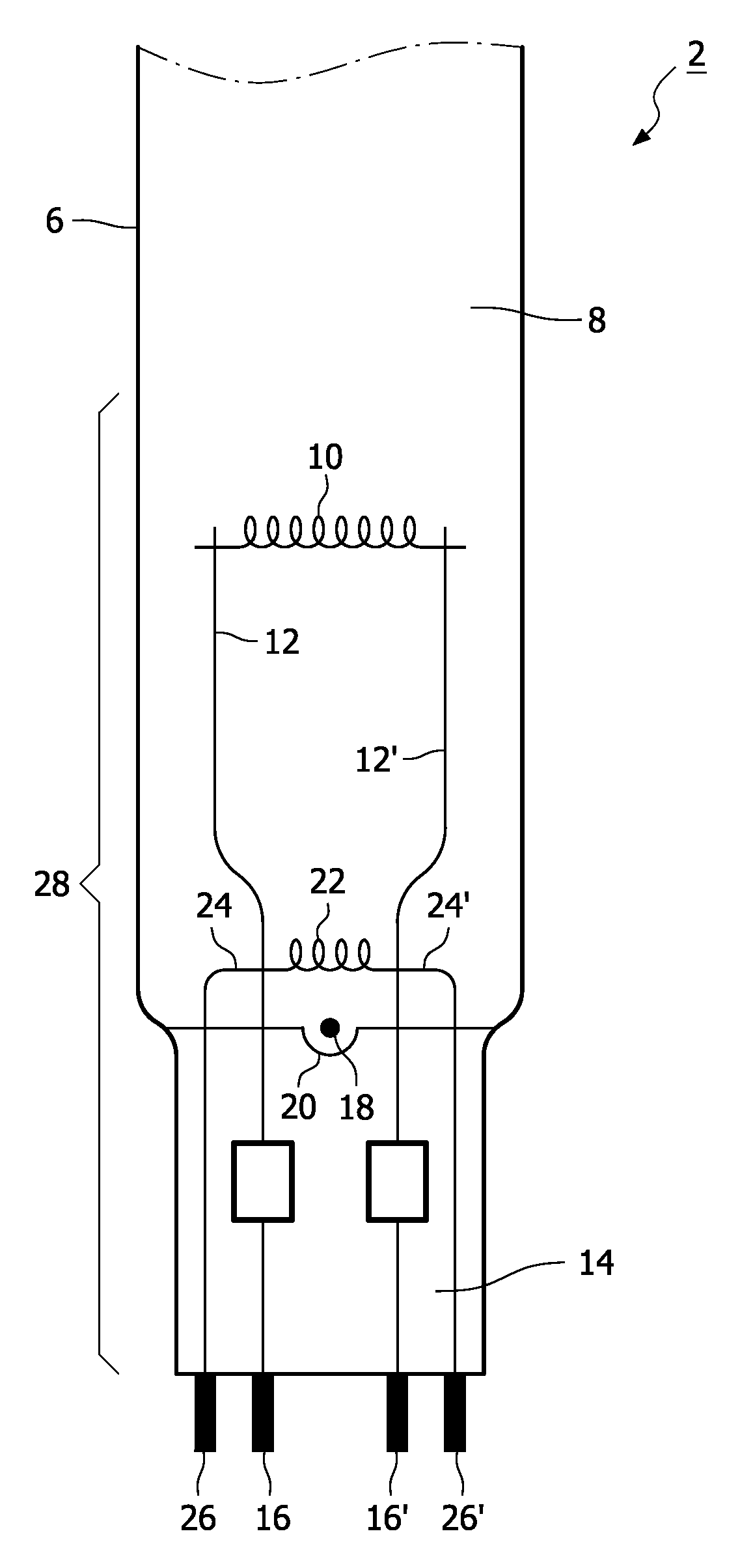
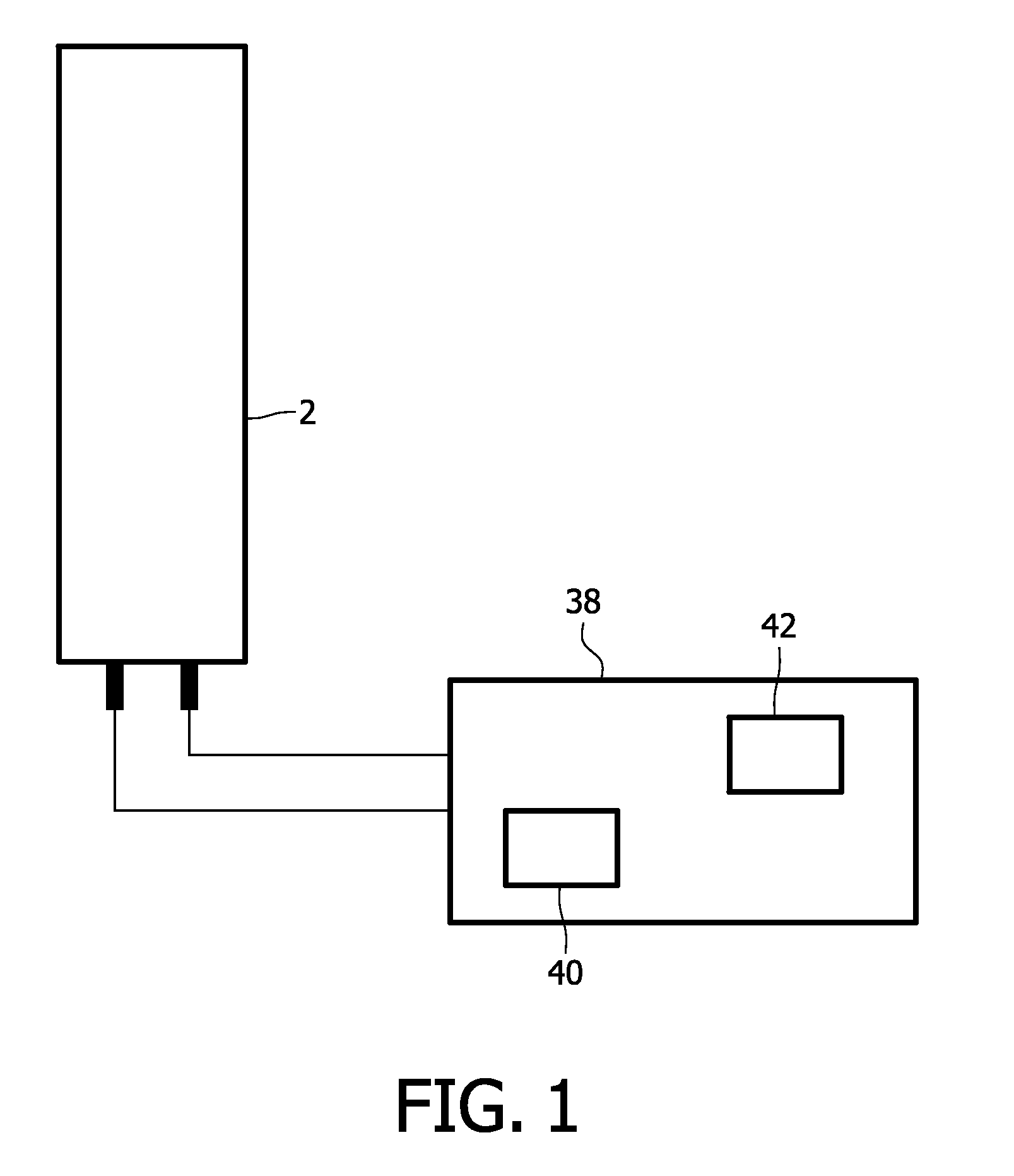
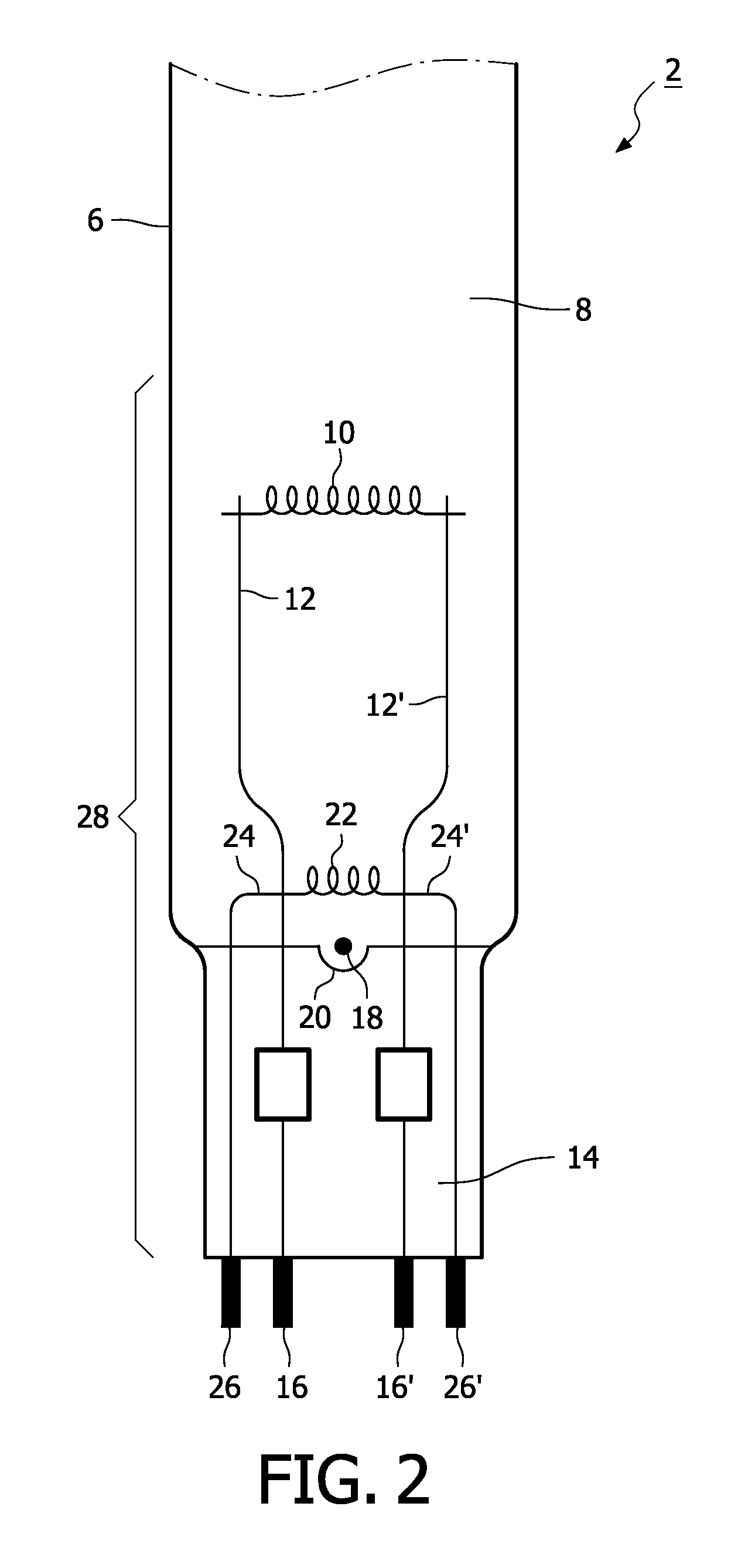
[0029]FIGS. 2 and 3 are schematic drawings of a first and a second embodiment, respectively, of a low-pressure mercury vapor discharge (germicidal) lamp for the lamp system as shown in FIG. 1. The lamp 2 has a gas discharge vessel 6 that encloses, in a gastight manner, a discharge space 8 containing a filling of mercury and an inert gas, for example argon. For clarity reasons, only a part of the lamp 2 is shown. The lamp 2 has two electrodes, of which only electrode 10, 30 is shown. Electrode 10, 30 is positioned in a first end section 28 of the germicidal lamp 2, and a second electrode is positioned in a second end section of the lamp, for maintaining a discharge in the discharge space 8. Alternatively, the electrodes are external electrodes. The electrode 10, 30 is a winding of tungsten covered with an electron-emitting substance, for example a mixture of barium oxide, calcium oxide and strontium oxide. Current-supply conductors 12, 12′ are coupled to the electrode 10, 30 and pass...
fifth embodiment
[0030]FIGS. 4, 5 and 6 are schematic drawings of a third, fourth and fifth embodiment, respectively, of a low-pressure mercury vapor discharge (germicidal) lamp for a lamp system according to FIG. 1. Referring to FIGS. 4, 5 and 6, for clarity reasons, only a part of the lamp 2 is shown. The lamp 2 has a gas discharge vessel 6 that encloses a discharge space 8 containing a filling of mercury and an inert gas mixture, for example argon. The lamp 2 has two electrodes, of which only electrode 30 is shown. Electrode 30 is positioned in a first end section 28 of the lamp 2, and a second electrode is positioned in a second end section of the lamp, for maintaining a discharge in the discharge space 8. Alternatively, the electrodes are external electrodes. Current-supply conductors 12, 12′ are coupled to the electrode 30 and pass through the sealed end 14 of the lamp to the exterior. The current-supply conductors 12, 12′ are connected to contact pins 16, 16′. The lamp ballast 38 is arranged ...
PUM
 Login to View More
 Abstract
Description
Claims
Application Information
 Login to View More