

Method of fabricating solder bumps
- Summary
- Abstract
- Description
- Claims
- Application Information
AI Technical Summary
Benefits of technology
Problems solved by technology
Method used
Image

Examples
example 1
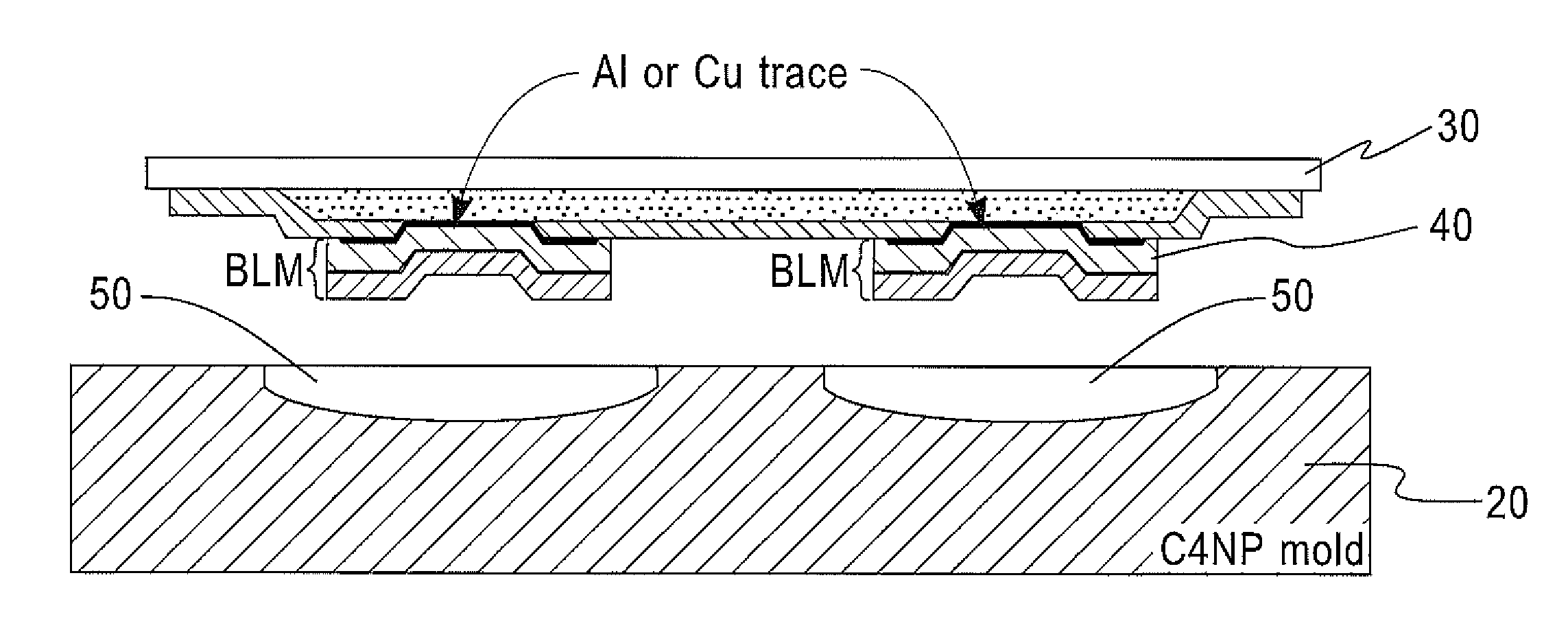
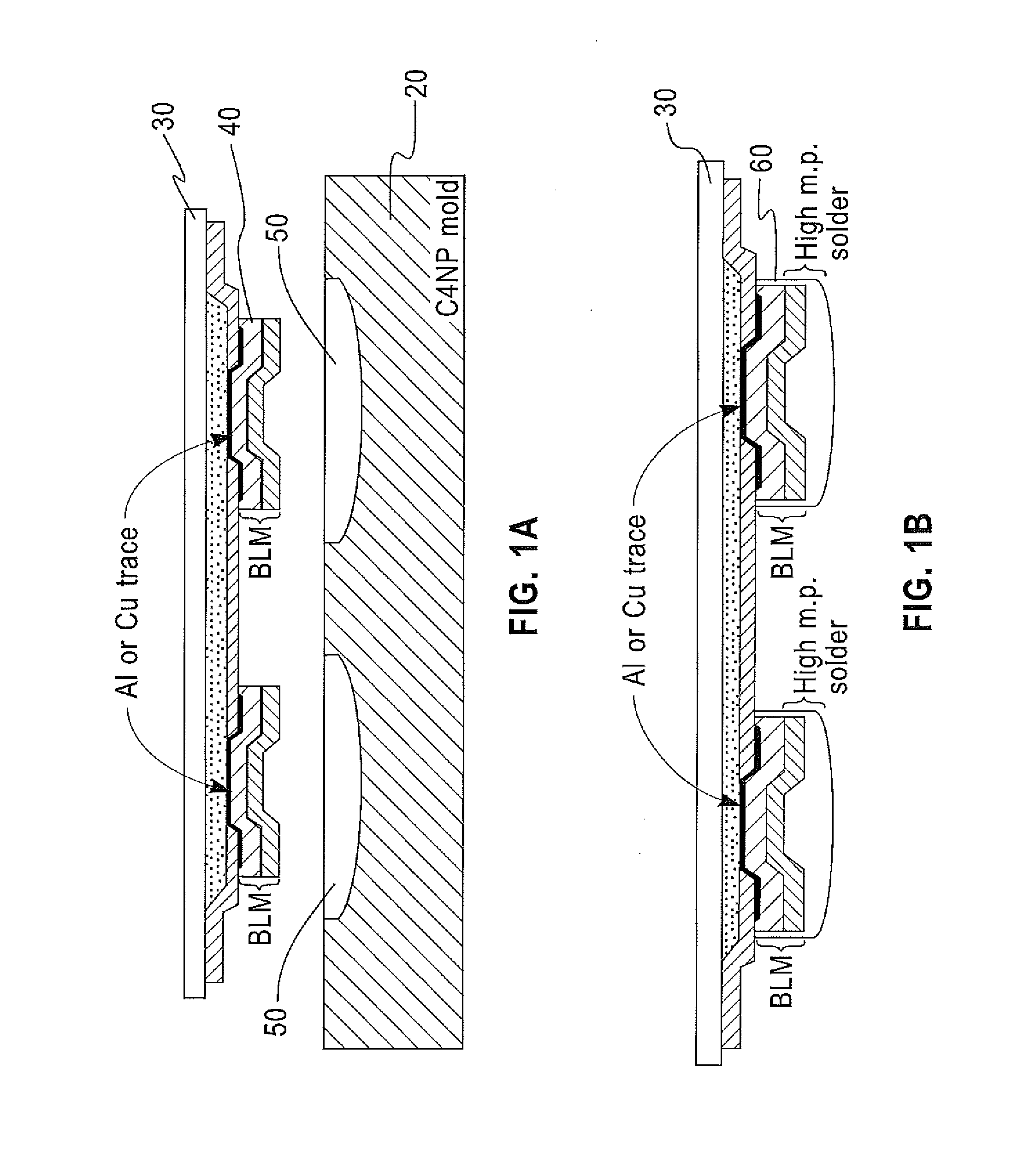
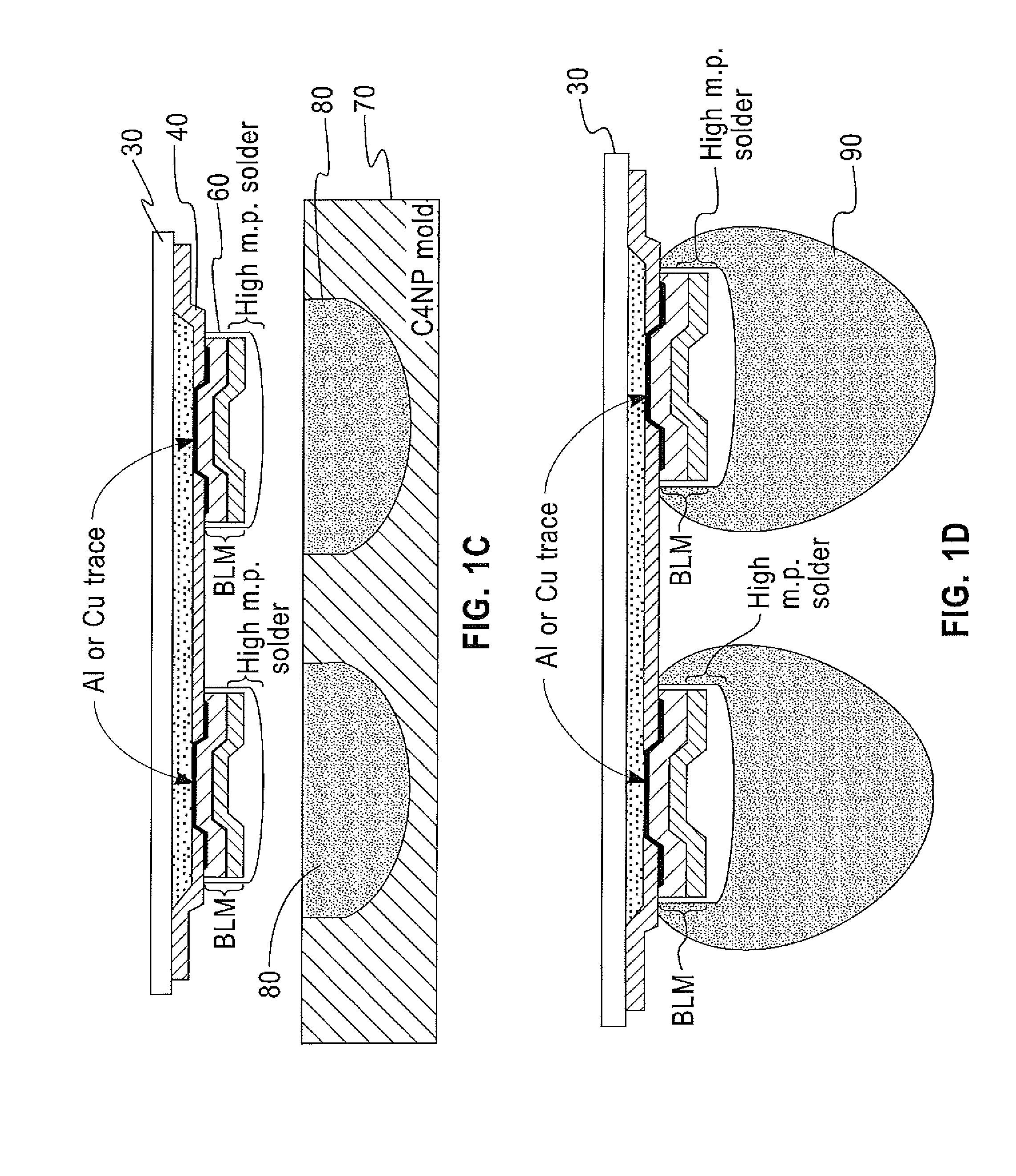
[0039]A mold was filled with a high melting temperature material (about 280° C., Au-20 wt % Sn) relative to the proposed second solder material, and a solder is transferred onto a UBM on a Si wafer. A C4NP mold was then filled with a low melting temperature material (about 221° C., Sn-3.5 wt % Ag) relative to the first solder material, and a solder transferred onto the first solder on the UBM on the Si wafer.
[0040]The resulting solder was used for the flip chip assembly of a chip to a substrate by melting of only a low melting temperature material.
example 2
[0041]A mold was filled with a low melting temperature material (about 221° C., Sn-3.5 wt % Ag) relative to the proposed second solder material, and a solder is transferred onto a UBM on a Si wafer. A transfer substrate (mold) having cavities with a high aspect ratio corresponding to positions of associated solder structures was then filled with a high melting temperature material (about 280° C., Au-20 wt % Sn) relative to the first solder material, and a columnar solder was transferred onto the first solder on the UBM on the Si wafer.
[0042]The resulting solder was used for the flip chip assembly where the joints has a high aspect ratio. The columnar high melting temperature material does not melt during the assembly process on the substrate because on the low melting temperature solders on the substrate melts and makes joints as shown in FIG. 2(G).
PUM
| Property | Measurement | Unit |
|---|---|---|
| Temperature | aaaaa | aaaaa |
| Temperature | aaaaa | aaaaa |
| Percent by mass | aaaaa | aaaaa |
Abstract
Description
Claims
Application Information
 Login to View More