
Use of cardiac hormones to assess risk of cardiovascular complication from volume overload
a cardiac hormone and volume overload technology, applied in the direction of hormone peptides, instruments, peptides, etc., can solve the problems of cardiovascular complication presence, morbidity and mortality, unrecognized cardiovascular complication, etc., and achieve the effect of simple and inexpensive methods and means
- Summary
- Abstract
- Description
- Claims
- Application Information
AI Technical Summary
Benefits of technology
Problems solved by technology
Method used
Image

Examples
example 1
Measurement of NT-proBNP:
[0169]NT-proBNP was determined by an electrochemiluminescence immunoassay (ELECSYS proBNP sandwich immunoassay; Roche Diagnostics, Mannheim, Germany) on ELECSYS 2010. The assay works according to the electrochemiluminescence sandwich immunoassay principle. In a first step, the biotin-labeled IgG (1-21) capture antibody, the ruthenium-labeled F(ab′)2 (39-50) signal antibody and 20 microliters of sample are incubated at 37° C. for 9 minutes. Afterwards, streptavidin-coated magnetic microparticles are added and the mixture is incubated for additional 9 minutes. After the second incubation, the reaction mixture is transferred to the measuring cell of the system where the beats are magnetically captured onto the surface of an electrode. Unbound label is removed by washing the measuring cell with buffer.
[0170]In the last step, voltage is applied to the electrode in the presence of a tri-propylamine containing buffer and the resulting electrochemiluminescent signal...
example 2
[0171]Following approval by the Institutional Review Board and informed written consent, 16 healthy male, non-smoking volunteers (age: 27±4 years; weight: 82±11 kg; height: 184±6 cm) on a customary sodium diet were studied. All subjects participated in the tilting protocol and 10 of the volunteers were additionally enrolled in the sodium loading protocol. The sodium loading protocol caused an increase in intravasal volume, a volume overload. The studies were performed in a temperature controlled laboratory after an overnight fast. After arrival at the laboratory at 8:00, subjects were placed in a supine position and equipped with a 16-gauge venous cannula allowing blood sampling without congestion. All subjects received a standard breakfast at 9:15 (2 slices of toast, marmalade, 3 ml*kg-1 water).
Tilting-Protocol:
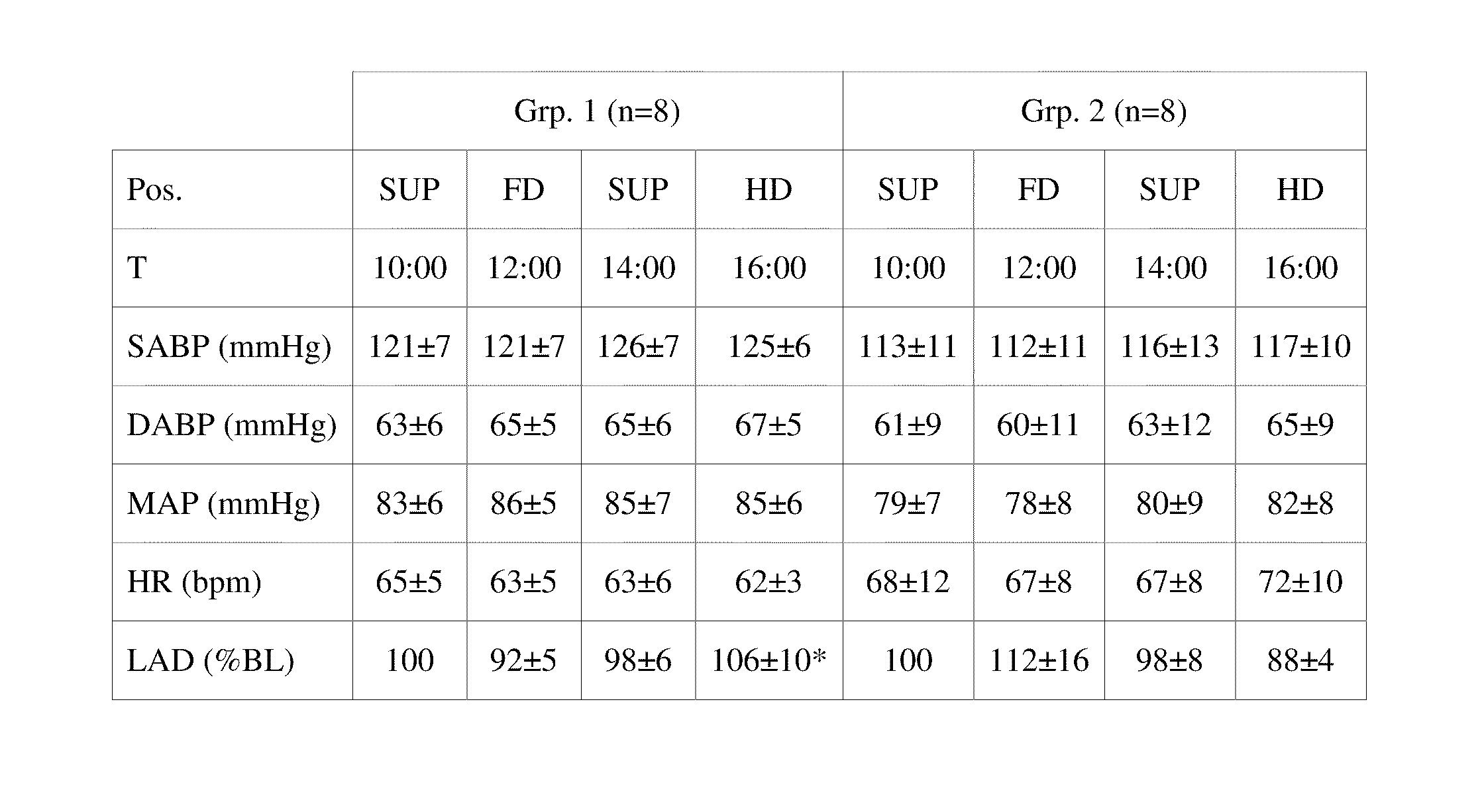
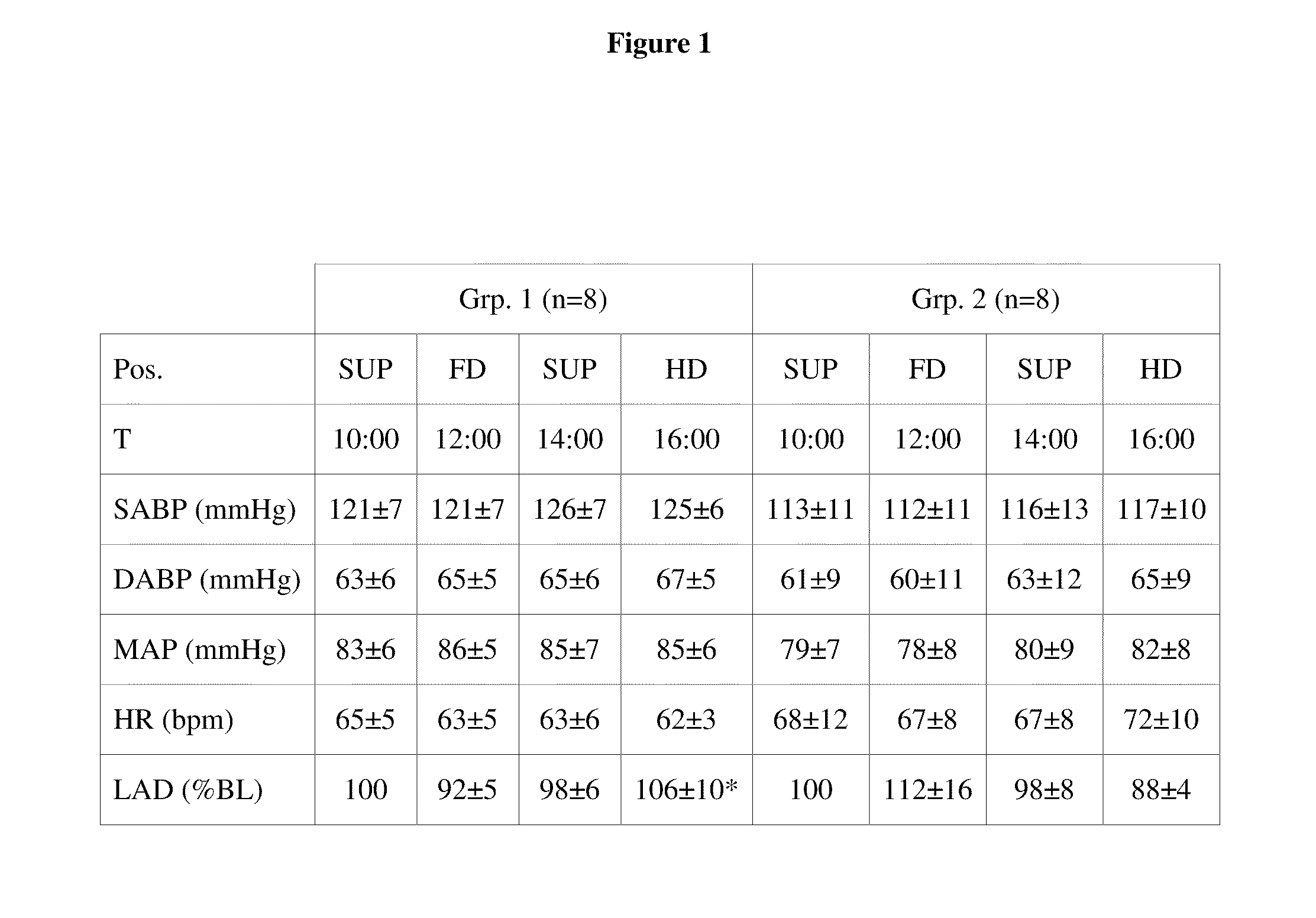
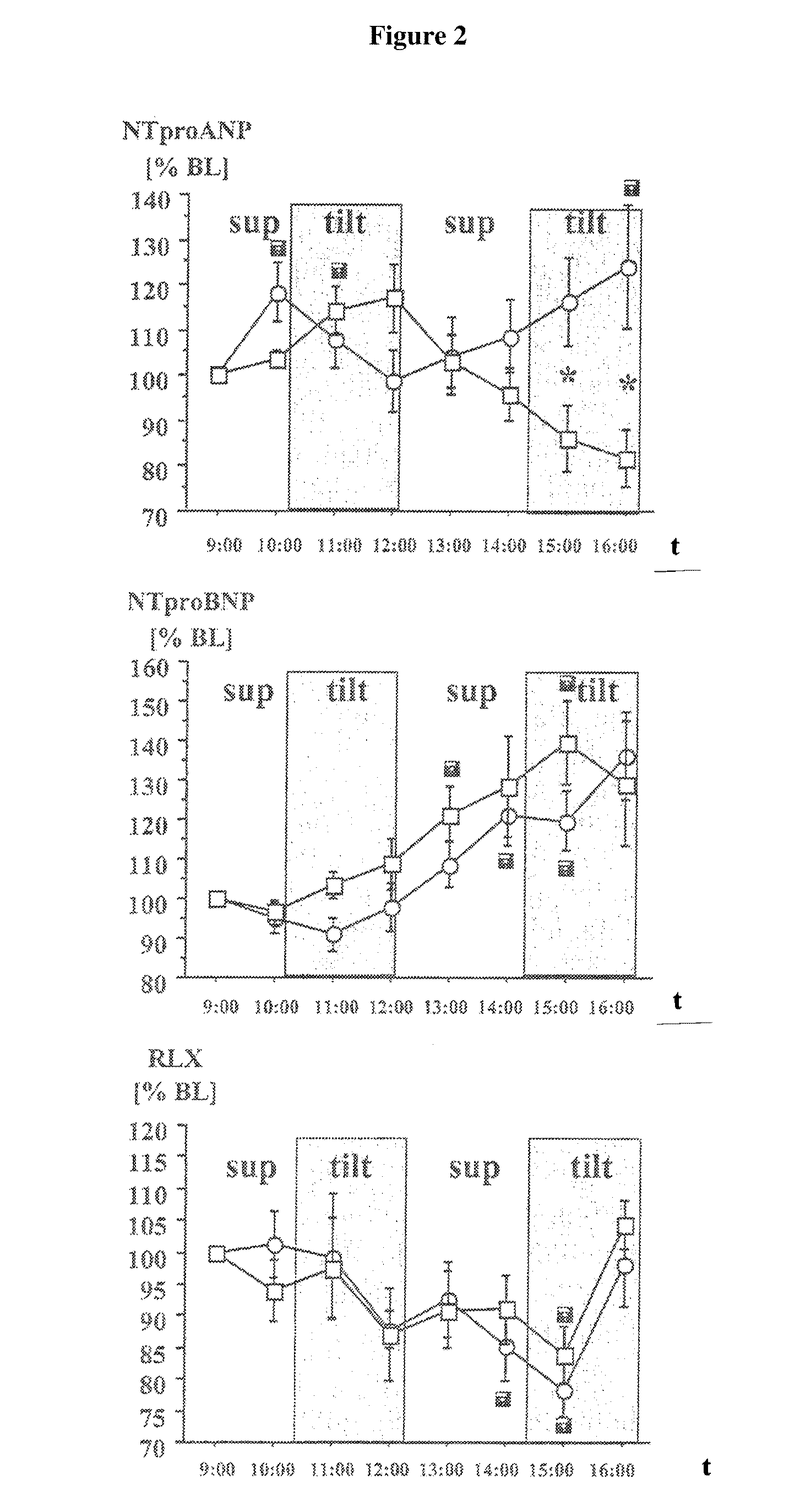
[0172]16 volunteers were randomly divided into two groups of n=8 and studied in different body positions of 2 hours each: Following a resting period in the supine position, ...
example 3
A Study of NT-proBNP Levels in Blood Donors:
[0189]A total of 1981 blood donors were recruited from the blood transfusion service of the University of Mainz, Germany. The majority of the blood donors were repeat donors and repeat donors do receive a physical examination at yearly interval. Based on this examination all blood donors included into the study were considered clinically healthy. At the time of blood donation hemoglobin levels as well as creatinine levels were taken. All determinations were done before blood donation. The study was conducted according to the Declaration of Helsinki and was approved by a local ethical committee.
[0190]As depicted in FIG. 8 individual NT-proBNP values are plotted in relation to age and sex. As becomes evident from FIG. 7, NT-proBNP levels (median) were higher in women than in men. Outliers were more frequently observed in elderly individuals (above the age of 50 years) whereas in younger individuals (below 50 years of age) individual determin...
PUM
| Property | Measurement | Unit |
|---|---|---|
| volume | aaaaa | aaaaa |
| volume | aaaaa | aaaaa |
| time | aaaaa | aaaaa |
Abstract
Description
Claims
Application Information
 Login to View More