[0021]The procedure avoids all disadvantages of the state of the actual technology by use of a valve-controlled bypass
system which avoids a
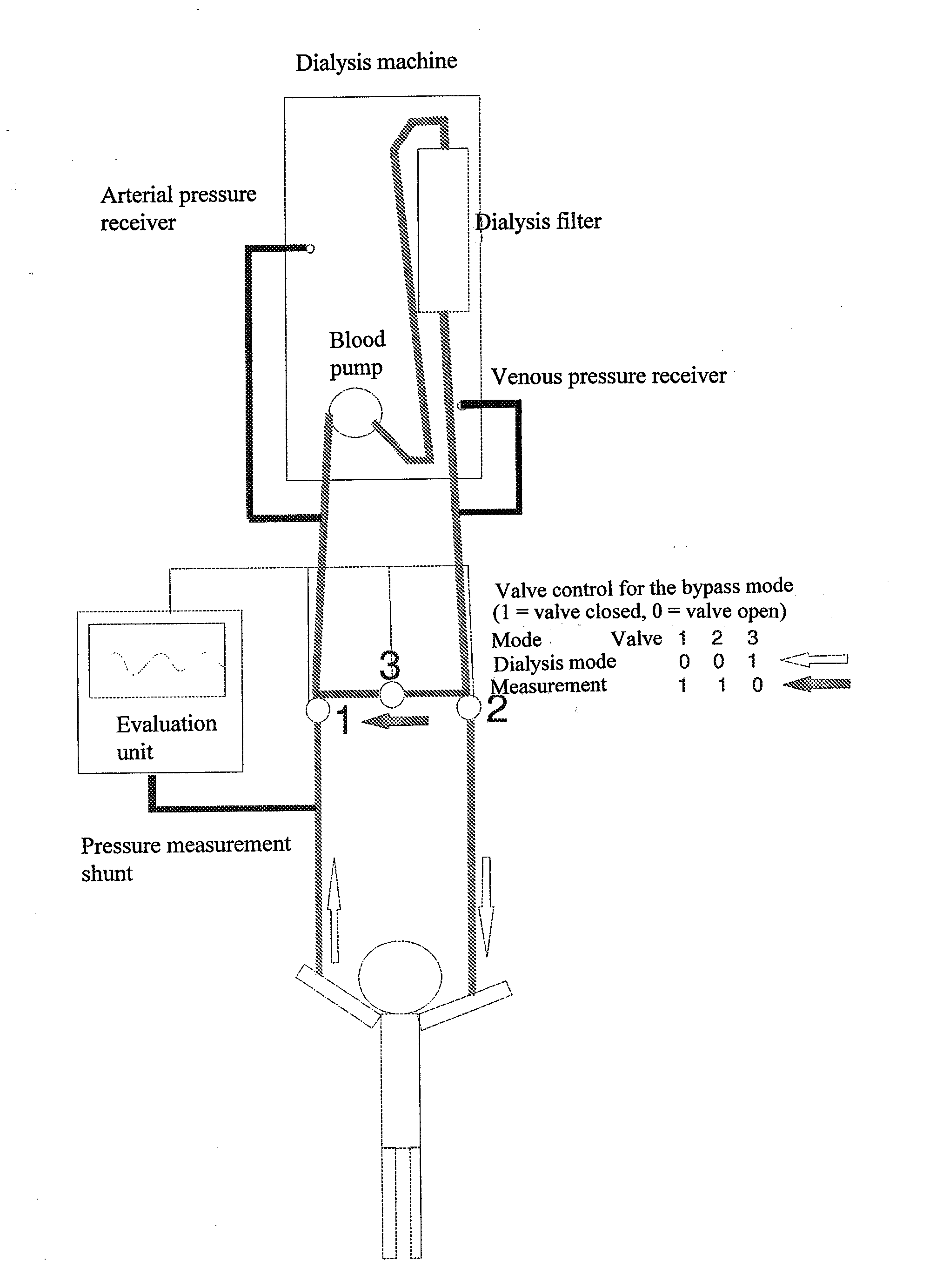
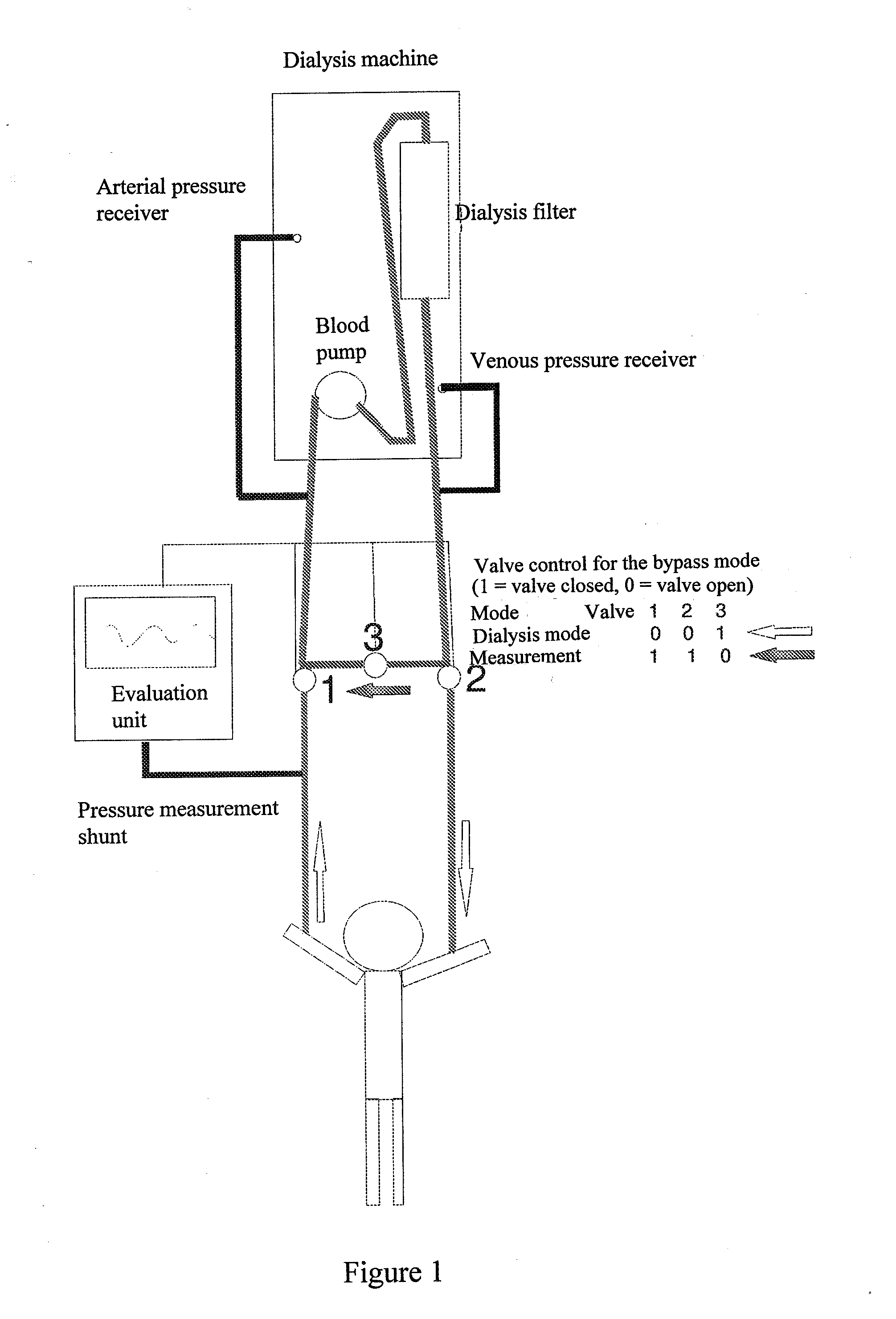
blood pump's hold. With it, the blood flow is not interrupted in the therapy device, and false alarms are suppressed. A connection of the bypass module and the
measuring equipment is possible with different therapy units and brands. The device can be implemented into existing
dialysis machines or as a stand alone device which can be adapted to the
dialysis machine.
[0023]In the procedure of the present invention, the blood
pressure measurement is performed at the existing (for chronic
dialysis therapy) vascular access with a pressure converter connected to the blood lines of the therapy unit. The measuring
signal is processed electronically and is sent to an evaluation unit. Differing from the invasive blood
pressure measurement used in
intensive care medicine, the measurement is not performed continuously, because a measurement is only possible during interrupted blood flow in the vascular access. This can be achieved by a short stop of the
blood pump or by redirecting the blood flow into a bypass
system. The bypass system allows a continued blood flow inside the dialysis
machine without a stop of the
blood pump, thus avoiding clotting problems in the blood lines or the dialysis filter. The distinction of the new invention is also marked by the bypass procedure using a new clamp control. By this clamp control, no intervention is necessary in the therapy unit itself. One
advantage of this system is the easy
adaptation of the measuring procedure to dialysis machines of different manufacturers. A combination or integration of the
control unit of the bypass system into the
control unit of the therapy unit is possible.
[0024]The measuring time can be kept short, so that the whole dialysis time is extended only insignificantly. A central component of the invention is the new combination of the known measuring procedures with the new principle of the blood flow redirection in a bypass system, as well as the procedure of the electronic evaluation of the measured values. The measurement of different dynamic parameters (slope of the arterial
central pressure and the volume pulse in the slope phase) differs from the measurements obtained previously. The application of a bypass system which is steered by the application of clamps brings crucial advantages. The blood flow in the therapy unit is not interrupted and the risk of coagulation is avoided. Another
advantage of the procedure of the present invention is that by using the bypass system no interventions are necessary in the dialysis
machine itself (particularly in the monitoring and the control of the blood
pump function). With the new system, it is also possible to perform a problem-free implementation into devices of different manufacturers, without colliding with the respective device directives.
[0026]A further
advantage of the new procedure is that frequent measuring is possible during the therapy and that also by frequent measurement, the measured values are not influenced by the measurement procedure itself, like in the
common method of Riva-Rocci. A good correlation of the blood pressure measured in the vascular access and the systemic arterial pressure has been shown. Even when the absolute values often did not exactly show the same values, a conclusion on the course of patient
systemic blood pressure is possible. Other optimisation can occur therefore through course observations in the same patient over several therapy meetings through
adaptation of the
patient specific settings. By derivation of the above mentioned parameters, it is possible to raise the security of the patient in the dialysis by an improved supervision and to raise the
efficacy of treatment. This is realized by the parameters directed control of
filtration rates, temperature of the dialysis solution,
sodium concentration of the dialysate or with the application of solutions with high osmolarity (glucose or
sodium solutions).


 Login to View More
  Login to View More