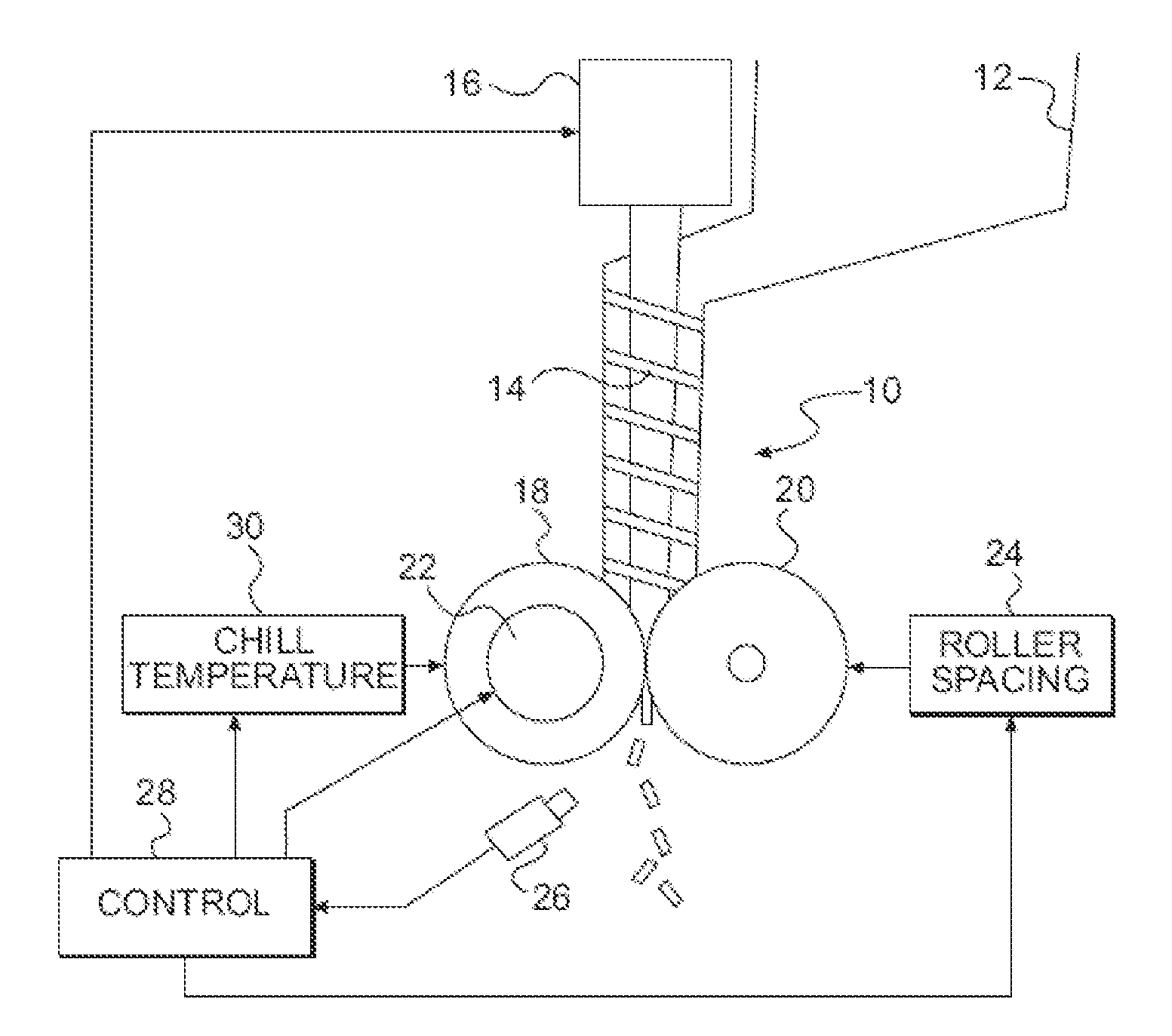
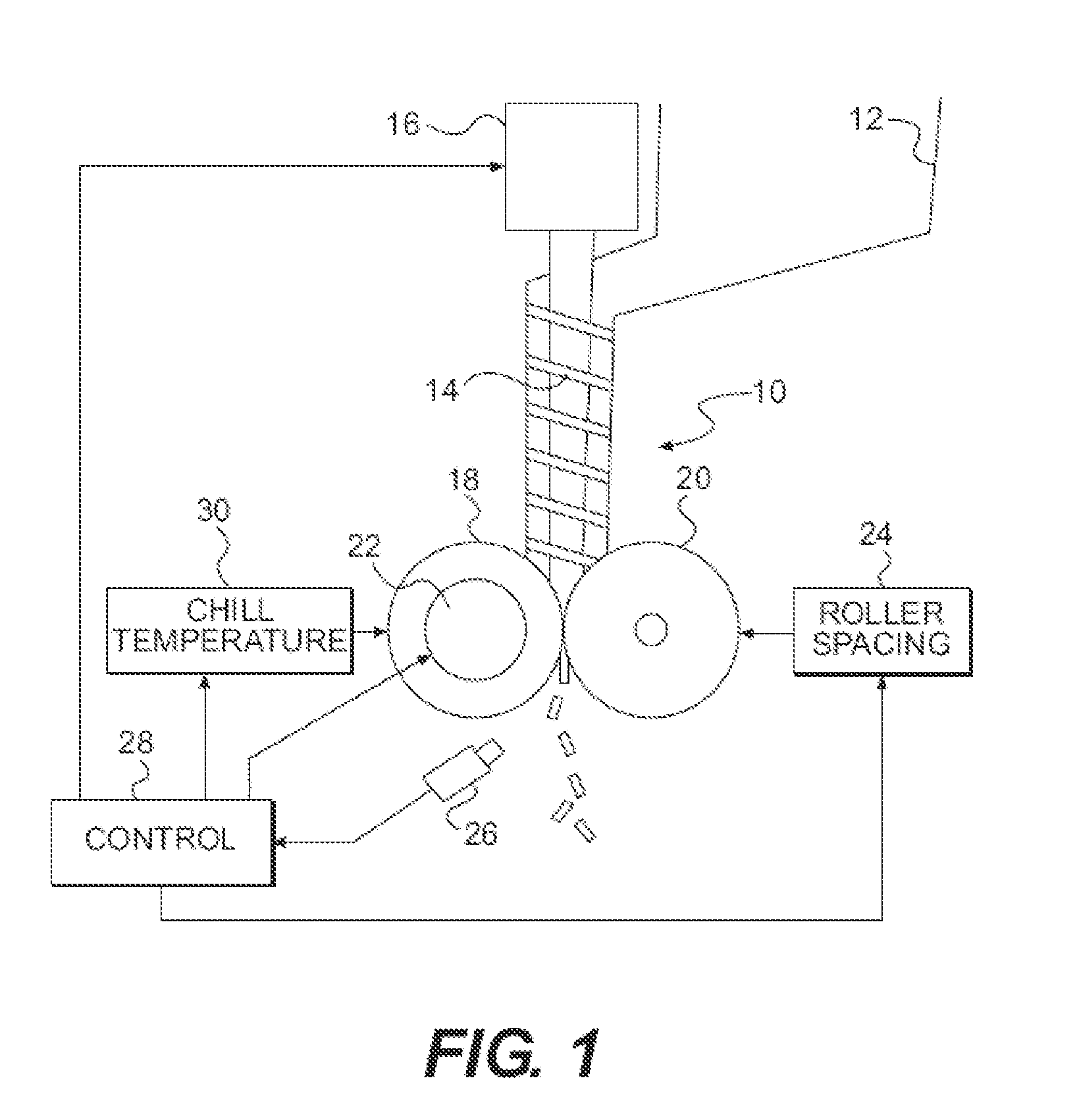
However, product quality problems have been encountered.
It is possible to overcome these problems by making adjusting various parameters of the operation of the compactor, but doing so is difficult and requires a great deal of operator experience.
In addition, some materials that are highly
temperature sensitive, and materials that are processed at temperatures near their
melting point are particularly susceptible to problems when subjected to roller compaction.
The known
temperature measurement devices used for monitoring
coating processes do not provide sufficient information for
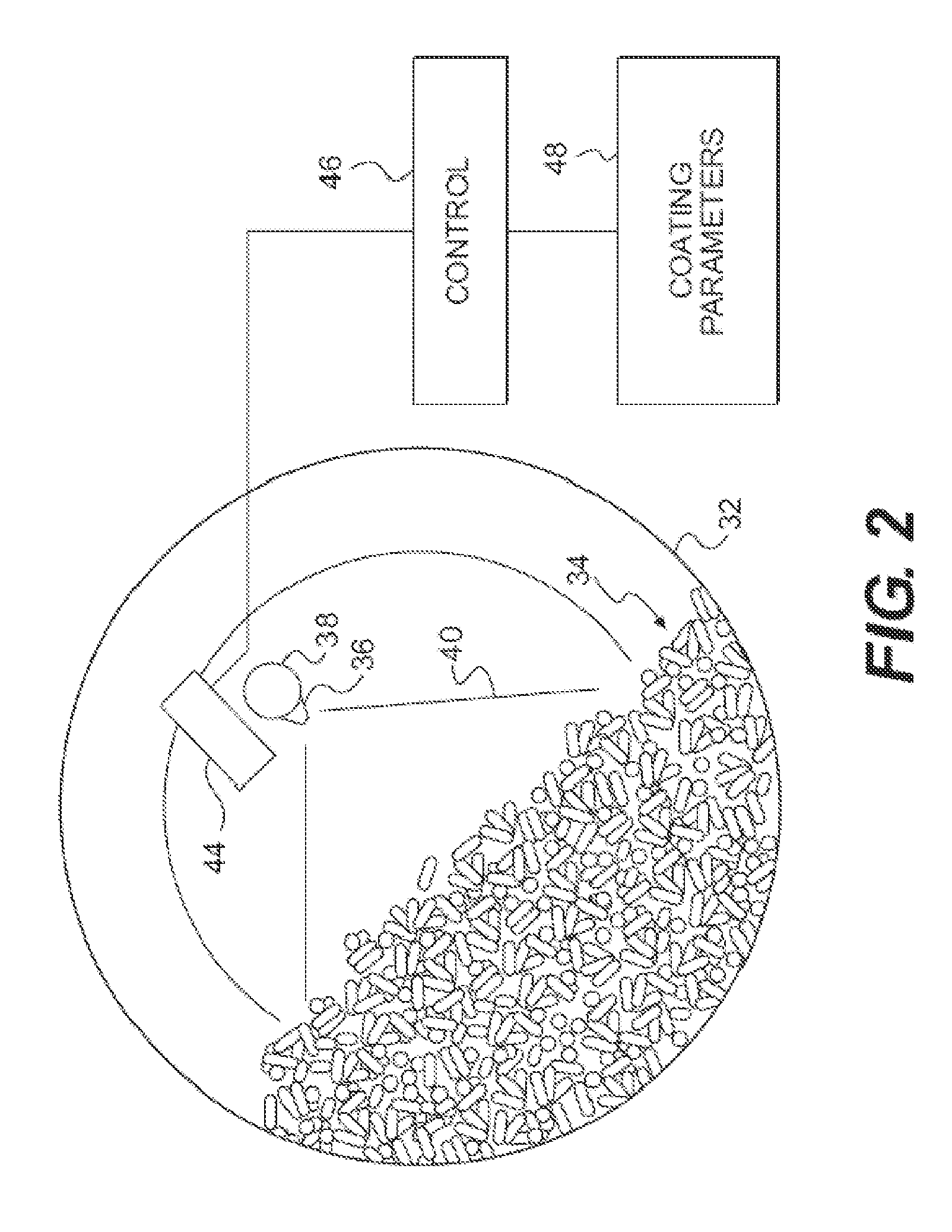
good control of the coating operation, or for designing large coaters by “scaling up” on the basis of temperature measurements taken using a smaller experimental coater.
In particular, known
temperature measurement devices used in coaters provide little information concerning the coater spray pattern, and are therefore of limited use in determining the relationship between the rate of flow of coating material through the spray nozzles and the amount of coating deposited on the tablets.
However, as
drying proceeds, the temperatures in the upper parts of the dryer increase, and the temperature differences between the upper and lower parts tend to decrease.
The result is either that excessive drying occurs in the upper zones of the dryer, or the time required for drying decreases.
However, conventional probes do not provide adequate information concerning the progressive changes in temperature differentials that occur over time to enable an operator to control drying parameters such as
air temperature,
material flow, and
drying time.
The cooling that occurs due to
evaporation of the binder affects the
granulation process, but does not take place uniformly within the granulator.
Conventional temperature probes cannot adequately monitor the temperature variations in the material, which can occur both at the surface of the
bed as a function of the spray pattern as in a coating operation, and within the bed, as in fluid bed drying.
Conventional
temperature measurement techniques used in
spray drying measure the temperature of the air at the exhaust outlet, and provide only an indirect, and somewhat unreliable, indication of the actual temperature of the sprayed material as it is being dried.
These conventional techniques also lack the ability to monitor the
spray characteristics and the temperature profiles within the spray pattern.
However, the materials in the vials tend to dry at different rates depending on their location within the chamber, and also depending on the materials themselves, which are not necessarily identical.
Therefore, temperature measurement in selected representative vials does not always lead to optimal results.
In liquid dispensing technology, as in the other processes mentioned above, the temperatures of different carriers in the array of carriers moving past the dispensing nozzles can vary from one carrier to another, and if the heating of the carriers for
evaporation of the liquid component of the coatings is not properly controlled, some carriers and the active material adhering thereto could be overheated or others could be insufficiently heated to evaporate the
solvent or suspension medium.



 Login to View More