
Pulp food product, process and method of manufacturing same
a technology of food products and pulp, applied in the field of pulp food products, process and method of manufacturing same, can solve the problems of unnecessarily discarded, substantial degradation of inherent nutrients, and many, if not all of these examples are inadequate, and achieve the effect of maximizing the retention of pulp's essential nutrients
- Summary
- Abstract
- Description
- Claims
- Application Information
AI Technical Summary
Benefits of technology
Problems solved by technology
Method used
Image

Examples
example compositions
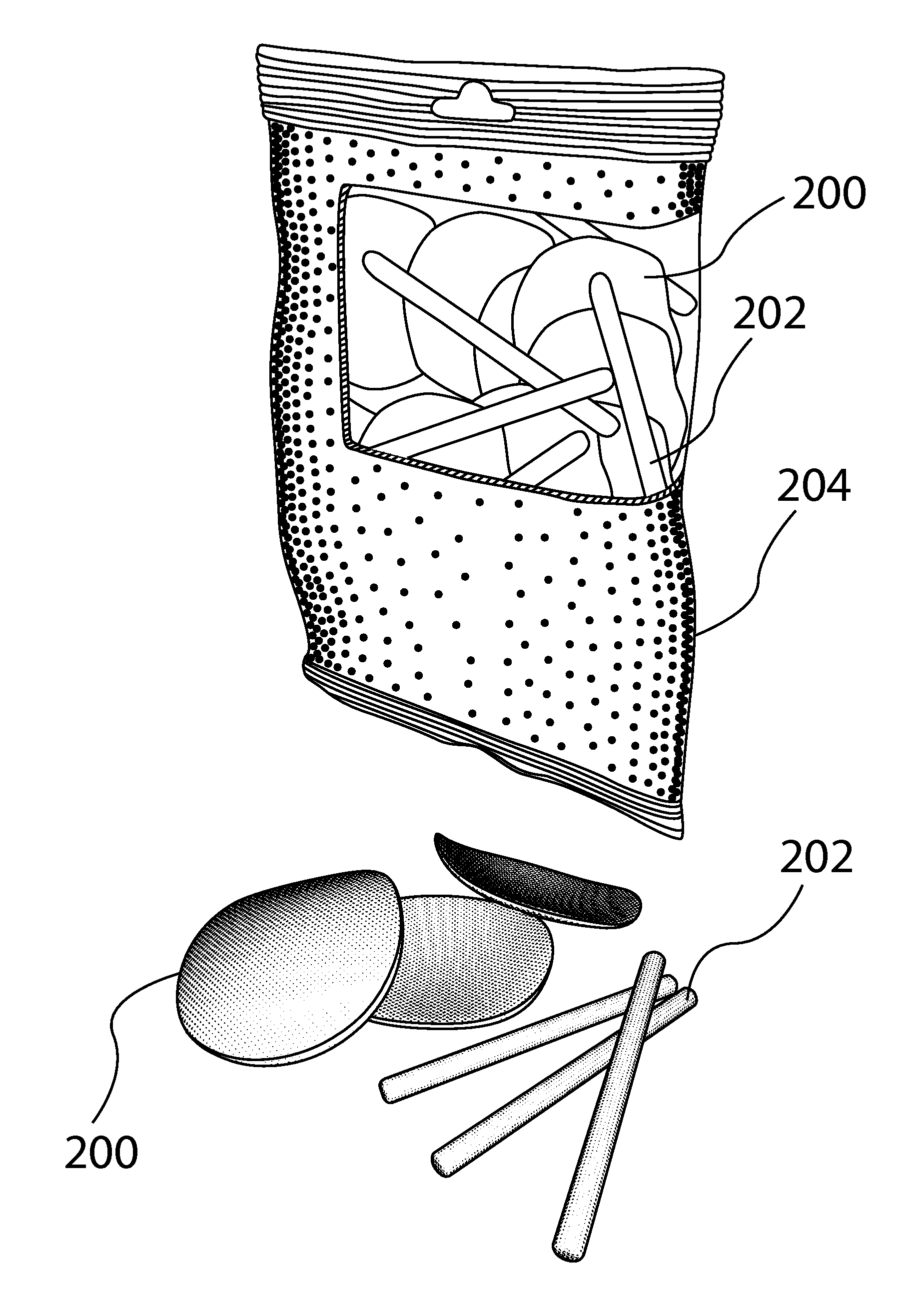
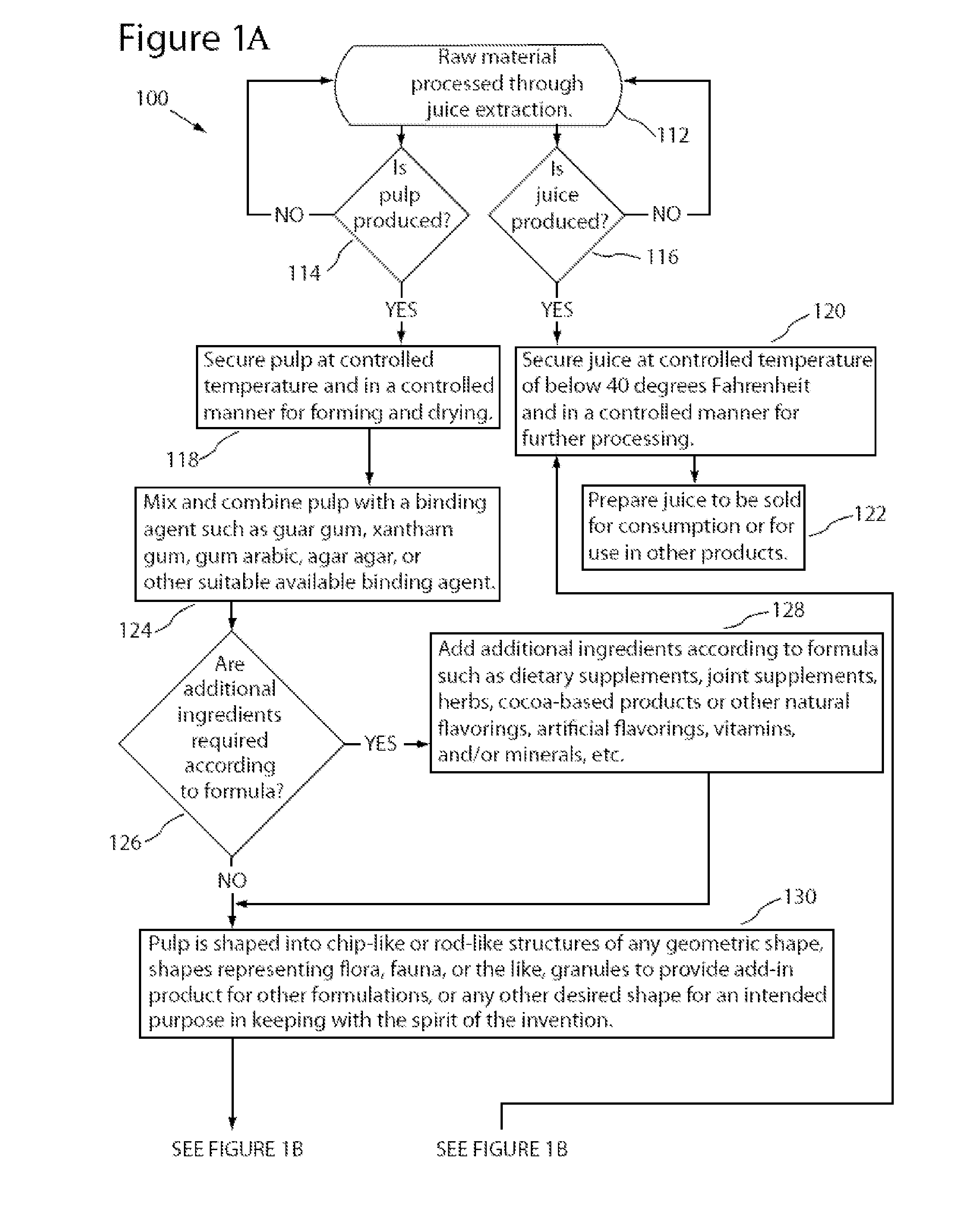
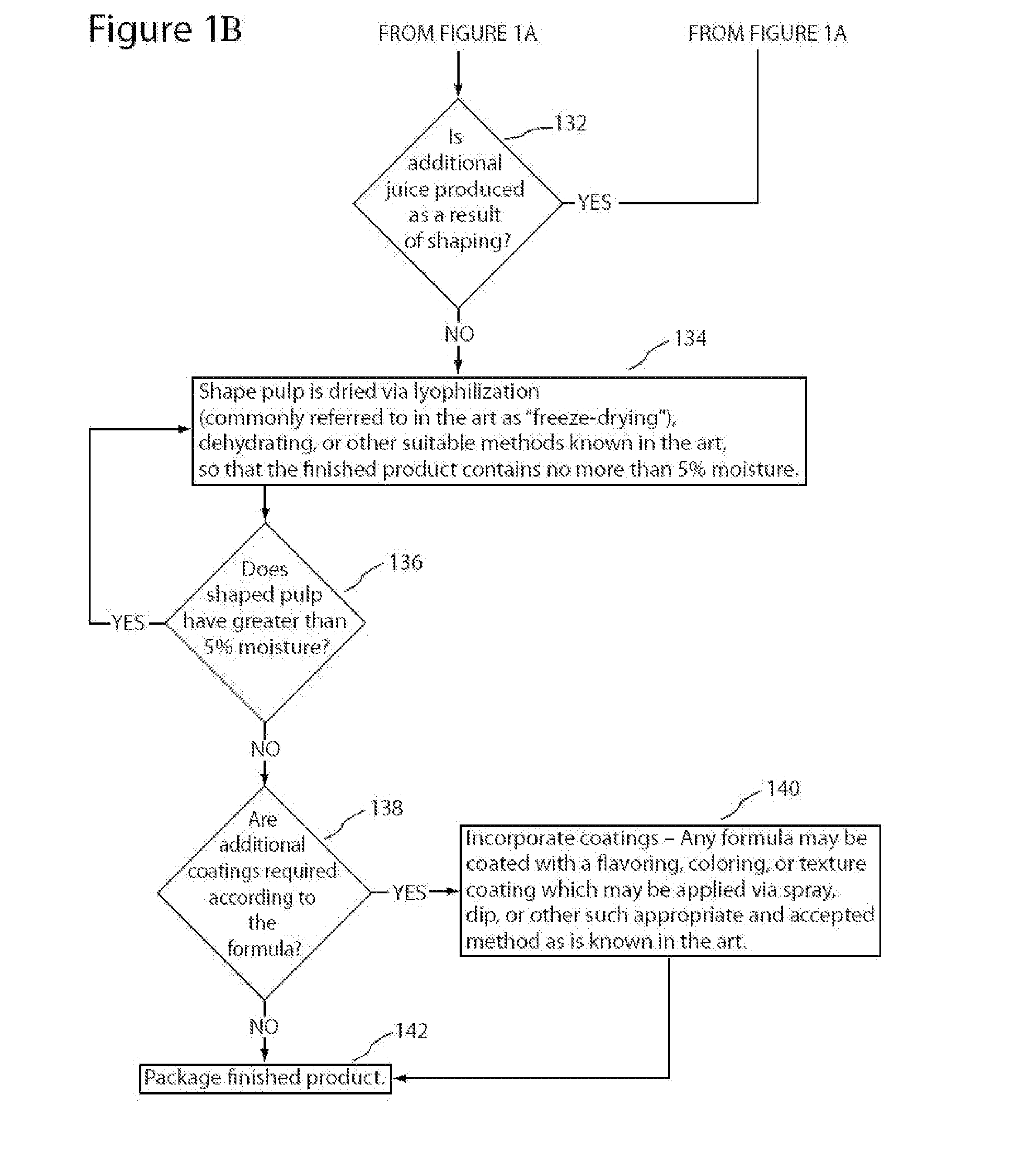
[0052]In a first embodiment, the pulp food product comprises at least one pulp material formed from at least one raw vegetable and / or fruit wherein juice is substantially removed therefrom. The process of substantially removing the juice results in the creation of pulp material containing no more than approximately 5% moisture after treatment. The resulting food pulp is one hundred percent natural raw food and is generally low in fat and salt, yet is high in fiber, vitamins, minerals, antioxidants, and other photonutrients. While any of series of known binding agents may be incorporated into the mixture, it is preferred that a natural food binding agent such as arrowroot powder or xanthan gum is optionally added. The binding agent preferably comprises 10-25 g of binder / kilogram of pulp. Of course, one of ordinary skill in the art will readily recognize that in producing a natural food product of high nutrient value, using of a low percentage of binder agent is more advantageous and ...
PUM
 Login to View More
 Abstract
Description
Claims
Application Information
 Login to View More