Method of Operating a Multiport Vehicle Charging System

a vehicle charging and multi-port technology, applied in battery/fuel cell control arrangement, electric/magnetic computing, instruments, etc., can solve the problems of limited current charging infrastructure, relatively inefficient and costly approach

US20130057210A1Active Publication Date: 2013-03-07TESLA INC
5 Cites 296 Cited by

Patent Information

Authority / Receiving Office
US · United States
Patent Type
Applications(United States)
Current Assignee / Owner
Publication Date
2013-03-07

Smart Images

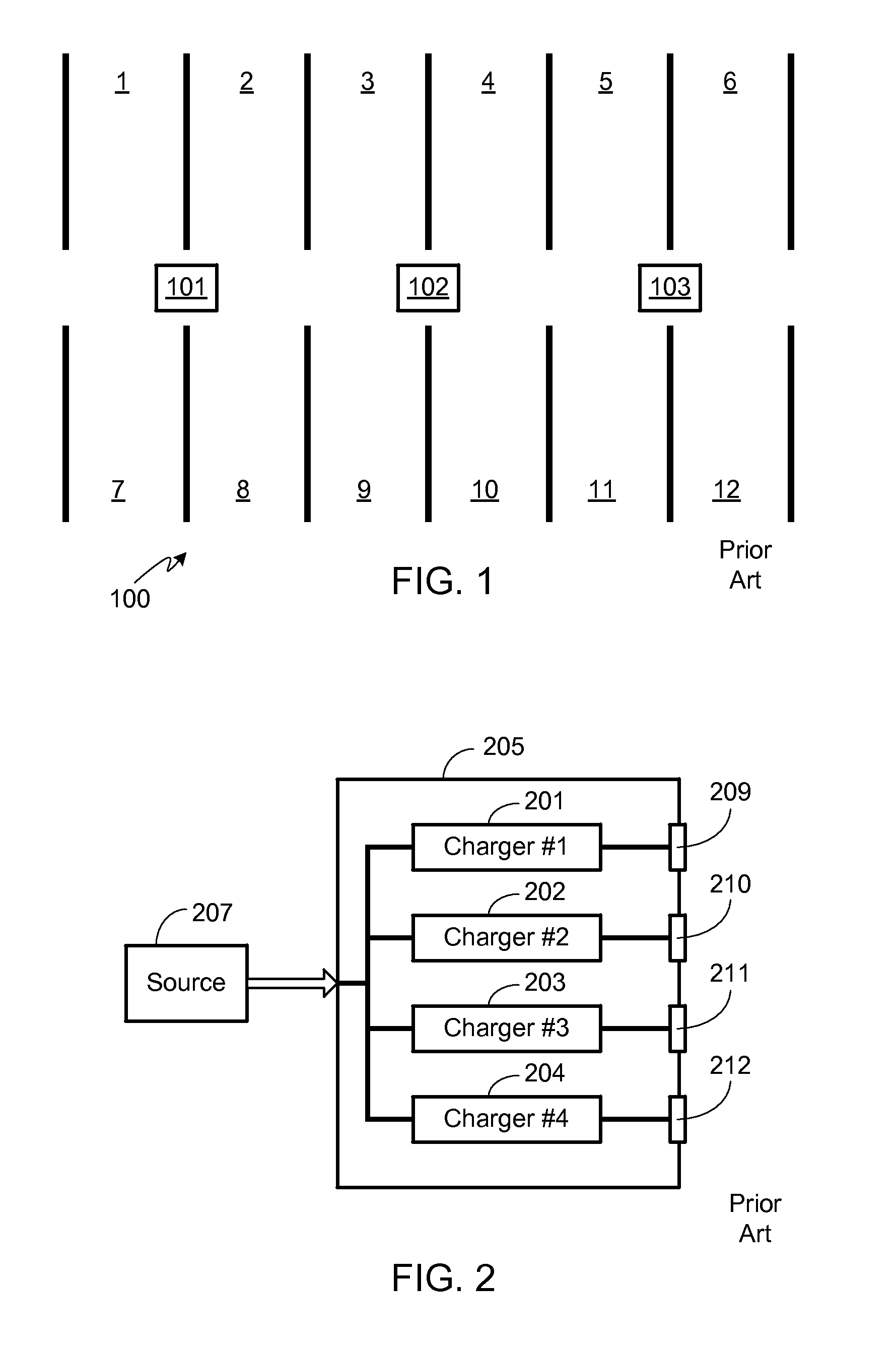
  • Figure 1
    Figure 1
  • Figure 2
    Figure 2
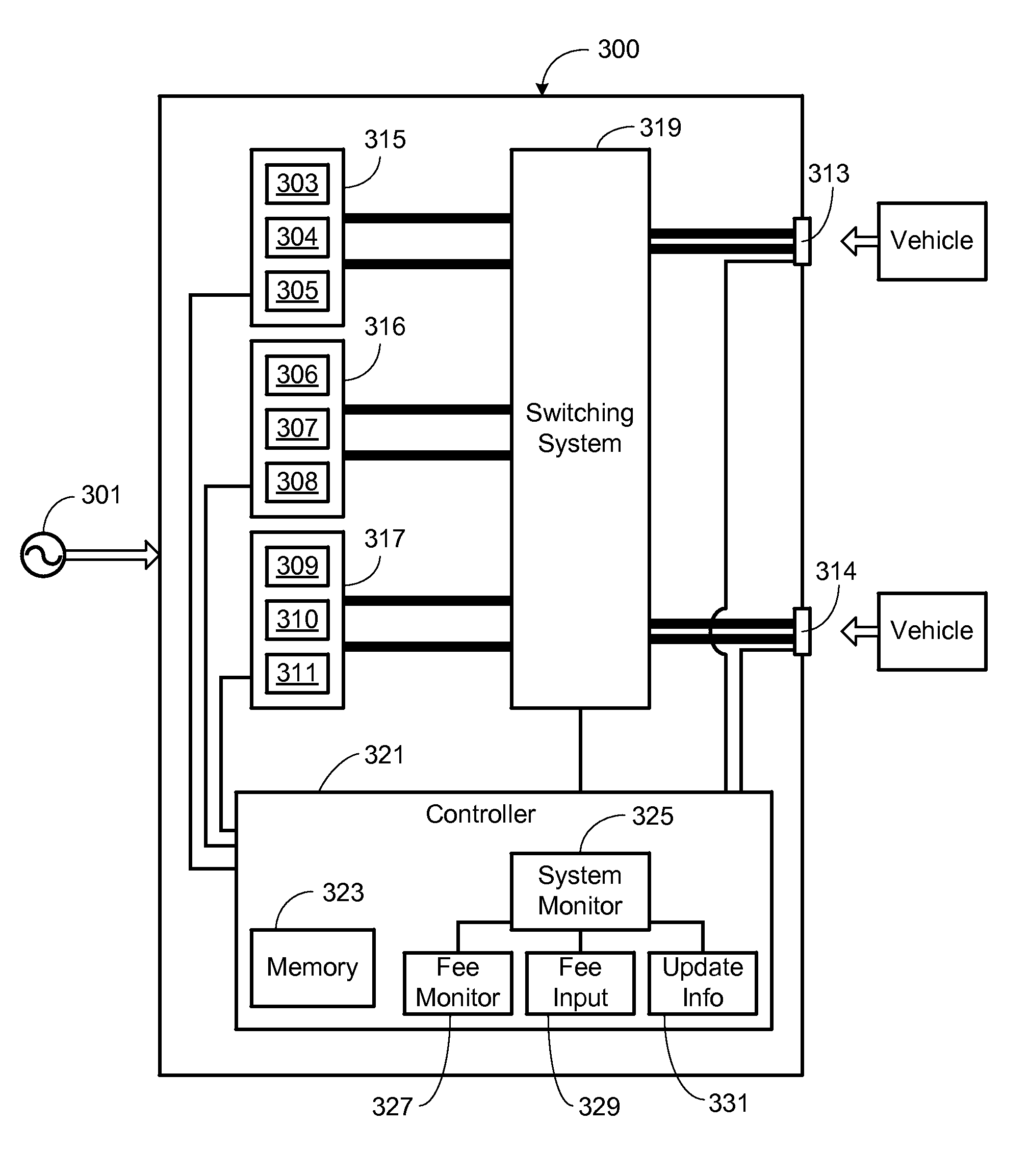
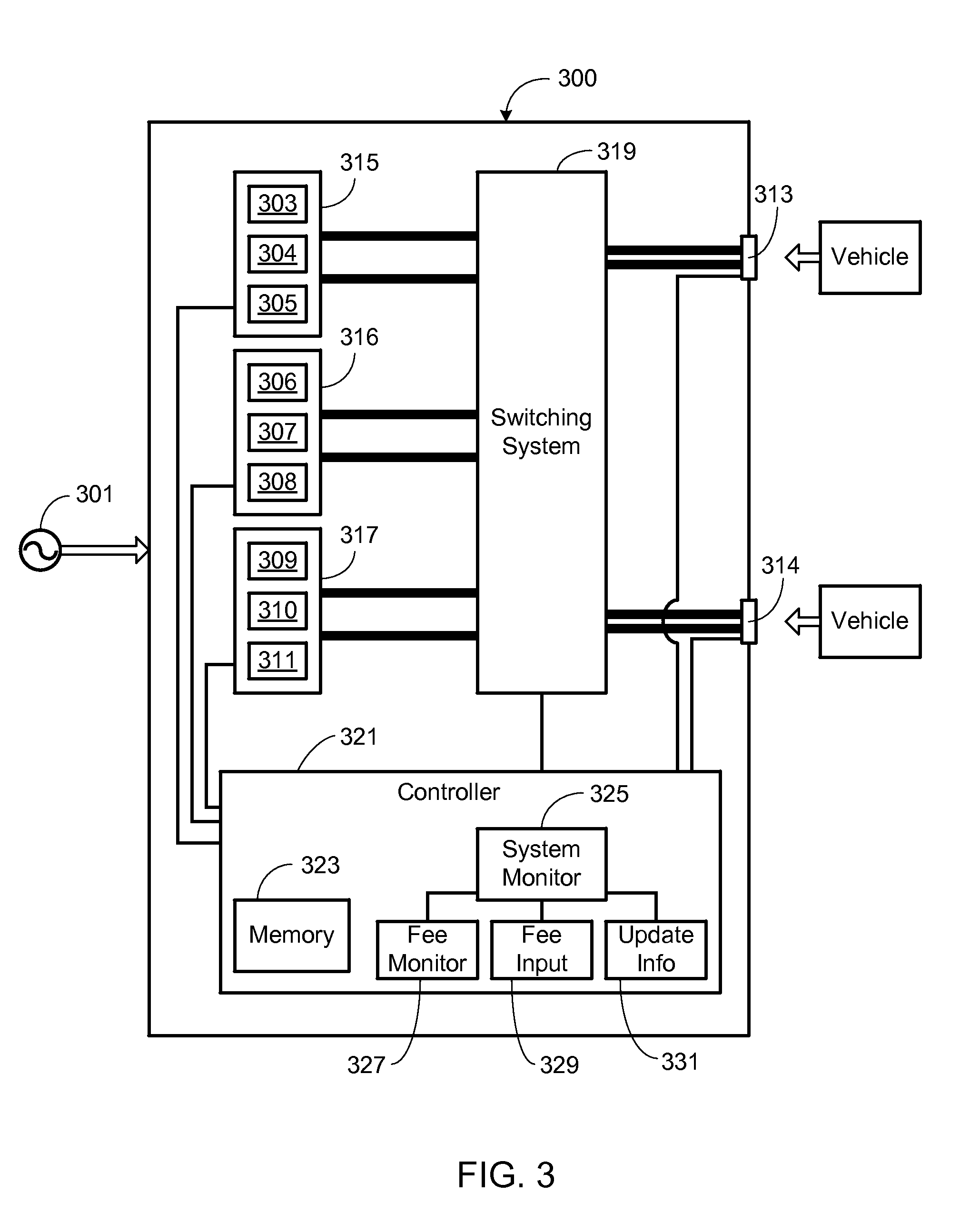
  • Figure 3
    Figure 3
Patent Text Reader

Abstract

A method of distributing charging power among a plurality of charge ports of a battery charging station is provided, where the battery charging station includes a plurality of power stages where each power stage includes an AC to DC converter and provides a portion of the charging station's maximum available charging power, the method comprising the steps of (i) monitoring battery charging station conditions and operating conditions for each charging port; (ii) determining current battery charging station conditions, including current operating conditions for each charging port; (iii) determining power distribution for the battery charging station and the charging ports in response to the current battery charging conditions and in accordance with a predefined set of power distribution rules; and (iv) coupling the power stages to the charging ports in accordance with the power distribution.
Need to check novelty before this filing date? Find Prior Art

Description

CROSS-REFERENCE TO RELATED APPLICATION

[0001] This application is a continuation of U.S. patent application Ser. No. 13 / 224,368, filed Sep. 2, 2011, the disclosure of which is incorporated herein by reference for any and all purposes.FIELD OF THE INVENTION

[0002] The present invention relates generally to battery charging systems and, more particularly, to a method and apparatus for distributing electrical power to recharge one or more electric and hybrid vehicles from a single source.BACKGROUND OF THE INVENTION

[0003] A large percentage of the world's vehicles run on gasoline using an internal combustion engine. The use of such vehicles, more specifically the use of vehicles which rely on fossil fuels, e.g., gasoline, creates two problems. First, due to the finite size and limited regional availability of such fuels, major price fluctuations and a generally upward pricing trend in the cost of gasoline are common, both of which can have a dramatic impact at the consumer level. Second, fos...

Examples

Embodiment Construction

[0021]In the following text, the terms “battery”, “cell”, and “battery cell” may be used interchangeably and may refer to any of a variety of different cell types, chemistries and configurations including, but not limited to, lithium ion (e.g., lithium iron phosphate, lithium cobalt oxide, other lithium metal oxides, etc.), lithium ion polymer, nickel metal hydride, nickel cadmium, nickel hydrogen, nickel zinc, silver zinc, or other battery type / configuration. The term “battery pack” as used herein refers to multiple individual batteries, typically contained within a single piece or multi-piece housing, the individual batteries electrically interconnected to achieve the desired voltage and capacity for a particular application. The terms “battery” and “battery system” may be used interchangeably and as used herein refer to an electrical energy storage system that has the capability to be charged and discharged such as a battery, battery pack, capacitor or supercapacitor. The term “e...