

Biochar products and method of manufacture thereof
a technology of biochar and charcoal, applied in the field of biochar or charcoal products, can solve the problems of reducing the value of reaction by-products, destroying useful products, and affecting the quality of biochar products,
- Summary
- Abstract
- Description
- Claims
- Application Information
AI Technical Summary
Benefits of technology
Problems solved by technology
Method used
Image

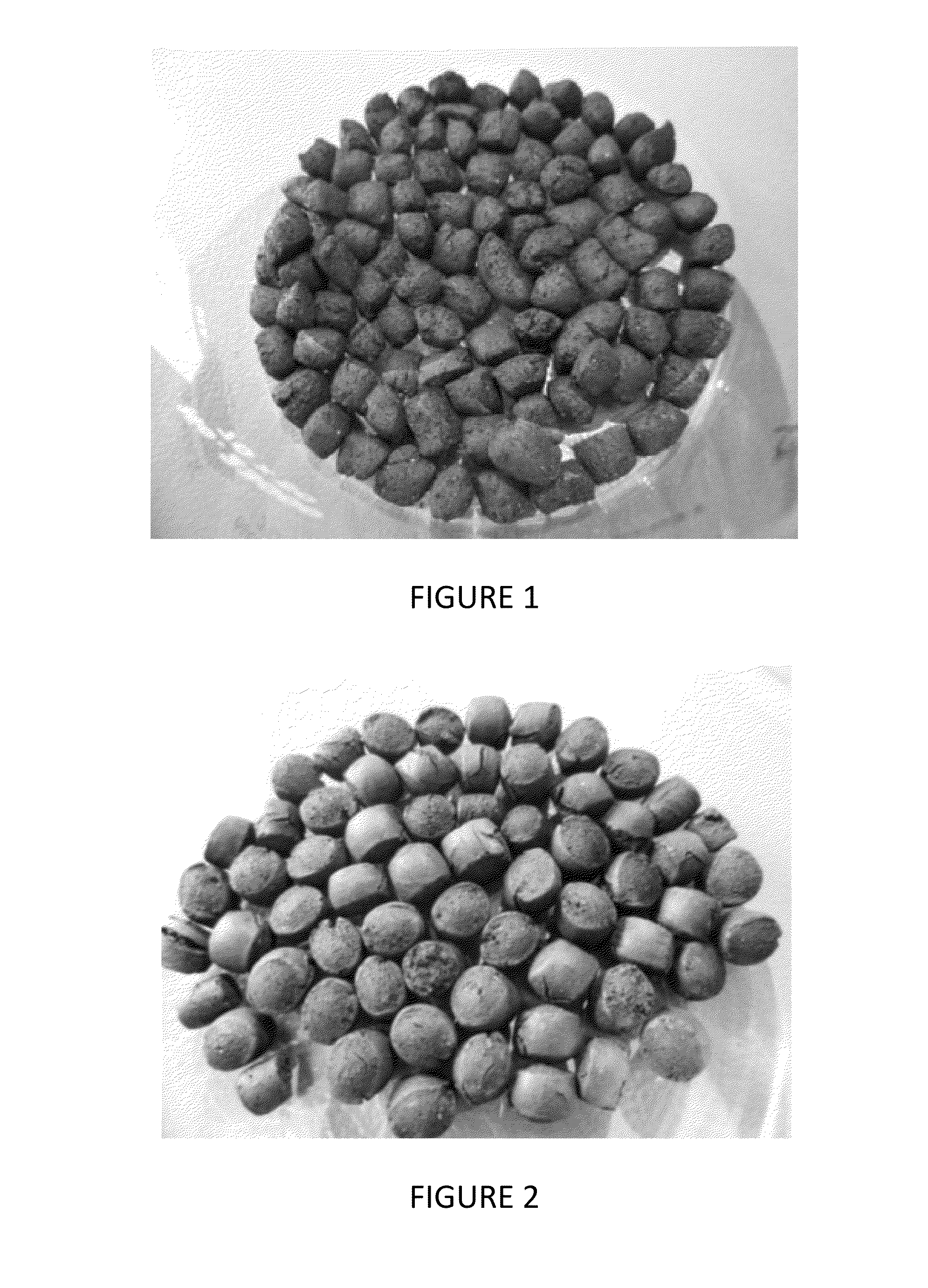
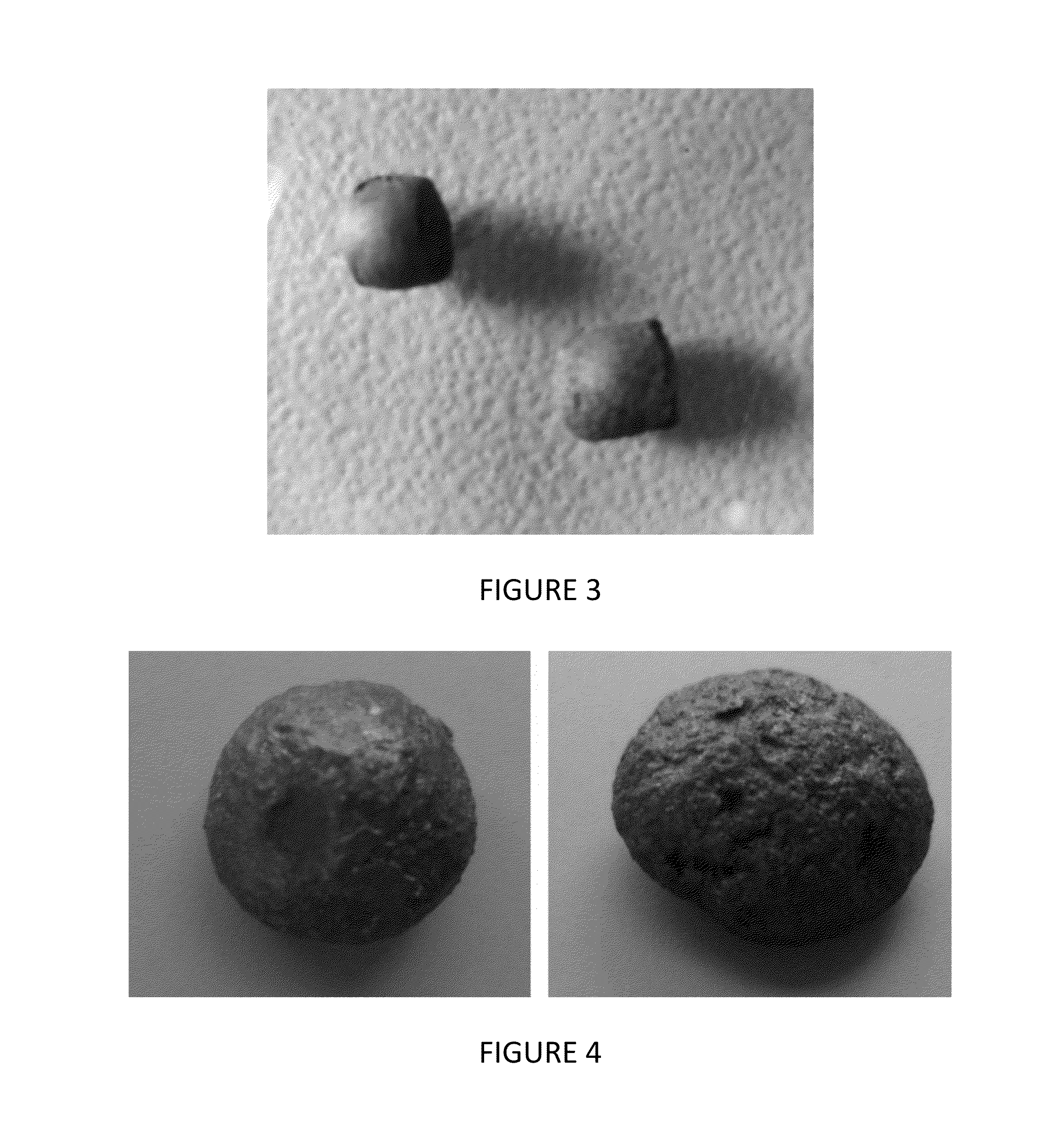
Examples
Embodiment Construction
[0034]The present invention, in one embodiment, provides a coated biochar or charcoal product having a coating and binding agent which may include sulphur and / or gluten. The coating would both protect and increase overall bulk density. The present invention also provides a method of manufacturing such a coated biochar product.
[0035]By increasing bulk density and adding a protective coating, as well as promoting the spheronization of the pellets, the handling characteristics of the final product are improved. This, in turn, allows easier product distribution by conventional agriculture fertilizer spreading equipment. The bulk density and diameter of the present coated biochar particles may be modified to match that of commercial fertilizer particles by adjusting the mixture formulation, the coating procedure, as well as the formation of the pellet size.
[0036]Some important properties of biochar include the ability to absorb nutrients, metals and water, as well as provide physical spa...
PUM
| Property | Measurement | Unit |
|---|---|---|
| Fraction | aaaaa | aaaaa |
| Fraction | aaaaa | aaaaa |
| Fraction | aaaaa | aaaaa |
Abstract
Description
Claims
Application Information
 Login to View More