Check patentability & draft patents in minutes with Patsnap Eureka AI!

Process and system for whole tyres and plastic composites pyrolysis to fuel conversion and compound recovery

Active Publication Date: 2015-07-02
RIEDEWALD FR
View PDF3 Cites 14 Cited by
  • Summary
  • Abstract
  • Description
  • Claims
  • Application Information

AI Technical Summary

Benefits of technology

The present invention is a better method for burning tires and big plastic parts by direct heating. It avoids using mechanical devices and allows water to be present while collecting the valuable materials produced during the process. The pyrolysis chamber has a U-shaped structure. The patent also mentions the use of extractors and augers to improve performance. The invention can be used with any type of plastic material suitable for recycling.

Problems solved by technology

Unfortunately, the very characteristics that make tyres long lasting and resistant to decomposition at moderate temperatures make tyres difficult to disintegrate.
While shredding overcomes some process difficulties for handling a bulky material of varying size, it greatly increases the capital, energy and maintenance requirements of these processes.
However, exposing mechanical and other devices to molten zinc is potentially problematic as it can result in frequent equipment failures.
Generally it is undesirable to have water present within a tyre, as water is expensive to evaporate and it does not form any useful product.
However, the geometry of a tyre allows water to accumulate within its body from where it is difficult to dislodge.
For some processes, for instance US. Pat. 2011 / 0171114 A1, water is detrimental as treatment of a tyre filled with water could result in over-pressurisation of the reaction chamber.
This drying process reduces the overall throughput of the plant and is expensive as a vacuum pump may have to run for a considerable amount of time to draw off the water.
This patent proposes to use superheated steam, which is expensive to generate and requires high pressure equipment, to dry the tyres.
Drawbacks of this system include that the tyres must be shredded and the steel removed prior to pyrolysis.
In addition the pyrolysis reaction time is 2 to 4 hours; hence the requirements of multiple reactors to achieve commercial throughput requirement increasing capital and operational costs.
Moreover the tyre pieces are moved through the reactor by means of a screw, which may be liable to mechanical breakdowns.

Method used

the structure of the environmentally friendly knitted fabric provided by the present invention; figure 2 Flow chart of the yarn wrapping machine for environmentally friendly knitted fabrics and storage devices; image 3 Is the parameter map of the yarn covering machine
View more

Image

Smart Image Click on the blue labels to locate them in the text.
Viewing Examples
Smart Image
  • Process and system for whole tyres and plastic composites pyrolysis to fuel conversion and compound recovery
  • Process and system for whole tyres and plastic composites pyrolysis to fuel conversion and compound recovery
  • Process and system for whole tyres and plastic composites pyrolysis to fuel conversion and compound recovery

Examples

Experimental program
Comparison scheme
Effect test

Embodiment Construction

[0100]In the figures, the same constitutional elements or components are represented by the same reference numerals as given in the drawings legend. In the following the present invention is described by the example of tyre pyrolysis. Other plastic components are treated in a similar manner.

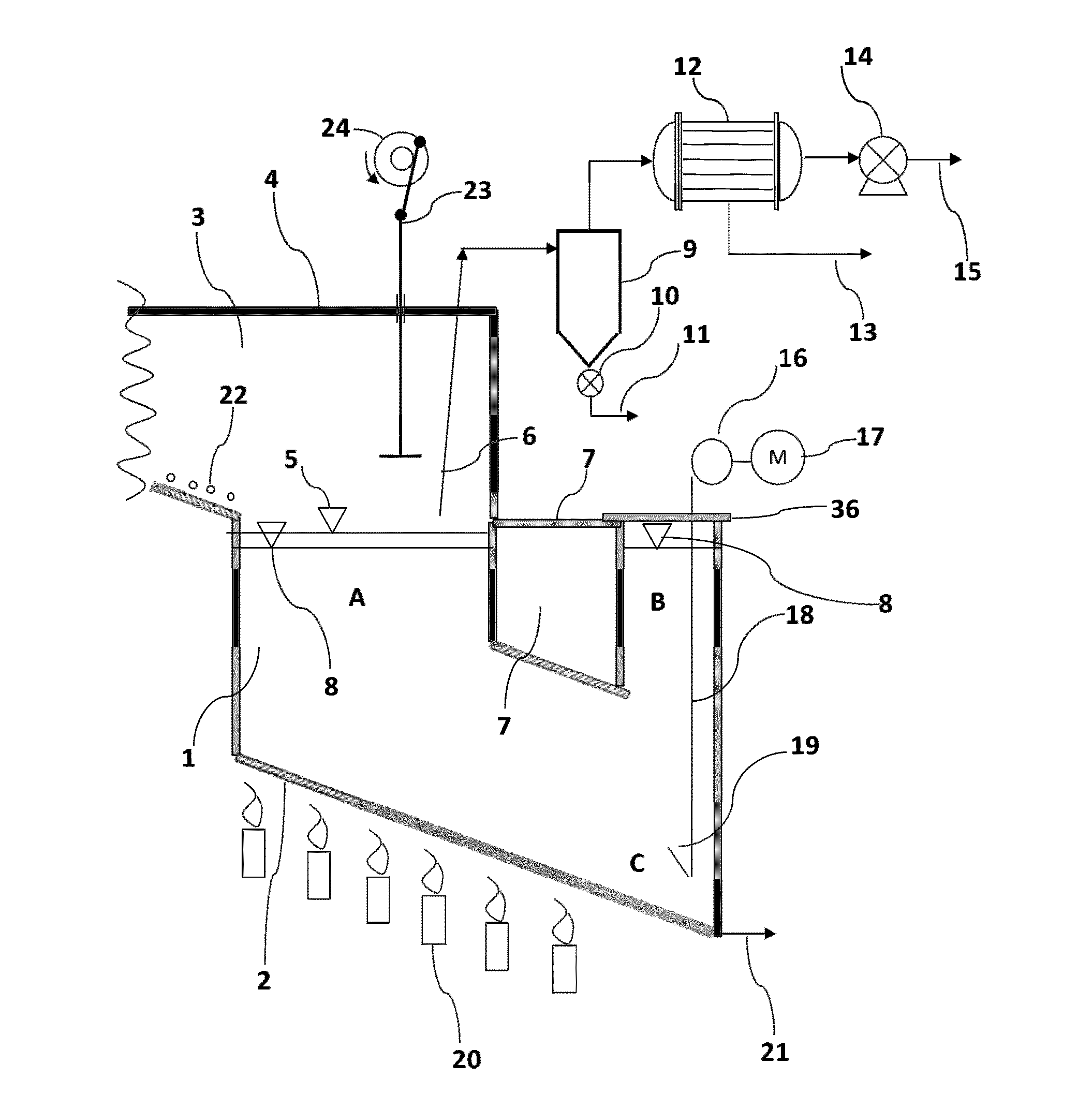
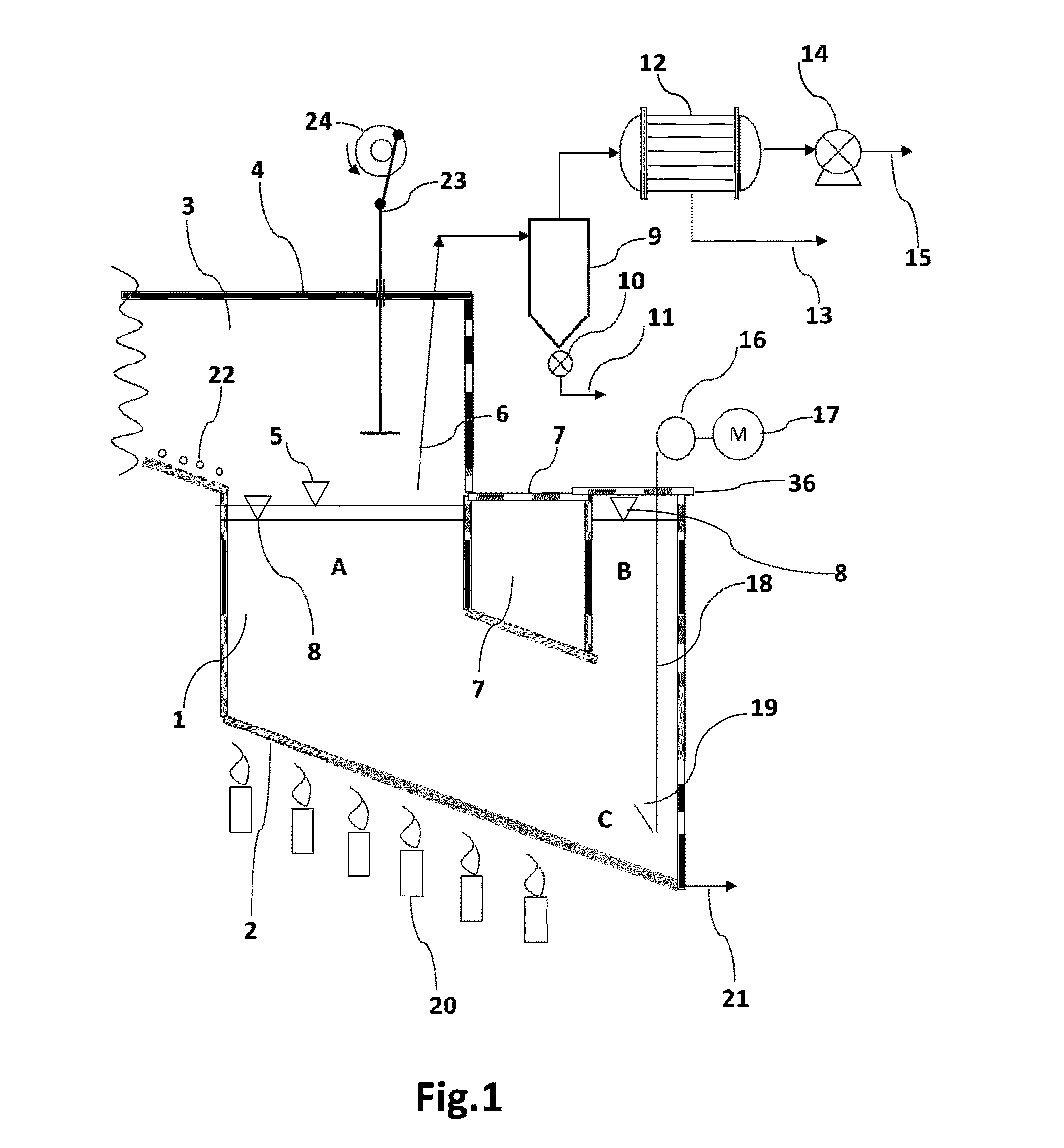
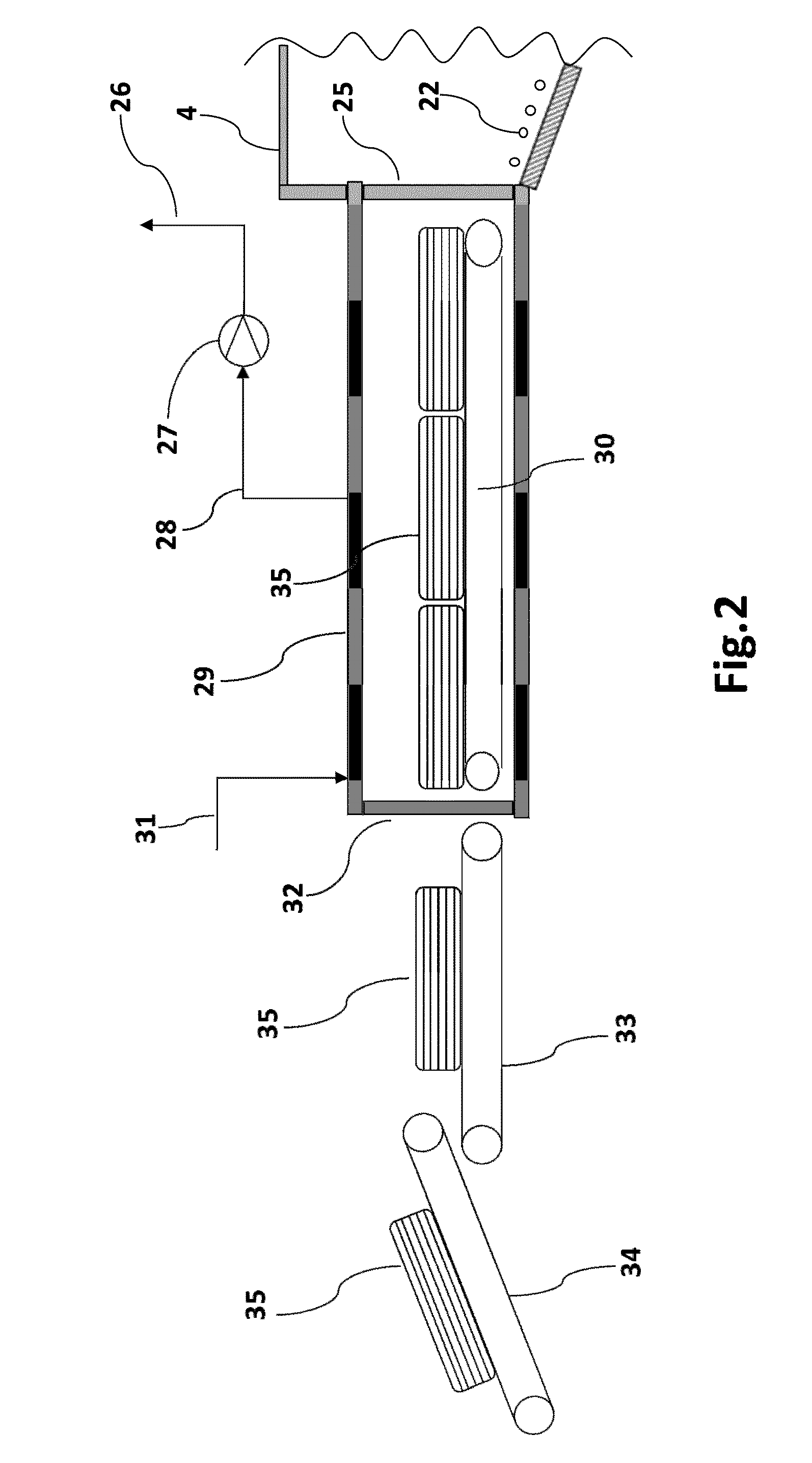
[0101]Referring now to FIGS. 1, 2 and 3, illustrates a preferred embodiment of the invention, showing waste tyres to be pyrolised fed into charging vessel 29 by belt conveyors 33 and 34 or by other means.

[0102]Once the charging vessel 29 is fully charged with tyres, the charging vessel entry door 32 is closed; the air in the vessel is removed by vacuum pump 27 and subsequently broken with nitrogen until the vessel is inerted. It will be appreciated that there are numerous ways of removing air from the charging vessel, for example by displacement, dilution, pressure swing purging or combinations thereof utilising an inert gas such as nitrogen and are well known in the art. Nitrogen is commonly use...

the structure of the environmentally friendly knitted fabric provided by the present invention; figure 2 Flow chart of the yarn wrapping machine for environmentally friendly knitted fabrics and storage devices; image 3 Is the parameter map of the yarn covering machine
Login to View More

PUM

No PUM Login to View More

Abstract

Disclosed is a process for treating waste plastic materials such as whole tyres, coarsely cut tyres, large plastic pieces, plastic composites such as hoses or combinations of above into gases, liquids and solids by direct heating in a pyrolysis liquid (1) such as molten salt or molten metal. The pyrolysis system is constructed such that the segregation of the light and heavy materials occurs within the pyrolysis chamber. The carbon black is segregated from the pyrolysis vapours via a cyclone and fractions of carbon black may be obtained by installing a number of cyclones in series so that different qualities of carbon black may be produced. Diesel or other oils, steel, carbon black, ZnO and synthesis gas are recovered; all of which can be feed streams to other processes. This process avoids the inefficient procedure of cutting the tyres or other plastic composites into small pieces before treatment by pyrolysis and also recovers valuable components.

Description

TECHNICAL FIELD[0001]The invention relates to the compound recovery i.e. fuel, steel, ZnO, glass from plastic and rubber waste materials.DESCRIPTION OF THE PRIOR ART[0002]The pyrolysis of tyres and plastics is a thermochemical decomposition process at elevated temperatures under the exclusion of oxygen.[0003]The chemistry of tyre pyrolysis is well investigated and established as is evident by a number of publications such as: Isabel de Marco Rodriguez et al., Pyrolysis of scrap tyres, Fuel Processing Technology 72 (2001) 9-22; M. F. Laresgoiti et al., Characterization of the liquid products obtained in tyre pyrolysis, J. Anal. Appl. Pyrolysis 71 (2004) 917-934; M. Felisa Laresgoiti et al., Chromatographic analysis of the gases obtained in tyre pyrolysis, J. Anal. Appl. Pyrolysis 71 (2004) 917-934 or J. D. Martinez, N. Puy, R. Murillo, T. Garcia, M. V. Navarro and A. M. Mastral, Waste tyre pyrolysis—A review, Renewable and Sustainable Energy Reviews, 23 0 (2013) 179-213.[0004]The che...

Claims

the structure of the environmentally friendly knitted fabric provided by the present invention; figure 2 Flow chart of the yarn wrapping machine for environmentally friendly knitted fabrics and storage devices; image 3 Is the parameter map of the yarn covering machine
Login to View More

Application Information

Patent Timeline
no application Login to View More
IPC IPC(8): C10B53/07C10L1/08C10B49/14C10B27/06C10B11/00C10B31/06
CPCC10B53/07C10B11/00C10B31/06C10B49/14C10L2290/544C10L1/08C10L2200/0469C10L2270/026C10L2290/02C10B27/06C10G1/10Y02P20/143
Inventor RIEDEWALD, FRANK
Owner RIEDEWALD FR
Features
  • R&D
  • Intellectual Property
  • Life Sciences
  • Materials
  • Tech Scout
Why Patsnap Eureka
  • Unparalleled Data Quality
  • Higher Quality Content
  • 60% Fewer Hallucinations
Social media
Patsnap Eureka Blog
Learn More