
Electroconductive film and method for producing same
- Summary
- Abstract
- Description
- Claims
- Application Information
AI Technical Summary
Benefits of technology
Problems solved by technology
Method used
Image

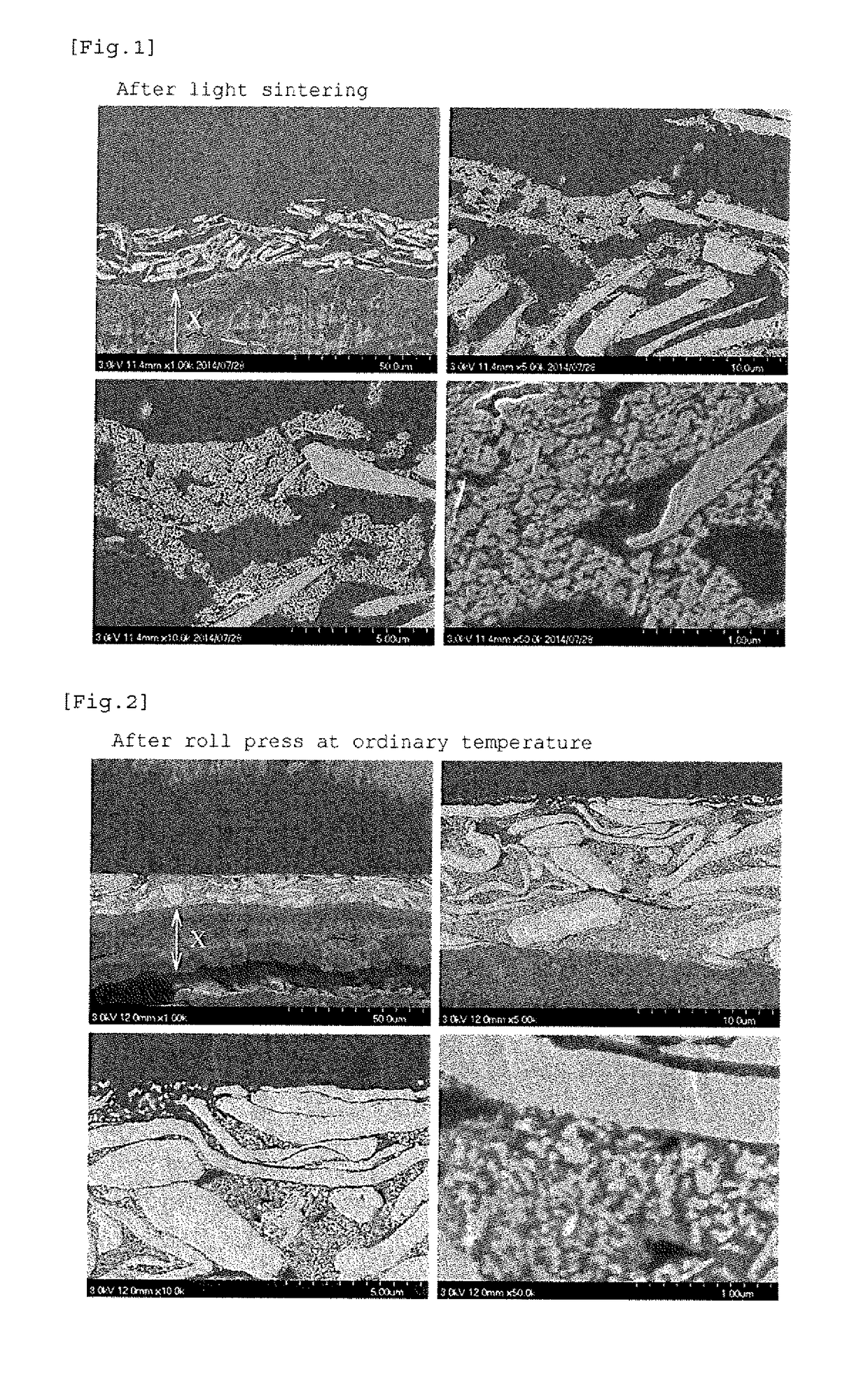
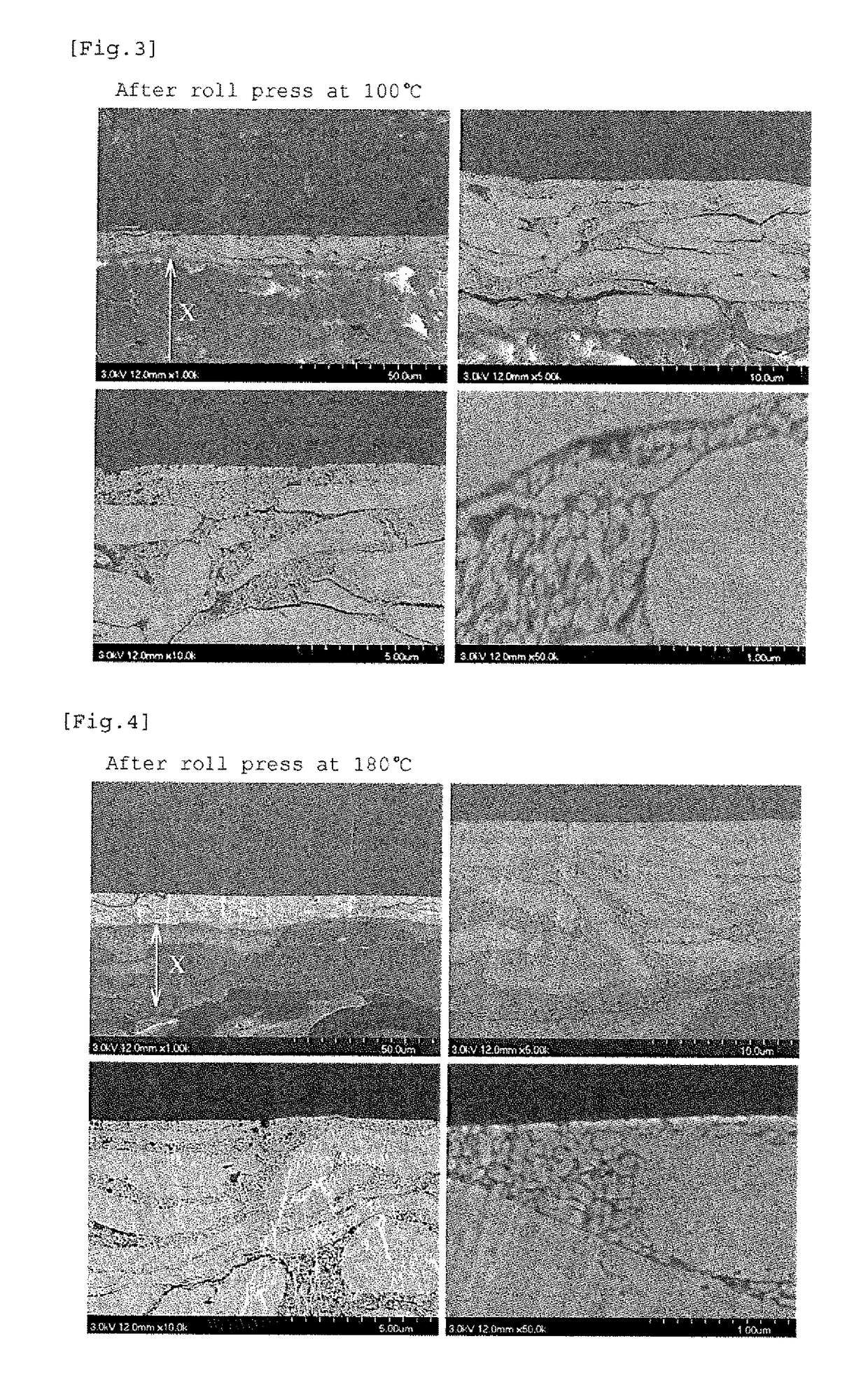
Examples
examples
Production of Copper Powder-Containing Coating Material
[0049]A solution A was prepared by dissolving 280 g of copper sulfate pentahydrate (produced by JX Nippon Mining & Metals Corporation) and 1 g of benzotriazole (BTA) (produced by Wako Pure Chemical Industries, Ltd.) in 1,330 g of pure water. A solution B was prepared by diluting 20 of a 50% by mass sodium hydroxide aqueous solution (produced by Wako Pure Chemical Industries, Ltd.) with 900 g of pure water. A solution C was prepared by diluting 150 g of a 80% by mass hydrazine monohydrate with 1,300 g of pure water.
[0050]The solution A and the solution B were mixed under stirring, the liquid temperature was controlled to 60° C., and then the entire amount of the solution C was added to the mixed liquid under stirring within a period of 30 seconds or less, so as to deposit particles of metallic copper through reduction. The reaction was completed within approximately 5 minutes. The liquid after the reaction (slurry) was subjected ...
PUM
| Property | Measurement | Unit |
|---|---|---|
| Temperature | aaaaa | aaaaa |
| Fraction | aaaaa | aaaaa |
| Fraction | aaaaa | aaaaa |
Abstract
Description
Claims
Application Information
 Login to View More