Composition for obesity treatment comprising liquid-phase plasma
Active Publication Date: 2019-10-10
AJOU UNIV IND ACADEMIC COOP FOUND
View PDF0 Cites 2 Cited by
Summary
Abstract
Description
Claims
Application Information
AI Technical Summary
This helps you quickly interpret patents by identifying the three key elements:
Problems solved by technology
Method used
Benefits of technology
Benefits of technology
The present invention is about a liquid that can help treat obesity. This liquid has the unique ability to stop the growth of fat cells and reduce the production of fat inside cells. This liquid is better than direct treatment with plasma and can be utilized to prevent and treat obesity.
Problems solved by technology
Obesity is an important factor that not only psychologically disturbs individuals, but also increases the risk of various adult diseases socially.
However, conventional therapeutic agents have been reported to have side effects such as heart disease, respiratory diseases, neurological diseases, and the like and low persistence of their efficacy.
In addition, surgery for removing fat, gastroplasty or stomach band implantation for limiting the amount of food that can be digested by the body, and the like have been performed as obesity surgery methods, but therapeutic effects are not satisfactory compared to the side effects, surgery costs, and the like.
Method used
the structure of the environmentally friendly knitted fabric provided by the present invention; figure 2 Flow chart of the yarn wrapping machine for environmentally friendly knitted fabrics and storage devices; image 3 Is the parameter map of the yarn covering machine
View more
Image
Smart Image Click on the blue labels to locate them in the text.
Viewing Examples
Smart Image
Click on the blue label to locate the original text in one second.
Reading with bidirectional positioning of images and text.
Smart Image
Examples
Experimental program
Comparison scheme
Effect test
example 1
ion of Effect of Non-Thermal Plasma Treated Solution (NTP) on Obesity Treatment
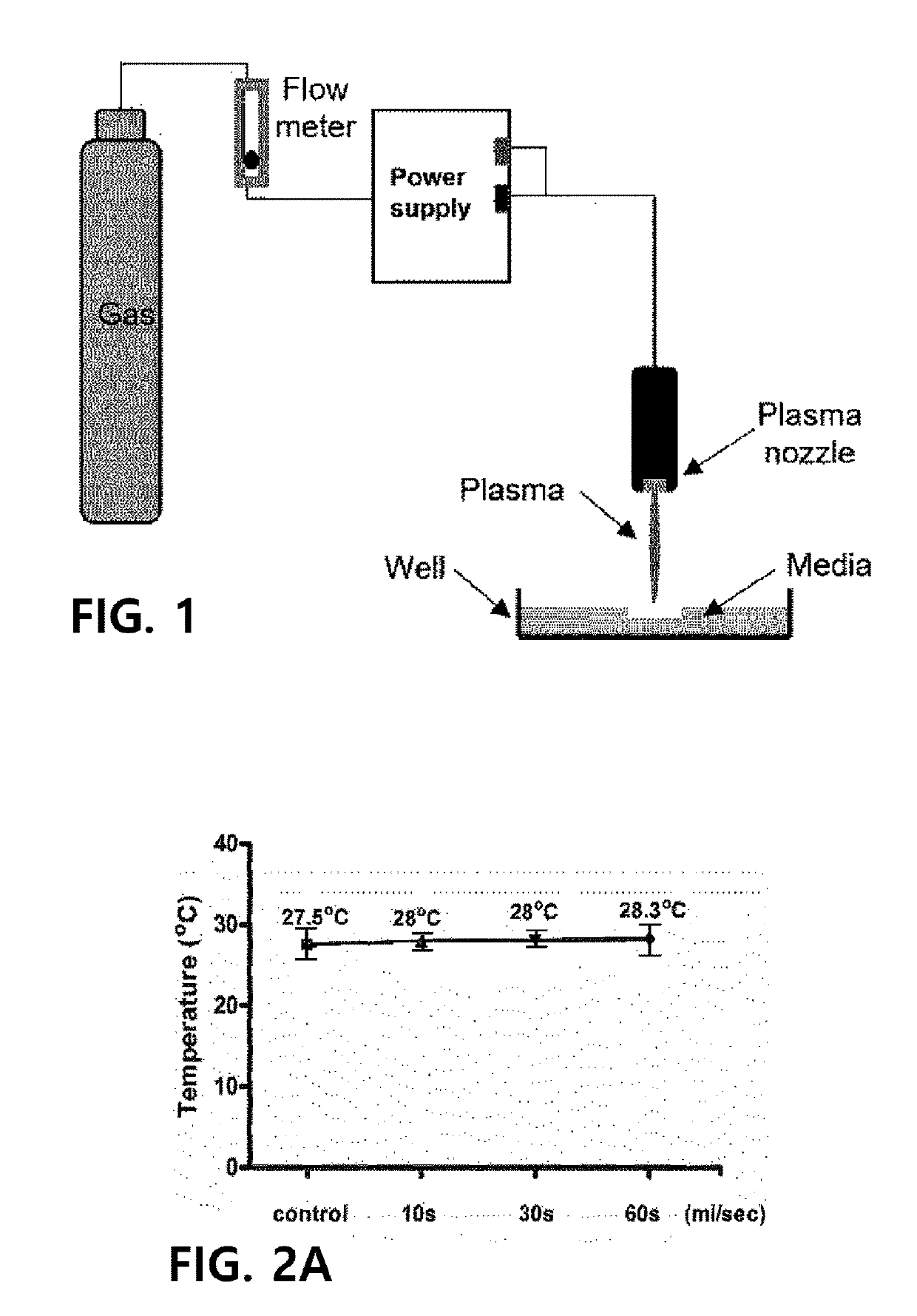
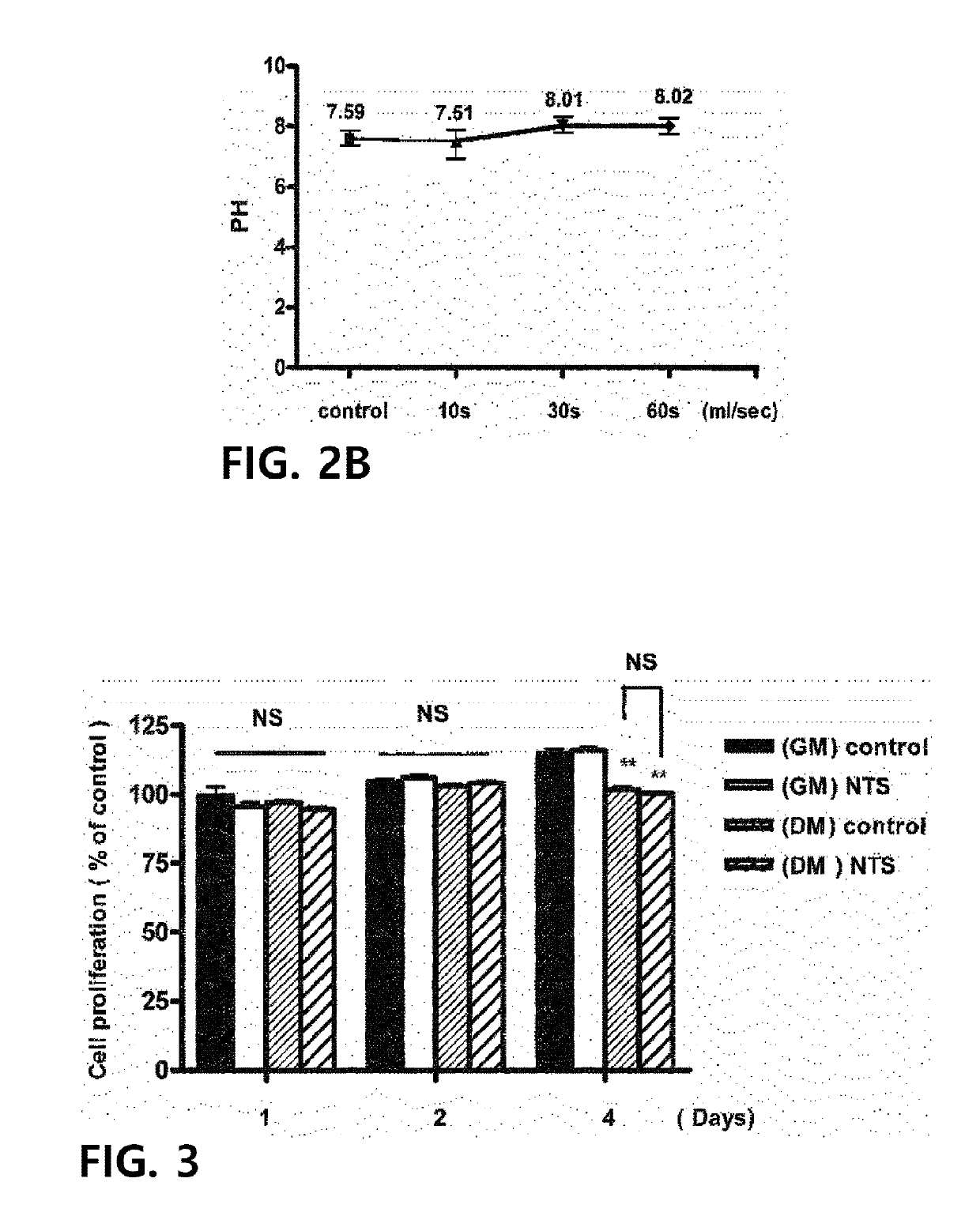
[0044]A non-thermal plasma treated solution (NTP) was prepared, using a plasma device including a pair of high-voltage and ground electrodes (Al2O3, 10×40 mm2, a gap of 2 mm between the electrodes) separated from plasma by a ceramic barrier, i.e., not in direct contact with plasma, by treating a culture dish (100 mm, TPP, Renner, Dannstadt, Germany) in which 10 ml of cell media was dispensed, with plasma for 1 minute per 1 ml at a distance of 4 cm from a surface of the bottom of the culture dish, by supplying, as a carrier gas, a mixture of helium and oxygen in a ratio of 20:80 at a flow rate of 10 L / min. At this time, power supply specifications of the plasma device may be a voltage of a minimum of 2 kV and a maximum of 13 kV and an average frequency of 20 kHz to 30 kHz, and a voltage of 4 kV is most preferably used. The preparation of the non-thermal plasma treated solution is illustrated in FIG. 1, and changes in temperature and acidity...
[0045]It was examined whether the NTP exhibits cytotoxicity against adipocytes. 3T3-L1 pre-adipocytes were obtained from a U.S. cell line bank (ATCC, Manassas, Va., USA), and cultured using a method of thawing the cells with a DMEM (GIBCO, Carlsbad, Calif., USA) growth medium (GM) supplemented with 10% serum and antibiotics under 5% CO2 and humidified conditions, and replacing, on day 2 after thawing, the medium with a differentiation medium (DM) containing 0.5 mM 3-isobutyl-1-methylxanthine (IBMX, Sigma Aldrich, St. Louis, Mo., USA), 1 mM dexamethasone, 10% FBS, and 10 mg / ml of insulin, and then replacing the medium every three days.
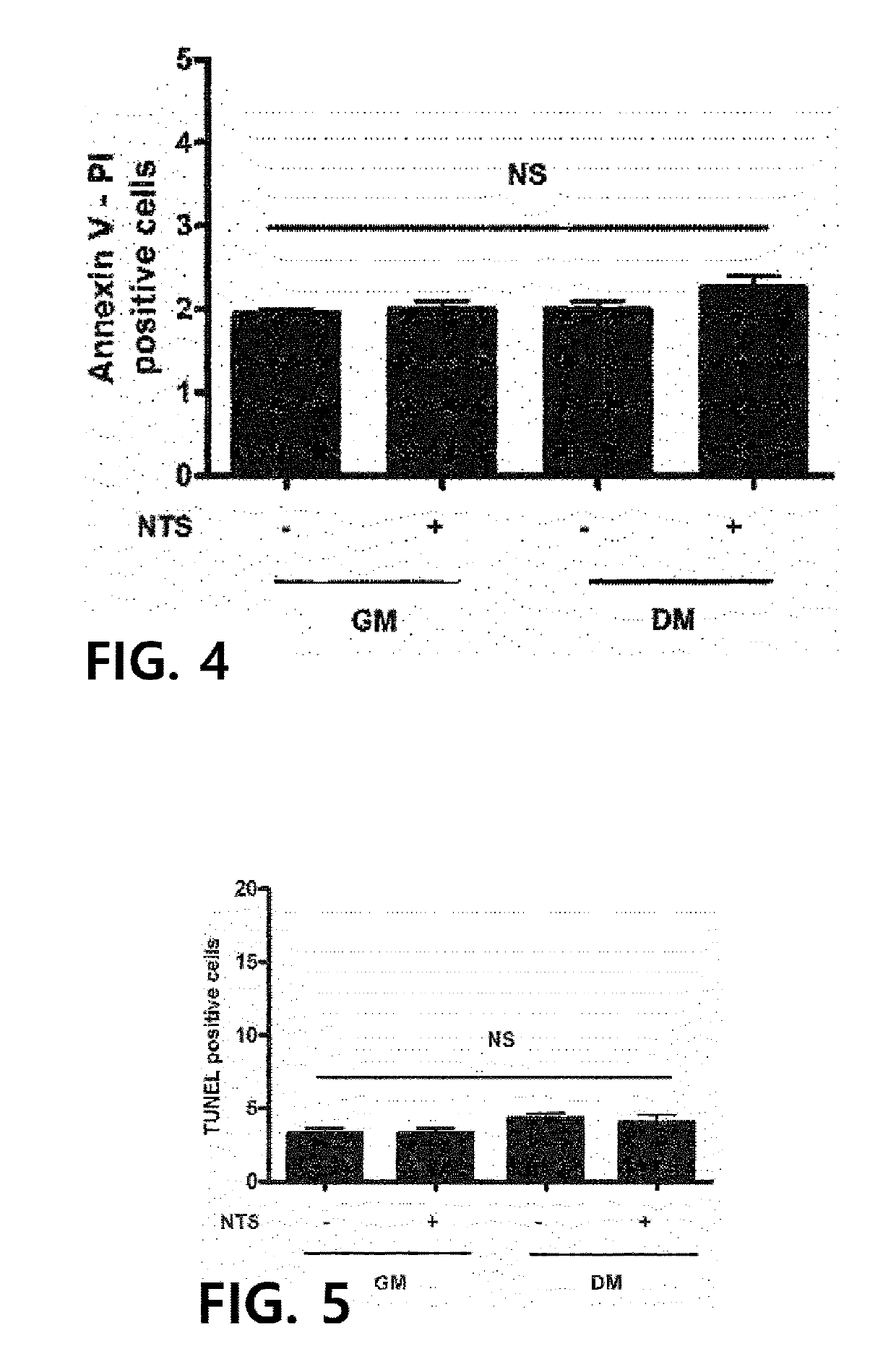
[0046]Apoptotic cell death analysis was performed using 3-(4,5-dimethylthiazol-2-yl)-2,5-diphenyltetrazolium bromide (MTT, Sigma-Aldrich, St Louis, Mo., USA). Briefly, 3T3-L1 pre-adipocytes were inoculated into a 96-well cell culture plate, and after differentiation was induced, the cells were treated with th...
the structure of the environmentally friendly knitted fabric provided by the present invention; figure 2 Flow chart of the yarn wrapping machine for environmentally friendly knitted fabrics and storage devices; image 3 Is the parameter map of the yarn covering machine
Login to View More
PUM
Login to View More
Abstract
Provided is a composition for obesity treatment comprising a liquid-phase plasma. More particularly, provided is a method for producing a liquid-phase plasma for inhibiting adipocyte differentiation or proliferation, a pharmaceutical composition for obesity prevention or treatment using a liquid-phase plasma produced according to the method, and a method for obesity prevention or treatment using the liquid-phase plasma.
Description
TECHNICAL FIELD[0001]The present invention relates to a composition for treating obesity, which includes liquid type plasma. More particularly, the present invention relates to a method of producing liquid type plasma for inhibiting the differentiation or proliferation of adipocytes, a pharmaceutical composition for preventing or treating obesity using liquid type plasma produced using the method, and a method of preventing or treating obesity using the liquid type plasma.BACKGROUND ART[0002]As mankind has developed into a rich society, obesity has become one of the most serious diseases, and thus the World Health Organization (WHO) has declared that obesity is a target of diseases to be treated. Obesity is a metabolic disorder caused by an imbalance between intake and consumption of calories, and is caused by hypertrophy or hyperplasia of adipocytes in the body morphologically. Obesity is not only the most common malnutrition disorder in western society, but also in Korea, the impo...
Claims
the structure of the environmentally friendly knitted fabric provided by the present invention; figure 2 Flow chart of the yarn wrapping machine for environmentally friendly knitted fabrics and storage devices; image 3 Is the parameter map of the yarn covering machine
Login to View More
Application Information
Patent Timeline
Application Date:The date an application was filed.
Publication Date:The date a patent or application was officially published.
First Publication Date:The earliest publication date of a patent with the same application number.
Issue Date:Publication date of the patent grant document.
PCT Entry Date:The Entry date of PCT National Phase.
Estimated Expiry Date:The statutory expiry date of a patent right according to the Patent Law, and it is the longest term of protection that the patent right can achieve without the termination of the patent right due to other reasons(Term extension factor has been taken into account ).
Invalid Date:Actual expiry date is based on effective date or publication date of legal transaction data of invalid patent.



 Login to View More
  Login to View More