
Catalyst, method for producing same, electrode comprising same, membrane-electrode assembly comprising same, and fuel cell comprising same
- Summary
- Abstract
- Description
- Claims
- Application Information
AI Technical Summary
Benefits of technology
Problems solved by technology
Method used
Image

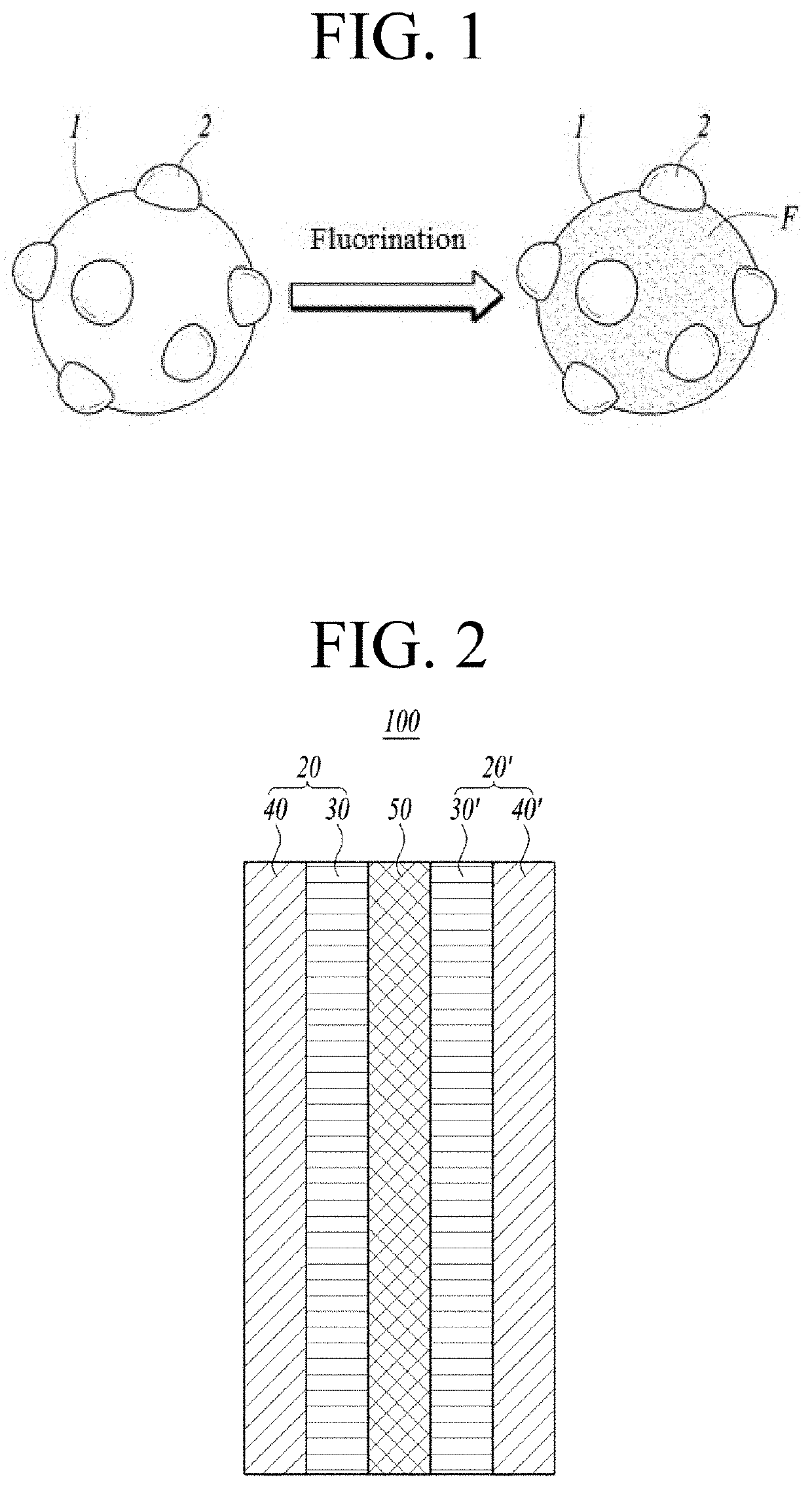
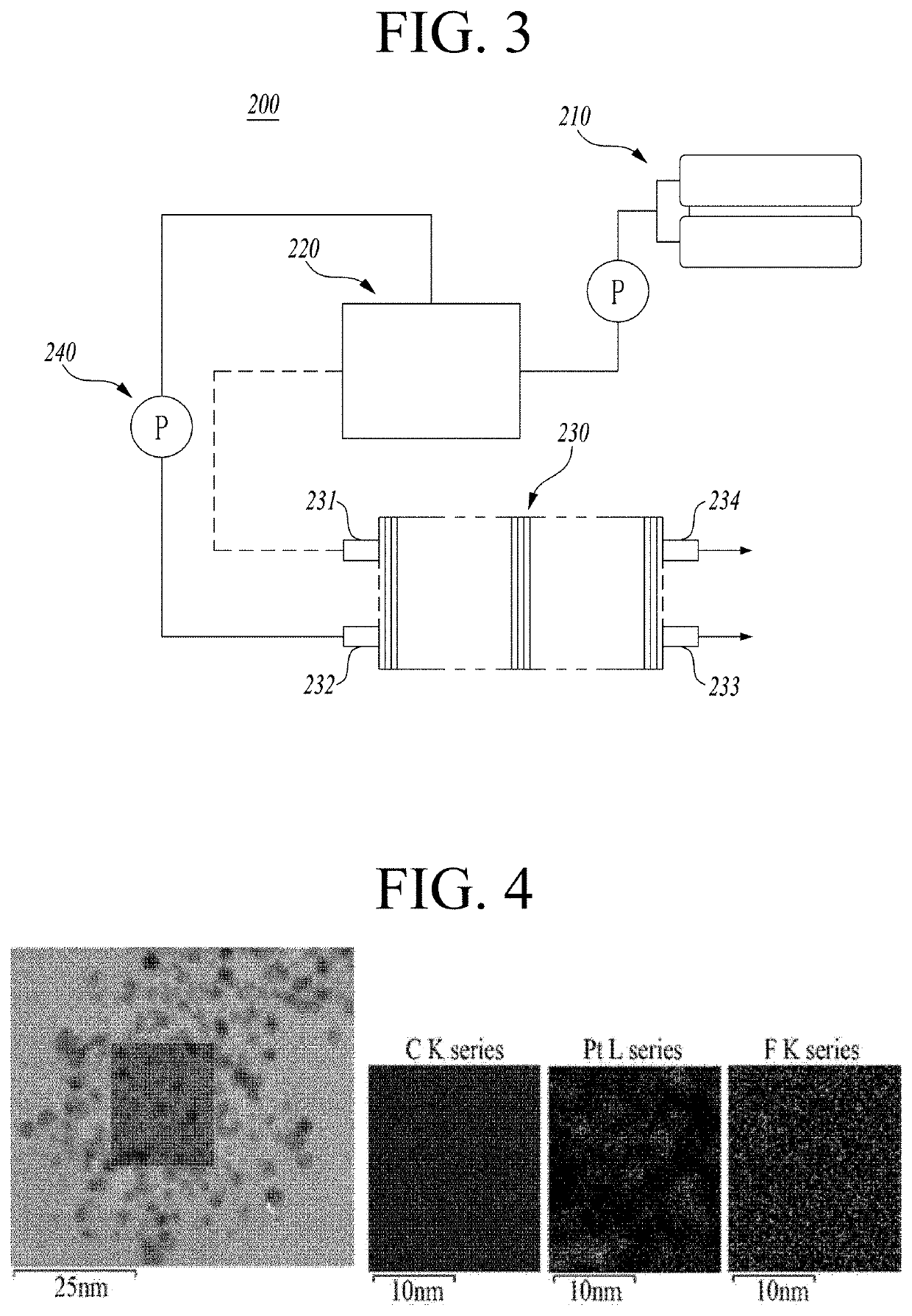
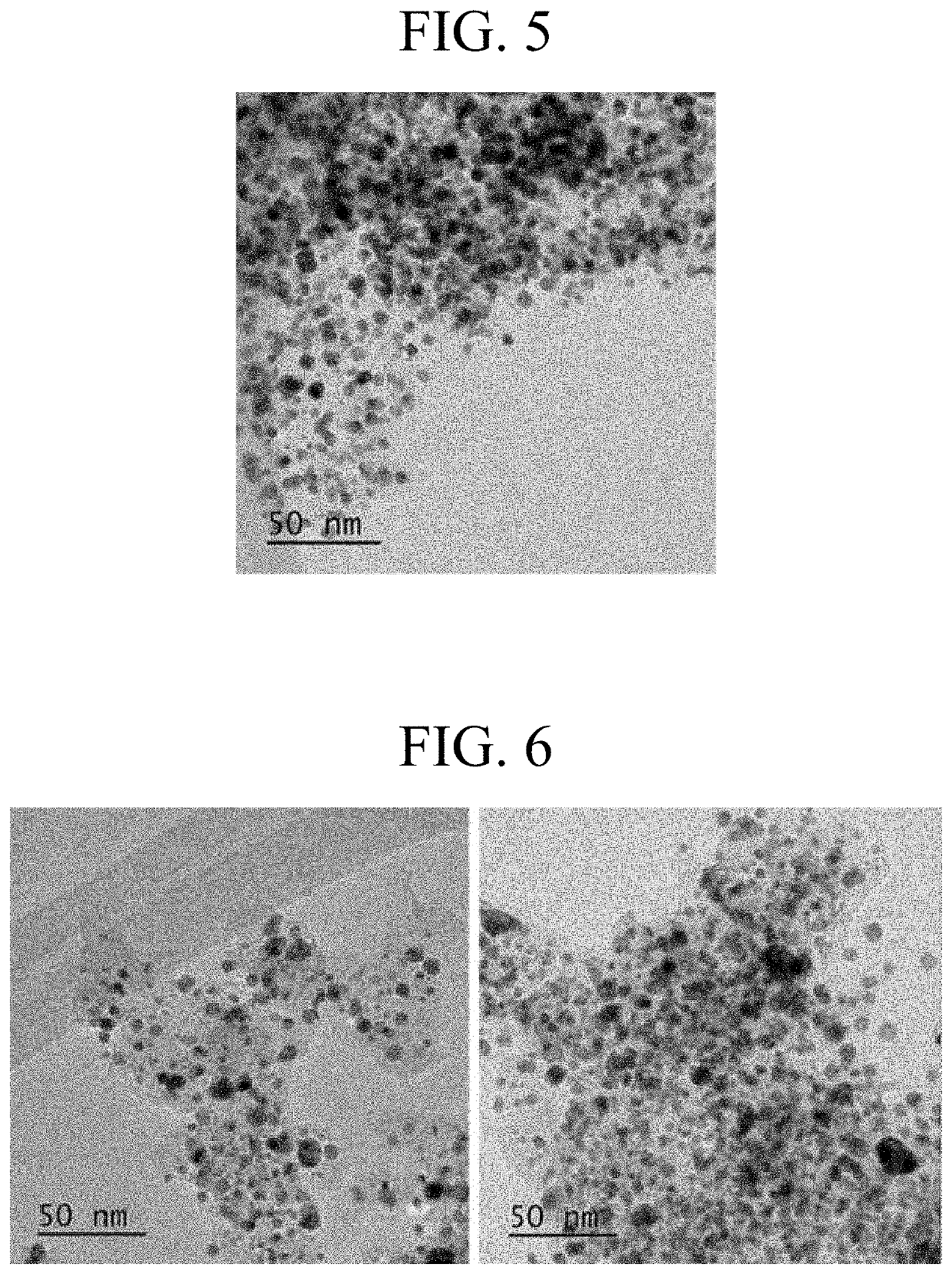
Examples
preparation example
1. Preparation of Catalyst
(1) Example 1: Preparation of Catalyst Using Inorganic Fluorine Compound Precursor
[0118]1.0 g of a commercially available Pt / C catalyst and 0.1 g of NH4F inorganic fluorine compound precursor were added to a reaction vessel. Subsequently, the commercial catalyst and precursor were homogeneously mixed with each other using a homogenizer. The mixture thus obtained was heat-treated at a temperature of 200° C. for 3 hours in a nitrogen atmosphere to prepare a catalyst having fluorine groups formed on the surface thereof.
example 2
(2) Preparation of Catalyst Using Inorganic Fluorine Compound Precursor
[0119]1.0 g of a commercially available PtCo / C catalyst and 0.1 g of NH4F inorganic fluorine compound precursor were added to a reaction vessel. Subsequently, the commercial catalyst and precursor were homogeneously mixed with each other using a homogenizer. The mixture thus obtained was heat-treated at a temperature of 200° C. for 3 hours in a nitrogen atmosphere to prepare a catalyst having fluorine groups formed on the surface thereof.
example 3
(3) Preparation of Catalyst Using Inorganic Fluorine Compound Precursor
[0120]1.0 g of a commercially available Pt / GC (GC: graphitic carbon) catalyst the support of which has high durability and 0.1 g of NH4F inorganic fluorine compound precursor were added to a reaction vessel. Subsequently, the commercial catalyst and precursor were homogeneously mixed with each other using a homogenizer. The mixture thus obtained was heat-treated at a temperature of 200° C. for 3 hours in a nitrogen atmosphere to prepare a catalyst having fluorine groups formed on the surface thereof.
(4) Example 4: Preparation of Catalyst Using Organic Fluorine Compound Monomer Precursor
[0121]1.0 g of a commercially available Pt / C catalyst, 0.1 g of benzyl fluoride (organic fluorine compound monomer precursor) and 0.05 g of formaldehyde (crosslinking agent) were added to a reaction vessel. Subsequently, the commercial catalyst, precursor and crosslinking agent were homogeneously mixed with each other using a homo...
PUM
| Property | Measurement | Unit |
|---|---|---|
| Temperature | aaaaa | aaaaa |
| Time | aaaaa | aaaaa |
| Pressure | aaaaa | aaaaa |
Abstract
Description
Claims
Application Information
 Login to View More