However, this repair does not obviate the risk of water leaking through.
Although the conventional wood flooring has many desirable features, it also suffers from certain disadvantages.
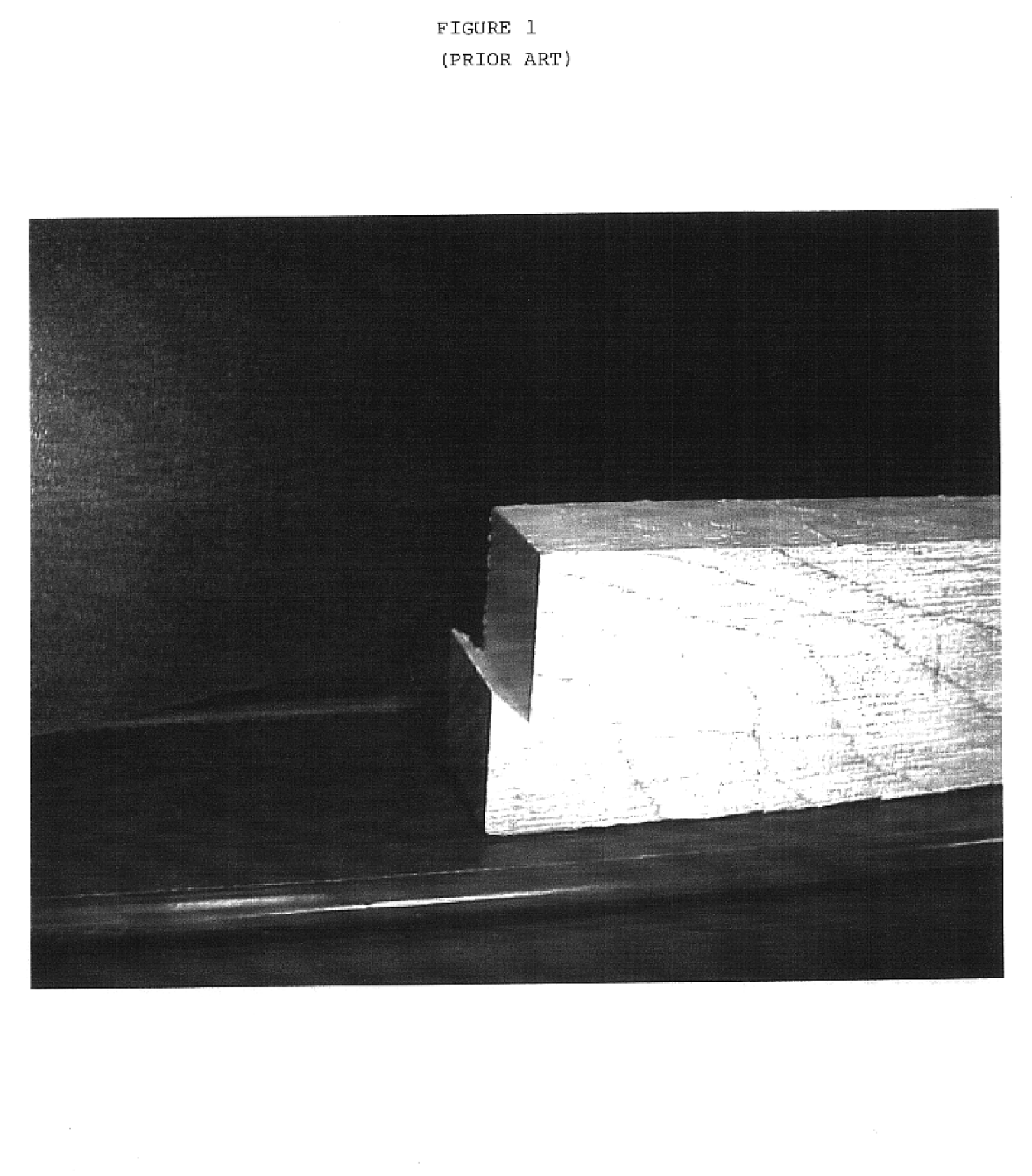
One of the problems is the hook joint at the end of each stick.
The design of the hook joint is not optimal for a trailer floor for two principal reasons.
Firstly, water from the road is known to leak into trailers through the hook joints.
The reasons the water can leak into the joint are that during the production of the floor, there is not enough longitudinal pressure to ensure that all the hook joints are tightly closed.
This lack of pressure sometimes creates small gaps which can extend through the floor, allowing water to leak into the trailer.
Furthermore, during the assembling of the strips of wood, the assembler may not assemble the sticks properly, breaking the hook or leaving a gap between two strips through which water can penetrate.
Finally, the design of the hook joint is not optimal to properly prevent water from entering by capillarity into the joint.
Although the undercoating is supposed to provide a barrier to the path of water, it may not properly cover larger gaps, thus exposing them to
moisture.
Wetting and
drying cycles can degrade the undercoating leading to its
cracking and peeling away from the wood.
Over time, the action of the shrinkage and the swelling at the end of the strip will create the start of a failure in the line of glue along the
glue line between strips.
Over the time, the floor will lose is
initial strength and stiffness, gradually reducing its integrity.
Secondly, each hook joint in a trailer floor is mechanically a
weak spot due to the shape of the hook.
This reduces the capacity of the floor to react properly to the dynamic action of a moving lift truck placing heavy cargo into the trailer.
The dynamic action of a moving lift truck placing heavy cargo on the trailer floor creates severe
stress concentration in the flooring and some of the cross-members.
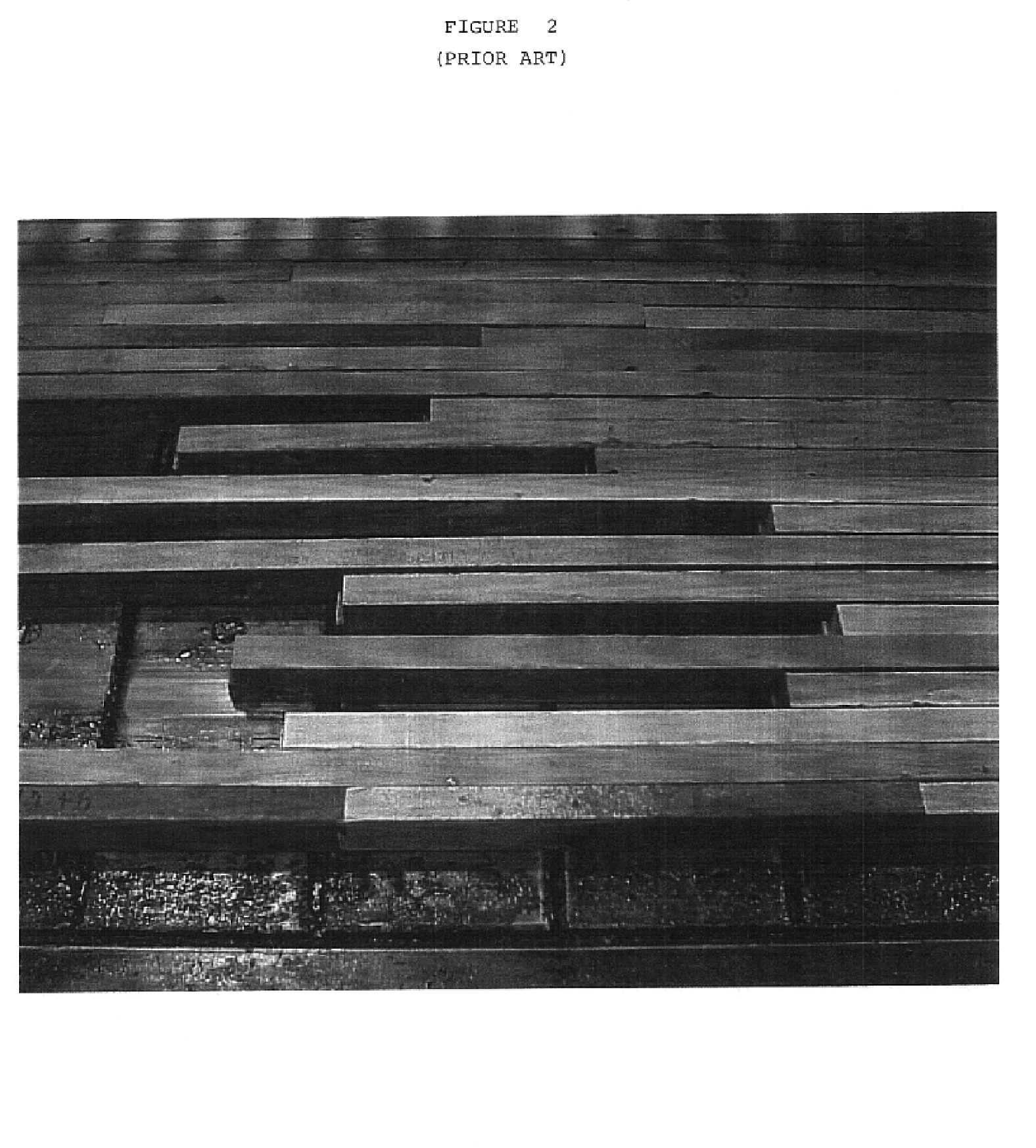
Bending of the floor between two adjacent cross-members due to any applied load on the top of the floor has a tendency to open the hook joints and enlarge the gaps.
The effect of repeated lift truck operation on the conventional wood floor causes considerable
fatigue damage including:
delamination of the edge glued lumber strips near the hook joints leading to the “pop-out” of the lumber strips on the underside;
crack initiation and propagation in the wood strips on the underside of the floor due to tensile stresses; and
cracking of edge glue lines due to shearing, transverse bending and twisting of the floor.
The combination of
moisture attack and
fatigue damage to the wood floor affects its performance thus necessitating its repair or replacement.
In some cases, catastrophic
structural failure of the trailer floor
system may occur leading to the unacceptable injury to working personnel and damage to machinery.



 Login to View More
  Login to View More