
Charged particle beam detection system
- Summary
- Abstract
- Description
- Claims
- Application Information
AI Technical Summary
Benefits of technology
Problems solved by technology
Method used
Image

Examples
Embodiment Construction
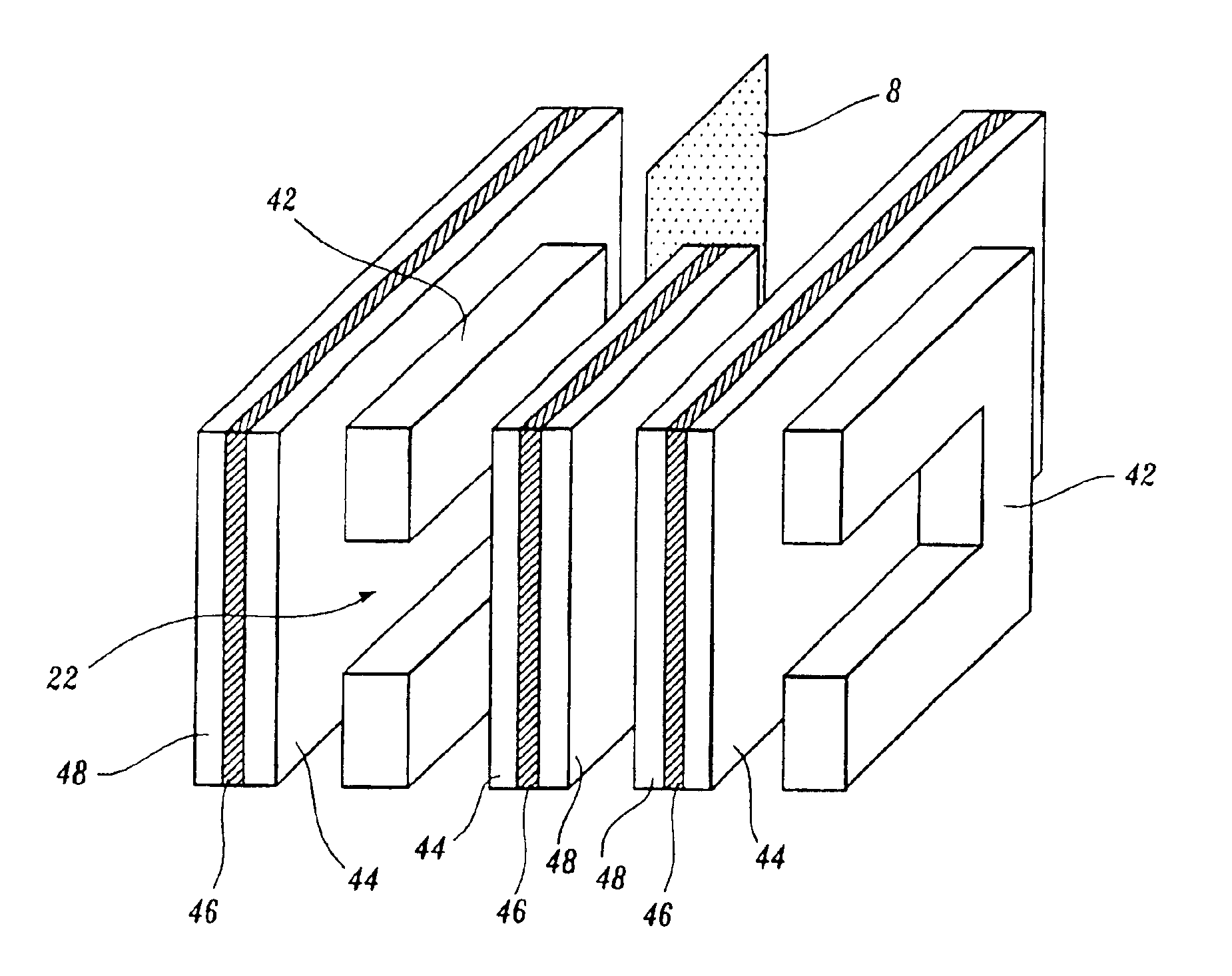
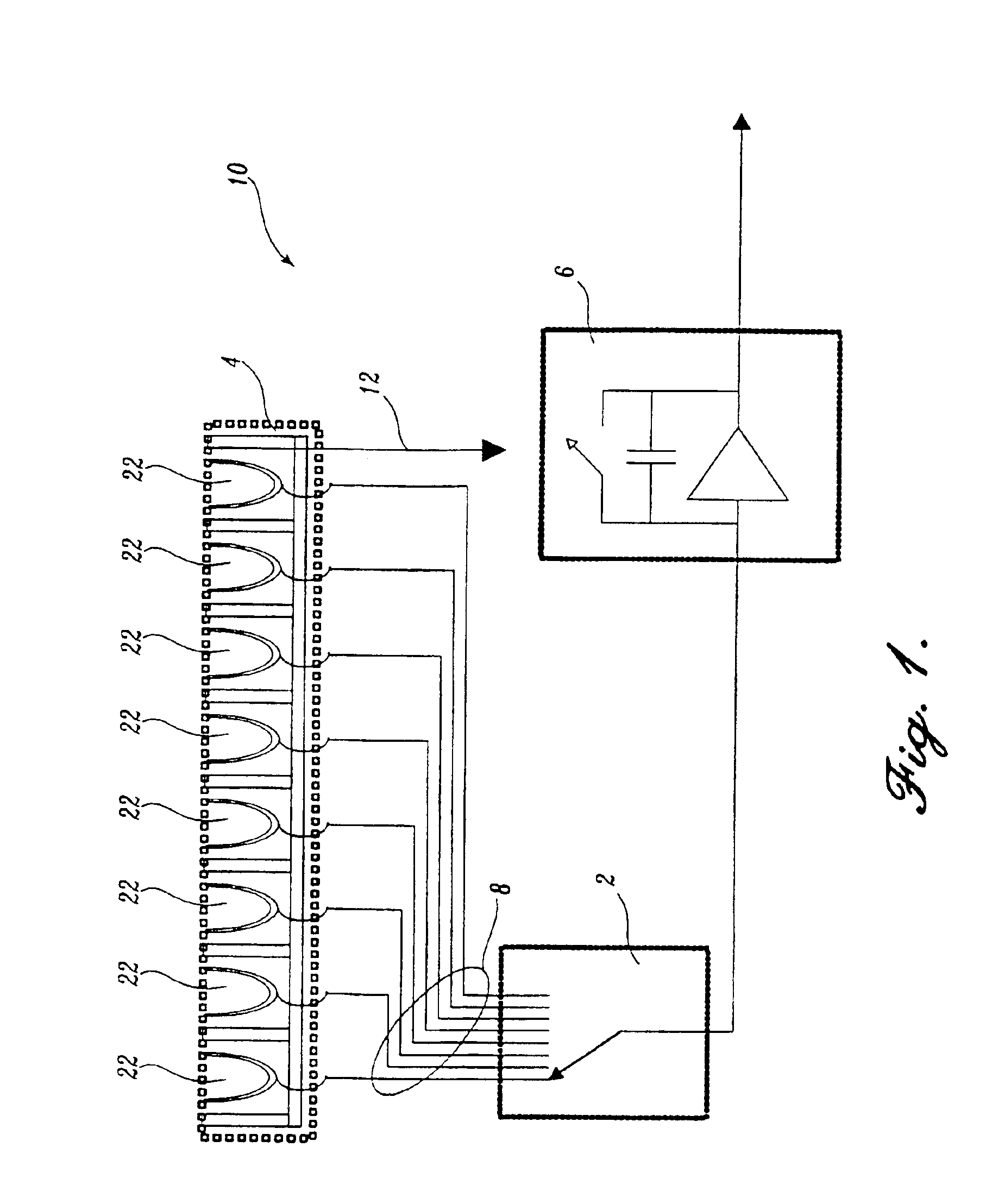
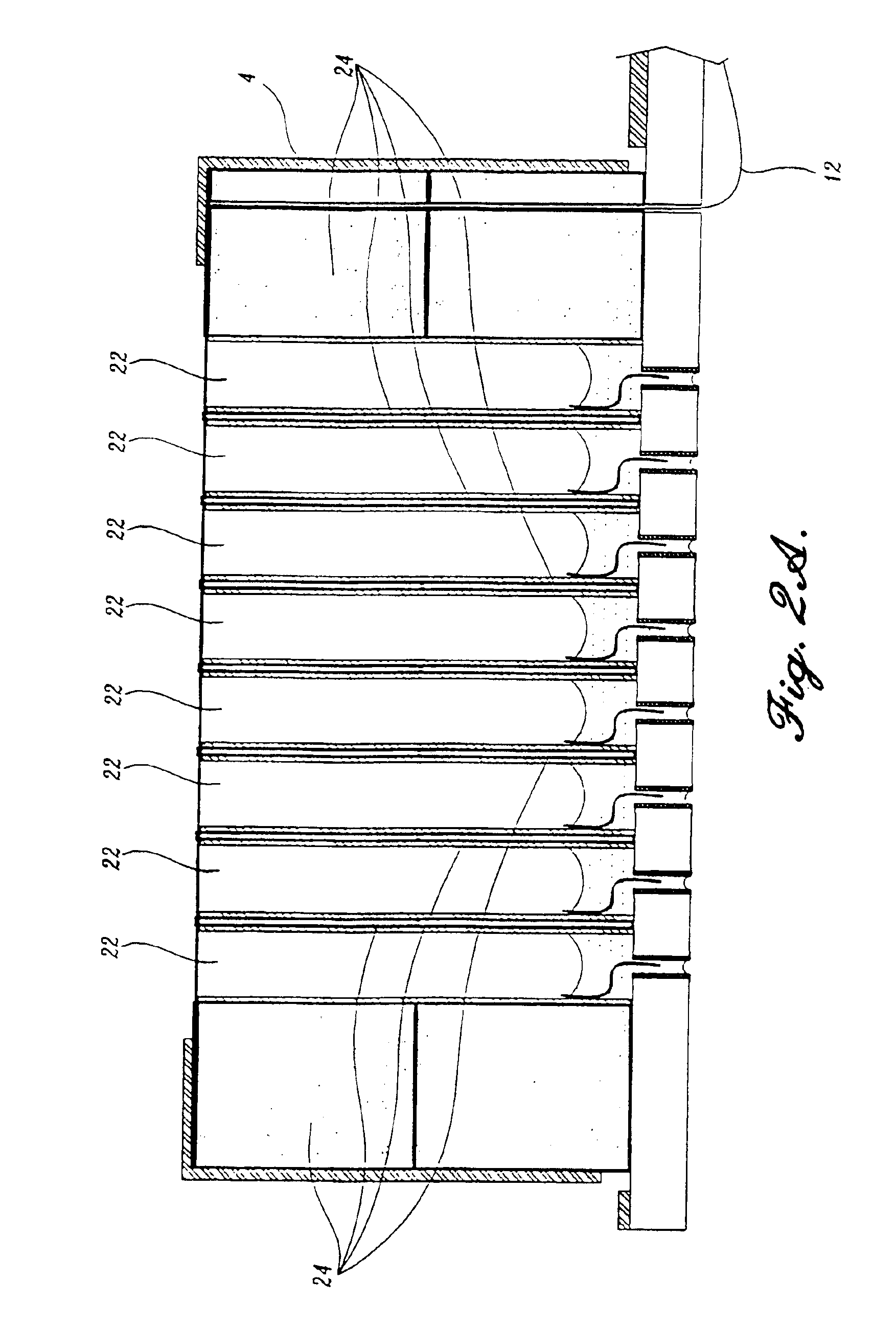
The present invention provides a Faraday cup detector array FCDA) for charged particle beam detection. The detector being an array of Faraday cups means that the detector is position sensitive. By combining the FCDA with a properly synchronized electronic multiplexing unit (MUX, the resulting instrument has the unique capability to simultaneously monitor the entire array of Faraday cups with a duty cycle approaching 100%. The high duty cycle is achieved by collecting the ions with a large number of small, electronically decoupled Faraday cups. Because Faraday cups collect incident ions independent of their charge state, each cup is both a charged particle collector and a charge integrator. The ability of a Faraday cup to integrate the charge, in combination with the electronic multiplexing unit, which quickly reads out (and empties) the cups compared to the charge integration time of the array, provides the almost perfect duty cycle for such position-sensitive charged particle detec...
PUM
 Login to View More
 Abstract
Description
Claims
Application Information
 Login to View More