[0039]The preferred unit contains a 6
cubic inch accumulator. There are 6-8 pulses per second typically produced with the 6
cubic inch accumulator. If a larger accumulator is used, such as the 20
cubic inch accumulator, the number of pulses per second is reduced, and more energy and liquid under pressure is stored between shots. The net result, is that each burst of liquid will inject more fluid and inject it more deeply into the soil than is desirable for planting grass seeds.
[0042]The use of a fan
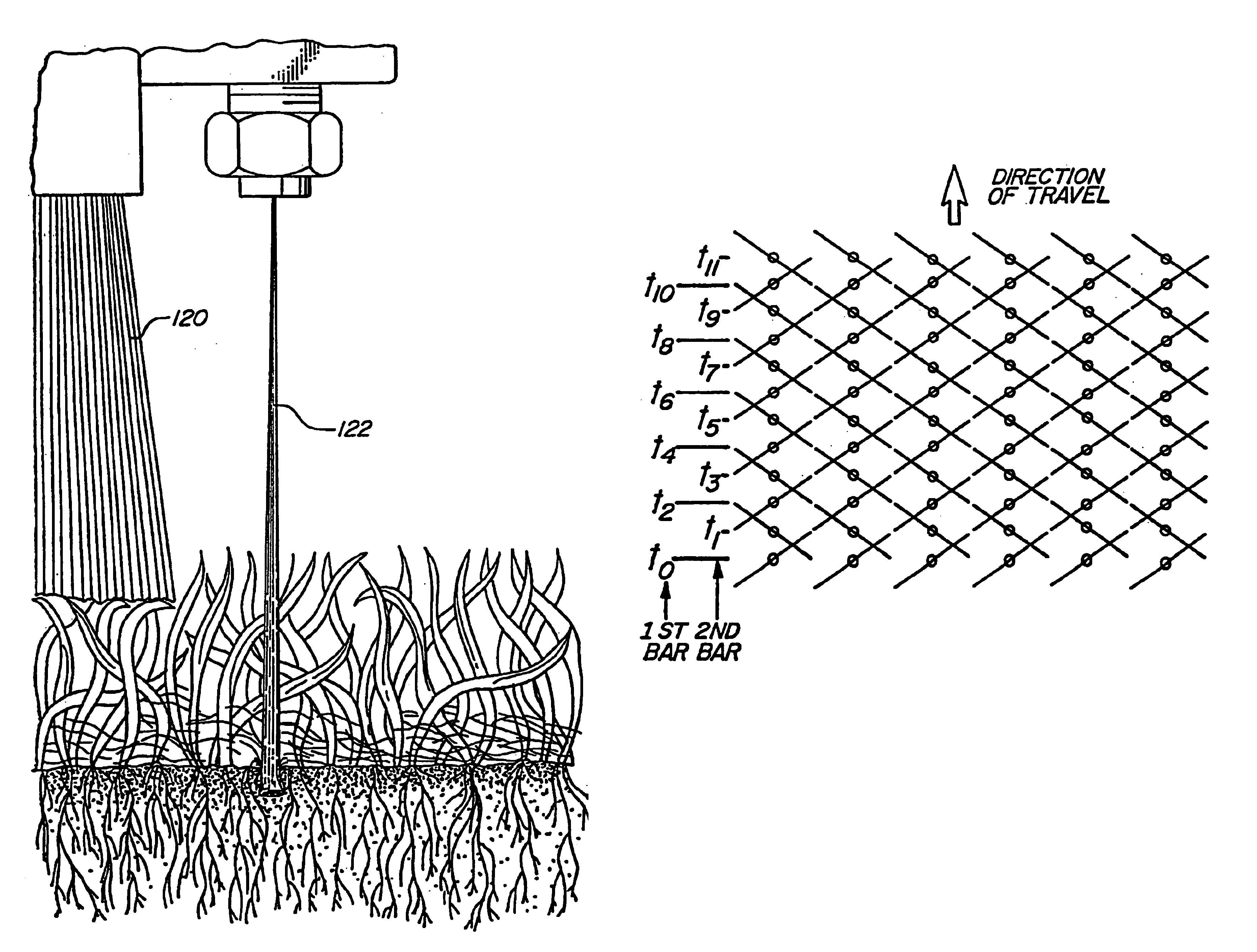
spray nozzle allows for a small shallow elongated opening about 4 inches long and ⅛ inch to ¼ inch wide to be created. As will be further explained, the LSI system and method of present invention use the high-pressure bursts or jets of liquid and seed mixtures to
cut through existing
vegetation and dig this shallow “seed-
starter” trench. The
maximum depth to which the creeping bent grass, a typical grass seed used on golf courses, should be planted is about ¼ inch. The planting of seeds at depths of greater than ¼ inch significantly reduces the
seedling's ability to emerge from the
soil surface. Accordingly, the various parameters of the LSI system of the present invention are set or adjusted until the depth of injection into the soil reaches the desired depth. The fan
spray nozzle preferably used is a Spraying Systems
nozzle tip part No. 1 / 4 MEG-65054. It is during the formation of this seed-
starter trench that the seeds are also injected at
high pressure, thus becoming lodged in the crown area of the established turf or top layer of the soil. This high-pressure spray has the beneficial effect of
cutting and / or partially clearing away the existing grass blades and root structures, which otherwise might compete against the new grass seedlings. This partial
cutting provides a short-lived stunting action to the existing turf stand, which helps inhibit the growth of immediately adjacent existing plants, thus allowing the newly germinating seeds to compete more effectively for light, nutrients and air.
[0043]The disruptive effect of producing these shallow trenches in the existing turf fortunately does not seriously disrupt the turf's interwoven turf
substructure, so that players and vehicles can still pass over the soil without significant displacement of the turf in one direction or another. The seed is effectively placed in excellent soil / thatch contact where it is provided with
moisture and physical soil contact. It is also protected from physical damage by adjacent turf
substructure still present on either side of the trench. The adjacent
canopy holds
moisture and physically protects the newly created seed
bed from
drying winds and
desiccant, thus requiring less frequent
irrigation during the
germination process. One of the benefits of the seed-planting methods of the present invention is this very shallow
depth of cut, which is made only as deep as it needs to be to achieve the desired beneficial results to stimulate rapid
germination. The providing of a trench into which water will flow and into which water, nutrients and soil can collect and into which light can enter creates an ideal environment to stimulate and support germinating seed. Heretofore, there was no known way, except the use of mechanical
cutting tools like verti-cuts or elongated mechanical tines to achieve selective trenching for overseeding. In addition, there was no practical way of accurately controlling the depth of the trenches or slits produced by those conventional methods. In the present invention, this depth-control occurs automatically through the selection of the proper height of the nozzle above the soil and the spray pattern in combination with the pressure and volume, so as to
cut the grass and / upper soil regions to-the proper depth.
[0046]One beneficial effect of the seeds passing through the
high pressure pump, manifold, hydraulic lines, fittings,
sprayer bar header and nozzles and through the top soil, is that the seed is typically mechanically scarified, meaning that its seed coat is nicked up, or partially cracked or fractured. This agronomically acceptable amount of
scarification makes it easier for the seed
embryo to imbibe water and nutrients and to germinate through the seed coat, which is an essential factor in the successful part of the
embryo growth cycle.
[0047]Although the testing to date has been with interseeding over an existing
population of established grass having a grass
canopy and root structure, the methods and machinery of the present invention can be beneficially used for original seeding as well. Both the fan spray nozzles and the cone nozzles may be used for this purpose. The cone nozzles may work better to the extent that they provide for a more uniform
spatial distribution of the grass seeds over an area.
[0048]The machinery is particularly well suited for the original seeding process because it comes with an onboard
mixing tank. In this way, the seed,
fertilizer and any other desired water-soluble constituent such as water-absorbing polymers, can all be placed into the water and kept under agitation to help ensure substantially uniform distribution with the tank.


 Login to View More
  Login to View More