[0012]
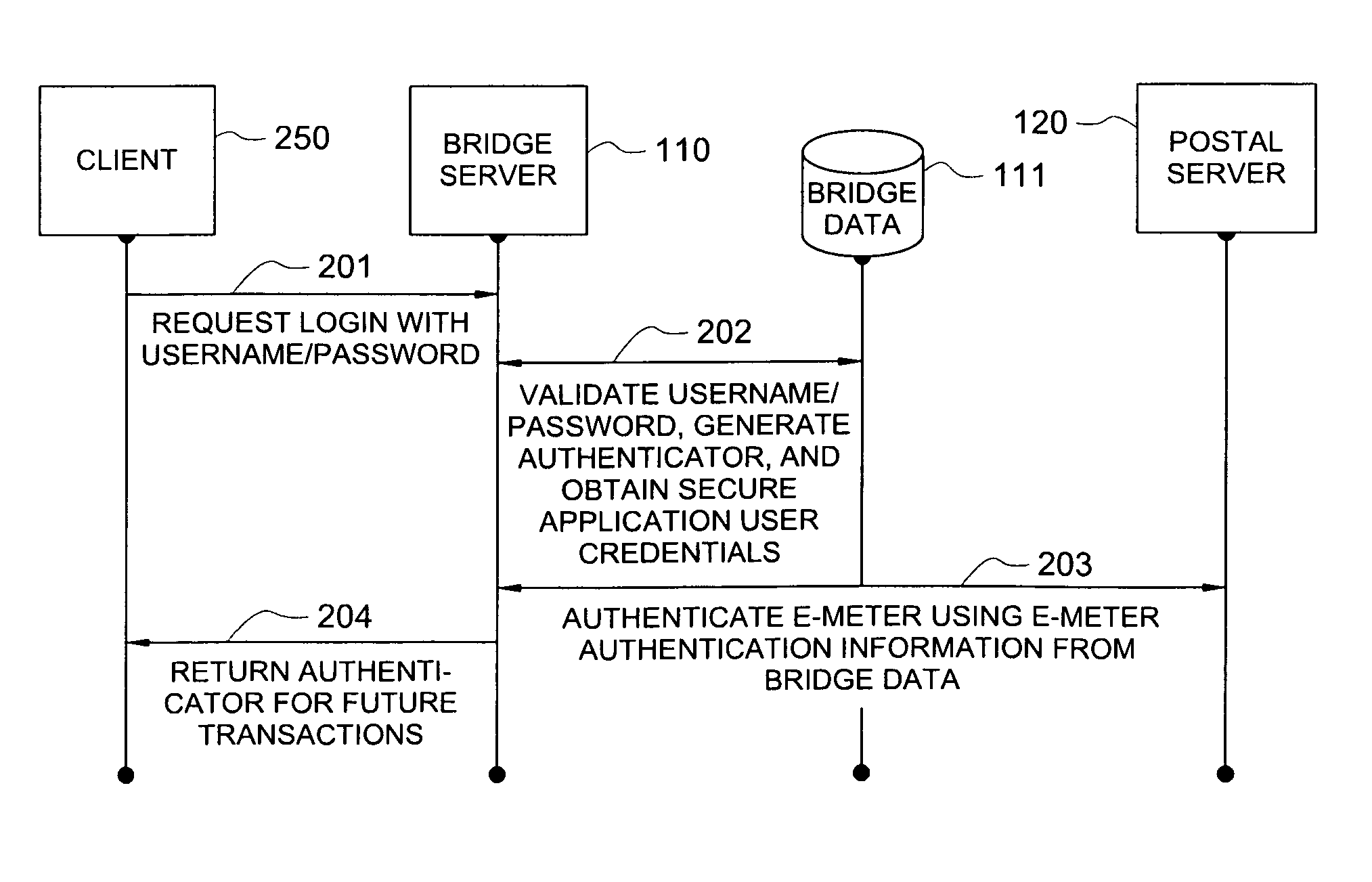
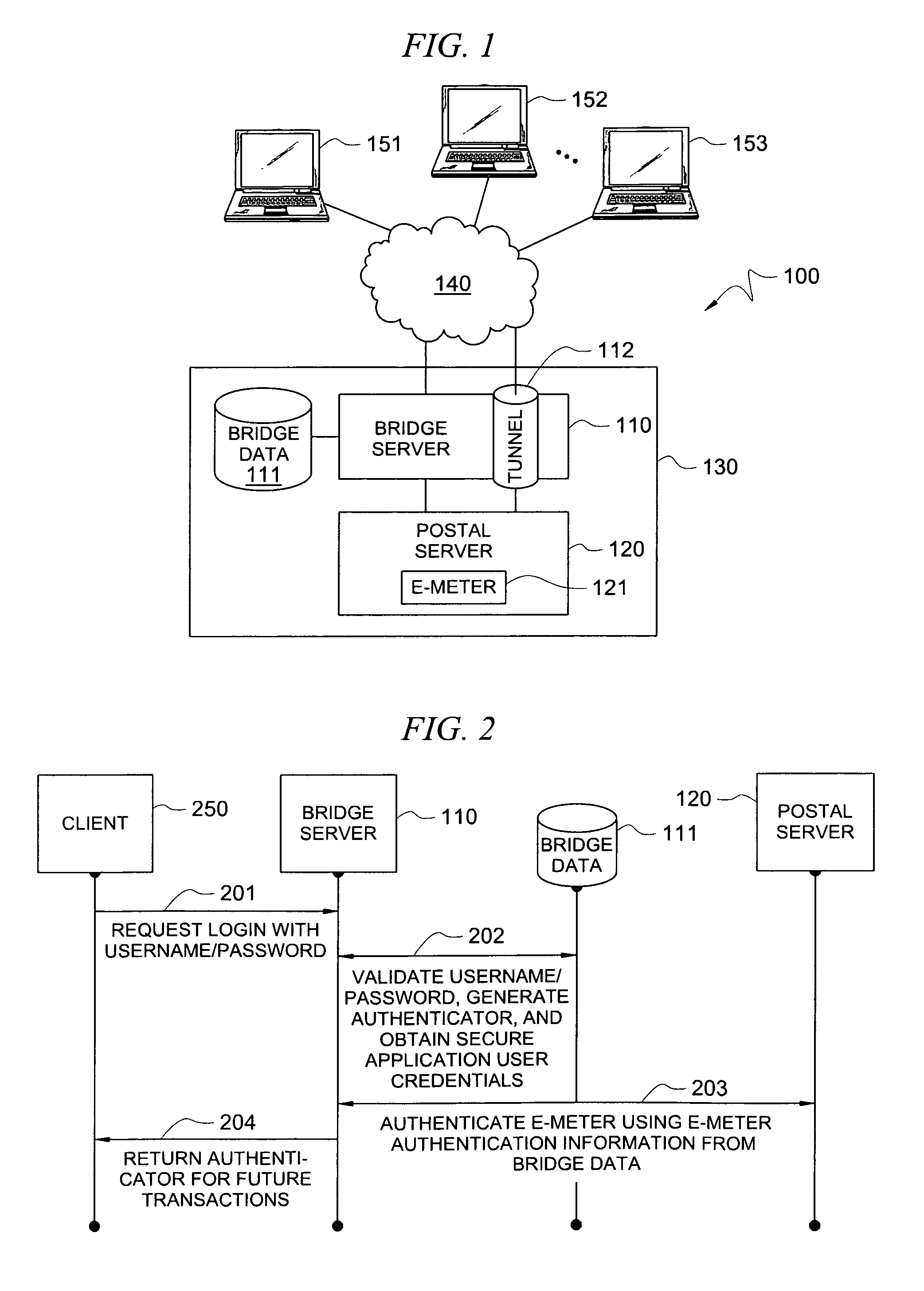
User authentication by a bridge server of embodiments of the invention preferably utilizes substantially standard (i.e., widely accepted) credentials, such as user name and
password. Accordingly, a
thin client, simple browser interface, or other easily implemented
client configurations may be supported by embodiments of the invention. Moreover, integration with
third party applications and / or systems may be relatively easily accommodated. Additional credentials as may be needed by the secure application are preferably stored in a
database of the bridge server, and may be referenced by the credentials provided to the bridge server (e.g., by user name). Once the bridge server has validated the user (e.g., validated the
password as properly associated with the user name), the bridge server can access the secure application credentials and implement a bridge between the client and secure application.
[0013]Embodiments of the present invention abstract the security model of the secure application, facilitating the use of much less expensive ways for changing the security model without the need to rewrite, and perhaps recertify, the back
end system. A bridge server of embodiments provides an
interpreter for a new, simpler easier to use protocol (e.g., simpler and easier to use in the sense that it is less cumbersome for clients to interact with the bridge server using its protocols than to interface with the security application using its protocols). For example, embodiments of the invention support standard web clients or other standardized security protocol clients (hereinafter collectively standardized clients), and thus do not require special code running on the
client machine in order to successfully and fully interact with a secure application. Accordingly, issues of complexity with respect to
interfacing with particular secure applications are reduced without the need to rewrite the backend
system. Moreover,
third party systems and applications may readily interface with a bridge server using
industry standard protocols rather than proprietary protocols implemented by a corresponding secure application.
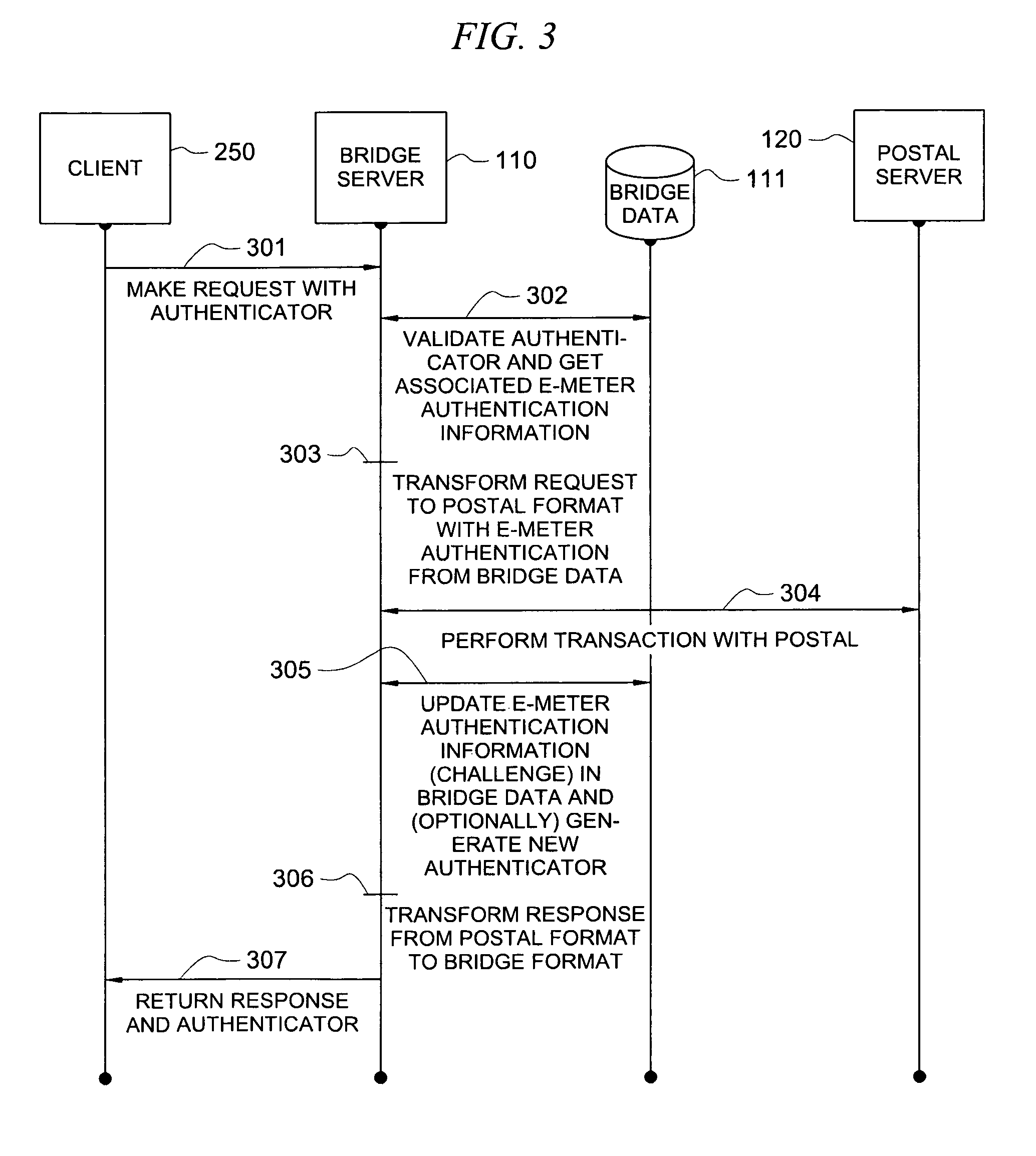
[0014]Bridge servers of embodiments of the invention provide a high level of security with respect to a user's access to a secure application and thus, although utilizing different security protocols, provide a desired and appropriate level of security. Communications between a client and a bridge server of embodiments are encrypted (e.g., using secure socket layer (SSL) communications) to prevent
eavesdropping or snooping by systems or individuals other than an intended recipient. Moreover, a session is preferably maintained between the client and the bridge server as a client conversation which is constantly updated as transmissions are made by the bridge server to the client. This updated client conversation information prevents a
replay attack (e.g., where the user or an eavesdropper attempts to replay a transaction).
[0016]In addition to or in the alternative to providing the aforementioned security abstracting, bridge servers of embodiments of the invention facilitate providing features with respect to secure application user access unavailable using the secure
application security protocols. For example, the mapping of the bridge server user credentials to secure application user credentials may be one to many, thereby facilitating multi-user access with unique multi-user identification. Specifically, embodiments of the invention provide multiple users in association with one secure application account.
[0021]The bridge server security protocol of embodiments of the invention relies solely on user credentials which travel with the user (e.g., user name and
password), and thus is not tied to a particular user terminal. Accordingly, a user may move from terminal to terminal when accessing a secure application without having to go through a re-registration process, even where the secure application security protocol utilizes credentials unique to the particular terminal accessing the secure application, because the bridge server effectively acts as the client with respect to the secure application. Although allowing a user to move from terminal to terminal as desired, embodiments of the invention prevent the same user from
logging into a bridge server and interacting with a secure application simultaneously from multiple terminals (or in multiple sessions on one terminal). For example, the aforementioned authenticator string will only be valid for a last to log on client, thereby preventing multiple simultaneous sessions using the same user credentials.



 Login to View More
  Login to View More