Red light transmitting zirconia sintered body, method for producing the same, member comprising the sintered body, and jewelry goods and exterior component using the member
a technology of red light and zirconia, which is applied in the field of red light transmitting zirconia sintered body, method for producing the same, and member comprising the sintered body, and using the member. it can solve the problems of high translucency of zirconia sintered body and lack of clear red color. the effect of zirconia's refractive index
- Summary
- Abstract
- Description
- Claims
- Application Information
AI Technical Summary
Benefits of technology
Problems solved by technology
Method used
Image

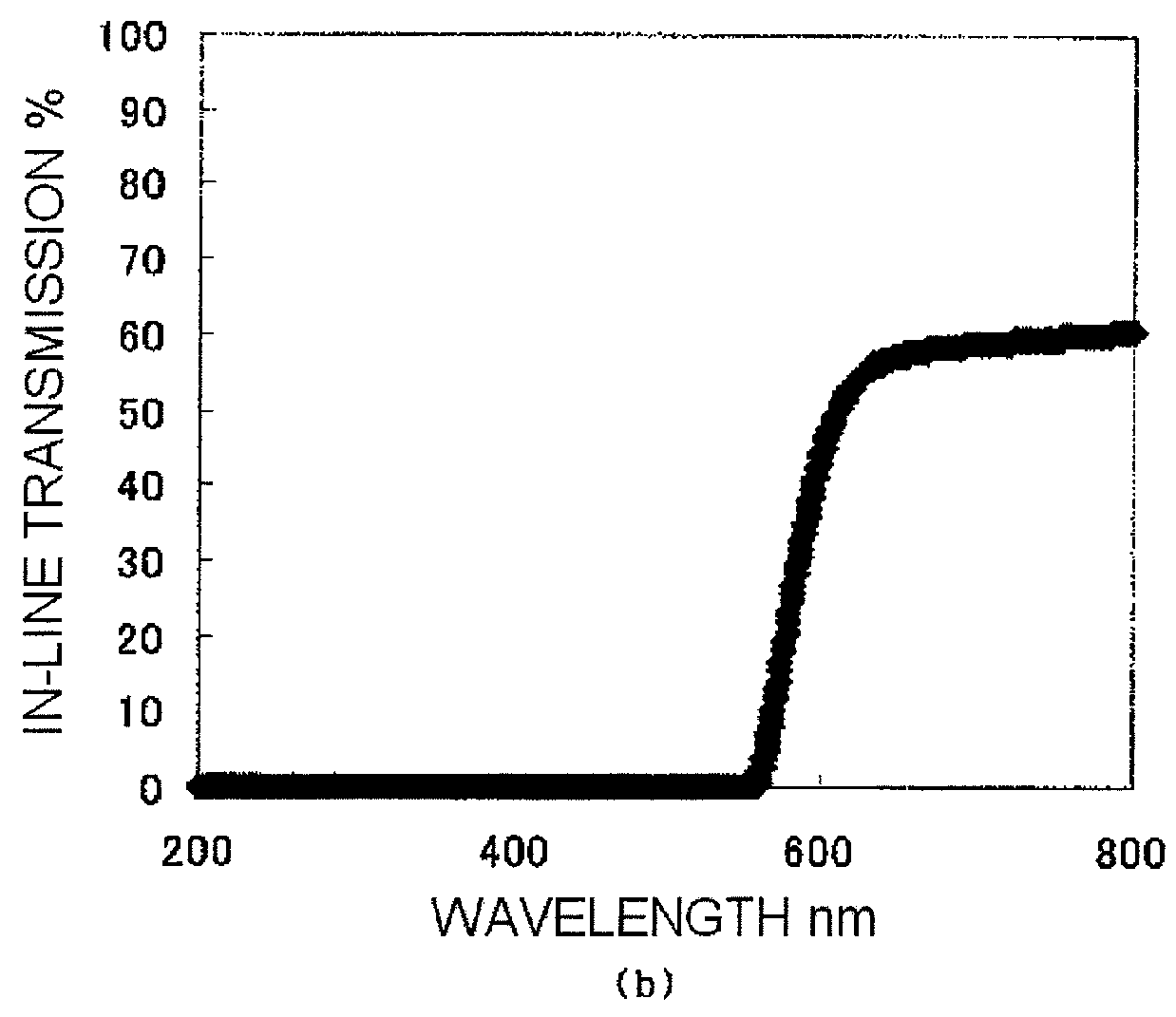
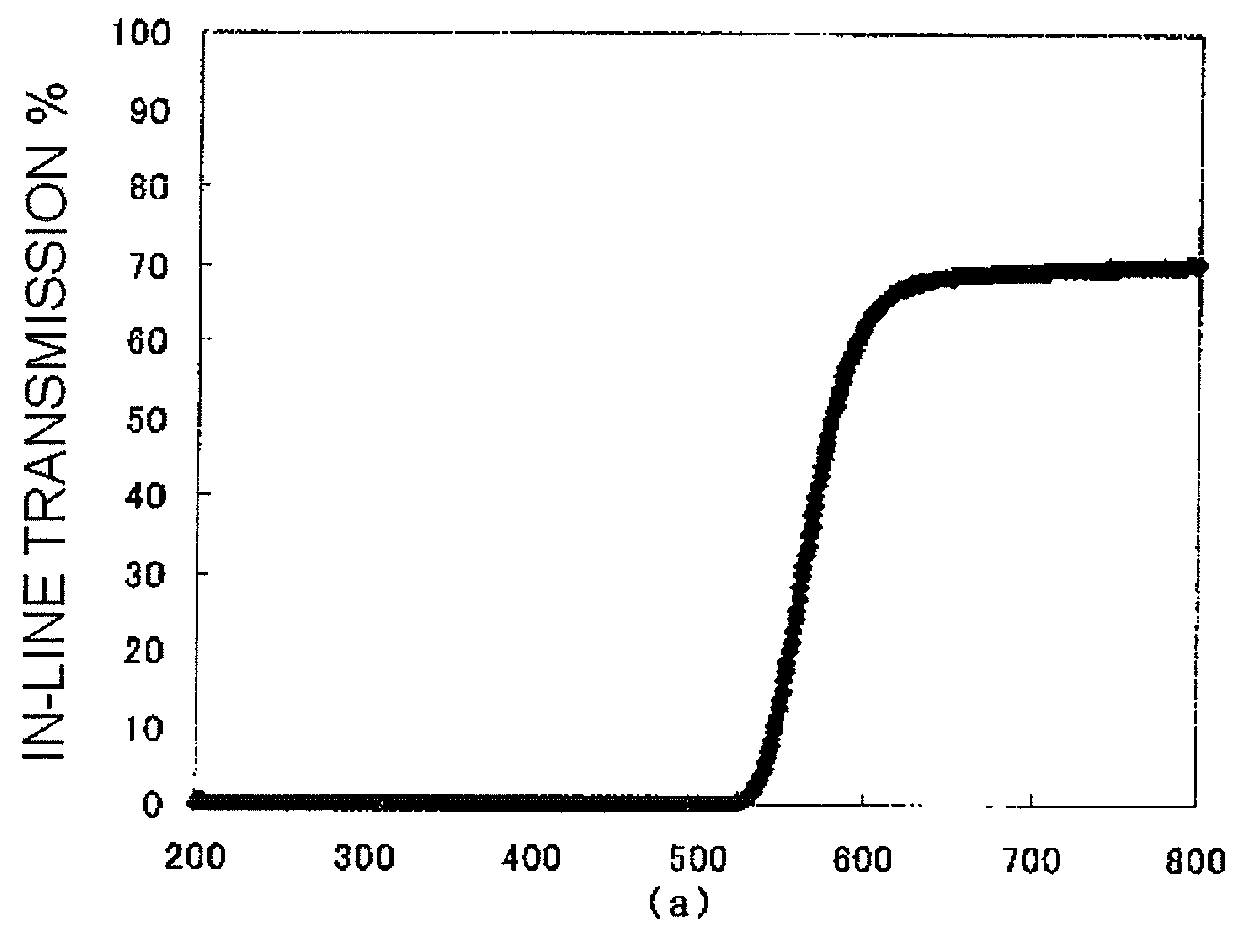
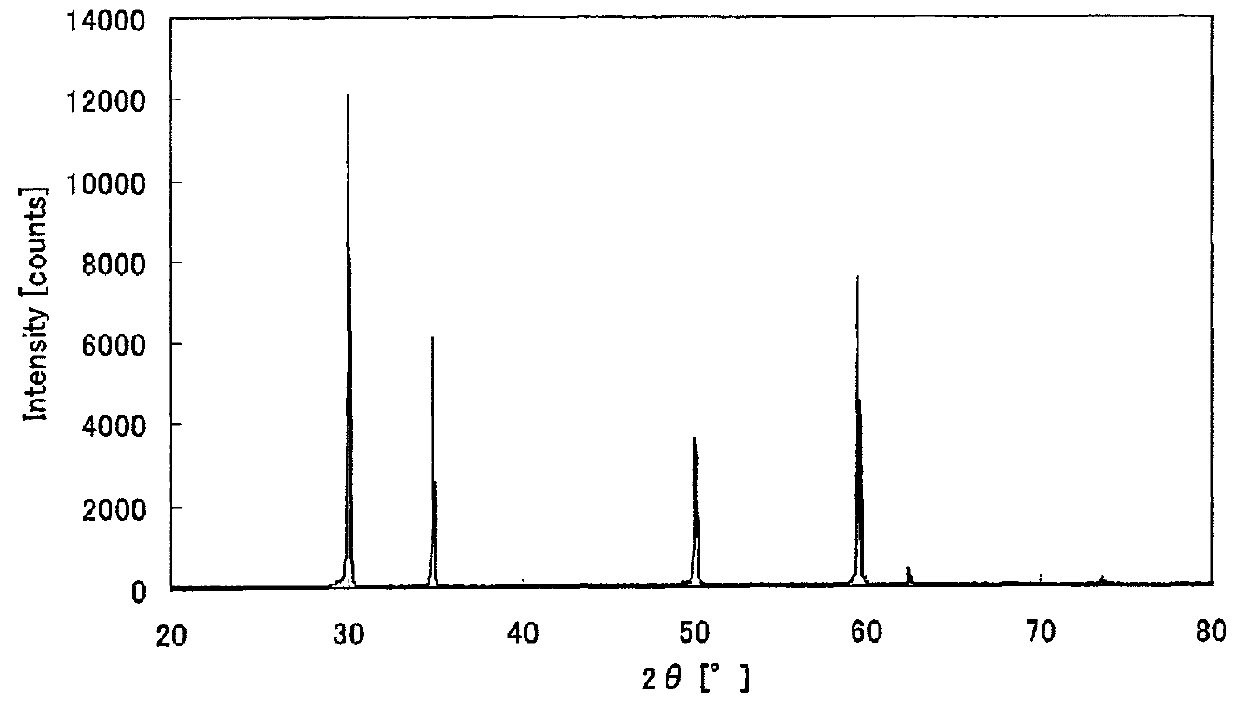
Examples
examples
[0062]The present invention is specifically described below by reference to Examples, but the invention is not construed as being limited to the Examples.
[0063]Measurement methods of the sintered body and the powder of the present invention are described below.
(Measurement of Color Tone)
[0064]Color tone was measured using a color-analyzer (Color Analyzer TC-1800MK-II, manufactured by Tokyo Denshoku Co., Ltd.) under the condition of D65 light source and 10° view angle according to JIS Z8722.
(In-Line Transmission)
[0065]Transmission was measured based on JIS K7105 “Test Method of Optical Characteristics of Plastics” and JIS K7361-1 “Test Method of Total forward Transmission of Plastic and Transparent Material”. Measurement sample used was a sample obtained by processing a sintered body so as to have a thickness of 1 mm, and mirror-polishing both surfaces to surface roughness=0.02 μm or less. Double beam system spectrophotometer (V-650 Model, manufactured by JASCO Corporation) was used ...
examples 1 to 6
Preparation of Raw Material Powder
[0070]Zirconia powder and cerium oxide power were weighed in given amounts, and those powders were mixed with a ball mill using zirconia-made balls having a diameter of 10 mm in an ethanol solvent for 72 hours, followed by drying. Thus, raw material powders having different cerium amount were prepared.
[0071]8 mol % yttria-containing zirconia powder produced by a hydrolysis method (manufactured by Tosoh Corporation, TZ-8Y, specific surface area: 13 m2 / g, crystallite diameter: 40 nm) was used as the zirconia powder, and a reagent having a purity of 99.9% was used as the cerium oxide powder.
Primary Sintering
[0072]Each raw material powder was molded under a pressure of 50 MPa by metallic mold pressing, and the resulting molding was treated under a pressure of 200 MPa using a cold isostatic press apparatus. Thus, a columnar molding having a diameter of 20 mm and a thickness of 3 mm was obtained.
[0073]The moldings obtained were sintered in the air at a si...
examples 4 to 6
[0079]Zirconia sintered bodies were obtained in the same manner as in Examples 1 to 3, except for using primary sintered bodies of Sample Nos. 1 to 3 and changing the HIP treatment temperature to 1,500° C. Properties of the zirconia sintered bodies obtained are shown in Table 3.
[0080]The zirconia sintered bodies obtained were transparent sintered bodies having low brightness and deep red color, as compared with the zirconia sintered bodies of Examples 1 to 3. Furthermore, crystal phase of all the sintered bodies was a cubic fluorite type structure.
[0081]
TABLE 3Maximum in-linetransmission (%)(MaximumTransmissiontotal forwardat 600 nm (%)transmission (%))Density ofAverageSampleIn-lineTotal forward400-500600-800BrightnessHuesintered bodygrain sizeExampleNo.transmissiontransmissionnmnmL*a*b*g / cm3μm4135400 (0)48 (53)29.345.750.35.98145232370 (0)46 (52)26.745.945.15.98156329340 (0)43 (49)22.846.139.05.9915
PUM
| Property | Measurement | Unit |
|---|---|---|
| thickness | aaaaa | aaaaa |
| thickness | aaaaa | aaaaa |
| grain size | aaaaa | aaaaa |
Abstract
Description
Claims
Application Information
 Login to View More