
Method for increasing bismuth layer structure piezoelectricity ferroelectric ceramic material density
A ferroelectric ceramic, bismuth layer structure technology, applied in piezoelectric/electrostrictive/magnetostrictive devices, circuits, electrical components, etc., to achieve the effects of inhibiting grain boundary migration, improving density, and reducing oxygen vacancies
- Summary
- Abstract
- Description
- Claims
- Application Information
AI Technical Summary
Problems solved by technology
Method used
Image

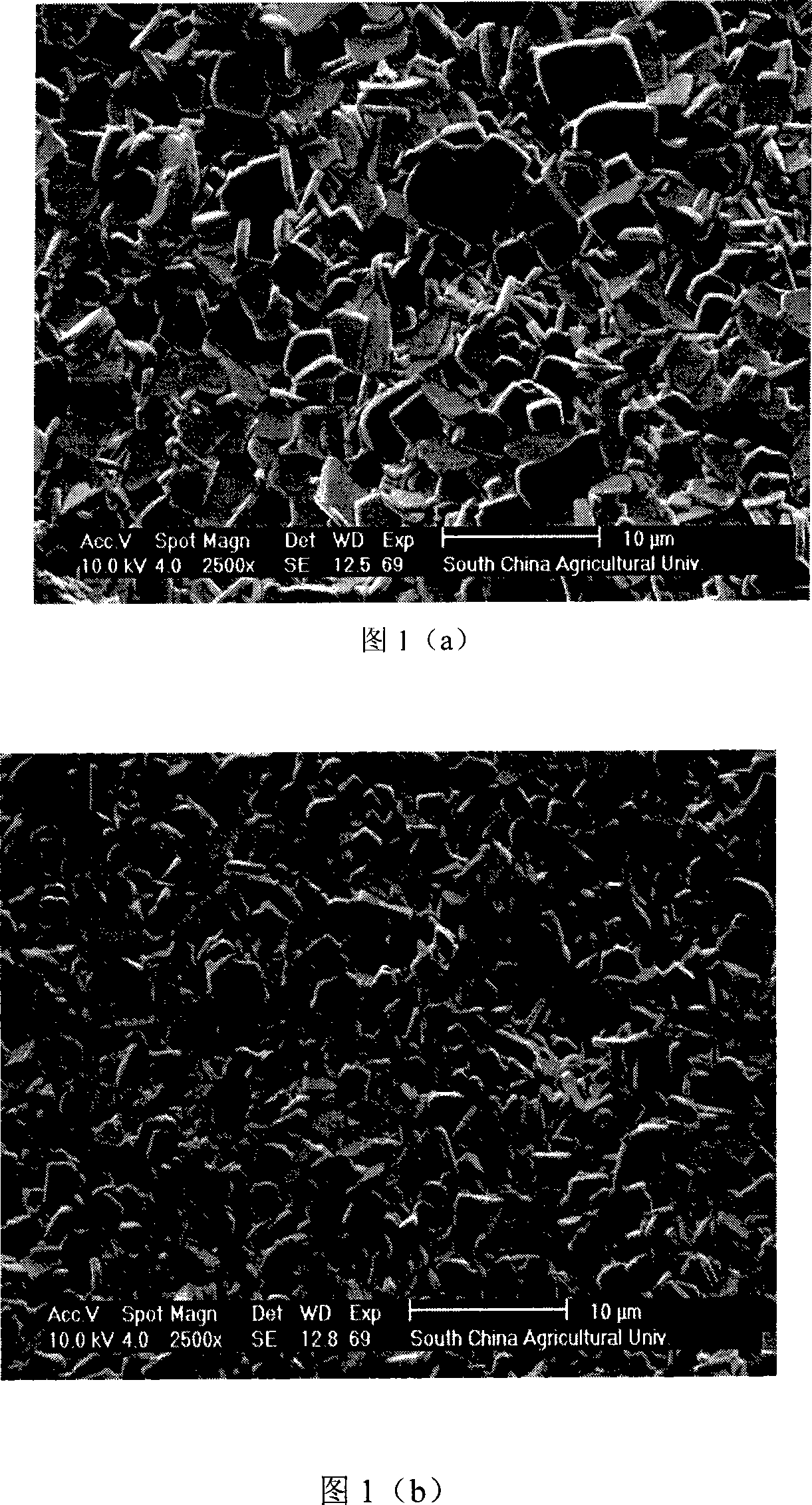
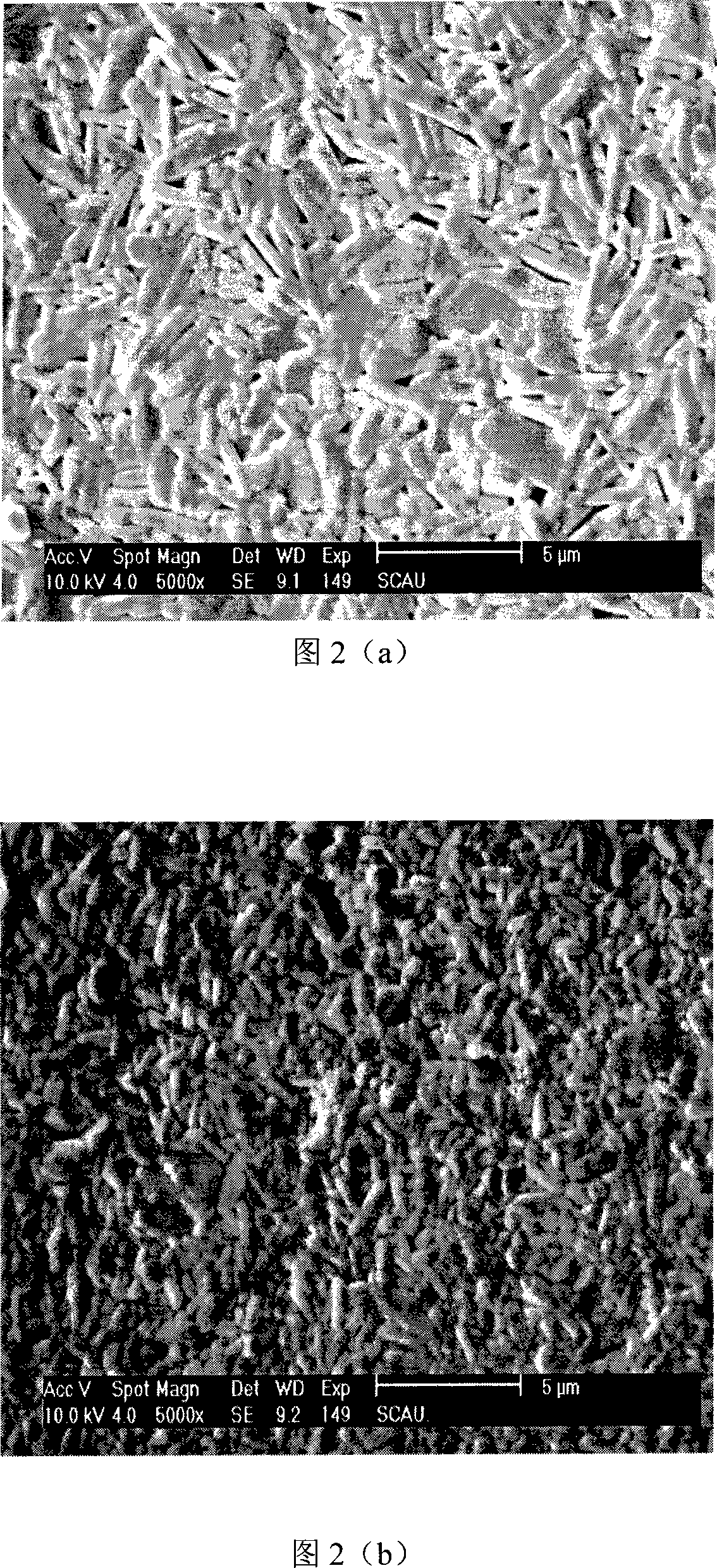
Examples
Embodiment 1
[0024] Sr with m=4 0.3 Ba 0.7 Bi 4 Ti 3.95 V 0.05 o 15 For the base formula, the molar ratio Sr: Ba: Bi: Ti: V = 0.3: 0.7: 4: 3.95: 0.05 ingredients, the raw materials used are analytically pure strontium carbonate (SrCO 3 ), barium carbonate (BaCO 3 ), bismuth oxide (Bi 2 o 3 ), titanium oxide (TiO 2 ), vanadium oxide (V 2 o 5 ).
[0025] Calculate and weigh raw materials according to the formula. Using distilled water as the ball milling medium, use a planetary ball mill for 2 hours, dry at 120°C, and pass through an 80-mesh sieve. Then the mixture was sealed and pre-fired at 800°C for 2 hours. After crushing the pre-fired powder for 4 hours, dry it at 120° C. and pass through a 80-mesh sieve. Pre-compress the powder with a pressure of 10MPa, and then press the powder into a disc with a diameter of 15mm and a thickness of 2mm with a cold isostatic press under a pressure of 250MPa, and hold the pressure for 1min.
[0026] The shaped discs are sealed and sintere...
Embodiment 2
[0032] SrCaBi with m=5 4 Ti 5 o 18 For the base formula, the molar ratio Sr: Ca: Bi: Ti = 1: 1: 4: 5 ingredients, the raw materials used are analytically pure strontium carbonate (SrCO 3 ), calcium carbonate (CaCO 3 ), bismuth oxide (Bi 2 o 3 ), titanium oxide (TiO 2 ).
[0033] Calculate and weigh raw materials according to the formula. Using distilled water as the ball milling medium, use a planetary ball mill for 2 hours, dry at 120°C, and pass through an 80-mesh sieve. Then the mixture was sealed and pre-fired at 900°C for 4 hours. After crushing the pre-fired powder for 4 hours, dry it at 120° C. and pass through a 80-mesh sieve. Pre-compress the powder with a pressure of 20 MPa, and then press the powder into a disc with a diameter of 15 mm and a thickness of 2 mm with a cold isostatic press under a pressure of 300 MPa for a holding time of 20 s.
[0034] The shaped discs are sealed and sintered in a muffle furnace. The sintering is carried out in stages: firs...
Embodiment 3
[0037] Bi with m=3 3 LaTi 3 o 12 It is base formula, by molar ratio Bi: La: Ti=3: 1: 3 batching, used raw material is the bismuth oxide of analytical grade (Bi 2 o 3 ), lanthanum oxide (La 2 o 3 ), titanium oxide (TiO 2 ).
[0038] Calculate and weigh raw materials according to the formula. Using distilled water as the ball milling medium, use a planetary ball mill for 2 hours, dry at 120°C, and pass through an 80-mesh sieve. Then the mixture was airtightly calcined at 850°C for 3 hours. After crushing the pre-fired powder for 4 hours, dry it at 120° C. and pass through a 80-mesh sieve. Pre-compress the powder with a pressure of 5 MPa, and then press the powder into a disc with a diameter of 15 mm and a thickness of 2 mm with a cold isostatic press under a pressure of 150 MPa, and hold the pressure for 2 minutes.
[0039] The shaped discs are sealed and sintered in a muffle furnace. The sintering is carried out in stages: first, the temperature is raised to the high...
PUM
| Property | Measurement | Unit |
|---|---|---|
| particle size | aaaaa | aaaaa |
| size | aaaaa | aaaaa |
Abstract
Description
Claims
Application Information
 Login to View More