
Method used for heat liberation pressurization catalytic reaction
A catalytic reactor and reactor technology, applied in chemical instruments and methods, heat exchanger types, indirect heat exchangers, etc., can solve the problems of high processing difficulty, poor radial heat transfer effect, slow reaction speed, etc. Achieve the effect of optimizing the design of the runner cross section, strengthening the radial cross heat transfer, and improving the heat transfer effect.
- Summary
- Abstract
- Description
- Claims
- Application Information
AI Technical Summary
Problems solved by technology
Method used
Image

Examples
Embodiment 1
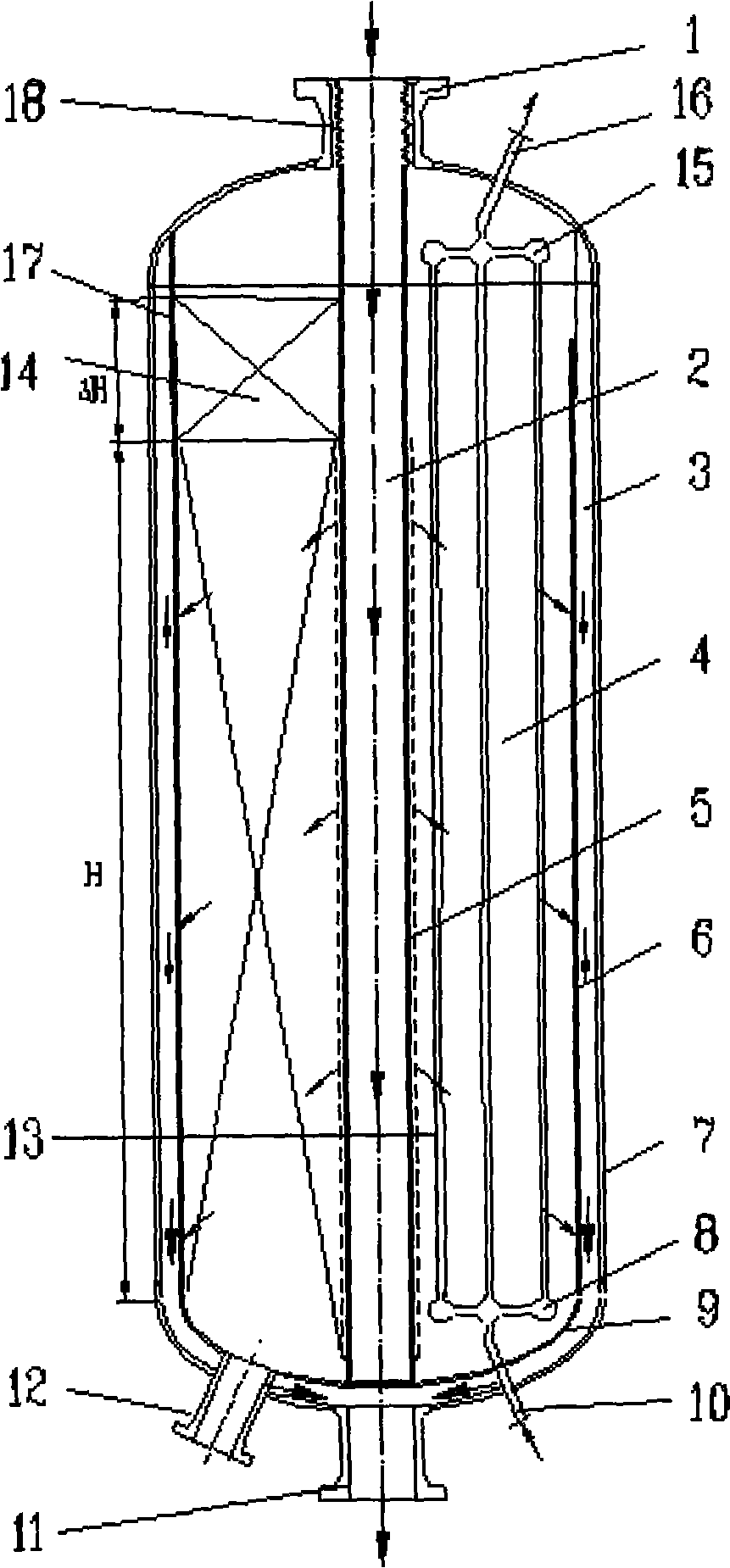
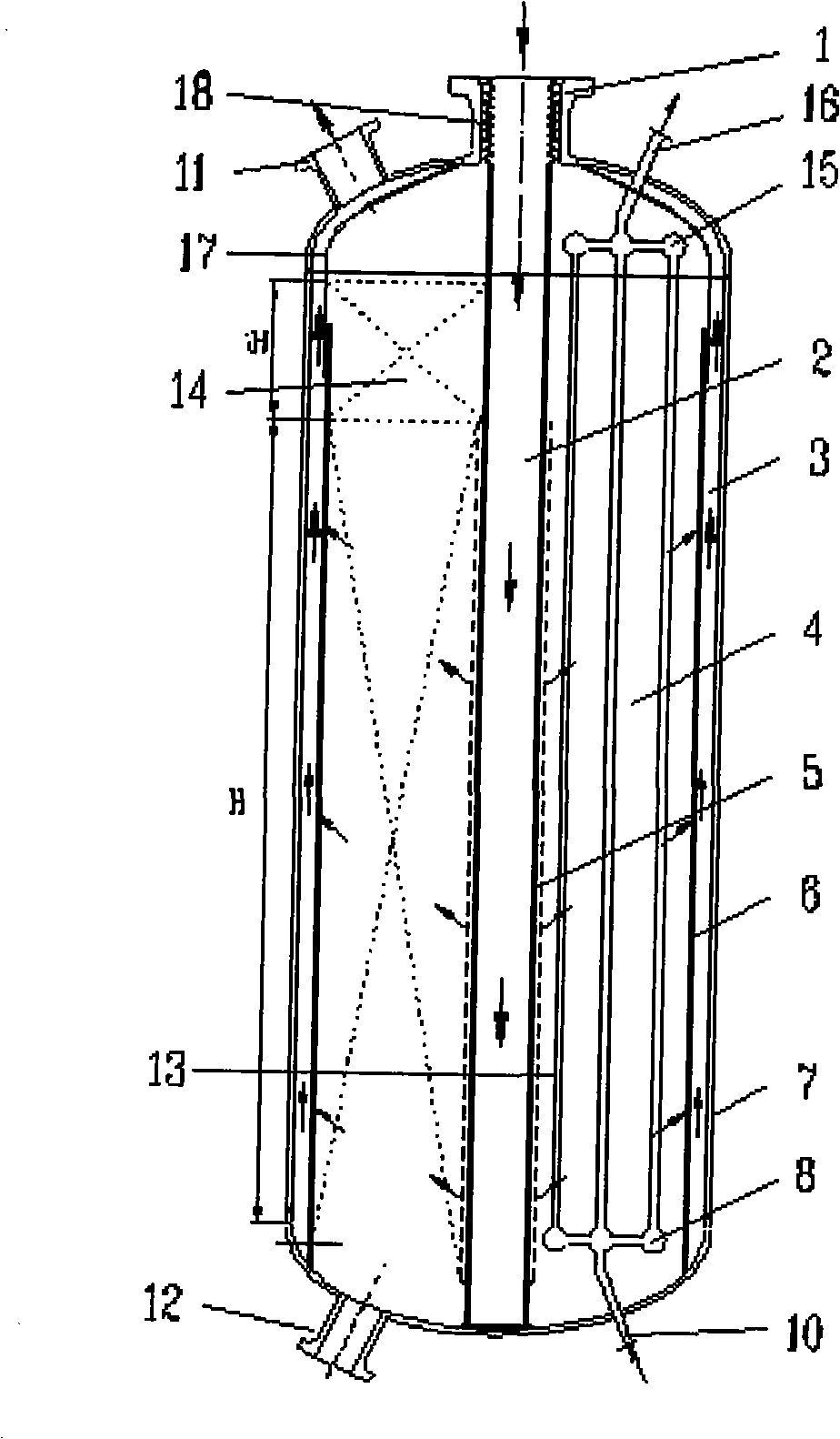
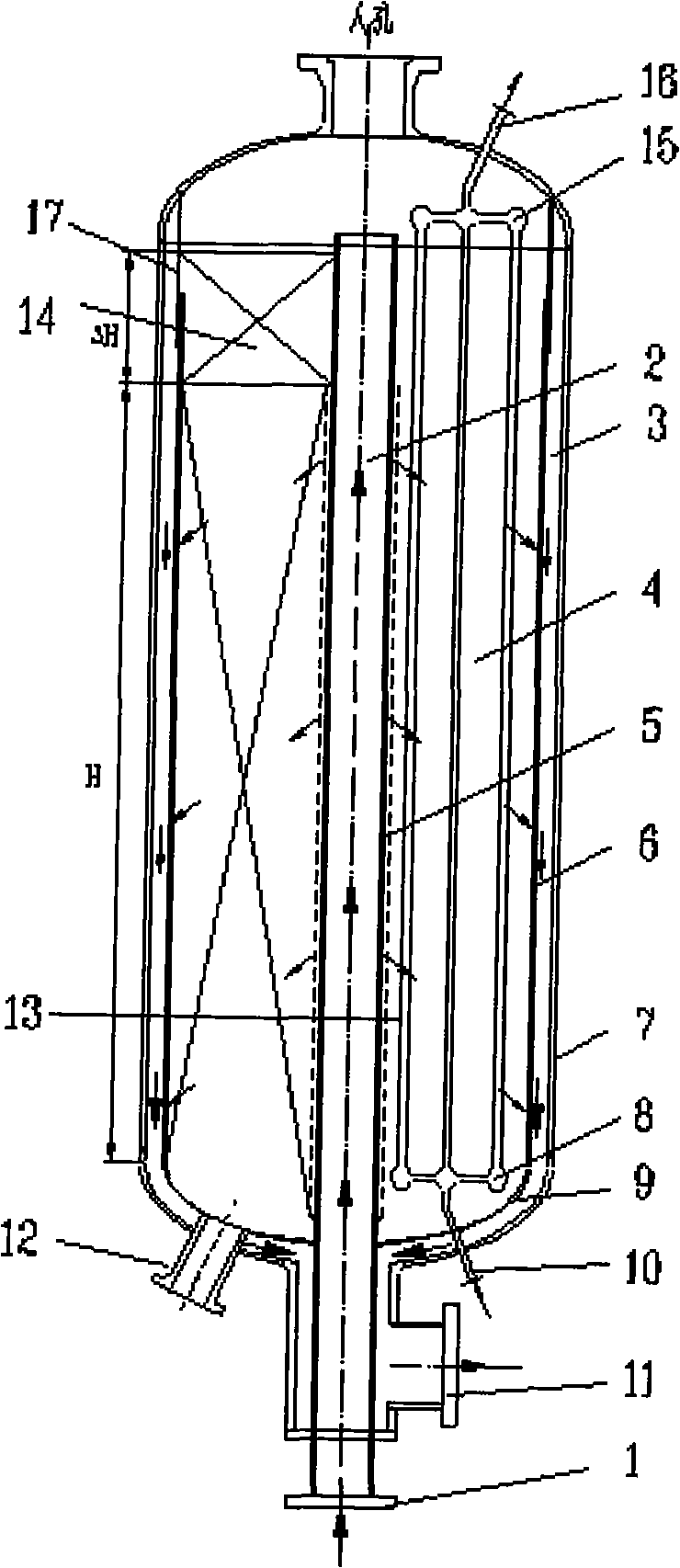
[0065] The composition of raw gas is: CO 13.3%, CO 2 4.96%, H 2 75.62%, CH 4 0.98%, Ar+N 2 4.75%, CH 3 OH 0.34%, gas space velocity 6500h -1 , the methanol synthesis reaction process with a reaction temperature of 210-260°C and a reaction pressure of 8MPa adopts figure 1 , figure 2 or image 3 Any one of the three ways shown. The composition of the obtained product gas is: CO 7.30%, CO 2 5.11%, H 2 70.1%, CH 4 1.21%, Ar+N 2 5.71%, CH 3 OH9.89%, H 2 O 0.68%; the axial difference of bed temperature in the reactor is less than ±2°C, the axial distribution deviation of gas flow is less than ±2%, the reactor pressure drop is less than 0.2MPa, and the space-time productivity is 0.78t / m 3 .h, heat exchange tubes account for less than 30% of the cross-section of the catalyst bed, the temperature distribution of the bed is close to the optimal temperature distribution curve, and the daily methanol production is 3,000 tons.
Embodiment 2
[0067] The composition of raw gas is: CO 13.4%, CO 2 4.96%, H 2 75.63%, CH 40.98%, Ar+N 2 4.75%, CH 3 OH 0.32%, gas space velocity 6500h -1 , the methanol synthesis reaction process with a reaction temperature of 210-260°C and a reaction pressure of 10MPa adopts figure 1 , figure 2 or image 3 Any one of the three ways shown. The composition of the obtained product gas is: CO 6.58%, CO 2 5.24%, H 2 69.3%, CH 4 1.32%, Ar+N 2 5.82%, CH 3 OH10.85%, H 2 O 0.89%; the axial difference of bed temperature in the reactor is less than ±2°C, the axial distribution deviation of gas flow is less than ±2%, the reactor pressure drop is less than 0.2MPa, and the space-time productivity is 0.79t / m 3 .h, heat exchange tubes account for less than 30% of the cross-section of the catalyst bed, the temperature distribution of the bed is close to the optimal temperature distribution curve, and the daily methanol production is 3,000 tons.
[0068] The reaction gas enters the spl...
PUM
 Login to View More
 Abstract
Description
Claims
Application Information
 Login to View More