Check patentability & draft patents in minutes with Patsnap Eureka AI!

Method for preparing polymer solar cell

A solar cell and polymer technology, applied in circuits, photovoltaic power generation, electrical components, etc., can solve problems such as large fluctuations in the efficiency of polymer cells

Active Publication Date: 2009-08-26
CHANGZHOU INST OF ENERGY STORAGE MATERIALS &DEVICES
View PDF0 Cites 5 Cited by
  • Summary
  • Abstract
  • Description
  • Claims
  • Application Information

AI Technical Summary

Problems solved by technology

However, due to many factors affecting the solvent atmosphere treatment, the efficiency of the regulated polymer battery fluctuates greatly. Therefore, a controllable solvent atmosphere treatment method is used to control the crystallinity of polythiophene and the phase separation morphology of the blended film to obtain stable high-efficiency solar energy. The battery method has not been reported yet

Method used

the structure of the environmentally friendly knitted fabric provided by the present invention; figure 2 Flow chart of the yarn wrapping machine for environmentally friendly knitted fabrics and storage devices; image 3 Is the parameter map of the yarn covering machine
View more

Image

Smart Image Click on the blue labels to locate them in the text.
Viewing Examples
Smart Image
  • Method for preparing polymer solar cell
  • Method for preparing polymer solar cell
  • Method for preparing polymer solar cell

Examples

Experimental program
Comparison scheme
Effect test

experiment example 1

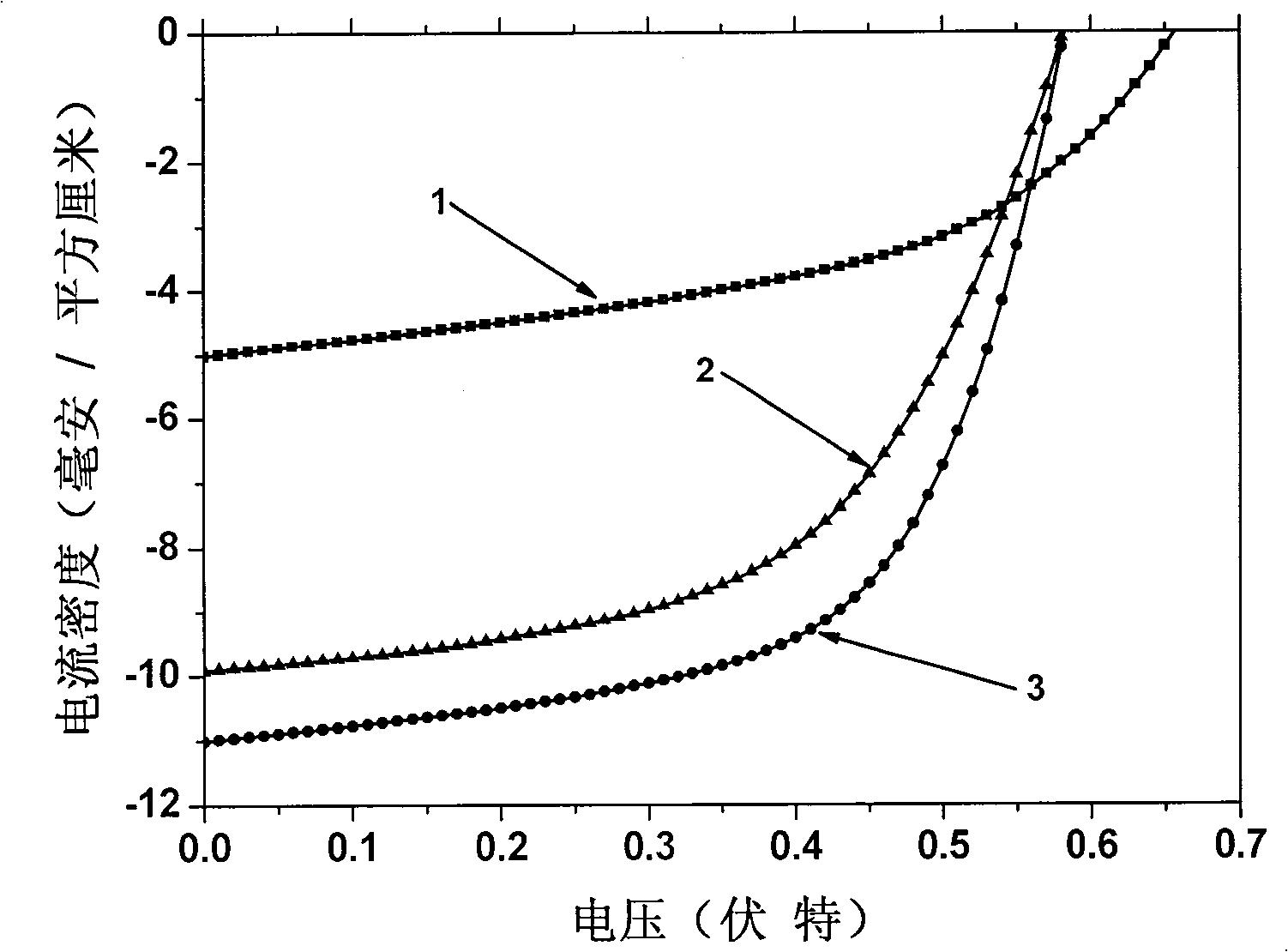
[0018] Experimental example 1: At room temperature, dissolve P3HT and PCBM with a mass ratio of 1:1 in o-dichlorobenzene (ODCB) solvent to prepare a mixed solution with a total concentration of 20 mg / ml, and then spin-coated with a spin coater A 100-nanometer film is obtained; the film is first placed in 1 times the saturated vapor pressure of tetrahydrofuran for 5 seconds at room temperature, and then the treated film is placed in 0.8 times the saturated vapor pressure of carbon disulfide for 15 seconds. Finally, an electrode with a thickness of 100 nanometers is evaporated to obtain a polymer solar cell. The average efficiency of the obtained original device is 3.87%.

experiment example 2

[0019] Experimental example 2: At room temperature, dissolve P3HT and PCBM with a mass ratio of 1:2 in o-dichlorobenzene (ODCB) solvent to form a mixed solution with a total concentration of 18 mg / ml, and then spin-coated with a spin coater A 60-nanometer film is obtained; the film is first placed in 1 times the saturated vapor pressure of tetrahydrofuran for 5 seconds at room temperature, and then the treated film is placed in 0.8 times the saturated vapor pressure of carbon disulfide for 15 seconds. Finally, a polymer solar cell is obtained after the electrode is evaporated with a thickness of 80 nanometers. The average efficiency of the obtained original device was 2.91%.

experiment example 3

[0020] Experimental example 3: At room temperature, dissolve P3HT and PCBM with a mass ratio of 2:1 in o-dichlorobenzene (ODCB) solvent to form a mixed solution with a total concentration of 18 mg / ml, and then spin-coated with a spin coater Obtain an 80-nanometer film; first place the film at room temperature at 1 times the saturated vapor pressure of tetrahydrofuran for 5 seconds, and then place the treated film at 0.8 times the saturated vapor pressure of carbon disulfide for 15 seconds. Finally, an electrode with a thickness of 120 nanometers is evaporated to obtain a polymer solar cell. The average efficiency of the obtained original device was 3.11%.

the structure of the environmentally friendly knitted fabric provided by the present invention; figure 2 Flow chart of the yarn wrapping machine for environmentally friendly knitted fabrics and storage devices; image 3 Is the parameter map of the yarn covering machine
Login to View More

PUM

No PUM Login to View More

Abstract

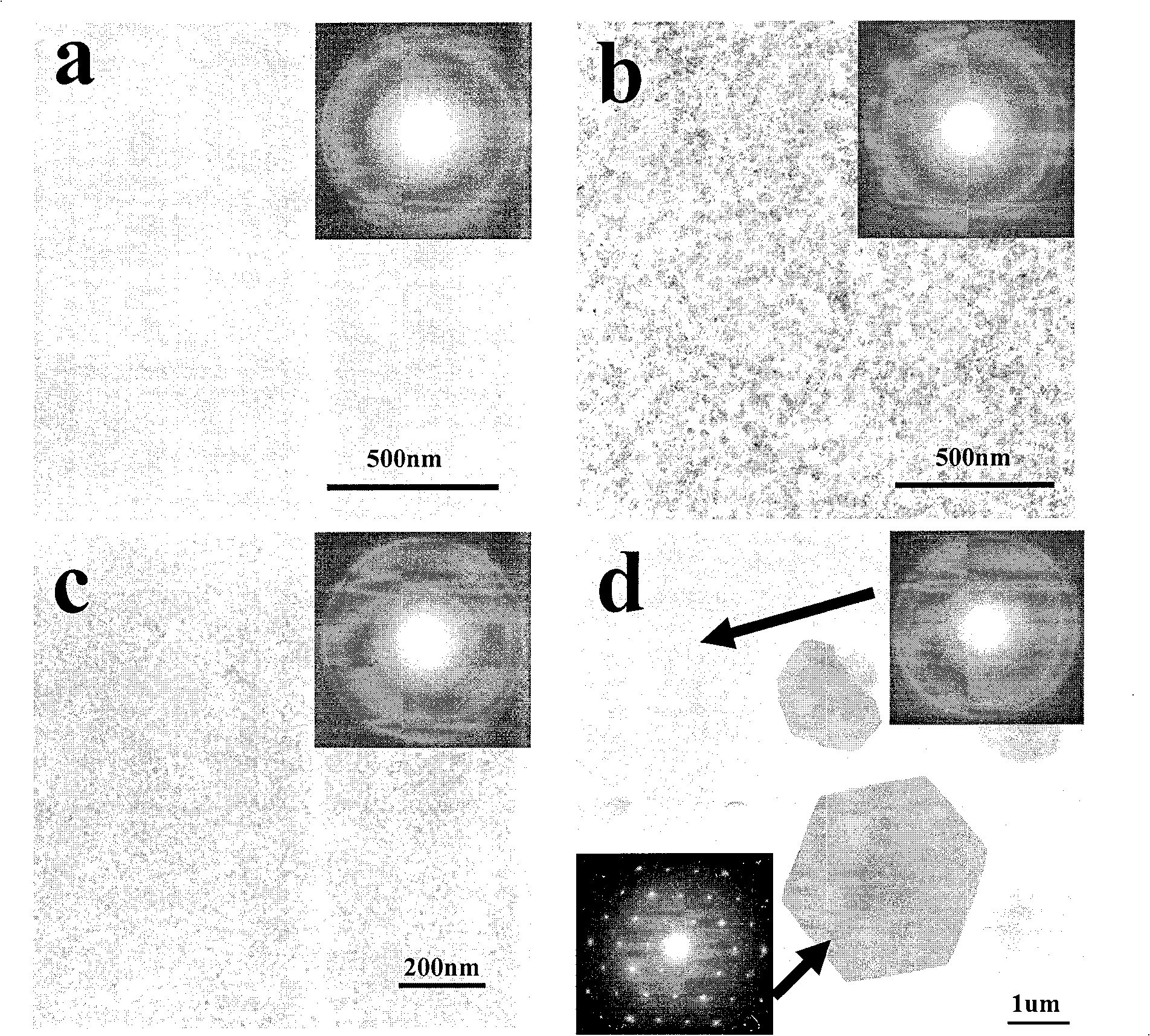
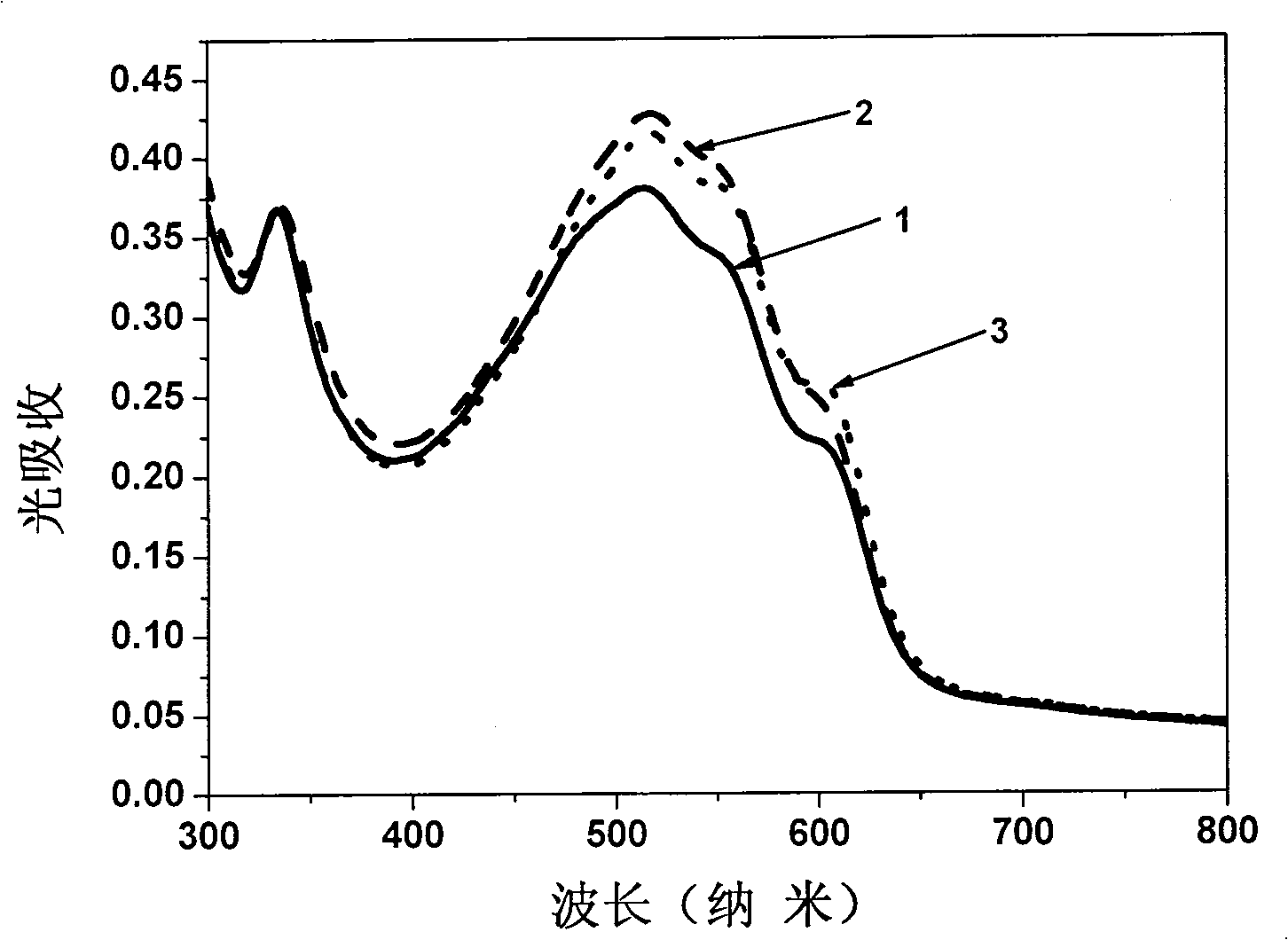
The invention belongs to a method for preparing a polymer solar cell. Through a condition of non high-temperature heating, by adopting a method of controllable solvent atmosphere treatment, phase separation appearance of poly(3-hexyl)thiophene) and [6,6]-C61-phenyl methyl butyrate blend film can be optimized and crystallinity of poly(3-hexyl)thiophene) can be improved, and [6,6]-C61-phenyl methyl butyrate can be improved to form agglomerative phase about 10 nanometers, so that a stable high-efficiency solar cell can be obtained under white radiation. Conversion efficiency of the produced polymer solar cell by the method can reach 3.87 percent, but only 3.20 percent of the conversion efficiency can be achieved by heat annealing treatment, which proves that the polymer solar cell without heat annealing treatment can be obtained through the method.

Description

Technical field [0001] The invention relates to a method for preparing a high-efficiency polymer solar cell. Background technique [0002] Polymer solar cells have become a hot spot in renewable energy research due to their low cost, flexibility, and ease of production. In polymer solar cells based on soluble polythiophene (P3HT) / fullerene derivatives (PCBM) blend films, constructing highly crystalline polythiophene and controlling the phase separation scale of the two blends can greatly improve the efficiency of the cell (Advanced Functional Materials 2003, 13, 85). Generally, thermal annealing is used to improve the crystallinity of polythiophene in the device, but this method is likely to cause large-scale (above micron) phase separation between blended components in the film, which is not conducive to improving device performance. In addition, thermal annealing at higher temperatures (>100°C) requires inert gas protection, otherwise there will be a risk of oxidation and de...

Claims

the structure of the environmentally friendly knitted fabric provided by the present invention; figure 2 Flow chart of the yarn wrapping machine for environmentally friendly knitted fabrics and storage devices; image 3 Is the parameter map of the yarn covering machine
Login to View More

Application Information

Patent Timeline
no application Login to View More
Patent Type & Authority Applications(China)
IPC IPC(8): H01L51/48C08J5/18C08L65/00
CPCY02E10/50Y02E10/549
Inventor 杨小牛唐浩为
Owner CHANGZHOU INST OF ENERGY STORAGE MATERIALS &DEVICES
Features
  • R&D
  • Intellectual Property
  • Life Sciences
  • Materials
  • Tech Scout
Why Patsnap Eureka
  • Unparalleled Data Quality
  • Higher Quality Content
  • 60% Fewer Hallucinations
Social media
Patsnap Eureka Blog
Learn More