Unlock instant, AI-driven research and patent intelligence for your innovation.

Method for removing sodium sulfate and sodium chloride from lauryl sodium sulfate

A technology of sodium chloride and sodium sulfate, which is applied in the field of pharmaceutical adjuvant production, can solve the problems of high content of sodium sulfate and sodium chloride, and achieve the effect of reducing the content

Active Publication Date: 2009-12-23
HUNAN ER KANG PHARMA
View PDF0 Cites 8 Cited by
  • Summary
  • Abstract
  • Description
  • Claims
  • Application Information

AI Technical Summary

Problems solved by technology

[0005] The present invention therefore proposes a method for removing sodium sulfate and sodium chloride impurities from technical grade sodium lauryl sulfate, to overcome the higher problem of sodium sulfate and sodium chloride content in the existing pharmaceutical grade SDS

Method used

the structure of the environmentally friendly knitted fabric provided by the present invention; figure 2 Flow chart of the yarn wrapping machine for environmentally friendly knitted fabrics and storage devices; image 3 Is the parameter map of the yarn covering machine
View more

Image

Smart Image Click on the blue labels to locate them in the text.
Viewing Examples
Smart Image
  • Method for removing sodium sulfate and sodium chloride from lauryl sodium sulfate
  • Method for removing sodium sulfate and sodium chloride from lauryl sodium sulfate

Examples

Experimental program
Comparison scheme
Effect test

Embodiment

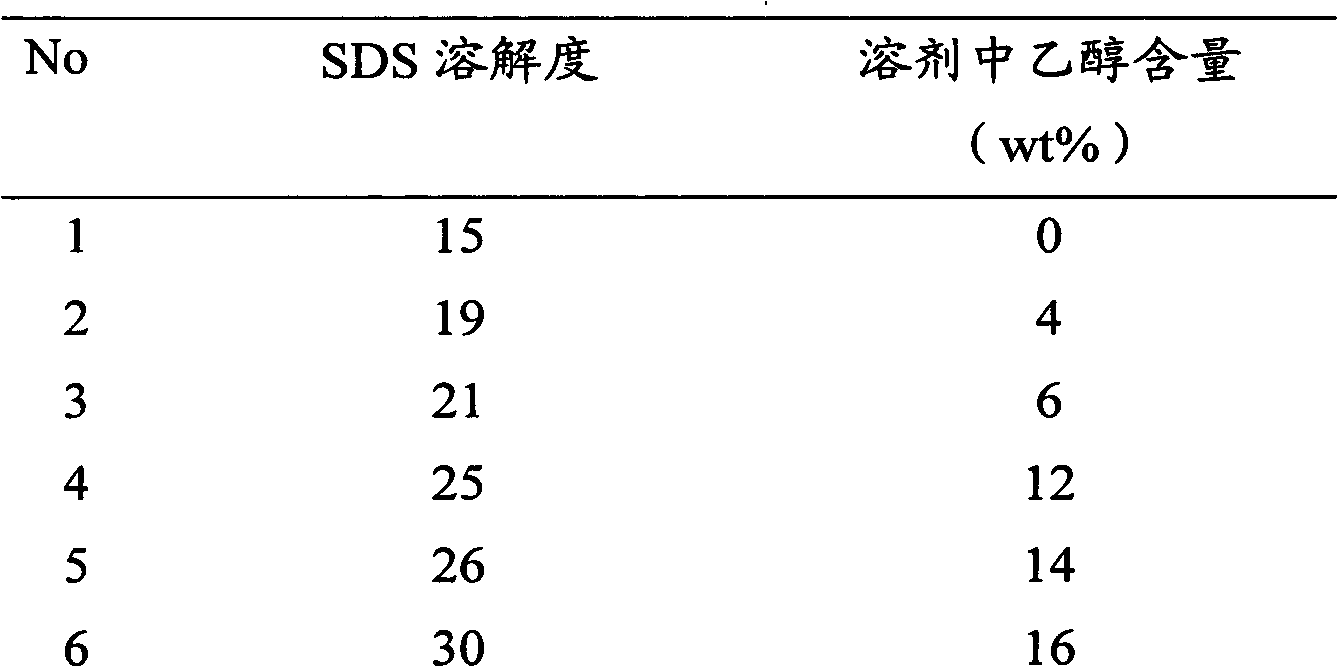
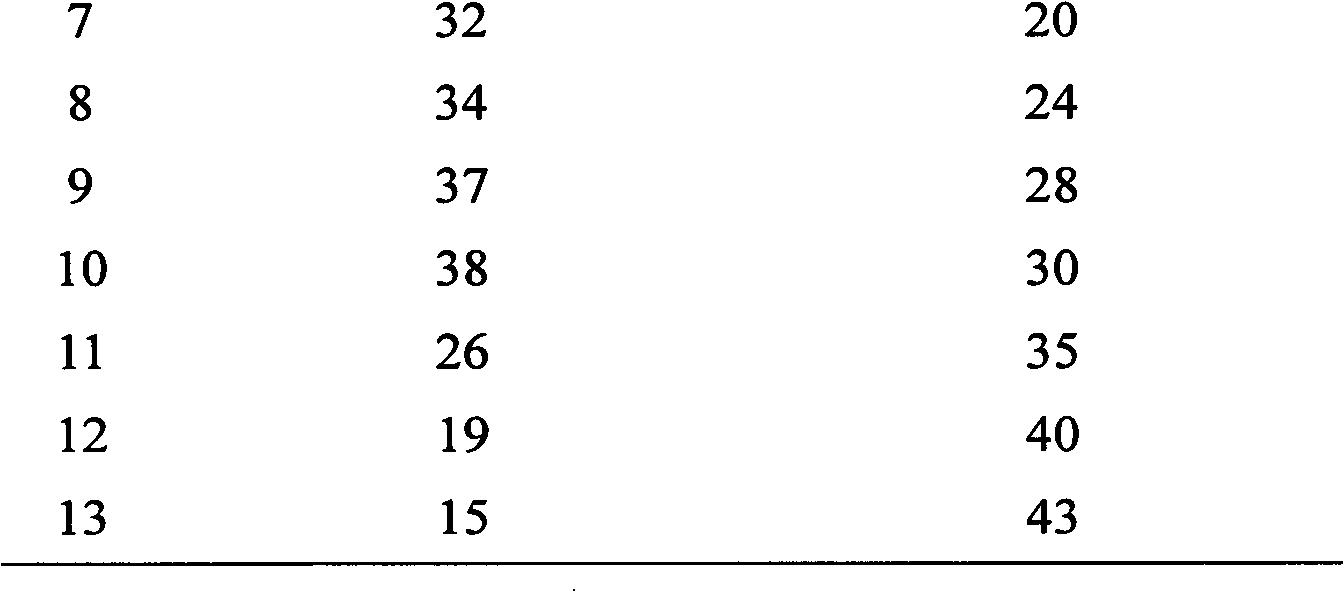
[0024] Dissolve 35 g of technical grade SDS in 70 g of ethanol-water solvent containing 30% ethanol. Stir for 30min, filter to remove insoluble matter. The solution was cooled to 0-1 °C over a period of 3 hours and held for 30 min. Filter to obtain powder. The powder was combined with the above insoluble matter, dried and weighed to obtain 3.2 g. The powder was fired with no weight loss. The filtrate was concentrated under reduced pressure until the filtrate became a slurry. Finally, dry and remove water in a vacuum oven at 80° C. to obtain 30.7 g of the finished product. Detecting its sodium sulfate content is 2.1%, and sodium chloride content is 1.1%.

the structure of the environmentally friendly knitted fabric provided by the present invention; figure 2 Flow chart of the yarn wrapping machine for environmentally friendly knitted fabrics and storage devices; image 3 Is the parameter map of the yarn covering machine
Login to View More

PUM

No PUM Login to View More

Abstract

The invention relates to a method for obtaining pharmaceutical-grade lauryl sodium sulfate from industrial-grade lauryl sodium sulfate, which comprises the following steps of: (a) dissolving crude SDS into an ethanol-water solvent with ethanol content within 15-35 percent to prepare solution; (b) cooling the solution to 0-5 DEG C; (c) filtering the solution; and (d) concentrating the obtained solution so as to remove all solvents. The method utilizes the adverse impact on the solubility of SDS, sodium sulfate and sodium chloride due to the existence of ethanol, and can effectively remove sodium sulfate and sodium chloride impurities contained in the SDS and reduce the content of electrolyte impurities compared with the prior art.

Description

technical field [0001] The invention relates to the field of pharmaceutical auxiliary production, in particular to a purification method of sodium lauryl sulfate. Background technique [0002] Sodium dodecyl sulfate (SDS), as a typical anionic surfactant, has the effects of emulsification, decontamination, dispersion, wetting and foaming, and is widely used as an emulsifier, detergent, dispersant, Wetting agent, foaming agent, used to make tablets, granules, capsules, creams, medicinal shampoos, skin cleansers, etc. The impurities contained are usually homologues of lauryl sulfate, unreacted alcohol and electrolytes (such as sodium sulfate, sodium chloride). Current pharmaceutical grade SDS contains up to 8% sulfuric acid and up to 4% sodium chloride. The presence of these electrolytes will greatly reduce the critical micelle concentration c.m.c of SDS, and increase the aggregation number of micelles, making the micelles larger. [0003] Removing sodium sulfate and sodium...

Claims

the structure of the environmentally friendly knitted fabric provided by the present invention; figure 2 Flow chart of the yarn wrapping machine for environmentally friendly knitted fabrics and storage devices; image 3 Is the parameter map of the yarn covering machine
Login to View More

Application Information

Patent Timeline
no application Login to View More
IPC IPC(8): C07C305/04C07C303/44C07C303/24
Inventor 帅放文王向峰章家伟
Owner HUNAN ER KANG PHARMA
Features
  • R&D
  • Intellectual Property
  • Life Sciences
  • Materials
  • Tech Scout
Why Patsnap Eureka
  • Unparalleled Data Quality
  • Higher Quality Content
  • 60% Fewer Hallucinations
Social media
Patsnap Eureka Blog
Learn More