

Methods and compositions for delivery of growth factor to fibrous connective tissue
A growth factor, fibrous knot technology, applied in growth factors/growth regulators, drug combinations, chemical instruments and methods, etc., can solve problems such as less success
- Summary
- Abstract
- Description
- Claims
- Application Information
AI Technical Summary
Problems solved by technology
Method used
Image

Examples
Embodiment 1
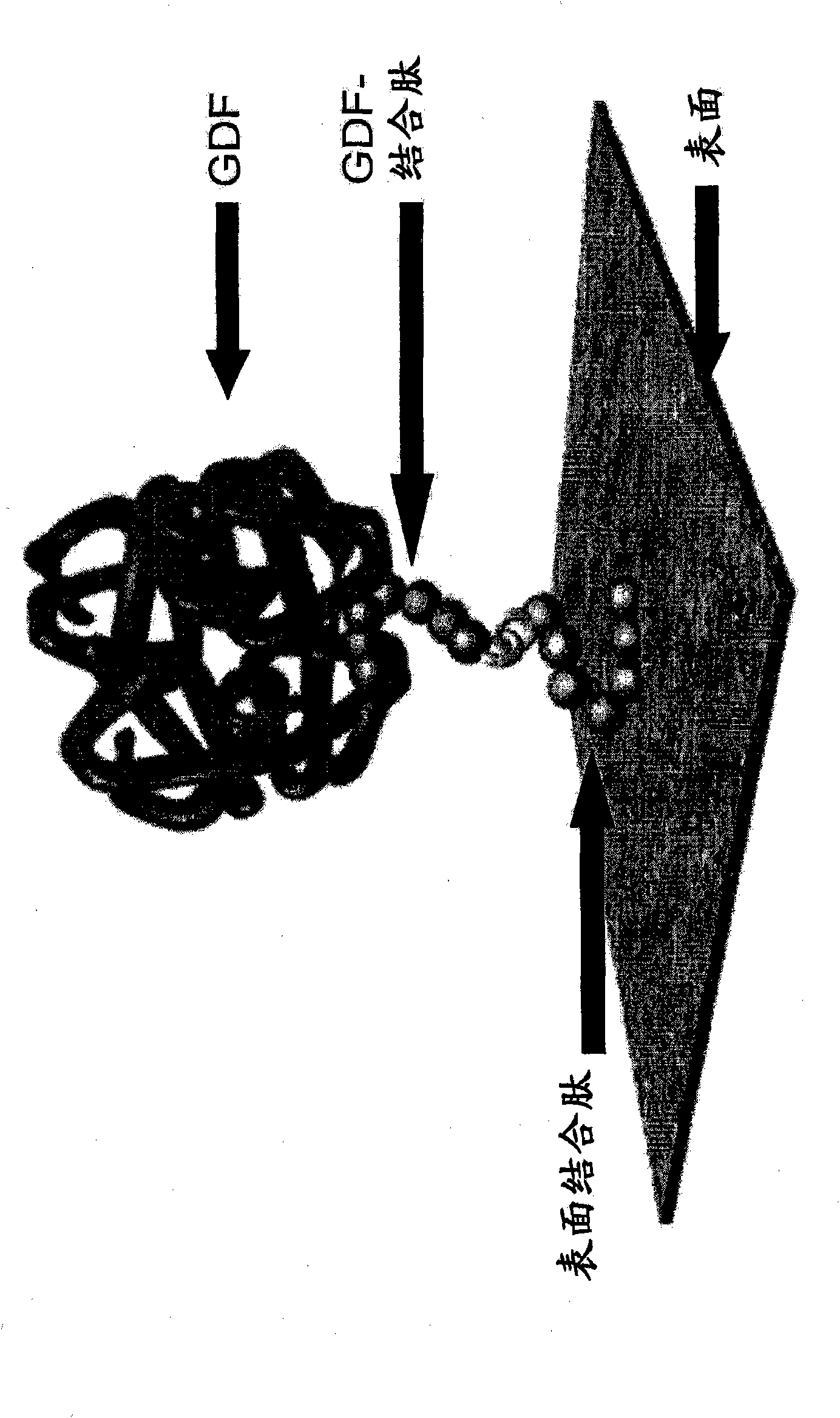
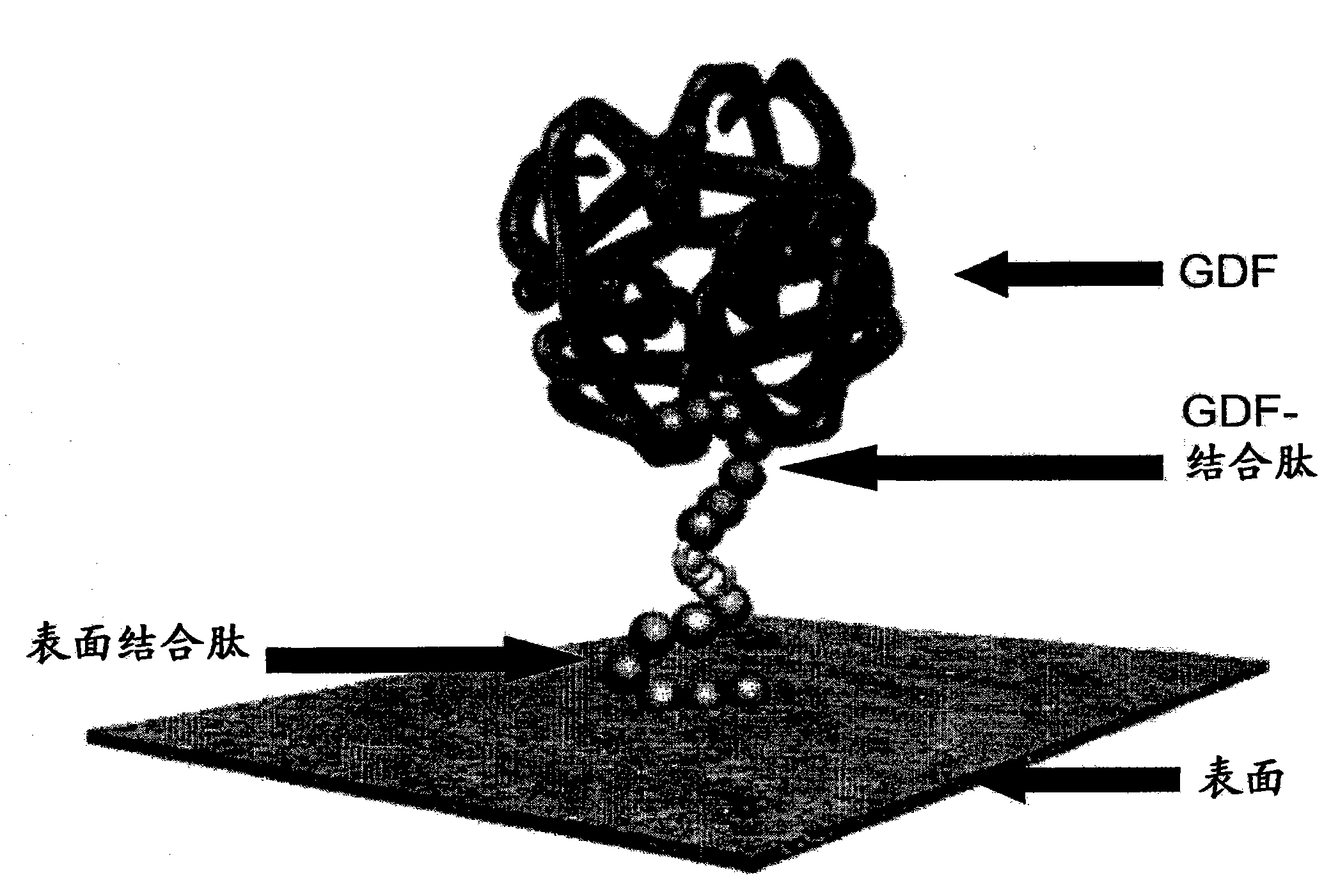
[0049] Shown in this example are various methods for generating peptides with affinity for fibrous connective tissue-inducible growth factors of the present invention using phage display technology. A plurality of binding domain-containing peptides (i.e., peptides with affinity for implant surfaces and peptides with affinity for fibrous connective tissue-inducible growth factor) in the coating compositions of the invention were initially displayed using phage Technology development followed by improved binding characteristics through peptide design and peptide synthesis.
[0050] Phage screening and selection
[0051] Phage display techniques are well known in the art and can be used to attempt to identify phage displayed peptides that have affinity for a particular target substrate used in the screen. Typically, using phage display, a library of various peptides against a target substrate can be provided, and a peptide that specifically binds to the substrate can be select...
Embodiment 2
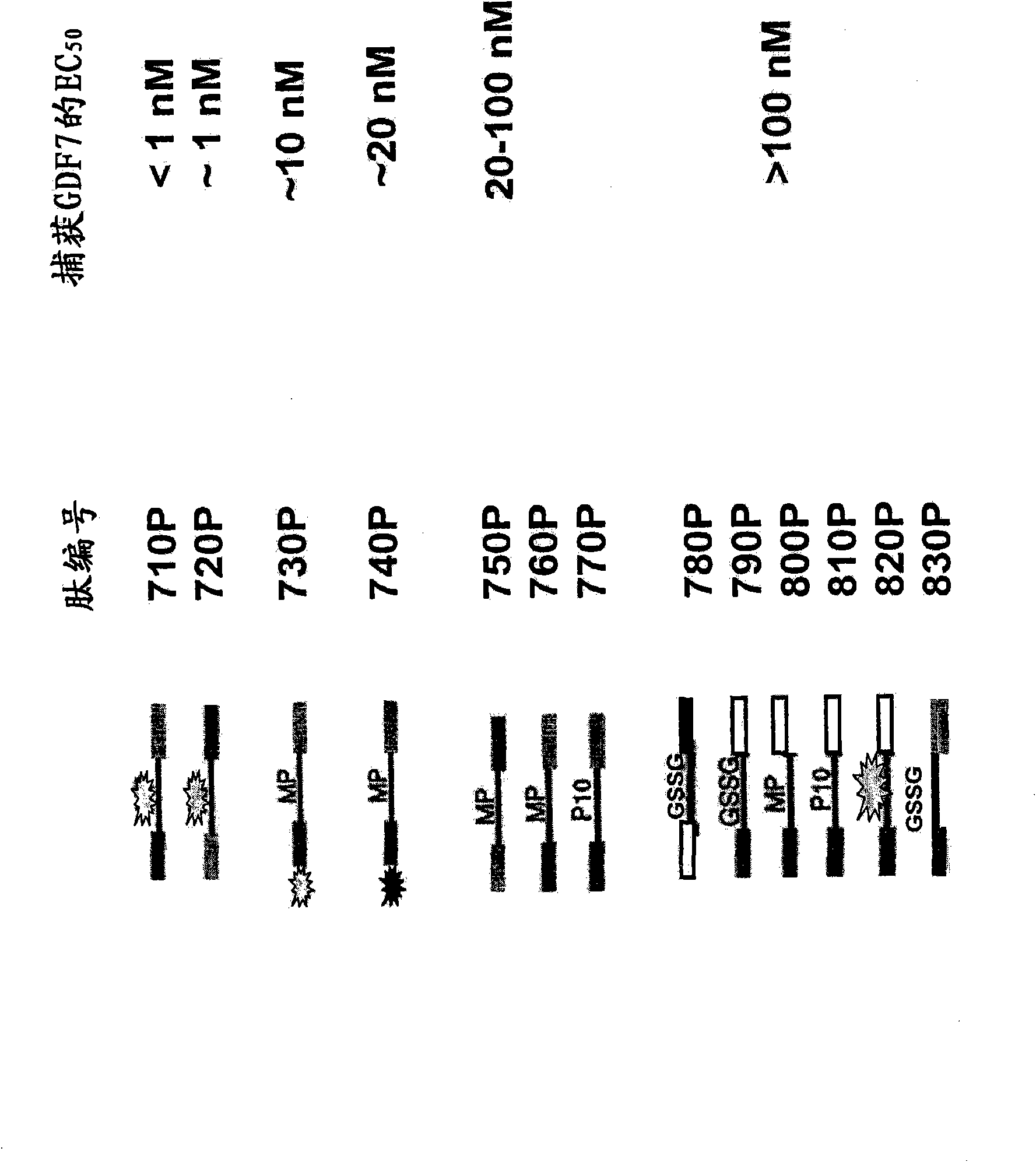
[0063] In this example, the identification of the peptides of the invention is further shown. The peptides of the present invention can be synthesized using any method known to those skilled in the art, including but not limited to solid phase synthesis, solution phase synthesis, linear synthesis and combinations thereof. In this example, peptides were synthesized using standard solid phase peptide synthesis techniques on a peptide synthesizer using standard Fmoc chemistry. After all residues have been coupled, cleavage and side chain deprotection are performed simultaneously by treatment with complex trifluoroacetic acid (TFA). The crude peptide was precipitated with cold diethyl ether and purified by high performance liquid chromatography (HPLC) using a linear water / acetonitrile gradient with 0.1% TFA. The homogeneity of the synthesized peptides was assessed by analytical reverse-phase-HPLC, and the identity of the peptides was confirmed by mass spectrometry.
[0064] af...
Embodiment 3
[0073] Table 3 shows exemplary peptides having affinity for implant surface materials ("surface-bound peptides"). For example, surface-binding peptides include those having a surface-binding region and are sensitive to, for example, polystyrene, polyurethane, polyglycolic acid, polycarbonate, nylon, Materials such as polyethylene terephthalate fibers and collagen-based substrates have affinity for peptides. Exemplary surface-binding peptides include SEQ ID NOs: 13-71. In certain embodiments, at least one surface-binding peptide may be conjugated to at least one peptide having an affinity for fibrous connective tissue-inducible growth factor in forming the compositions described herein.
[0074] table 3
[0075]
[0076]
PUM
 Login to View More
 Abstract
Description
Claims
Application Information
 Login to View More