
Ultrasonic training system based on CT (Computed Tomography) image simulation and positioning
A CT imaging and training system technology, applied in the field of medical ultrasound training, can solve problems such as difficulty in meeting the real-time requirements of medical ultrasound training, incomplete three-dimensional structure information of images, blurred display effect, etc. Improve applicability and practicality, facilitate the effect of ultrasonic simulation
- Summary
- Abstract
- Description
- Claims
- Application Information
AI Technical Summary
Problems solved by technology
Method used
Image

Examples
Embodiment Construction
[0034] The present invention will be described in detail below in conjunction with specific embodiments and drawings, but the present invention is not limited thereto.
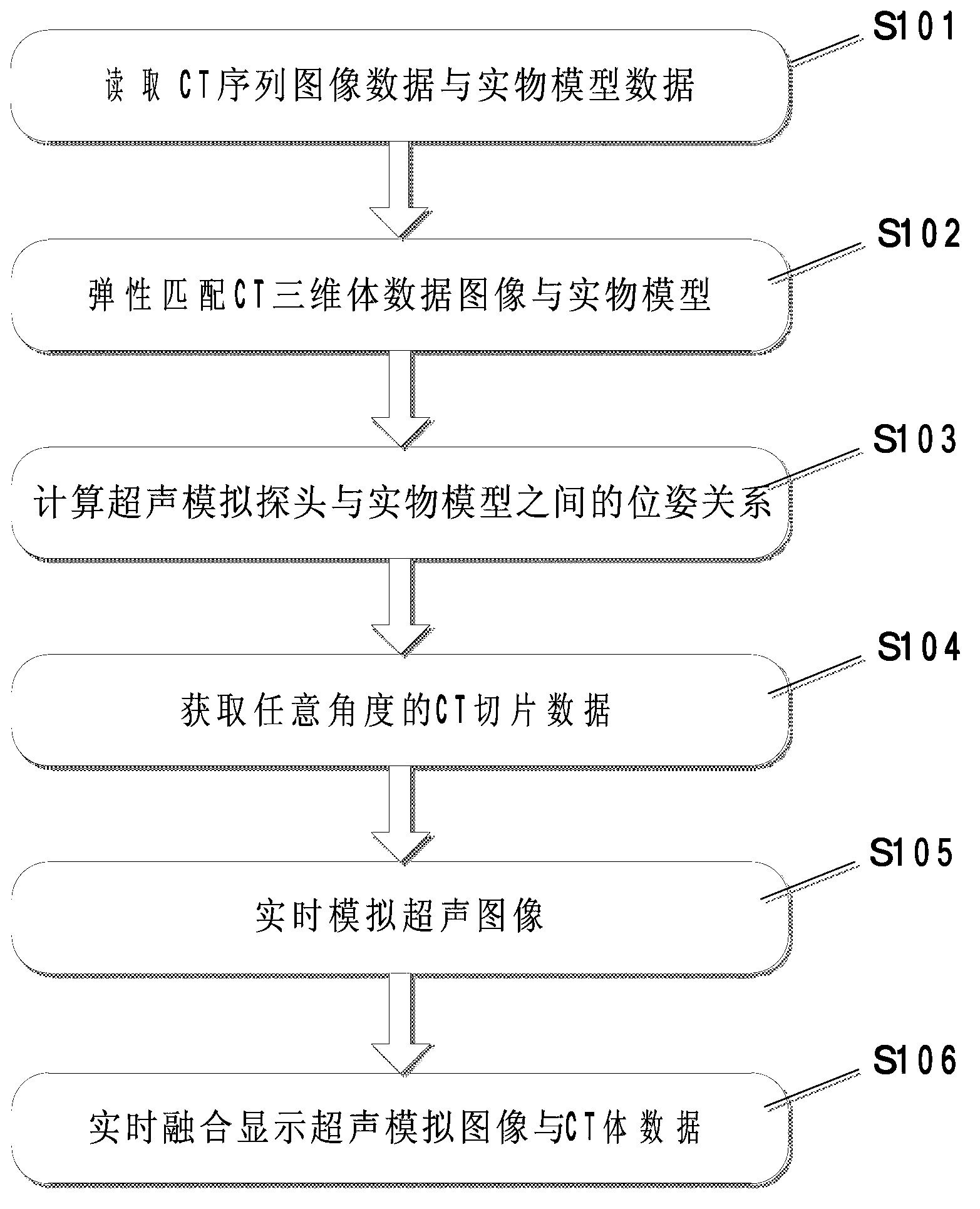
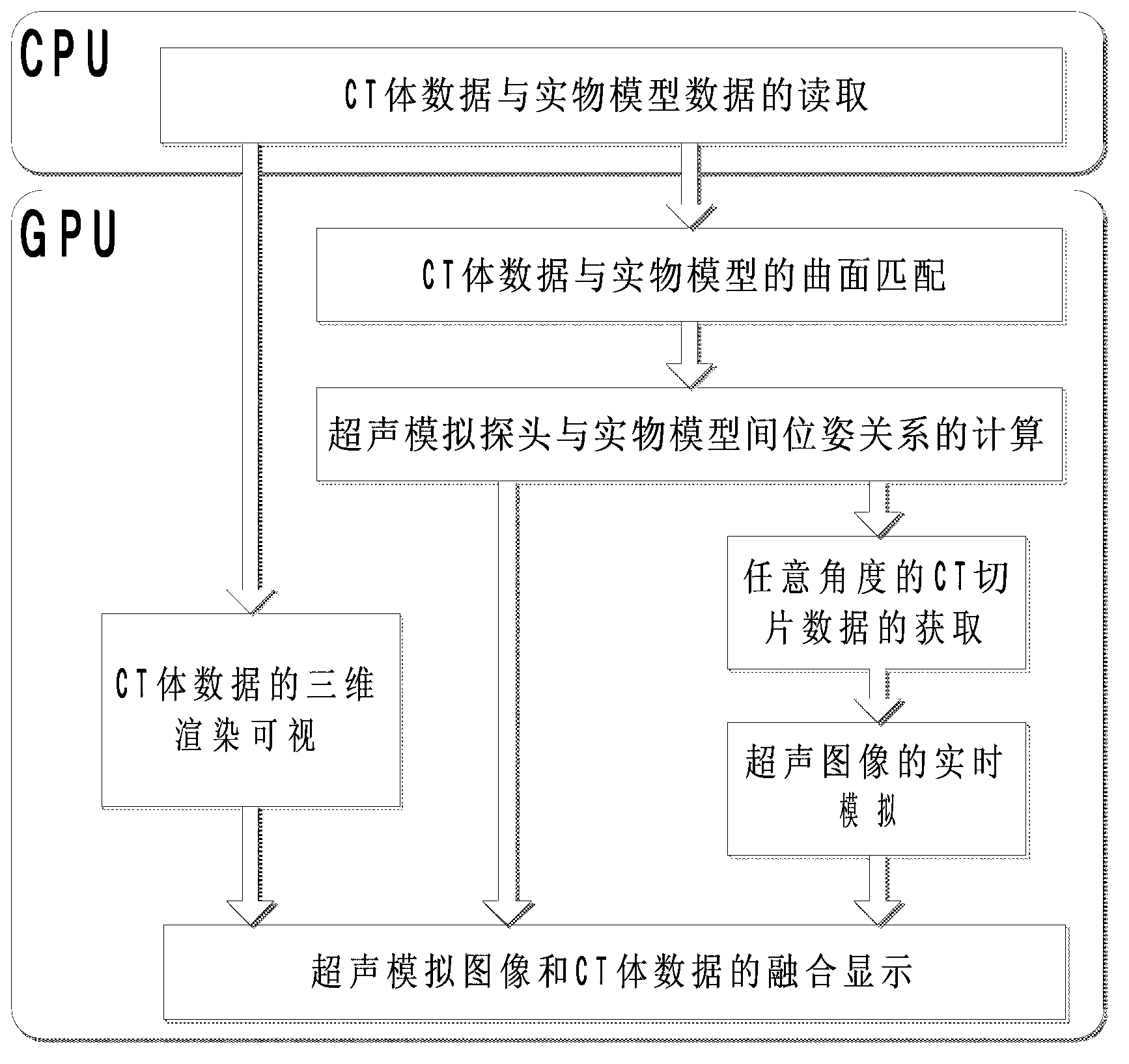
[0035] attached figure 1 To reconstruct the flow chart, the ultrasound simulation training system includes the following steps:
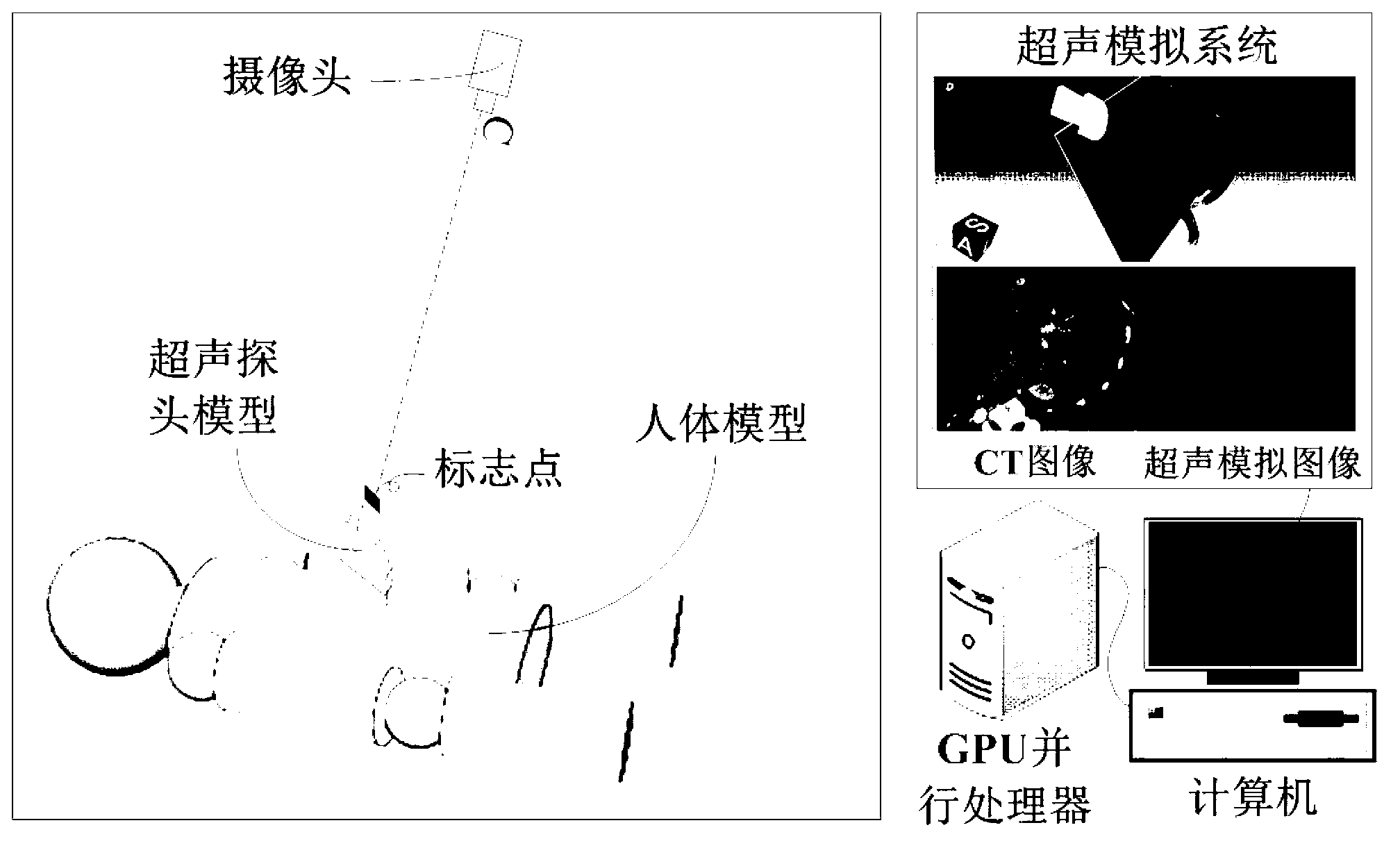
[0036] Step S101, read the CT sequence image data as the source image of the ultrasound simulation, and read the data of the solid model of the human abdominal cavity.
[0037] Step S102, using the read human abdominal cavity solid model data as a standard and the read CT sequence image data as an image to be registered, using an octree-based matching algorithm to complete surface matching between the CT volume data and the human abdominal cavity model data. The process of elastic registration based on octree algorithm is as follows:
[0038] (1) In the image to be registered, that is, select a certain number of marker points on the data surface of the human abdominal cavity model...
PUM
 Login to View More
 Abstract
Description
Claims
Application Information
 Login to View More