Check patentability & draft patents in minutes with Patsnap Eureka AI!

Decarbonation process

A carbon dioxide and carbon dioxide removal technology, applied in new fields, can solve the problems of cumbersome installation and not very effective, and achieve the effect of flexibility advantage and excellent heat exchange efficiency

Inactive Publication Date: 2014-01-22
HOLCIM
View PDF6 Cites 2 Cited by
  • Summary
  • Abstract
  • Description
  • Claims
  • Application Information

AI Technical Summary

Problems solved by technology

However, the problem with this method is that it is necessary to adapt the existing method by integrating additional equipment
Neither is very efficient, especially in the second case which is more cumbersome to install

Method used

the structure of the environmentally friendly knitted fabric provided by the present invention; figure 2 Flow chart of the yarn wrapping machine for environmentally friendly knitted fabrics and storage devices; image 3 Is the parameter map of the yarn covering machine
View more

Image

Smart Image Click on the blue labels to locate them in the text.
Viewing Examples
Smart Image
  • Decarbonation process
  • Decarbonation process
  • Decarbonation process

Examples

Experimental program
Comparison scheme
Effect test

Embodiment Construction

[0054] Description of the method

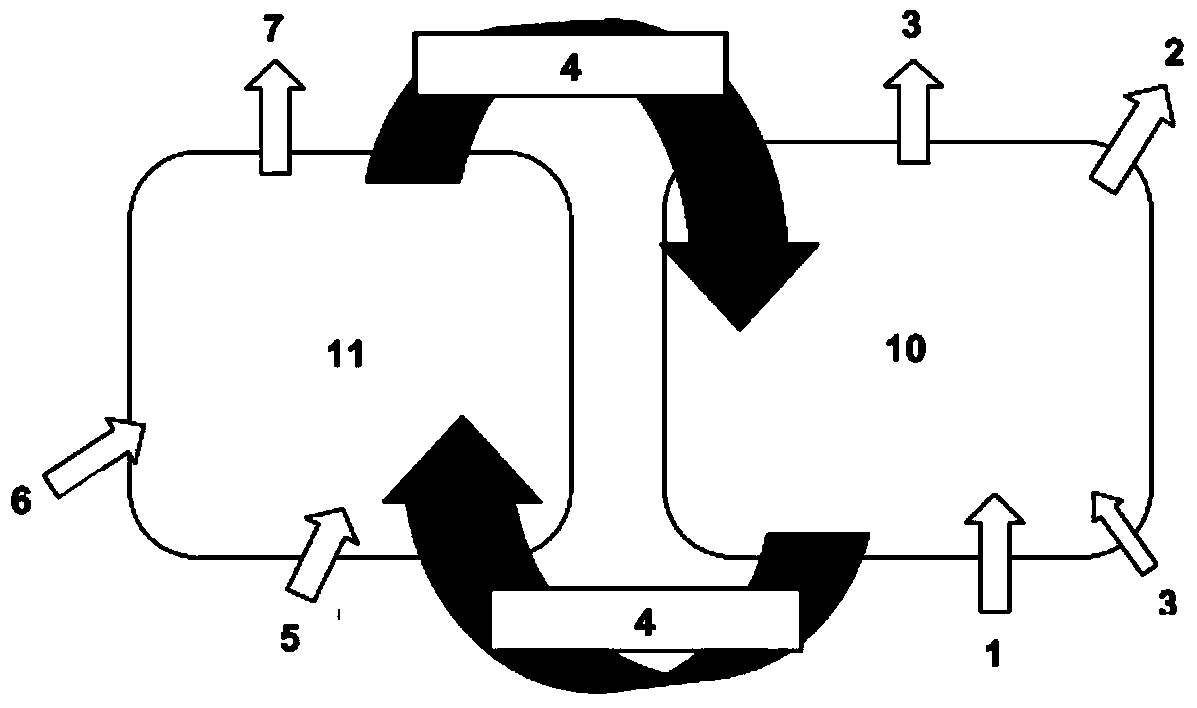
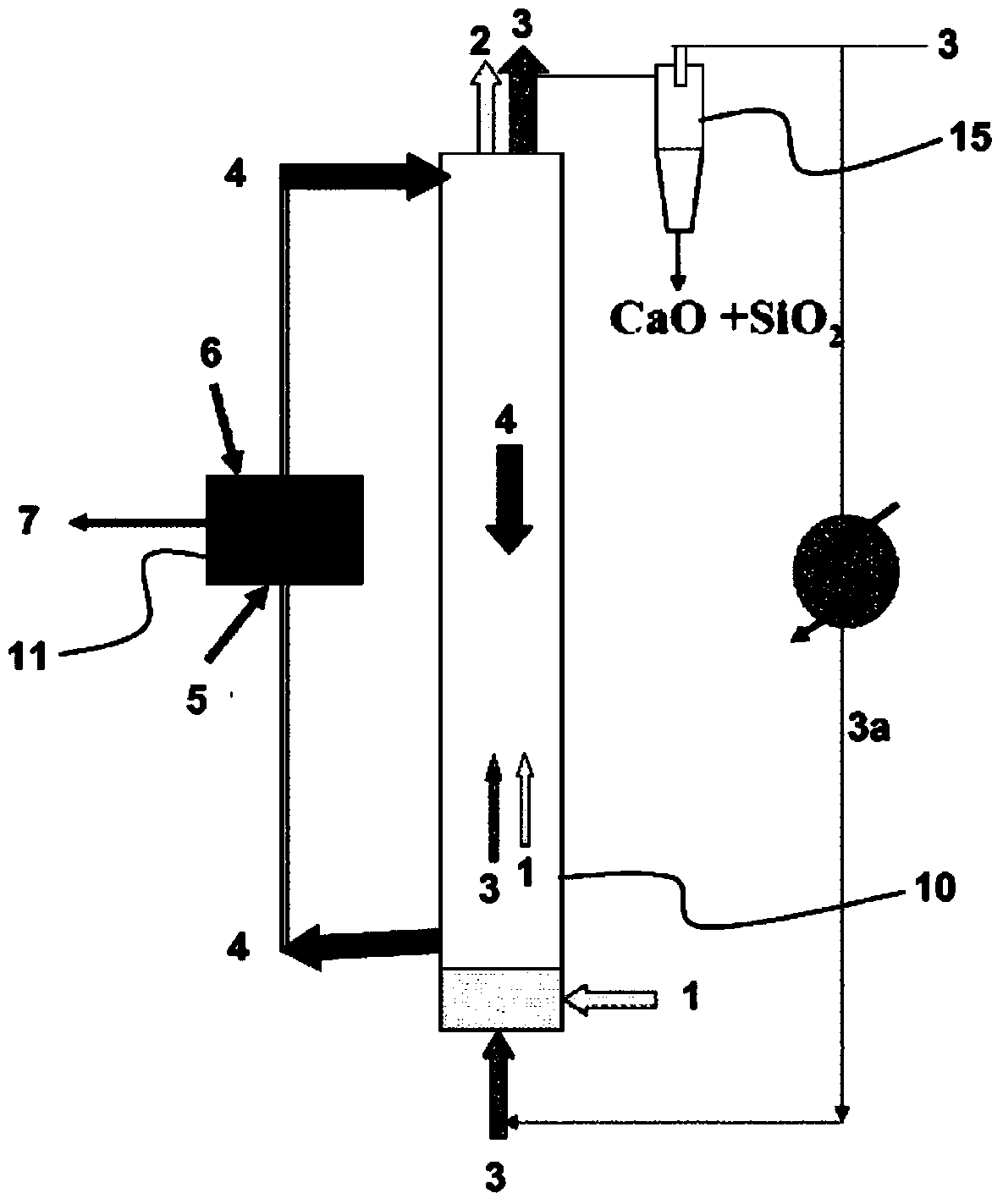
[0055] Due to the specificity of the clinker production method, the system proposed according to the invention for the concentration of carbon dioxide differs fundamentally from known methods. This is based on the finding that 820kg of CO2 are emitted per tonne of clinker produced, of which 535kg is mainly from the decarbonation of calcium carbonate and 285kg from the combustion of fuels such as coal. Decarbonation is a purely thermal phenomenon. A stream of nearly pure carbon dioxide can be produced by performing the calcination reaction in an enclosure where the calcium carbonate is calcined by indirect heating.

[0056] principle

[0057] According to the method and apparatus of the present invention, such as figure 1 with figure 2 As shown, based on the use of a fluidized bed exchanger-reactor comprising two interacting parts: a "combustor" and a "calcinator".

[0058] Description of the calciner

[0059] The calciner is the ...

the structure of the environmentally friendly knitted fabric provided by the present invention; figure 2 Flow chart of the yarn wrapping machine for environmentally friendly knitted fabrics and storage devices; image 3 Is the parameter map of the yarn covering machine
Login to View More

PUM

PropertyMeasurementUnit
Average sizeaaaaaaaaaa
Login to View More

Abstract

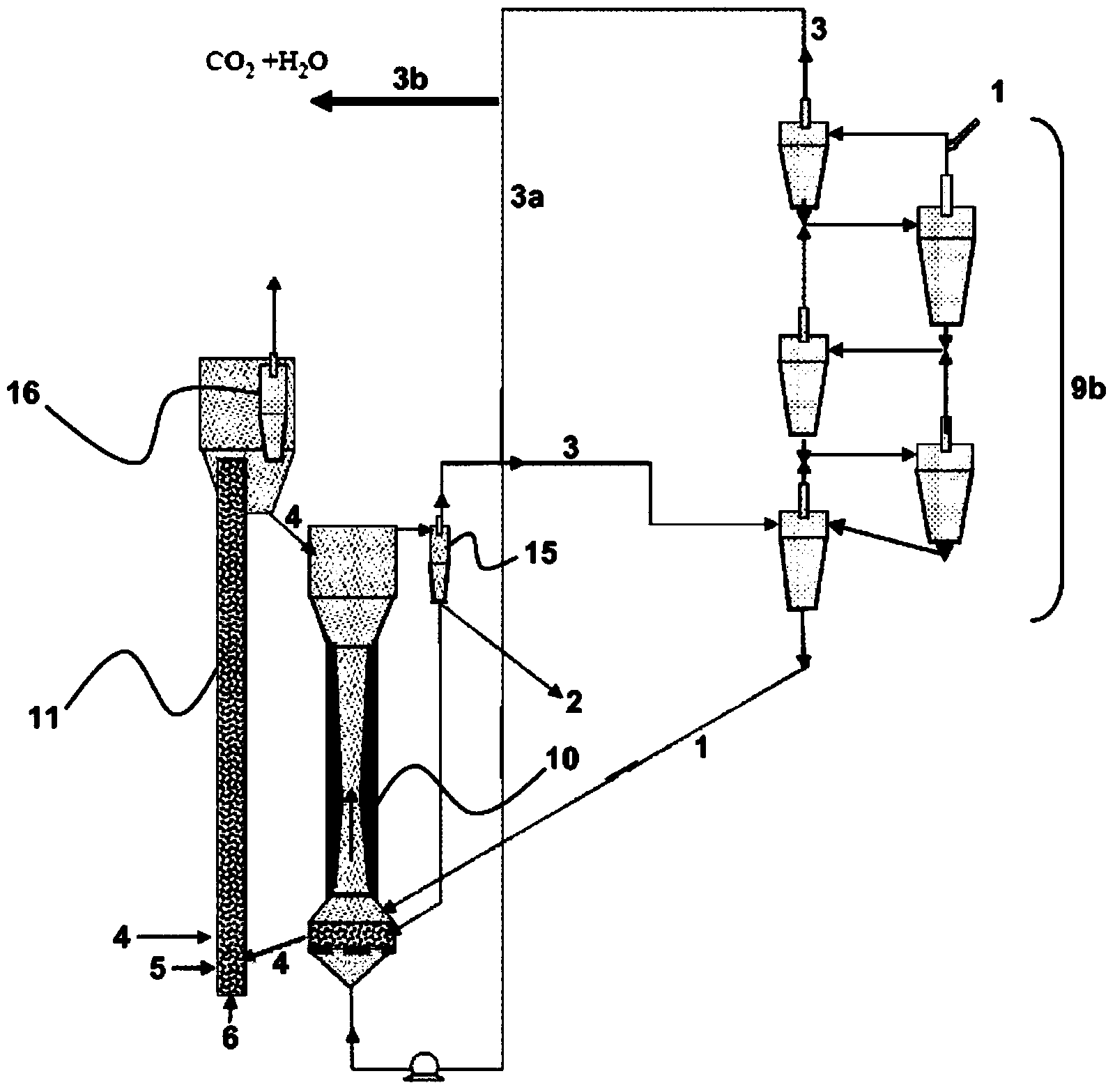
The present invention relates to a process for decarbonation of particles of raw meal, to be burnt in a clinkering kiln at a cement plant, which particles having a particle size distribution such that the retention of the particles on a 200[mu]m sieve is less than 2% by mass and the retention of the particles on a 90[mu]m sieve is less than 20% by mass, said process comprising the steps of: a) decarbonation of particles of raw meal, in a fluidised bed heat exchanger, said particles being suspended in a rising carrier gas comprising carbon dioxide, the said fluidised bed heat exchanger having a solid heat carrier circulating counter- current relative to the carrier gas, to provide an effluent gas comprising carbon dioxide and decarbonated raw meal; b)separating said effluent gas and the decarbonated raw meal c) separating the effluent gas into a first and second part; cooling said first part of the effluent gas and recycling to provide carrier gas, d)isolating said second part of effluent gas e)recovering and re heating said heat carrier and recirculating to step (a).

Description

technical field [0001] The present invention relates to the field of hydraulic binders, in particular cement. The present invention relates to a new method which makes it possible to obtain an exhaust gas rich in carbon dioxide. Background technique [0002] The method used to produce standard clinker revealed 820 kg of carbon dioxide emitted per ton of clinker. The emissions are divided in the following way: 535 kg (ie 65.2 mass %) from the dissociation of carbonates in the raw materials and 285 kg (ie 34.8 mass %) from the oxidation of carbon in the fuel. [0003] Several techniques are known for reducing carbon dioxide emissions in cement plants, for example through carbon dioxide capture. Capturing carbon dioxide after combustion is a known technique, for example, where the gas coming out of a chimney is treated. Typically, solvents such as amines are used for treatment. The advantage of this method is that it does not trigger changes in the clinker production method...

Claims

the structure of the environmentally friendly knitted fabric provided by the present invention; figure 2 Flow chart of the yarn wrapping machine for environmentally friendly knitted fabrics and storage devices; image 3 Is the parameter map of the yarn covering machine
Login to View More

Application Information

Patent Timeline
no application Login to View More
IPC IPC(8): F27B7/20F27D17/00C10B49/22F23C10/10F23G5/30F28D13/00F28D19/02B01J8/12B01J8/18B01J8/38C01B32/50
CPCB01J8/1836B01J8/1872B01J8/388B01J2208/00274B01J2208/00292B01J2208/00513F27B7/2033F27D17/004F27D17/008F28D13/00F28D19/02C04B7/38C04B7/434F28C3/16C01B32/50C01B13/18Y02P40/18F27B7/20F27D17/00C10B49/22F23C10/10F23G5/30B01J8/12B01J8/18C04B7/45
Inventor M·吉梅内斯M·哈迈迪
Owner HOLCIM
Features
  • R&D
  • Intellectual Property
  • Life Sciences
  • Materials
  • Tech Scout
Why Patsnap Eureka
  • Unparalleled Data Quality
  • Higher Quality Content
  • 60% Fewer Hallucinations
Social media
Patsnap Eureka Blog
Learn More