
A lithium ion battery
A technology for lithium-ion batteries and electrode groups, which is applied in battery electrodes, secondary batteries, circuits, etc., and can solve the problems of unsatisfactory anti-over-discharge solutions for lithium-ion batteries
- Summary
- Abstract
- Description
- Claims
- Application Information
AI Technical Summary
Problems solved by technology
Method used
Image

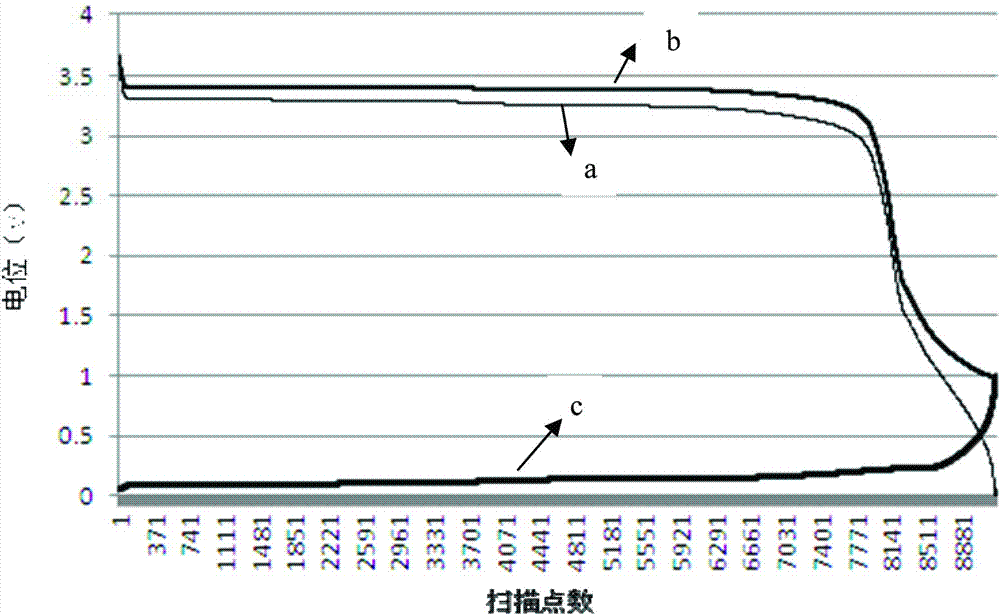
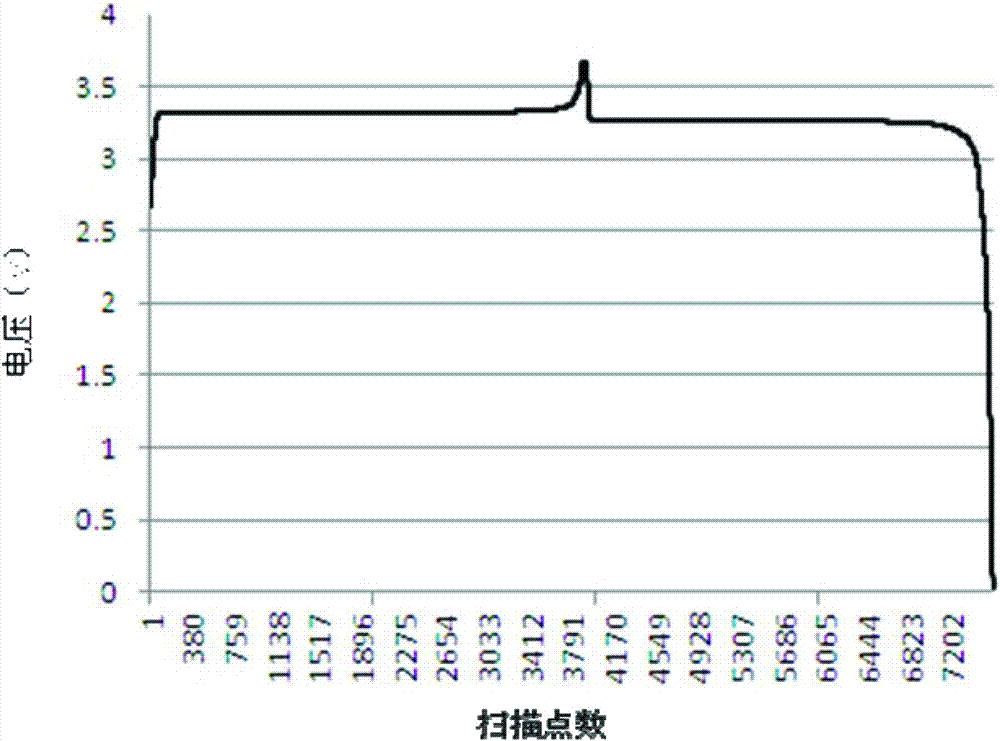
Examples
preparation example Construction
[0031] The preparation of the negative electrode can be that first lithium and / or lithium alloy, negative electrode active material and negative electrode binder are configured together to form a slurry and attached to the negative electrode conductive substrate, for example, lithium and / or lithium alloy, negative electrode active material and negative electrode binder can be After dry mixing of the binder, etc., it is attached to the negative electrode conductive substrate by spraying. It is also possible to wet mix lithium and / or lithium alloy, negative electrode active material, negative electrode binder, etc. with solvents and selectively add dispersants, etc., It is attached to the negative electrode conductive substrate by slurry coating and other methods. Generally, the solvent used at this time is an oily solvent, and the binder is an oily binder. Then drying, calendering, etc., wherein, the steps of drying and calendering are the same as the prior art, that is, drying ...
Embodiment approach
[0033] Among them, the separator can be selected from various separators used in lithium-ion batteries known to those skilled in the art, such as polyolefin microporous membrane (PP), polyethylene felt (PE), glass fiber felt or ultrafine glass fiber paper or PP / PE / PP. As a preferred embodiment, the separator is PP / PE / PP.
[0034] The electrolyte contains lithium salt and non-aqueous solvent. The lithium salt can be lithium hexafluorophosphate, lithium tetrafluoroborate, lithium hexafluoroarsenate, lithium perchlorate, lithium trifluoromethanesulfonate, lithium perfluorobutylsulfonate, aluminate One or more of lithium, lithium chloroaluminate, lithium fluorosulfonyl imide, lithium chloride and lithium iodide; the non-aqueous solvent can be γ-butyrolactone, ethyl methyl carbonate, methyl propyl carbonate , dipropyl carbonate, acid anhydride, N-methylpyrrolidone, N-methylformamide, N-methylacetamide, acetonitrile, N,N-dimethylformamide, sulfolane, dimethylsulfoxide, disulfite ...
Embodiment 1
[0040] (1) Preparation of positive electrode:
[0041] 90g of lithium iron phosphate (D 50 =0.3 microns), 10g of iron phosphate with a minimum primary particle size of 30 microns (D 50 =35 microns), 4g of binder polyvinylidene fluoride (PVDF), 5g of conductive agent SP (super conductive carbon black), 0.5g of dispersant polyvinylpyrrolidone (PVP) and 120g of N-methylpyrrolidone were added Stir in a vacuum mixer to form a uniform positive electrode slurry. The positive electrode slurry was evenly coated on both sides of an aluminum foil with a thickness of 16 μm, and then dried at 150° C. After rolling and cutting, a positive electrode sheet with a size of 453*40 mm is obtained.
[0042] (2) Preparation of negative electrode:
[0043] Add 50g of natural graphite, 1g of binder styrene-butadiene rubber latex (SBR), 0.5g of binder carboxymethylcellulose (CMC), 0.025g of lithium metal powder (purity 99.9%), and 125g of NMP into a vacuum mixer Stir to form a uniform negative el...
PUM
| Property | Measurement | Unit |
|---|---|---|
| particle diameter | aaaaa | aaaaa |
| particle size | aaaaa | aaaaa |
| specific surface area | aaaaa | aaaaa |
Abstract
Description
Claims
Application Information
 Login to View More