Hydrocracking method for producing heavy naphtha from high-nitrogen stock

A heavy naphtha, hydrocracking technology, applied in the petroleum industry, hydrotreating process, processing hydrocarbon oil, etc., can solve problems such as the limitation of naphtha yield

CN104560169AActive Publication Date: 2015-04-29CHINA PETROLEUM & CHEM CORP +1
4 Cites 10 Cited by

Patent Information

Authority / Receiving Office
CN · China
Patent Type
Applications(China)
Current Assignee / Owner
Publication Date
2015-04-29

Smart Images

  • Figure 1
    Figure 1
  • Figure 2
    Figure 2
  • Figure 3
    Figure 3
Patent Text Reader

Abstract

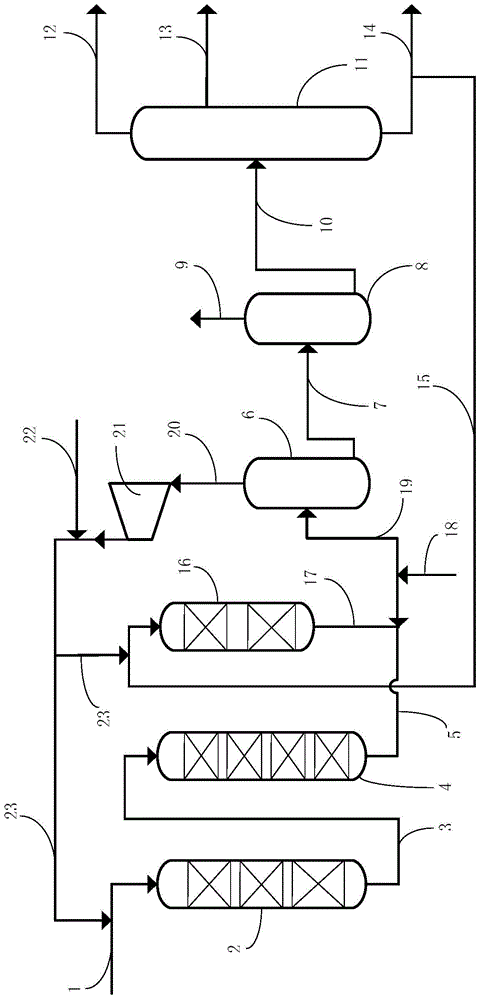
A hydrocracking method for producing heavy naphtha from a high-nitrogen stock comprises the following steps: mixing and heating a high-nitrogen raw oil and a hydrogen-rich gas, and enabling the heated mixture to enter a first reaction area to be subjected to hydrofining reaction and hydrocracking reaction; performing cooling, oil-gas separation and fractional distillation on the reactant flow to obtain light naphtha, heavy naphtha and tail oil distillates; and pressurizing the tail oil distillates, then mixing the pressurized tail oil distillates with recycle hydrogen, and enabling the mixture to enter a second reaction area to be subjected to hydrocracking reaction. In the second reaction area, the tail oil distillates which are difficult to convert can be all converted into naphtha distillates under the conditions of high airspeed and low severity. The method provided by the invention can be used for reducing the yield of products with relatively low added value, such as dry gas, liquefied gas and light naphtha, and improving the selectivity of heavy naphtha.
Need to check novelty before this filing date? Find Prior Art

Description

technical field

[0001] The invention belongs to a hydrocracking method for obtaining low-boiling distillate hydrocarbon oil in the presence of hydrogen. More specifically, a hydrocracking process to produce heavy naphtha. Background technique

[0002] Since the second half of 2009, the global economy has shown signs of recovery, and the demand for global petrochemical products has resumed its upward trend. It is estimated that 60% of the global demand growth for chemical products from now to 2015 will come from Asia, and half of the growth in demand in Asia will come from China. Benzene, toluene, and xylene (BTX for short) are the basic raw materials of the petrochemical industry and an important component of high-octane gasoline. Nearly 70% of the BTX needed in the world comes from catalytic reforming, while heavy naphtha is The main raw material for catalytic reforming. At present, the world's refining and chemical enterprises are facing severe challenges: oil prices co...

Examples

Embodiment 1

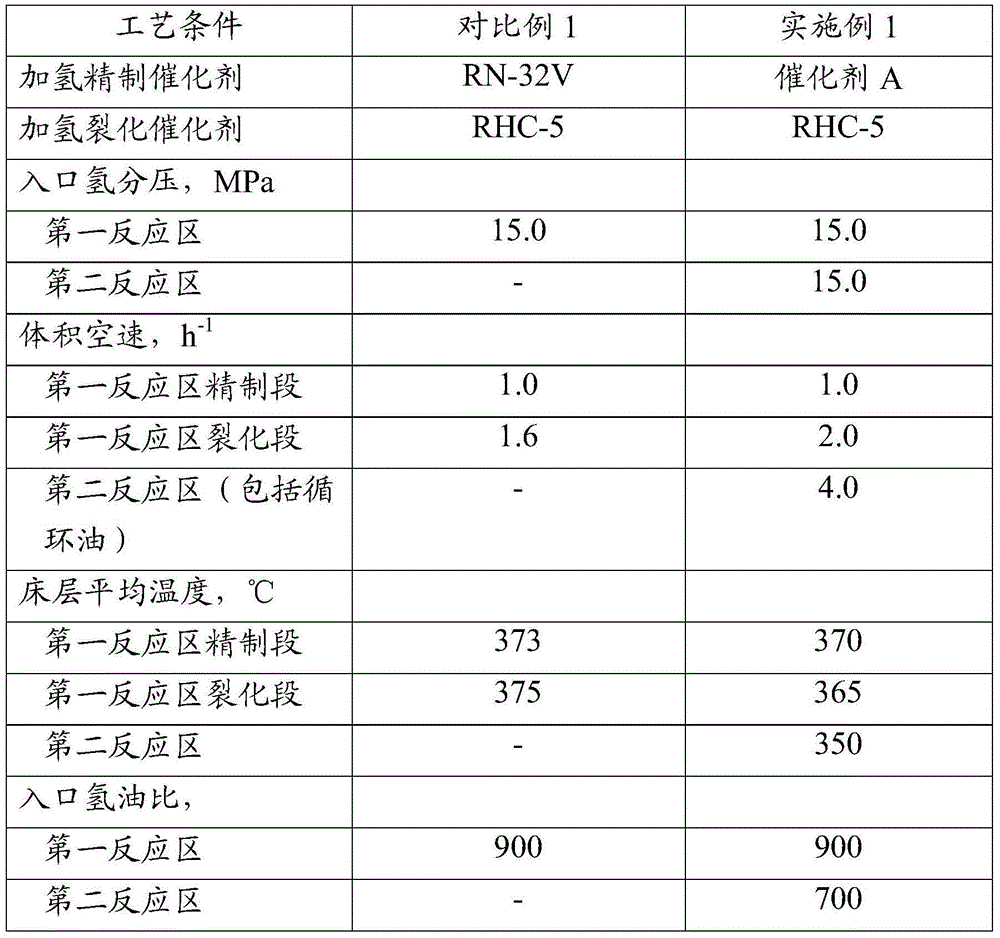
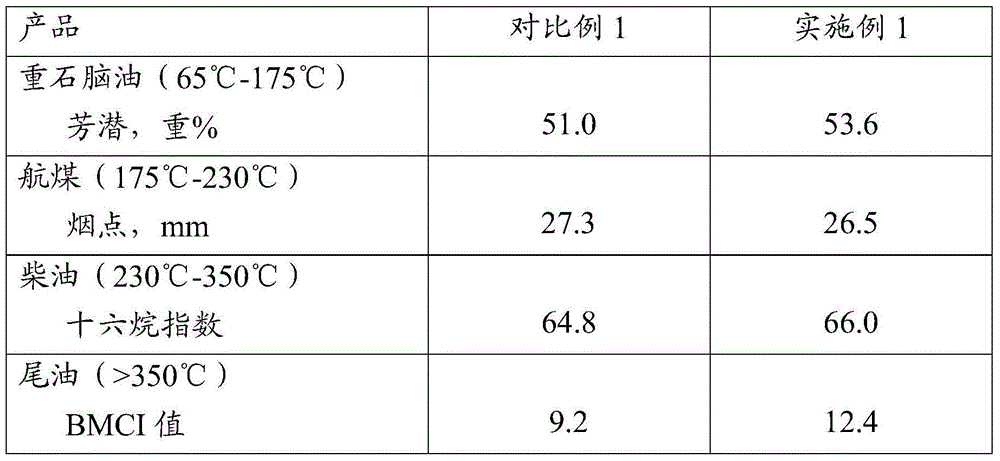
[0081] In this example, the same feedstock oil as in Comparative Example 1 was used, and the hydrocracking test was carried out with the hydrotreating catalyst A and the process flow provided by the present invention. The experimental results are listed in Table 2-Table 4.

[0082] As can be seen from the data in the table, under the condition of producing the same amount of heavy naphtha, compared with the one-pass flow process, the method provided by the present invention requires less hydrogen consumption and higher aroma potential of heavy naphtha.

Embodiment 2

[0084] In this example, mixed feed oil B containing VGO and CGO was used to carry out a hydrocracking test with the catalyst and process flow provided by the present invention, and the experimental results are listed in Table 5-Table 7.

[0085] As can be seen from the data in the table, the yield of tail oil can be reduced to the minimum under the condition of hydrogen partial pressure of 13.0MPa by adopting the method provided by the present invention, which is 0; and the maximum production obtains light naphtha and heavy naphtha The oil product has a total yield of more than 89% by weight. It shows that this method can produce the largest amount of naphtha under relatively moderate conditions.

[0086] Table 1. Raw oil properties

[0087] Raw oil name

A

B

Density, g / cm 3

0.921

0.930

S, weight%

2.5

2.7

N, μg / g

1800

2400

Distillation range (D-1160), ℃

initial boiling point

323

3...