
Monocrystalline silicon substrate TFT device
A monocrystalline silicon and substrate technology, applied in semiconductor devices, semiconductor/solid-state device manufacturing, transistors, etc., can solve problems such as performance gaps and achieve the effect of reducing pixel size
- Summary
- Abstract
- Description
- Claims
- Application Information
AI Technical Summary
Problems solved by technology
Method used
Image

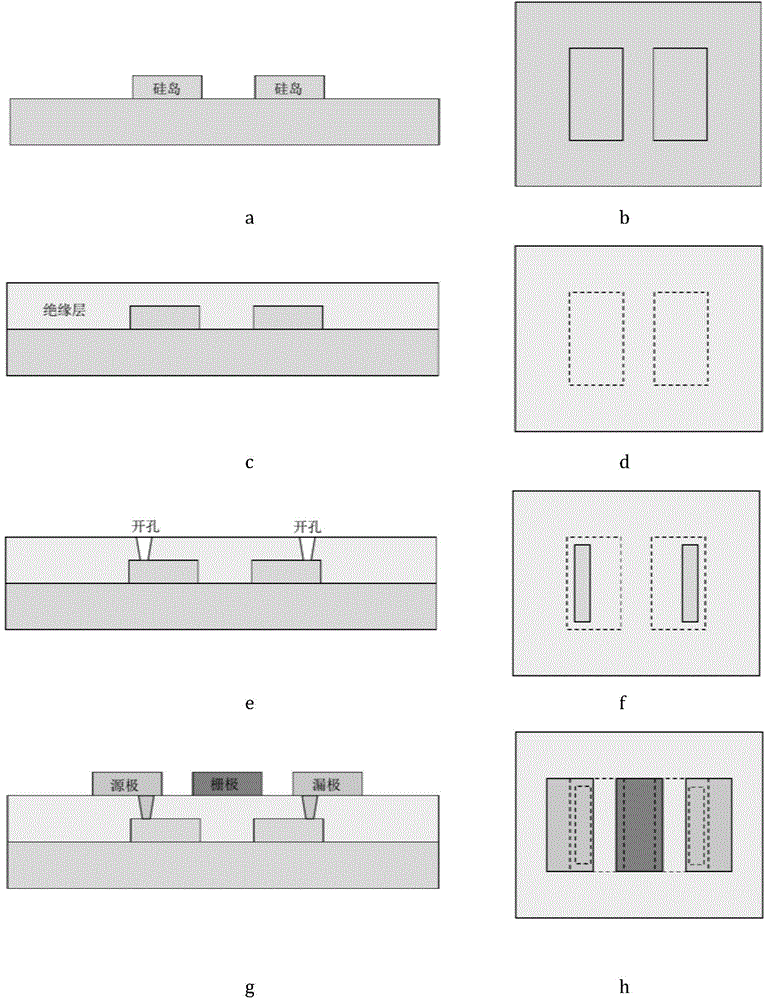
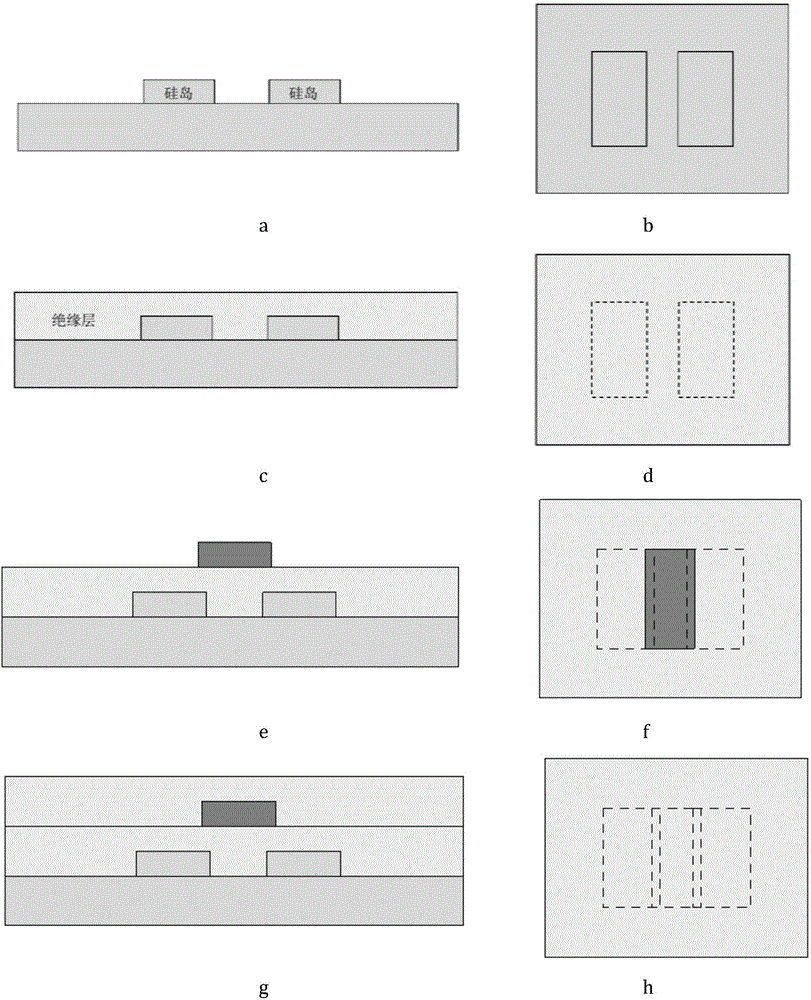
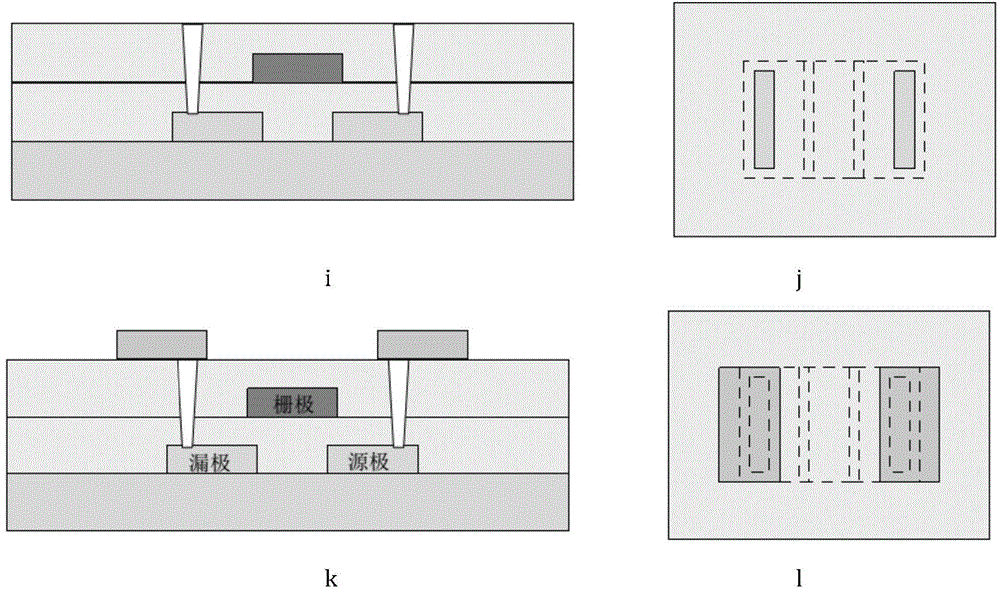
Examples
Embodiment 1
[0022] Such as figure 1 As shown in a to h, this embodiment includes the following steps:
[0023] 1. If figure 1 a and figure 1 As shown in b, the silicon island is etched on the single crystal silicon substrate. The etching method can be directly etched by laser beam, or ion beam etching can be used after covering the protective layer on the single crystal silicon substrate, or other etching methods can be used method. The size of the silicon island to be etched depends on the design requirements of the device.
[0024] 2. If figure 1 c and figure 1 As shown in d, the etched silicon island is covered with a layer of insulating material, which can be done by evaporation or magnetron sputtering, or by sol-gel method. The insulating material can be inorganic substances such as metal oxides and metal salts, or organic materials. The insulating material used should have good adhesion to the single crystal silicon substrate and be compatible with the subsequent process. sex...
Embodiment 2
[0029] Such as figure 2 Shown in a~l, this embodiment includes the following steps:
[0030] 1. If figure 2 a and figure 2 As shown in b, the silicon island is etched on the single crystal silicon substrate. The etching method can be directly etched by laser beam, or ion beam etching can be used after covering the protective layer on the single crystal silicon substrate, or other etching methods can be used method. The size of the silicon island to be etched depends on the design requirements of the device.
[0031] 2. If figure 2 c and figure 2 As shown in d, the etched silicon island is covered with a layer of insulating material, which can be done by evaporation or magnetron sputtering, or by sol-gel method. The insulating material can be inorganic substances such as metal oxides and metal salts, or organic materials. The insulating material used should have good adhesion to the single crystal silicon substrate and be compatible with the subsequent process. sex....
PUM
 Login to View More
 Abstract
Description
Claims
Application Information
 Login to View More