Unlock instant, AI-driven research and patent intelligence for your innovation.

Method for making Ti-graphene electrode through oxidized graphene in assistive mode

A graphene electrode and graphene technology, applied in the direction of electrochemical water/sewage treatment, etc., to achieve the effect of improving removal effect, convenient operation, and accelerating electronic conductivity

Active Publication Date: 2015-12-23
北京中清山水科技发展有限公司
View PDF9 Cites 5 Cited by
  • Summary
  • Abstract
  • Description
  • Claims
  • Application Information

AI Technical Summary

Problems solved by technology

Due to the excellent thermal, optical and electrical properties of graphene, especially its excellent electronic conductivity and large specific surface area, the effective combination of graphene materials and electrodes in electrochemical removal can greatly improve the removal rate of nitrate in sewage , but there are still few studies in this area

Method used

the structure of the environmentally friendly knitted fabric provided by the present invention; figure 2 Flow chart of the yarn wrapping machine for environmentally friendly knitted fabrics and storage devices; image 3 Is the parameter map of the yarn covering machine
View more

Image

Smart Image Click on the blue labels to locate them in the text.
Viewing Examples
Smart Image
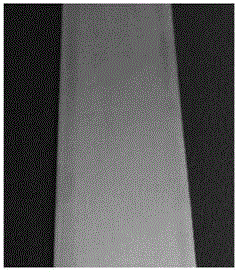
  • Method for making Ti-graphene electrode through oxidized graphene in assistive mode
  • Method for making Ti-graphene electrode through oxidized graphene in assistive mode
  • Method for making Ti-graphene electrode through oxidized graphene in assistive mode

Examples

Experimental program
Comparison scheme
Effect test

Embodiment 1

[0031] This embodiment is a method of using graphene oxide to assist in the production of Ti-graphene electrodes.

[0032] (1) Ti pole plate pretreatment: the Ti pole plate adopted in the present invention has a titanium content of 99.95%, a thickness of 0.5 mm, and a size of 10 cm×2.5 cm. First, polish the Ti plate with 150-mesh metallographic sandpaper until there is no scratch on the surface; then rinse it with deionized water for 2 to 5 times; finally, dry it with a hair dryer for use.

[0033] (2) Preparation of graphene oxide: specifically: add 4g flake graphite powder to a beaker; under stirring in an ice-water bath, add 2gNaNO to the beaker 3 with 92mLH 2 SO 4 , followed by slowly adding 12gKMnO 4 ; After 5 minutes, remove the ice-water bath and heat the system to 35°C for 30 minutes; slowly add 184mL deionized water to the beaker, and stir for 15 minutes; add 3% H at 60°C 2 o 2 aqueous solution until the bubbles disappear; centrifuge the precipitate to a pH of 3-...

Embodiment 2

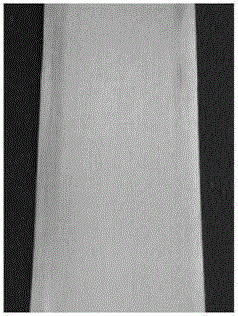
[0037] The pretreatment of the Ti pole plate and the manufacturing method of the Ti-graphene electrode in this embodiment are basically the same as those in Example 1, except that the Ti pole plate is immersed in the graphene oxide solution vertically or horizontally, and the immersion time is 15 minutes. The image of the obtained Ti-graphene electrode is as image 3 As shown, it can be seen from the figure that a layer of light brown film is formed on the surface of the Ti-graphene electrode.

the structure of the environmentally friendly knitted fabric provided by the present invention; figure 2 Flow chart of the yarn wrapping machine for environmentally friendly knitted fabrics and storage devices; image 3 Is the parameter map of the yarn covering machine
Login to View More

PUM

No PUM Login to View More

Abstract

The invention discloses a method for making Ti-graphene electrode through oxidized graphene in an assistive mode. The method includes the steps that flake graphite powder is added into a beaker; NaNO3, H2SO4 and KMnO4 are added into the beaker in ice-water bath stirring; after five minutes, an ice-water bath is removed, and the mixture is heated to 35 DEG C for thermal insulation; deionized water is slowly added for stirring; an H2O2 water solution of 60 DEG C is added until bubbles disappear; centrifuging and freeze drying are performed to obtain oxidized graphene powder, and after a Ti electrode plate is ground through abrasive paper, deionized water is used for washing; then blow-drying is performed for usage; an oxidized graphene solution is prepared, and sodium dodecyl benzene sulfonate is added; the blow-dried Ti electrode plate is perpendicularly or horizontally immersed into the solution and then pulled out; an oxidized graphene film will be formed on the surface of the Ti electrode plate; after a reaction, the formed Ti electrode plate with the oxidized graphene film is taken out and naturally aired to obtain the finished product Ti-graphene electrode. The Ti-graphene electrode is made through assisting of oxidized graphene in one beaker, and no other assistive treatment devices are needed.

Description

technical field [0001] The invention relates to the technical field of electrode production, in particular to a method for assisting the production of Ti-graphene electrodes by using graphene oxide. Background technique [0002] Graphene is a kind of carbon atom with sp 2 The single-proton-layer two-dimensional crystal formed by hybrid connection is essentially isolated single-atom-layer graphite. In 2004, scientists Geim and Novoselov of the University of Manchester in the United Kingdom discovered that there is a two-dimensional graphene in a monolithic state. Due to its special two-dimensional monoatomic layer crystal structure, graphene has excellent thermal, optical, electrical and mechanical properties, and has broad application prospects in composite materials, catalyst supports and environmental restoration. [0003] At present, the methods for removing nitrate in water mainly include physical, chemical and biological methods. Compared with the physical method tha...

Claims

the structure of the environmentally friendly knitted fabric provided by the present invention; figure 2 Flow chart of the yarn wrapping machine for environmentally friendly knitted fabrics and storage devices; image 3 Is the parameter map of the yarn covering machine
Login to View More

Application Information

Patent Timeline
no application Login to View More
IPC IPC(8): C02F1/46C01B31/04
Inventor 李淼马雪姣辛莉刘翔
Owner 北京中清山水科技发展有限公司