
Core-shell double-layer microsphere employing poly(p-dioxanone) as core and preparation method and application of core-shell double-layer microsphere
A technology of poly-dioxanone and microspheres, applied in the field of biomedicine, can solve the problems of low burst release and encapsulation rate of single-layer microspheres, inability to control sustained release time, fast degradation time, etc. Good repeatability and simple operation
- Summary
- Abstract
- Description
- Claims
- Application Information
AI Technical Summary
Problems solved by technology
Method used
Image

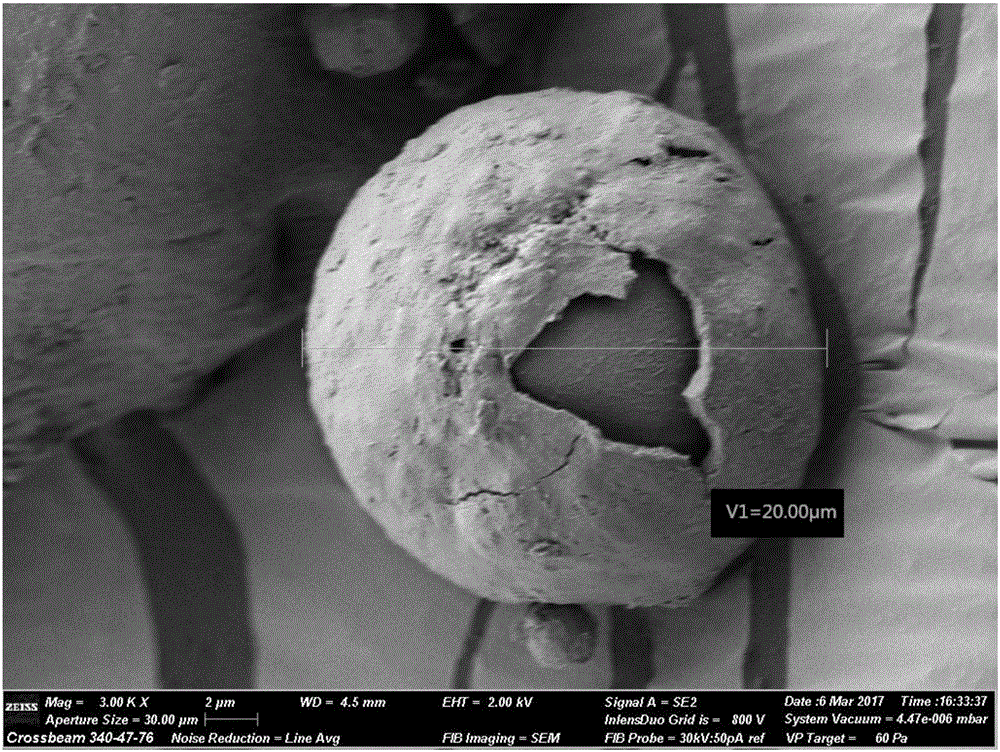
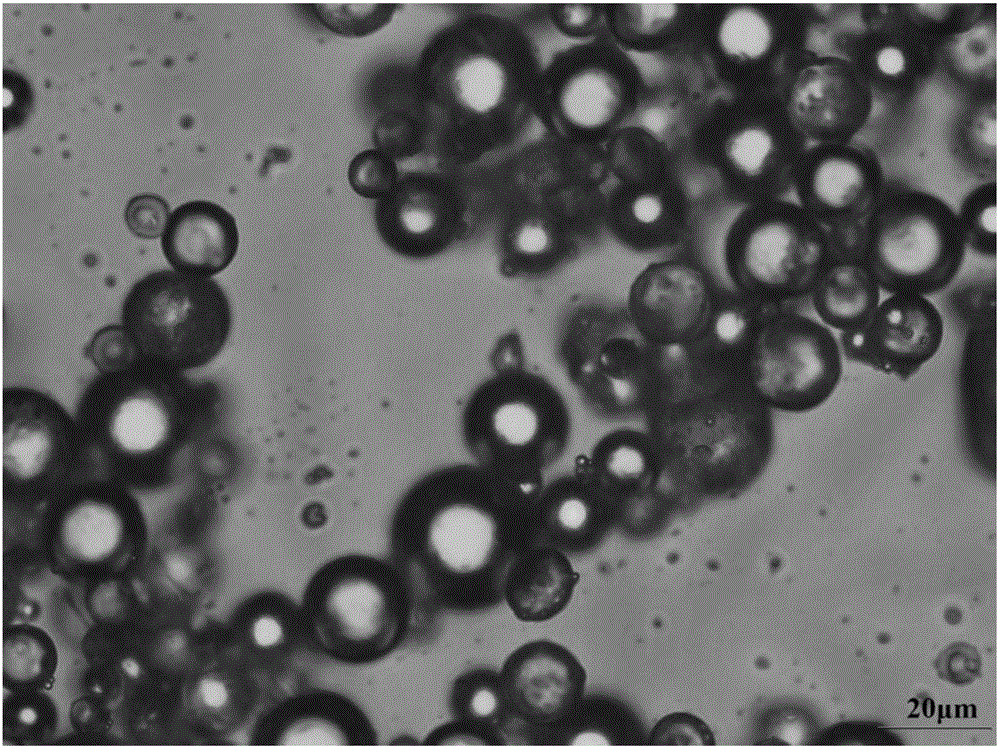
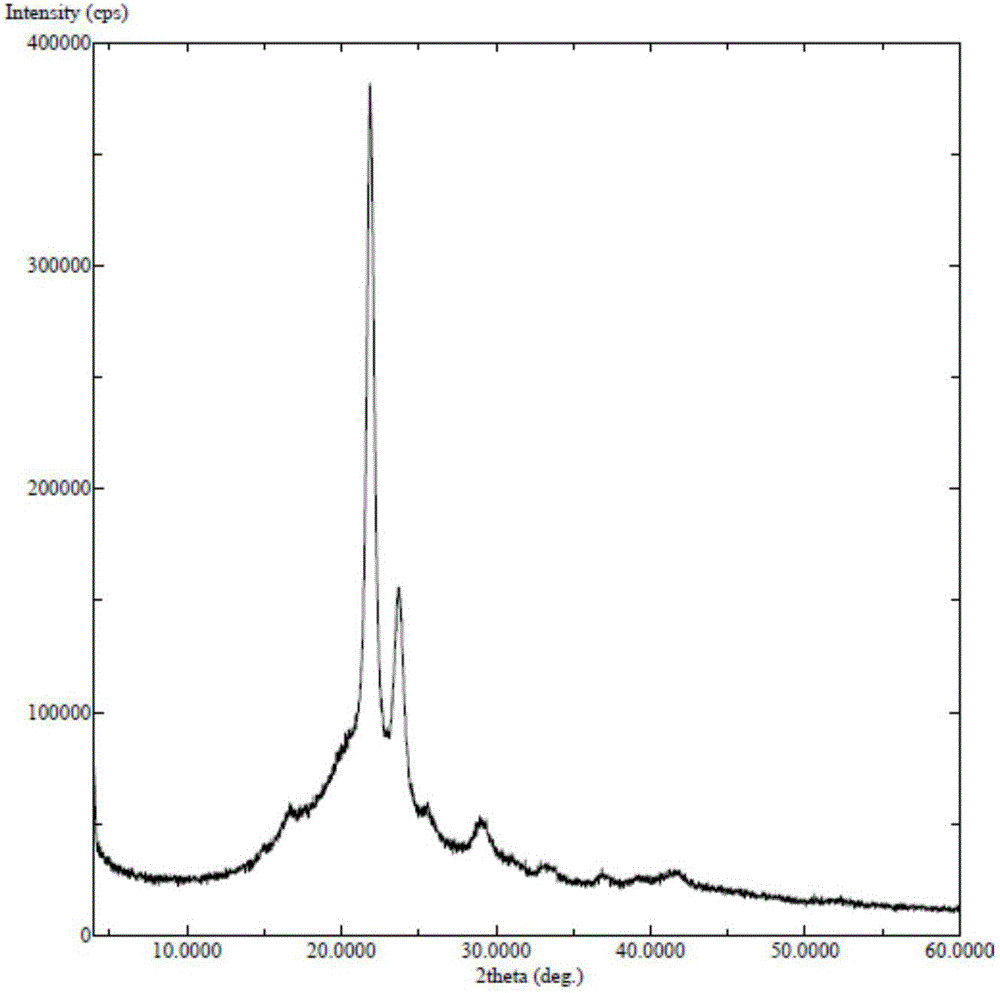
Examples
Embodiment 1
[0034] (1) According to the mass volume ratio (g / mL) of polydioxanone and hexafluoroisopropanol as 8:100, add polydioxanone to hexafluoroisopropanol to the polydioxanone Dioxanone is completely dissolved, and after adding chloroform and stirring, it is added dropwise in the polyvinyl alcohol aqueous solution to obtain a mixed solution. At this time, the volume ratio of hexafluoroisopropanol and chloroform in the mixed solution is 2.5:1. The mass ratio of polydioxanone and polyvinyl alcohol in the aqueous solution of polyvinyl alcohol is 1:1, and the mixed solution is homogeneously stirred at 6000 rpm until the emulsification is complete, and then water solidified with a volume twice the volume of the mixed solution is added. Microspheres, the temperature of the water is 2°C, and an emulsion containing polydioxanone microspheres is prepared;
[0035] (2) Distill the emulsion prepared in step (1) at 55° C. and 0.08 MPa for 30 minutes until the hexafluoroisopropanol and chlorofor...
Embodiment 2
[0041] (1) According to the mass volume ratio (g / mL) of polydioxanone and hexafluoroisopropanol as 1:100, add polydioxanone to hexafluoroisopropanol to the polydioxanone Dioxanone was completely dissolved, then added dichloromethane and stirred, then added dropwise to polyethylene glycol aqueous solution to obtain a mixed solution. At this time, the volume ratio of hexafluoroisopropanol and dichloromethane in the mixed solution was 1:1 , the mass ratio of polydioxanone and polyethylene glycol in aqueous solution of polyethylene glycol is 2:1, the mixed solution is homogeneously stirred at 4000rpm until the emulsification is complete, and the added volume is 3 times of the mixed solution water-cured microspheres, the temperature of the water is 5°C, and an emulsion containing polydioxanone microspheres is obtained;
[0042] (2) Distill the emulsion prepared in step (1) at 55° C. and 0.08 MPa for 50 minutes until the hexafluoroisopropanol and dichloromethane in the emulsion are ...
Embodiment 3
[0048] (1) According to the mass volume ratio (g / mL) of polydioxanone and hexafluoroisopropanol as 4:100, add polydioxanone to hexafluoroisopropanol to the polydioxanone Dioxanone is completely dissolved, and after adding dichloromethane and stirring, it is added dropwise in the polyvinyl alcohol aqueous solution to obtain a mixed solution. At this time, the volume ratio of hexafluoroisopropanol and dichloromethane in the mixed solution is 1:1. The mass ratio of polydioxanone and polyvinyl alcohol in the aqueous polyvinyl alcohol solution is 1:2, and the mixed solution is homogeneously stirred at 7000 rpm until the emulsification is complete, and then water solidified with a volume 4 times that of the mixed solution is added. Microspheres, the temperature of the water is 1°C, and an emulsion containing polydioxanone microspheres is prepared;
[0049] (2) Distill the emulsion prepared in step (1) at 55° C. and 0.06 MPa for 60 minutes until the hexafluoroisopropanol and dichloro...
PUM
| Property | Measurement | Unit |
|---|---|---|
| particle size | aaaaa | aaaaa |
| particle size | aaaaa | aaaaa |
| quality score | aaaaa | aaaaa |
Abstract
Description
Claims
Application Information
 Login to View More