Check patentability & draft patents in minutes with Patsnap Eureka AI!

Efficient and deep chemically reduced debromination treatment method for polybrominated diphenyl ether

A technology of polybrominated diphenyl ethers and a disposal method is applied in the field of high-efficiency and deep chemical reduction debromination disposal of polybrominated diphenyl ethers, can solve problems such as slow debromination efficiency of PBDEs, and achieve the effects of simple operation and low cost

Active Publication Date: 2018-10-09
SOUTH CENTRAL UNIVERSITY FOR NATIONALITIES
View PDF3 Cites 6 Cited by
  • Summary
  • Abstract
  • Description
  • Claims
  • Application Information

AI Technical Summary

Problems solved by technology

Therefore, Fang Zhanqiang et al. used biochar-loaded Ni / Fe bimetallic composites for the remediation of PBDEs-contaminated soil with a relatively high concentration (Chinese patent: CN 105670635 A); PBDEs (Chinese patent: CN 105536793), etc., but the debromination efficiency of these methods for PBDEs is relatively slow, so the efficient zero-valent metal reduction system currently studied still needs to introduce external fields (microwave, ultrasonic or heat) or noble metals (Pd, etc.)

Method used

the structure of the environmentally friendly knitted fabric provided by the present invention; figure 2 Flow chart of the yarn wrapping machine for environmentally friendly knitted fabrics and storage devices; image 3 Is the parameter map of the yarn covering machine
View more

Image

Smart Image Click on the blue labels to locate them in the text.
Viewing Examples
Smart Image
  • Efficient and deep chemically reduced debromination treatment method for polybrominated diphenyl ether
  • Efficient and deep chemically reduced debromination treatment method for polybrominated diphenyl ether
  • Efficient and deep chemically reduced debromination treatment method for polybrominated diphenyl ether

Examples

Experimental program
Comparison scheme
Effect test

Embodiment 1

[0030] Example 1 A high-efficiency deep chemical reduction debromination treatment method for polybrominated diphenyl ethers, comprising the following steps:

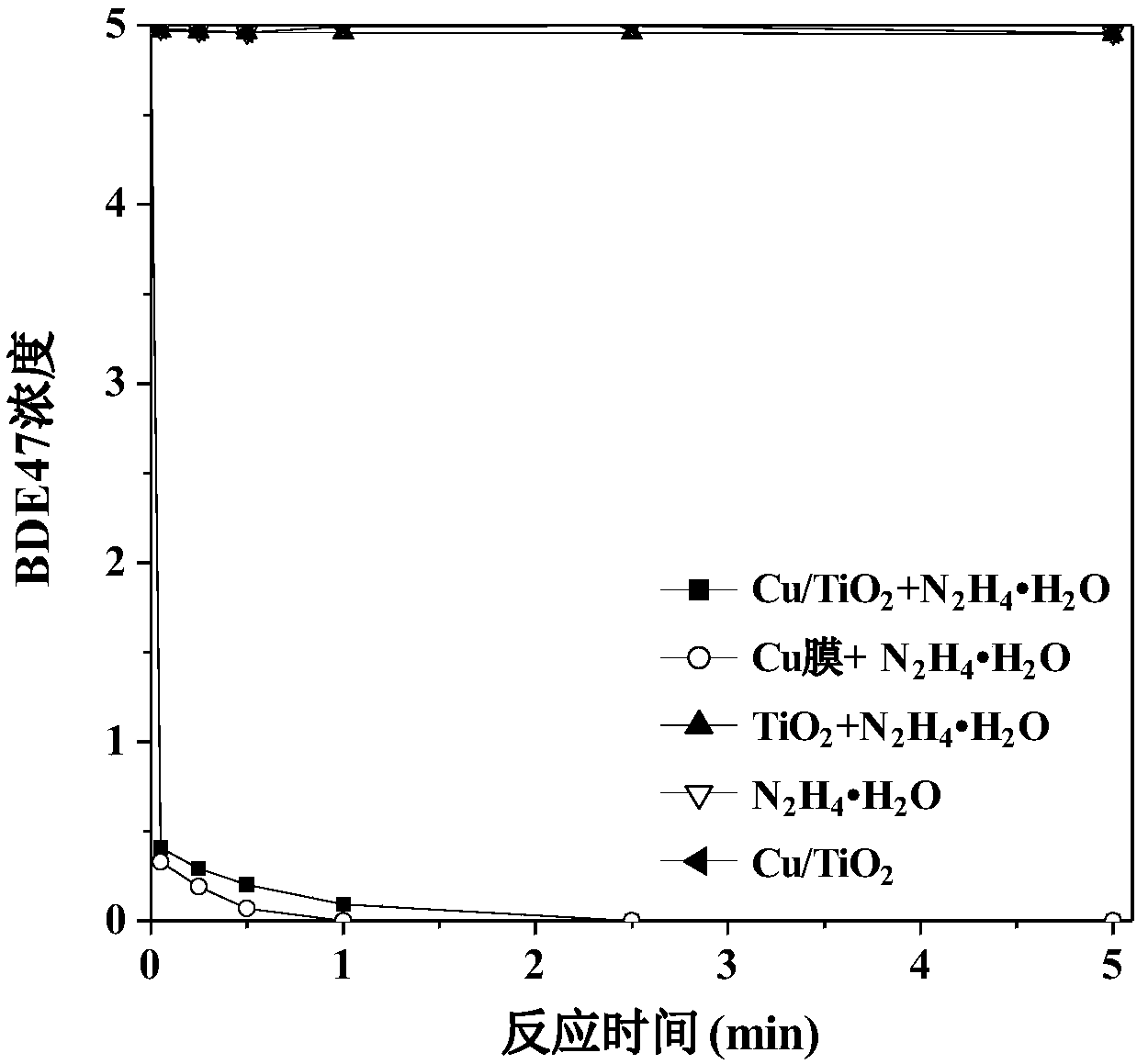
[0031] Step 1: Weigh 10mg TiO 2 Supported nano-Cu catalyst (Cu / TiO 2 , where the mass fraction of Cu is 2%) in a beaker, add 48mL of methanol and 2mL of 2,2',4,4'-tetrabromodiphenyl ether (hereinafter referred to as BDE47) stock solution (1000mg L -1 , is the methanol solution of BDE47) and ultrasonically disperses evenly, so that the concentration of the catalyst in the dispersion is 0.2g L -1 , the initial concentration of BDE47 was 40mg·L -1 .

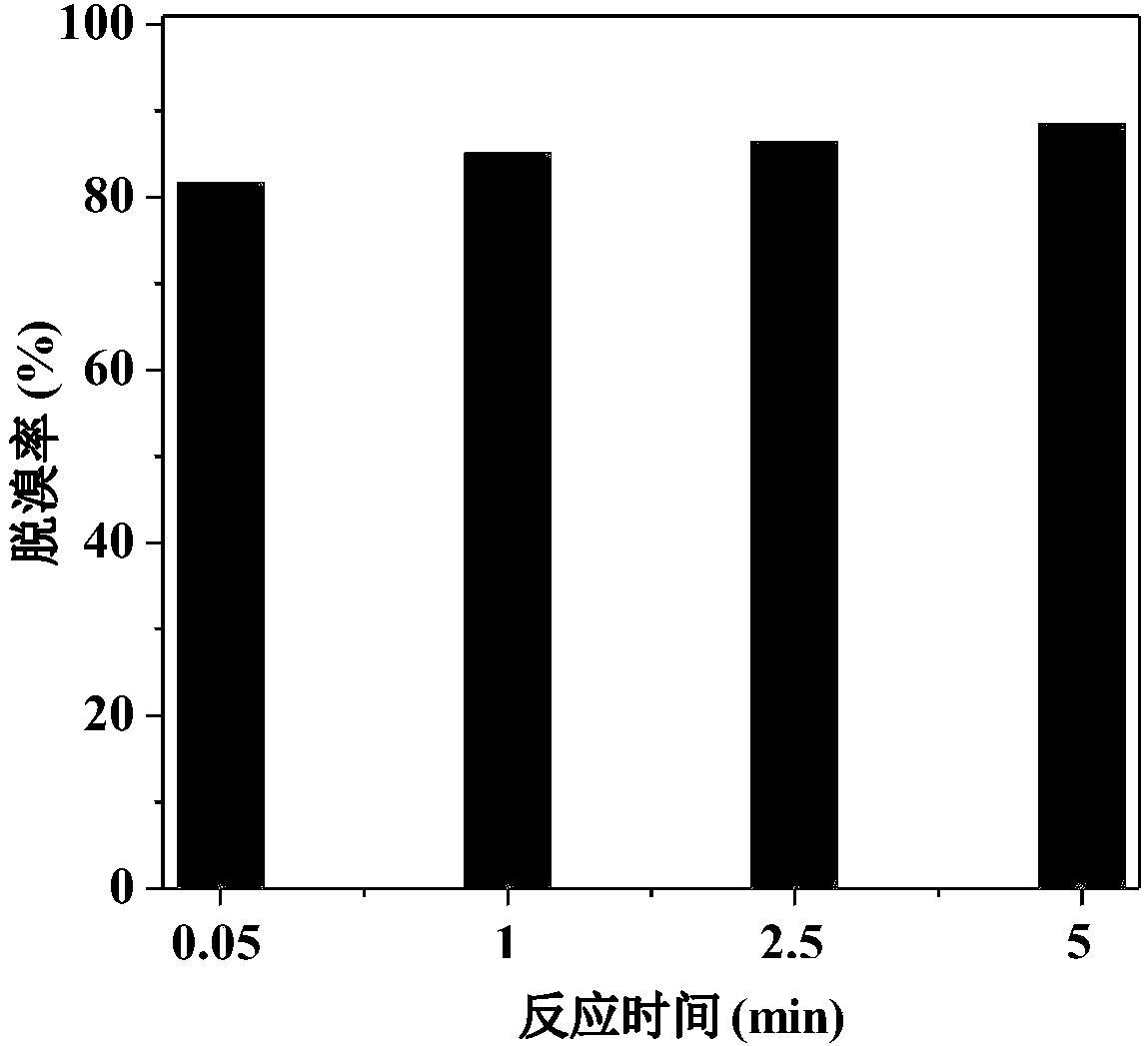
[0032] Step 2: Under stirring, quickly add hydrazine hydrate to the above-mentioned dispersion liquid and press the stopwatch at the same time to start timing. The final concentration of hydrazine hydrate added is 200mmol L-1 , when the reaction time is 3s, 15s, 30s, 1min, 2.5min, 5min, draw a certain amount of reaction solution with a syringe and quickly pass through a 0....

Embodiment 2

[0037] Example 2 A high-efficiency deep chemical reduction debromination treatment method for polybrominated diphenyl ethers, some adjustments are made on the basis of steps 1 and 2 of Example 1:

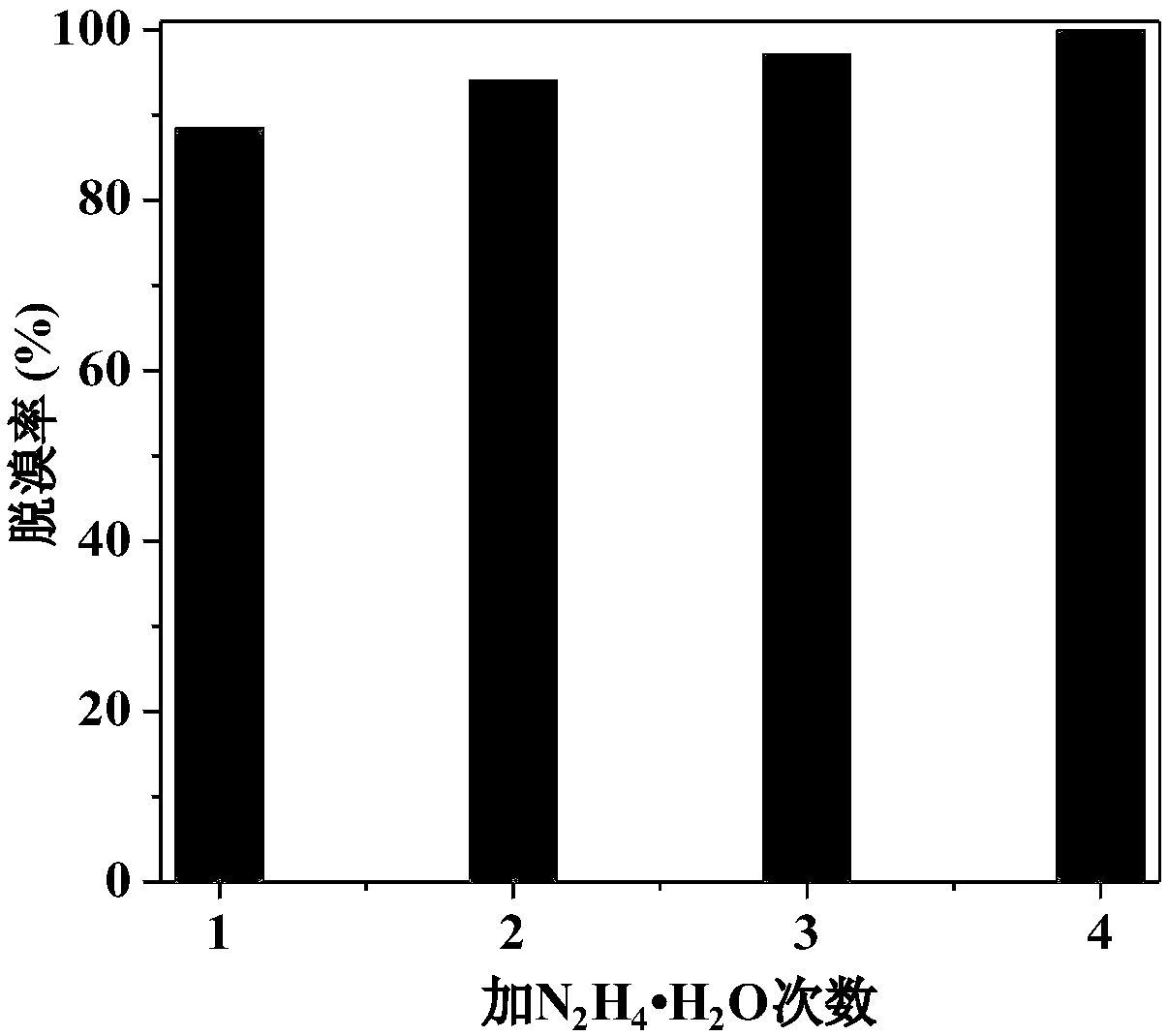
[0038] What is different from Example 1 is: after reacting 5min in the step 2, add the same amount of hydrazine hydrate with the first addition in the dispersion liquid, continue to react after 5min and then add the same amount of hydrazine hydrate with the first addition, so a total of Add three times, get certain reaction solution after adding hydrazine hydrate 5min each time, obtain the reaction solution of four stages thus, get supernatant after rapid filtration, adopt the method in embodiment 1 test 2 to measure its bromide ion concentration respectively , so as to calculate the debromination rate, the obtained results are as follows image 3 shown. image 3 It shows that BDE47 can be completely debrominated by increasing the amount of hydrogen donor hydrazine hydrate step by ...

Embodiment 3

[0039] Example 3 A high-efficiency deep chemical reduction debromination treatment method for polybrominated diphenyl ethers, some adjustments are made on the basis of Example 2:

[0040] The difference from Example 2 is: Step 1: Weigh 10 mg of Cu / TiO in Example 1 2 Put the catalyst in a beaker, add 50mL, 1500mg·L -1 BDE47 methanol solution (prepared by dissolving solid BDE47 in methanol) and ultrasonically disperse evenly. In step 2, the number of times of adding hydrazine hydrate is increased to five times, and the reaction solution of six stages of reaction is collected, and the supernatant is obtained after rapid filtration, and then the method in Example 1 Test 2 is used to measure the bromide ion concentration, thereby calculating the debromination rate, the result is Figure 4 shown. Figure 4 showed that when the initial concentration of BDE47 was as high as 1500mg·L -1 When hydrazine hydrate is added, the added BDE47 can still be rapidly and deeply debrominated. ...

the structure of the environmentally friendly knitted fabric provided by the present invention; figure 2 Flow chart of the yarn wrapping machine for environmentally friendly knitted fabrics and storage devices; image 3 Is the parameter map of the yarn covering machine
Login to View More

PUM

No PUM Login to View More

Abstract

The invention discloses an efficient and deep chemically reduced debromination treatment method for polybrominated diphenyl ether, and belongs to the technical field of environmentally-friendly treatment of halogenated aromatic hydrocarbon organic pollutants. The method comprises the following steps: under conditions of normal temperature, normal pressure and stirring, uniformly dispersing the polybrominated diphenyl ether and a zero-valent non-noble metal catalyst into a mixed solvent formed by water and an organic solvent, then adding a proper amount of a hydrogen donor, and attacking polybrominated diphenyl ether molecules by using active hydrogen formed on the surface of the zero-valent non-noble metal catalyst by the hydrogen donor and the solvent, thereby realizing quick and deep debromination of the polybrominated diphenyl ether. The method is easy to operate and low in economical cost; under an optimal condition, the polybrominated diphenyl ether can be basically removed after3 seconds; the polybrominated diphenyl ether is completely debrominated and converted into diphenyl oxide; the treatment concentration of the polybrominated diphenyl ether at least reaches 1,500 mg.L<-1>.

Description

technical field [0001] The invention belongs to the technical field of treatment of halogenated aromatic organic pollutants for environmental protection, and in particular relates to a high-efficiency deep chemical reduction debromination treatment method for polybrominated diphenyl ethers. Background technique [0002] In recent decades, polymers represented by petroleum-based polymers have been widely used in textile materials, electronic components, electrical appliances, etc. In order to comply with fire safety regulations, flame retardants must be added to increase the fire resistance of products. There are more than 175 kinds of flame retardants commonly used today, among which polybrominated diphenyl ethers (PBDEs) are widely used because of their low price and high flame retardant efficiency. However, as a class of additive flame retardants, PBDEs lack the bondage of chemical bonds with the matrix and are easily released into the environment; and because of their per...

Claims

the structure of the environmentally friendly knitted fabric provided by the present invention; figure 2 Flow chart of the yarn wrapping machine for environmentally friendly knitted fabrics and storage devices; image 3 Is the parameter map of the yarn covering machine
Login to View More

Application Information

Patent Timeline
no application Login to View More
IPC IPC(8): A62D3/37A62D101/28
CPCA62D3/37A62D2101/28
Inventor 唐和清雷鸣丁耀彬王智影
Owner SOUTH CENTRAL UNIVERSITY FOR NATIONALITIES
Features
  • R&D
  • Intellectual Property
  • Life Sciences
  • Materials
  • Tech Scout
Why Patsnap Eureka
  • Unparalleled Data Quality
  • Higher Quality Content
  • 60% Fewer Hallucinations
Social media
Patsnap Eureka Blog
Learn More