

Pesticide composition for preventing and treating rice seed-borne diseases, preparation method and application of pesticide composition
A pesticide composition and disease technology, applied in the field of pesticides, can solve the problems of exacerbating the spread of bakanae disease in rice and achieve the effect of reducing the loss of rice yield
- Summary
- Abstract
- Description
- Claims
- Application Information
AI Technical Summary
Problems solved by technology
Method used
Image


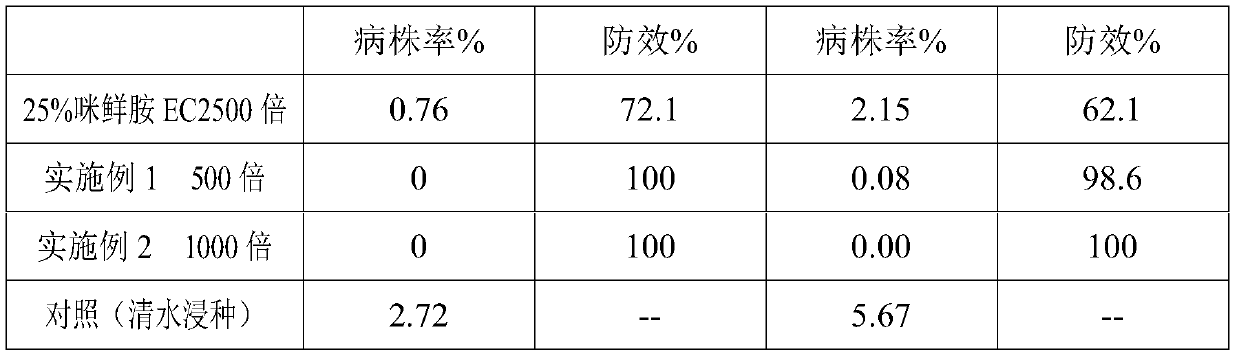
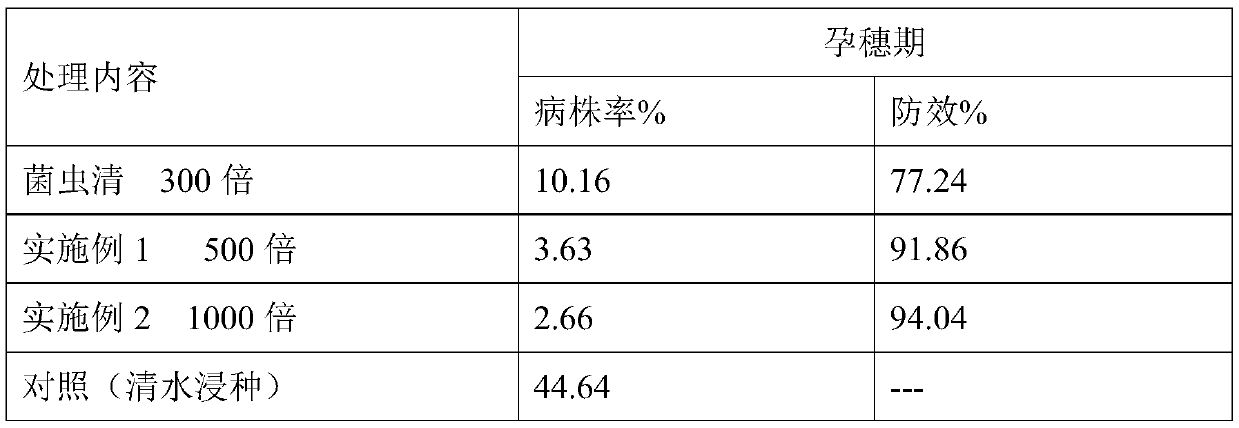
Examples
Embodiment 1
[0036] Embodiment 1: According to the following proportions: 2 grams of prothioconazole (active ingredient), 0.5 grams of cartap, 2 grams of sodium carboxymethyl cellulose, 3 grams of wetting agent powder, 92.5 grams of bentonite, according to conventional pesticides Wettable powder production process produces wettable powder.
Embodiment 2
[0037] Embodiment 2: According to the following proportions: 1.0 grams of prothioconazole, 1.0 grams of cartap, 3 grams of sodium lignosulfonate as a dispersant, 3 grams of alkylnaphthalene sulfonate as a wetting agent, and 0.5 grams of xanthan gum as a thickener 0.5 grams of antifreeze agent ethylene glycol, 2 grams of film-forming agent PVA, 0.5 grams of defoamer silicone, 0.3 grams of color paste rose essence, 0.2 grams of thixotropic agent magnesium aluminum silicate and 88 grams of water, add the bead mill Continuous grinding is carried out to obtain a seed treatment suspension.
PUM
 Login to View More
 Abstract
Description
Claims
Application Information
 Login to View More