Application of oroxylin A in preparation of drug for preventing and treating respiratory virus infection
A technology of melaleucain and respiratory system, applied in the direction of respiratory diseases, antiviral agents, drug combinations, etc., can solve the problems of rapid virus mutation, difficult defense effect, and no melaleucain A has yet been seen, and achieve good treatment Action, little side effects
- Summary
- Abstract
- Description
- Claims
- Application Information
AI Technical Summary
Problems solved by technology
Method used
Image

Examples
Embodiment 1
[0018] Preparation and characterization of the total flavonoids of Scutellaria baicalensis of embodiment 1
[0019] Take 1.2Kg of dried Scutellaria baicalensis, heat and reflux with 80% ethanol for three times, extract with 10 times the amount of solvent for 2 hours for the first time, extract 1.5 hours with 8 times the amount of solvent for the second and third times, combine the three extracts, and concentrate under reduced pressure to No alcohol smell, the obtained extract is suspended in water. The suspension was adsorbed by the pretreated AB-8 macroporous adsorption resin, eluted with distilled water 3 times the volume of the column bed, and 80% ethanol 6 times the volume of the column bed, and the ethanol eluate was collected, concentrated and dried under reduced pressure to obtain The total flavonoids of Scutellaria baicalensis, the yield is 25.48%. Using ultra-high performance liquid chromatography (UPLC), the total flavonoids of this Scutellaria baicalensis were char...
Embodiment 2
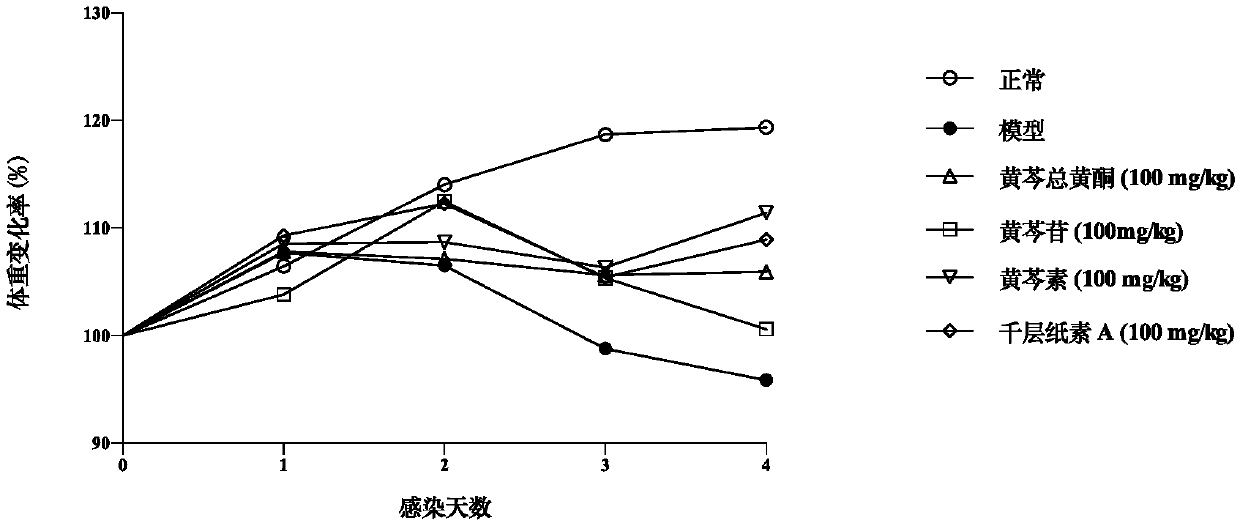
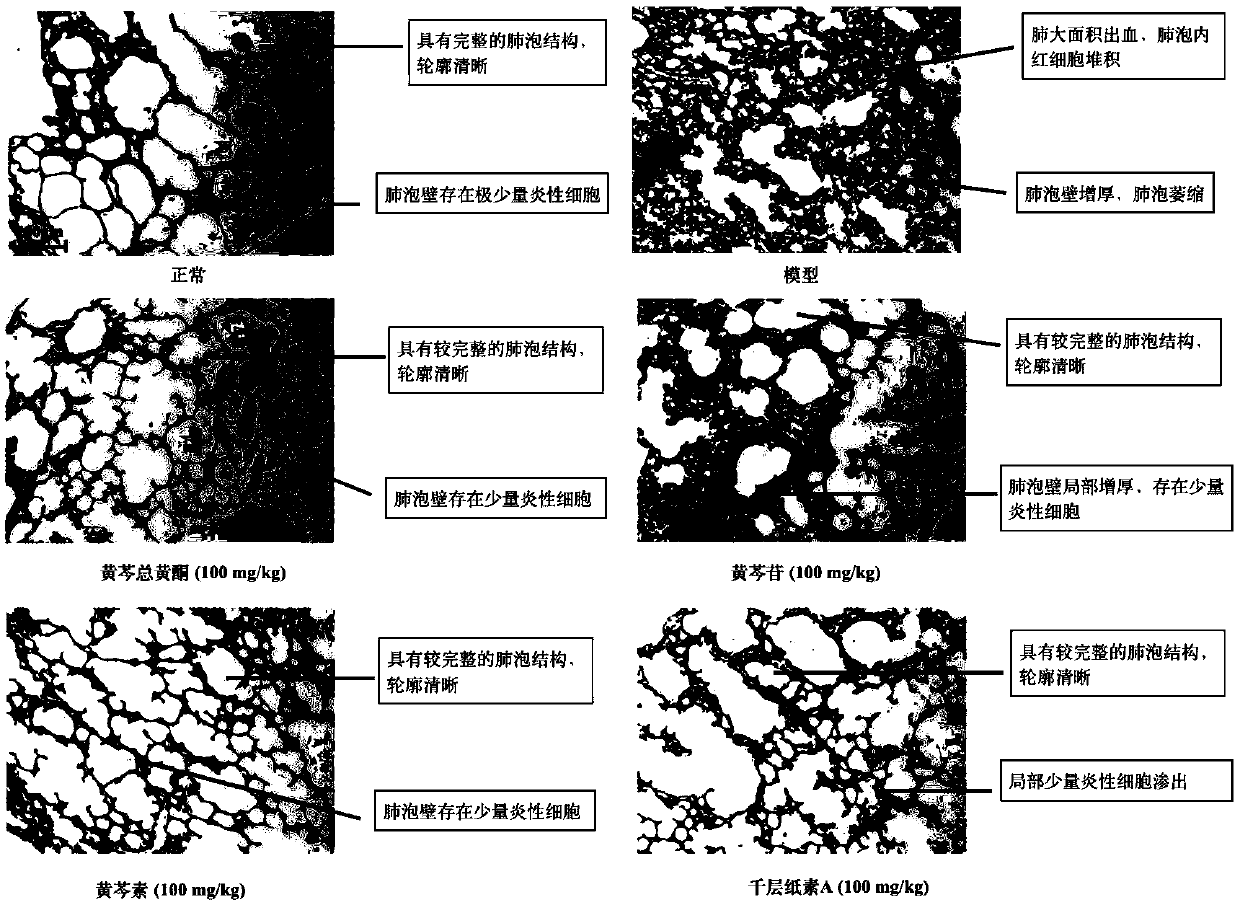
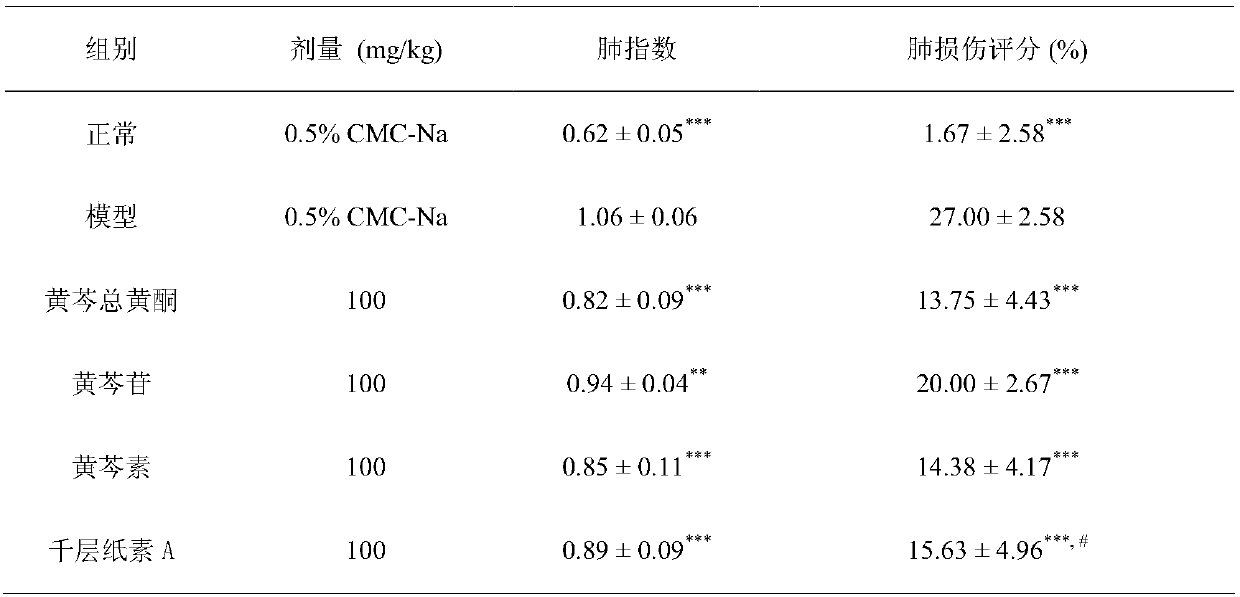
[0020] Example 2 Therapeutic Effect of Melaleutin A on Influenza A Virus-Induced Acute Lung Injury
[0021] 48 5-week-old SPF male BALB / c mice were randomly divided into 6 groups (Groups A, B, C, D, E, and F) according to body weight: Group A was the normal control group, group B was the model group, Groups C, D, E, and F received 100 mg / kg of total flavonoids from Scutellaria baicalensis, baicalin, baicalein, and scutellarin A, respectively, with 8 rats in each group. All mice were injected with propofol injection 0.026ml / 10g into the tail vein, and under anesthesia, the mice were infected with 30 μl of H1N1 virus in nasal drops, 15 μl in each of the left and right noses, and the normal control group was given virus dilution. Two hours after the infection, different concentrations of drugs were administered orally according to the groups, 0.1ml / 10g, for 4 days. Groups A and B were given 0.5% CMC-Na. 24 hours after the last administration, that is, samples were taken on the 4...
PUM
 Login to View More
 Abstract
Description
Claims
Application Information
 Login to View More