

Novel resistant gene of chloromycetin and application of novel resistant gene of chloromycetin
A resistance gene and a new technology are applied to the new resistance gene of chloramphenicol and its application field, and can solve the problems such as the ineffectiveness of Gram-positive cocci.
- Summary
- Abstract
- Description
- Claims
- Application Information
AI Technical Summary
Problems solved by technology
Method used
Image

Examples
Embodiment 1
[0020] 1. Material method
[0021] 1. Choose a suitable carrier
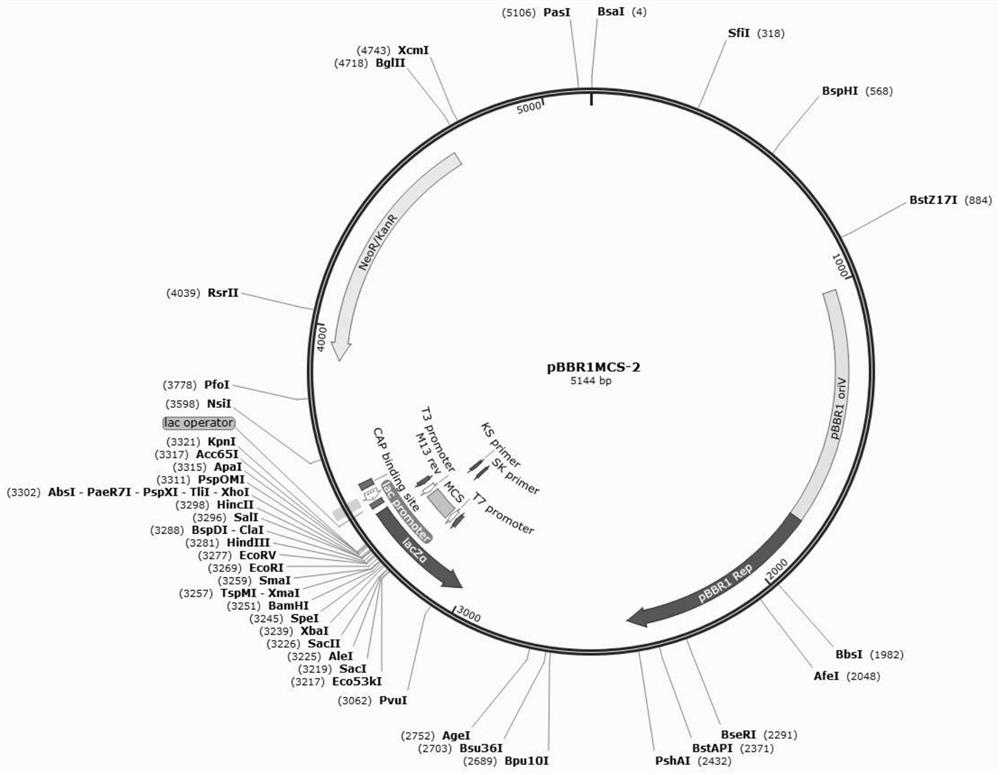
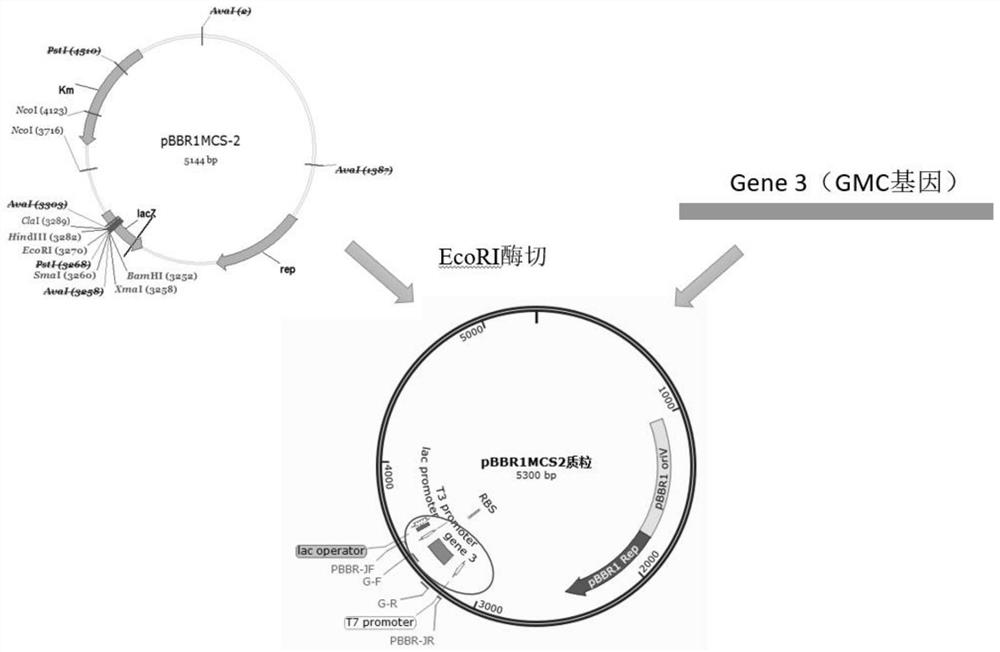
[0022] Select the pBBR1MCS-2 plasmid as figure 1 Shown is a schematic diagram of the pBBR1MCS-2 plasmid, which is a broad host protein expression and cloning plasmid with high copy, multiple cloning sites, stable expression and constitutive plasmid properties.
[0023] 2. Design of primers for digestion
[0024] upstream primer
[0025]
[0026] downstream primer
[0027] TCCCCCGGGCTGCAG GAATTC TCAGTGGCTTCTTCGGATCA
[0028] GAATTC Indicates the EcoRI restriction site, represents the SD sequence, which has the function of enhancing gene expression, Indicates the additionally added start codon sequence to prevent the inserted foreign sequence gene from not replicating.
[0029] The promoter sequence is the lac promoter that comes with the plasmid pBBR1-MCS2, tttacactttatgcttccggctcgtatgttg
[0030] 3. Construction of recombinant vector
[0031] 3.1 Acquisition of target gene GMC
[0032] Polymer...
PUM
 Login to View More
 Abstract
Description
Claims
Application Information
 Login to View More