Supercharge Your Innovation With Domain-Expert AI Agents!

Method of manufacturing high-ion conductive sulfide-based solid electrolyte using dissolution-precipitation and composition used therefor

a technology of high-ion conductive sulfide and solid electrolyte, which is applied in the direction of solid electrolytes, electric generators, electric apparatus, etc., can solve the problems of limit the extent to which the stability and energy density of solid electrolytes can be improved, and achieve the effect of reducing processing time and preventing impurities

Active Publication Date: 2021-04-27
HYUNDAI MOTOR CO LTD +2
View PDF8 Cites 0 Cited by
  • Summary
  • Abstract
  • Description
  • Claims
  • Application Information

AI Technical Summary

Benefits of technology

This approach significantly reduces processing time, prevents impurities, and enhances lithium ion conductivity and electrochemical stability of the sulfide-based solid electrolyte, achieving higher performance compared to existing methods.

Problems solved by technology

Secondary batteries are manufactured based on an organic solvent (e.g. an organic liquid electrolyte), whereby there are limitations on the extent to which the stability and energy density thereof can be improved.

Method used

the structure of the environmentally friendly knitted fabric provided by the present invention; figure 2 Flow chart of the yarn wrapping machine for environmentally friendly knitted fabrics and storage devices; image 3 Is the parameter map of the yarn covering machine
View more

Image

Smart Image Click on the blue labels to locate them in the text.
Viewing Examples
Smart Image
  • Method of manufacturing high-ion conductive sulfide-based solid electrolyte using dissolution-precipitation and composition used therefor
  • Method of manufacturing high-ion conductive sulfide-based solid electrolyte using dissolution-precipitation and composition used therefor
  • Method of manufacturing high-ion conductive sulfide-based solid electrolyte using dissolution-precipitation and composition used therefor

Examples

Experimental program
Comparison scheme
Effect test

example 1

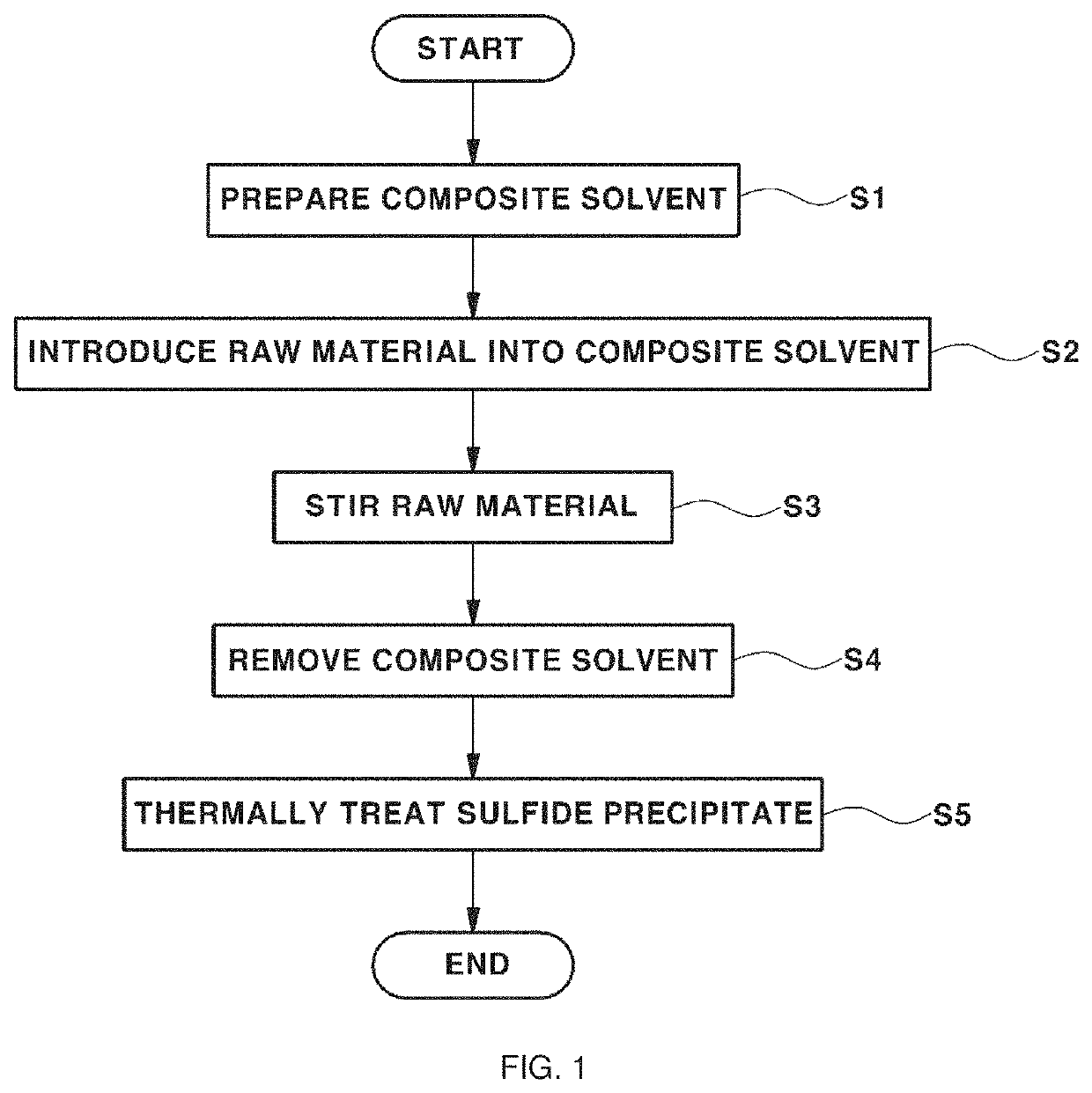
[0066](S1) 0.025 wt % of isopropyl alcohol (IPA), which is an alcohol-based solvent having a polarity index of 3.9, (a second solvent) was added to 99.975 wt % of acetonitrile (a first solvent), and the solvents were mixed at 150 rpm for about 10 minutes to prepare a composite solvent.

[0067](S2) A raw material including lithium sulfide (Li2S), phosphorus pentasulfide (P2S5), and lithium chloride (LiCl) was introduced into the composite solvent. At this time, the raw material was weighed and introduced to obtain the final product, i.e. a sulfide-based solid electrolyte, according to Chemical Formula 1 below.

Li6PS5Cl  [Chemical Formula 1]

[0068](S3) First stirring was performed on the raw material under conditions of 150 rpm and 5 minutes, and second stirring was performed on the raw material under conditions of 280 rpm and 24 hours to obtain a sulfide precipitate. The first stirring and the second stirring were continuously performed.

[0069](S4) After the stirring was finished, vacuum ...

example 2

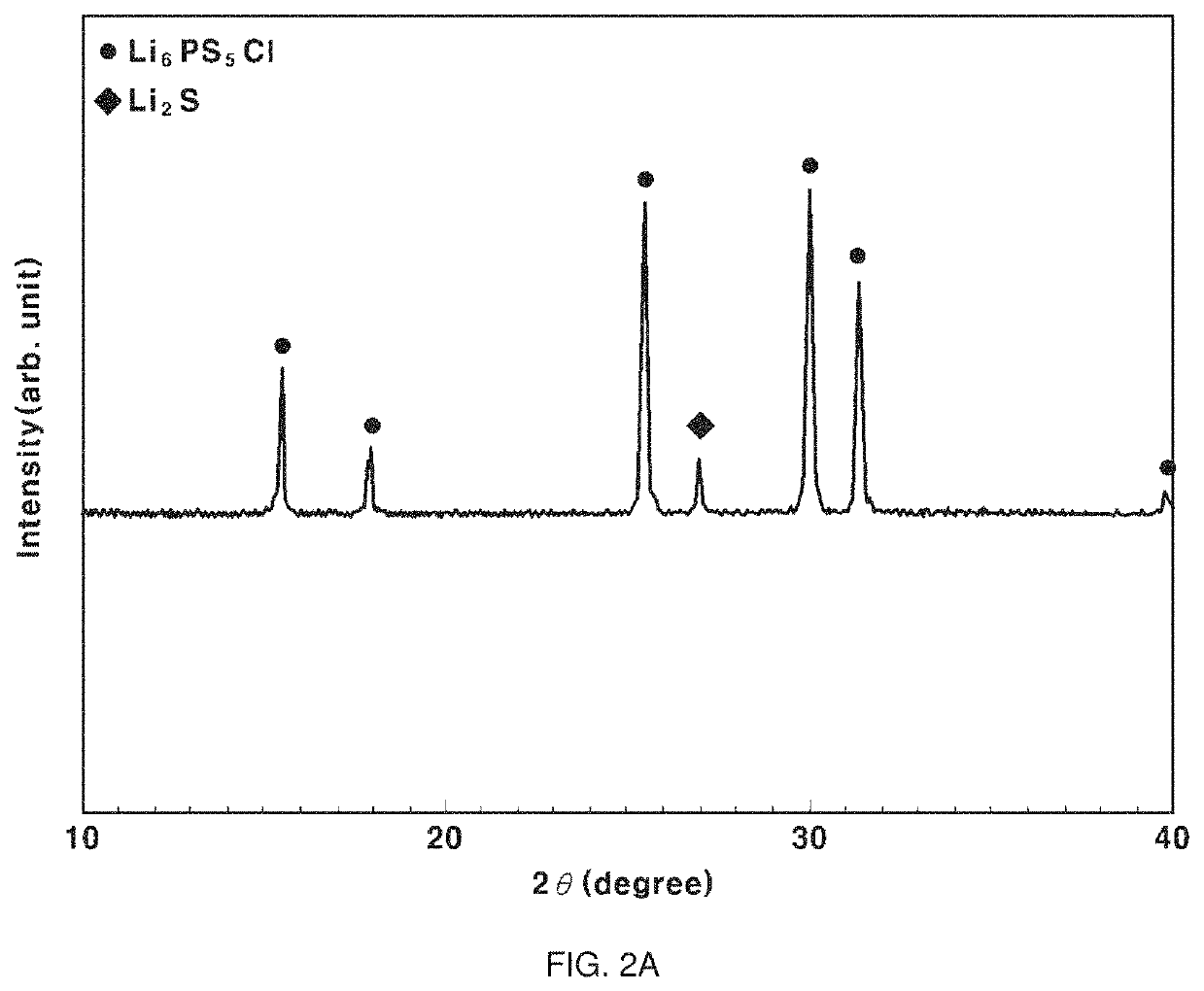
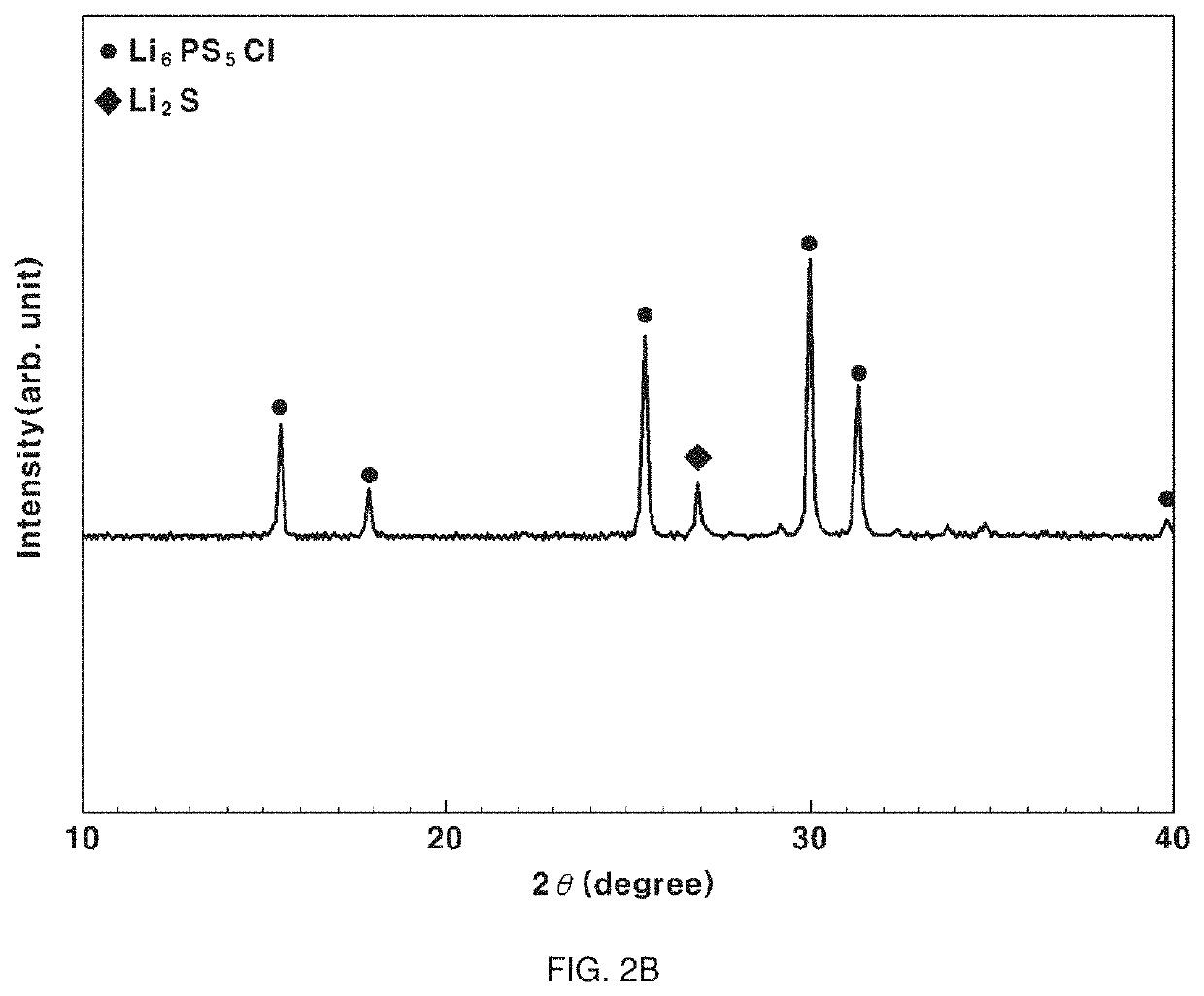
[0071]A crystalline sulfide-based solid electrolyte was manufactured using the same method as Example 1 except that 2-butanol, having a polarity index of 3.8, was used as the second solvent.

experimental example 1

Ion Conductivity

[0075]The ion conductivity of each of the sulfide-based solid electrolytes according to Examples 1 and 2 and Comparative Examples 1 to 3 was measured. Specifically, each of the sulfide-based solid electrolytes was compressed to form a sample for measurement (having a diameter of 13 mm and a thickness of 1 to 1.5 mm). An alternating-current potential of 10 mV was applied to the sample in an oven having an ambient temperature maintained therein, and then a frequency sweep of 1×10⁶ to 1 Hz was performed to measure an impedance value, from which ion conductivity was determined. The results are shown in Table 1 below.

[0076]

TABLE 1First solventSecond solventLithium ionContentPolarityContentconductivityClassificationKind[wt %]Kindindex[wt %][mS / cm]Example 1Acetonitrile99.975Isopropyl3.90.0252.3alcoholExample 2Acetonitrile99.9752-butanol3.80.0252.4ComparativeAcetonitrile99.9751-propanol4.00.0250.19Example 1ComparativeAcetonitrile99.975Ethanol5.20.0250.64Example 2ComparativeA...

the structure of the environmentally friendly knitted fabric provided by the present invention; figure 2 Flow chart of the yarn wrapping machine for environmentally friendly knitted fabrics and storage devices; image 3 Is the parameter map of the yarn covering machine
Login to View More

PUM

PropertyMeasurementUnit
wt %aaaaaaaaaa
wt %aaaaaaaaaa
wt %aaaaaaaaaa
Login to View More

Abstract

A method of manufacturing a high-ion conductive sulfide-based solid electrolyte using dissolution-precipitation includes preparing a composite solvent including a first solvent including a cyano group and a second solvent having a polarity index of less than 4, introducing a raw material including lithium sulfide (Li2S) and phosphorus pentasulfide (P2S5) into the composite solvent, and stirring the raw material to obtain a sulfide precipitate.

Description

CROSS-REFERENCE TO RELATED APPLICATION[0001]This application claims, under 35 U.S.C. § 119(a), the benefit of priority to Korean Patent Application No. 10-2018-0151746 filed on Nov. 30, 2018, the entire contents of which are incorporated herein by reference.BACKGROUND(a) Technical Field[0002]The present disclosure relates to a method of manufacturing a high-ion conductive sulfide-based solid electrolyte using dissolution-precipitation and a composition used therefor.(b) Background Art[0003]Secondary batteries, which can be charged and discharged, are used for large-sized transportation means, such as hybrid vehicles and electric vehicles, as well as small-sized electronic devices, such as mobile phones and laptop computers. For this reason, there is a necessity to develop a secondary battery having higher stability and energy density.[0004]Secondary batteries are manufactured based on an organic solvent (e.g. an organic liquid electrolyte), whereby there are limitations on the exten...

Claims

the structure of the environmentally friendly knitted fabric provided by the present invention; figure 2 Flow chart of the yarn wrapping machine for environmentally friendly knitted fabrics and storage devices; image 3 Is the parameter map of the yarn covering machine
Login to View More

Application Information

Patent Timeline
no application Login to View More
Patent Type & Authority Patents(United States)
IPC IPC(8): H01M10/0562C01B25/14
CPCH01M10/0562C01B25/14C01P2002/30C01P2002/72C01P2002/82C01P2006/40H01M2300/0068H01M10/052Y02E60/10
Inventor SEONG, JU YEONGSONG, IN WOOMIN, HONG SEOKJANG, YONG JUNKIM, YUN SUNGSHIN, DONG WOOKCHOI, SUN HOANN, JI UDO, JI YAELIM, SEUNG WOO
Owner HYUNDAI MOTOR CO LTD
Features
  • R&D
  • Intellectual Property
  • Life Sciences
  • Materials
  • Tech Scout
Why Patsnap Eureka
  • Unparalleled Data Quality
  • Higher Quality Content
  • 60% Fewer Hallucinations
Social media
Patsnap Eureka Blog
Learn More