[0006] It is a further object of the present invention to provide a composite metal panel which can be manufactured by means of brazing.
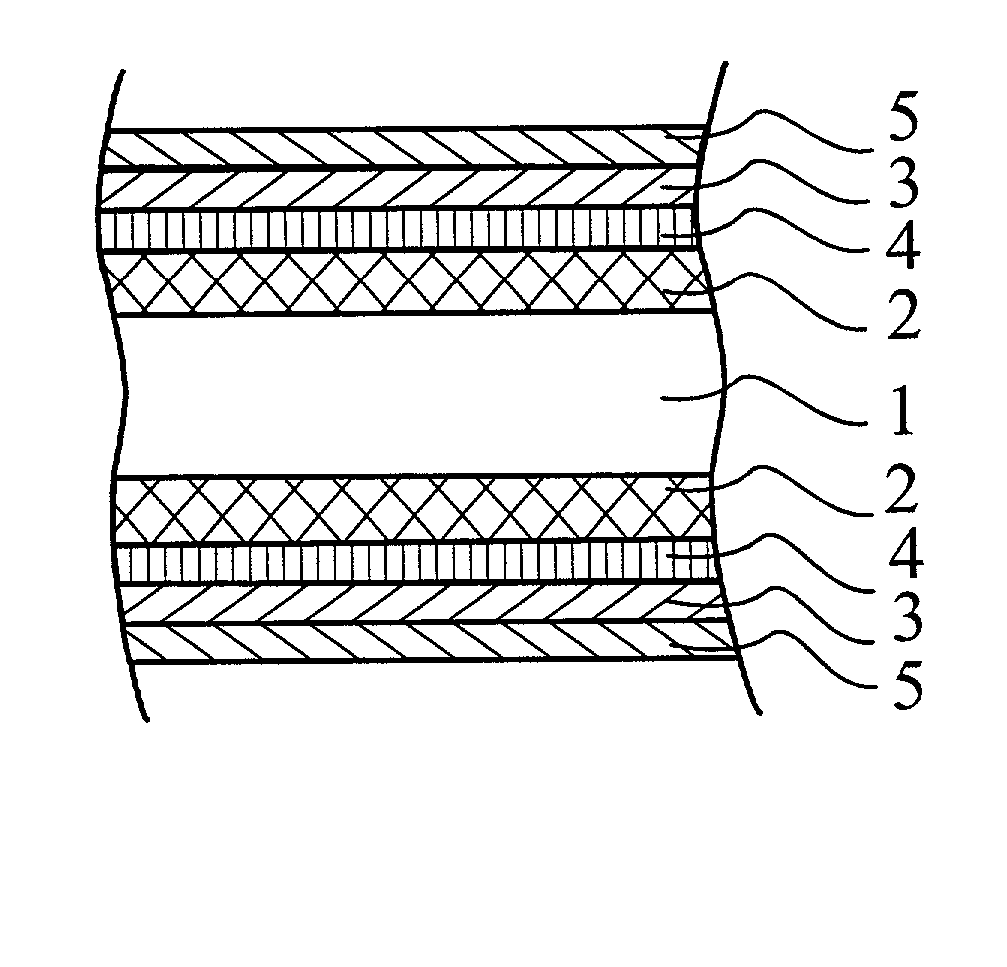
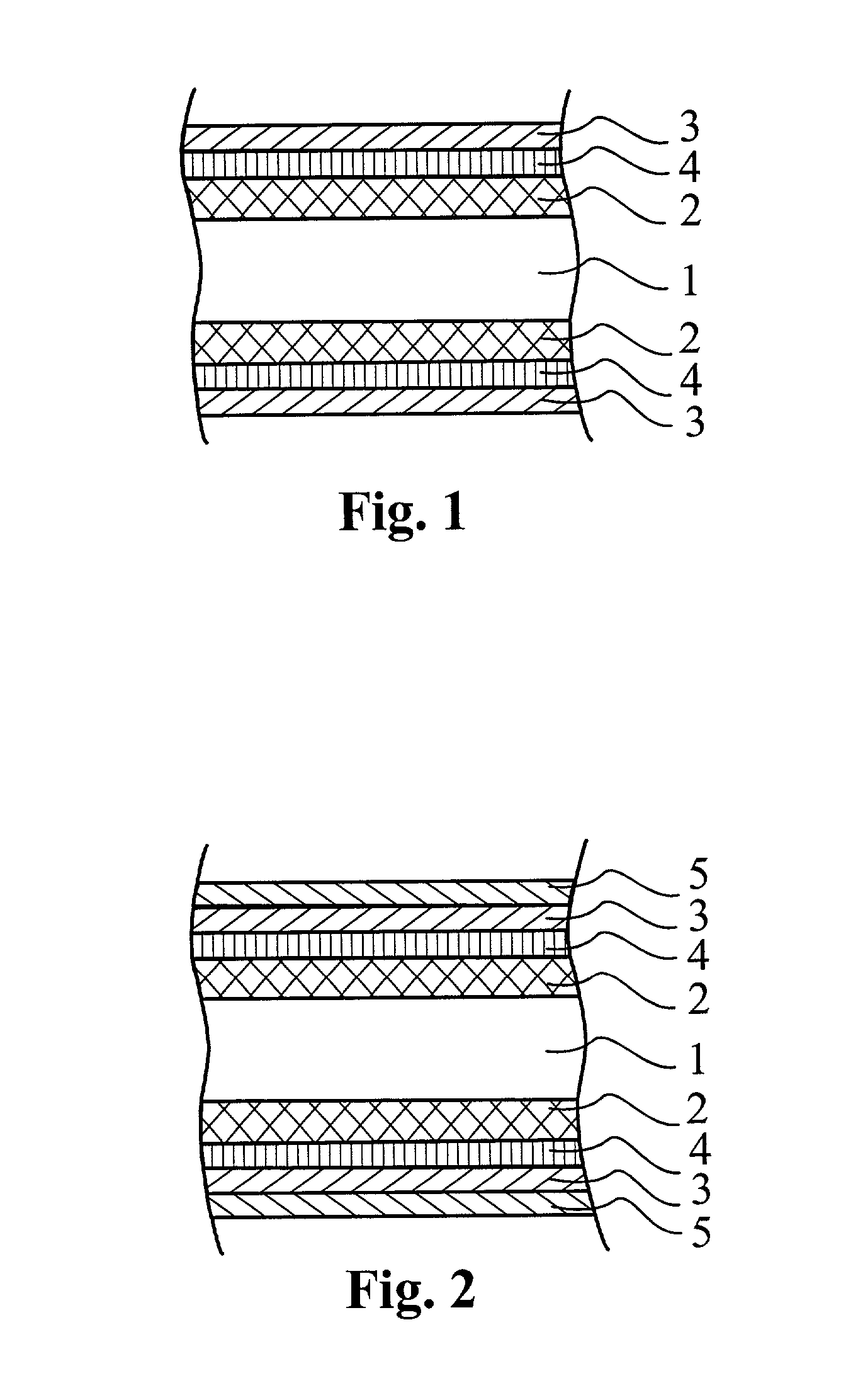
[0018] In an embodiment, the aluminium brazing sheet product according to the invention is further characterized by a layer comprising
zinc or
tin as a bonding layer between the outer surface of the aluminium clad layer and the layer comprising nickel. By the
zinc or
tin-comprising bonding layer a very effective bond between the
aluminium alloy clad layer and the layer comprising nickel is formed, the bond remaining effective during subsequent deformation of the aluminium brazing sheet, for example by
roll forming to obtain a corrugate stiffener sheet. The coverage of the nickel layer is no longer dependent on the surface characteristics of the bare clad layer. The aluminium brazing sheet product is suitable for fluxless brazing under
controlled atmosphere conditions. This part of the invention is based in part on the insight that to obtain a well-bonded nickel layer on the Si-containing aluminium clad layer of the brazing sheet product, so that the bond remains effective under
large deformation, pre-treatment of the aluminium clad layer is extremely important when manufacturing complex shapes of corrugated sheet. The prior art processes apparently aimed at applying the nickel in a distributed form, principally to the
silicon particles at the surface of the aluminium clad layer, rather than trying to achieve a uniform nickel-lead layer. In the present invention the surface of the Si-containing aluminium clad
alloy is altered in such way that the nickel coverage is independent of the
silicon particles at its surface. The nickel plating does not take place on the silicon particles but on the applied thin bonding layer comprising
zinc or
tin. Since the nickel thus is deposited on the total surface of the aluminium
alloy clad layer the necessary reaction before brazing can take place much more easily as compared to the process of the prior art. The zinc or tin applied does not interfere at all during the brazing process, and may contain a component to assist the brazing. Since the nickel is deposited smoothly and uniformly on the surface, the use of lead to promote
wetting during brazing can be reduced or avoided, or other elements such as
bismuth may be used for this purpose. A further important
advantage of the nickel deposited smoothly and uniformly on the surface is that the total amount of nickel to be applied in order to achieve good fluxless brazing can be reduced.
[0020] In an embodiment the aluminium brazing sheet is characterized in that the bonding layer comprising zinc or tin is applied by a direct zinc plating treatment, or by a
zincate treatment or a
stannate treatment. Very good results may be obtained with an immersion
zincate treatment or immersion
stannate treatment, often also referred to as displacement plating. A further
advantage is that this treatment lends itself to application in a continuous
process operation.
[0029] In particular
copper has been found to significantly reduce the
liquidus temperature of the resultant metal filler. However, further metal
layers may be applied in addition thereto.
[0032] In an embodiment the layer comprising
copper or
copper-based
alloy being deposited by plating copper or copper-alloy using an aqueous copper-
phosphate based plating bath. This aqueous plating bath demonstrated to be operational in a wide
pH range, and can be used on
industrial scale plating lines using a
high current density, which in turn allows for fairly high line speeds. It can be composed using standard and readily available chemicals, and copper can easily be replenished to the plating bath.
[0042] A typical
impurity element may be iron, in particular originating from the aluminium clad layer, and which may be tolerated in an amount of at most 0.8%. Other alloying elements may be present, and will typically, but not exclusively, originate from the aluminium clad layer. In this embodiment a metal filler is obtained which has a
liquidus temperature in the range of 510 to 550.degree. C., and allows for the manufacturing of composite metal panels at significant lower temperatures compared to traditional
industrial scale brazing temperatures for devices such as heat exchangers, and thereby allowing for a more unconventional choice of aluminium alloys, namely including those having
low melting point constituants, for the parallel plates or sheets for the composite metal panel.


 Login to View More