
Method and device for the non-invasive assessement of bones
a human bone and ultrasonic wave technology, applied in seismology, geological measurements, diagnostics, etc., can solve problems such as measurement errors, contact force variations unless corrected, etc., and achieve the effects of small size, large effect on lamb wave propagation, and difficult observation
- Summary
- Abstract
- Description
- Claims
- Application Information
AI Technical Summary
Benefits of technology
Problems solved by technology
Method used
Image

Examples
Embodiment Construction
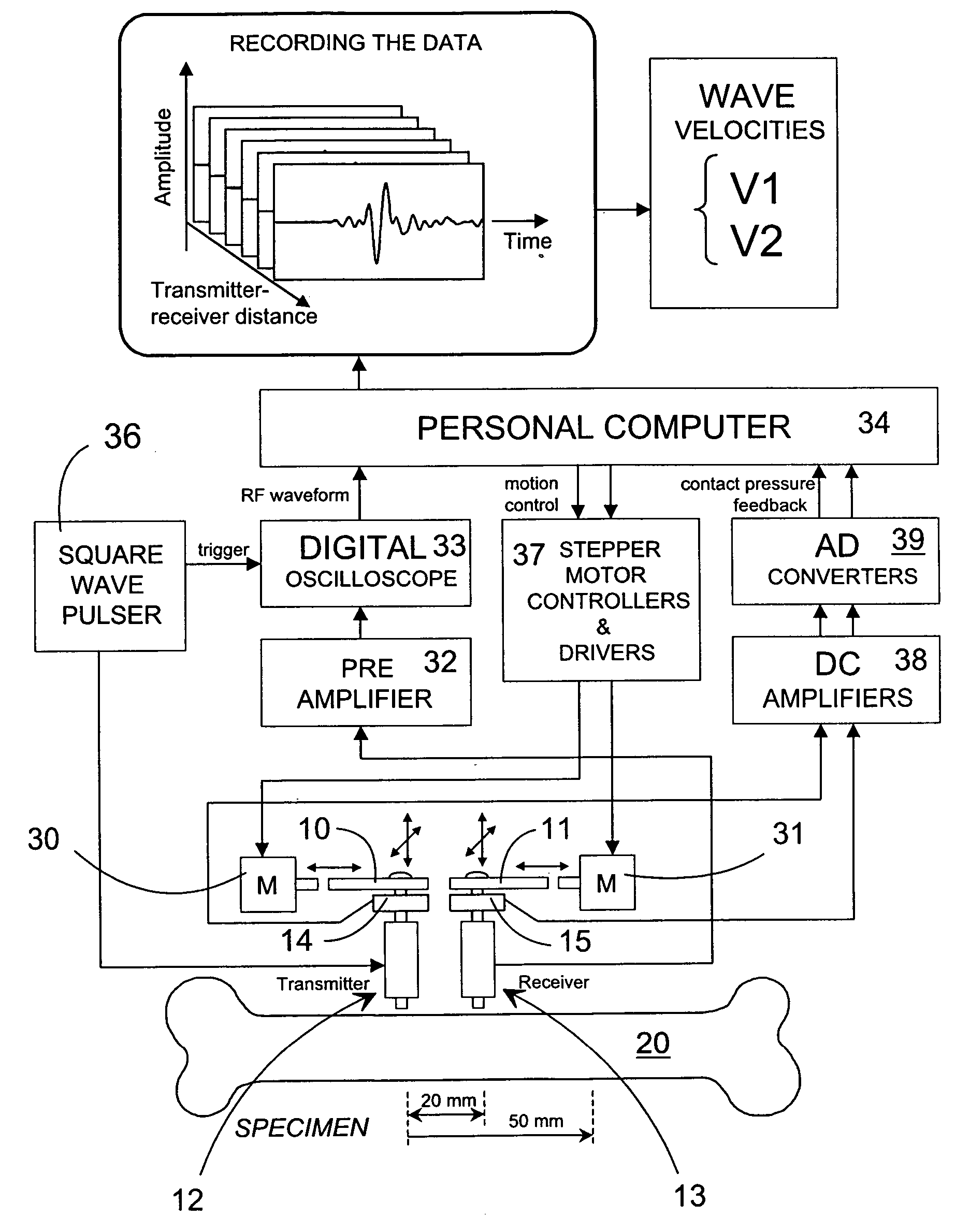
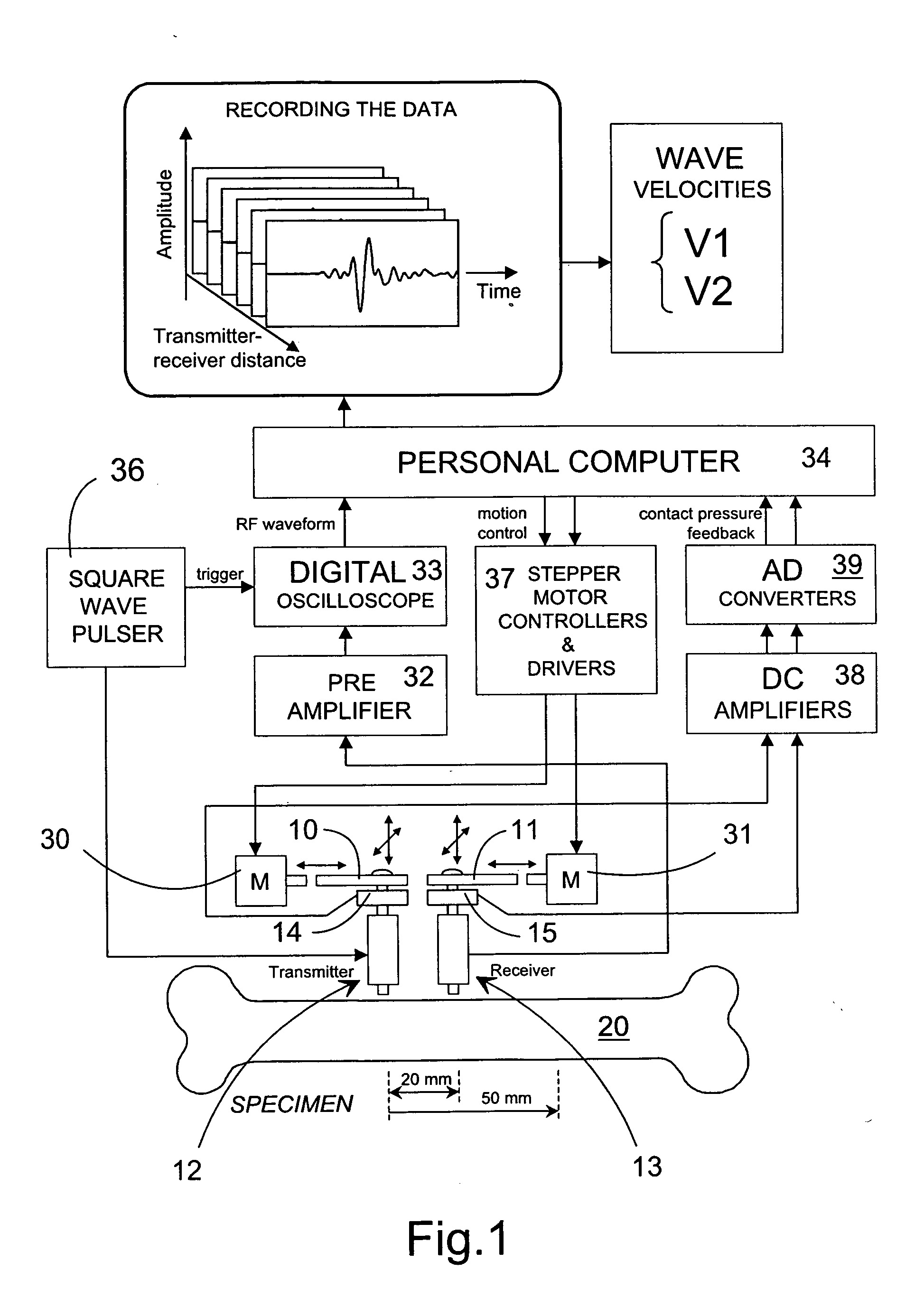
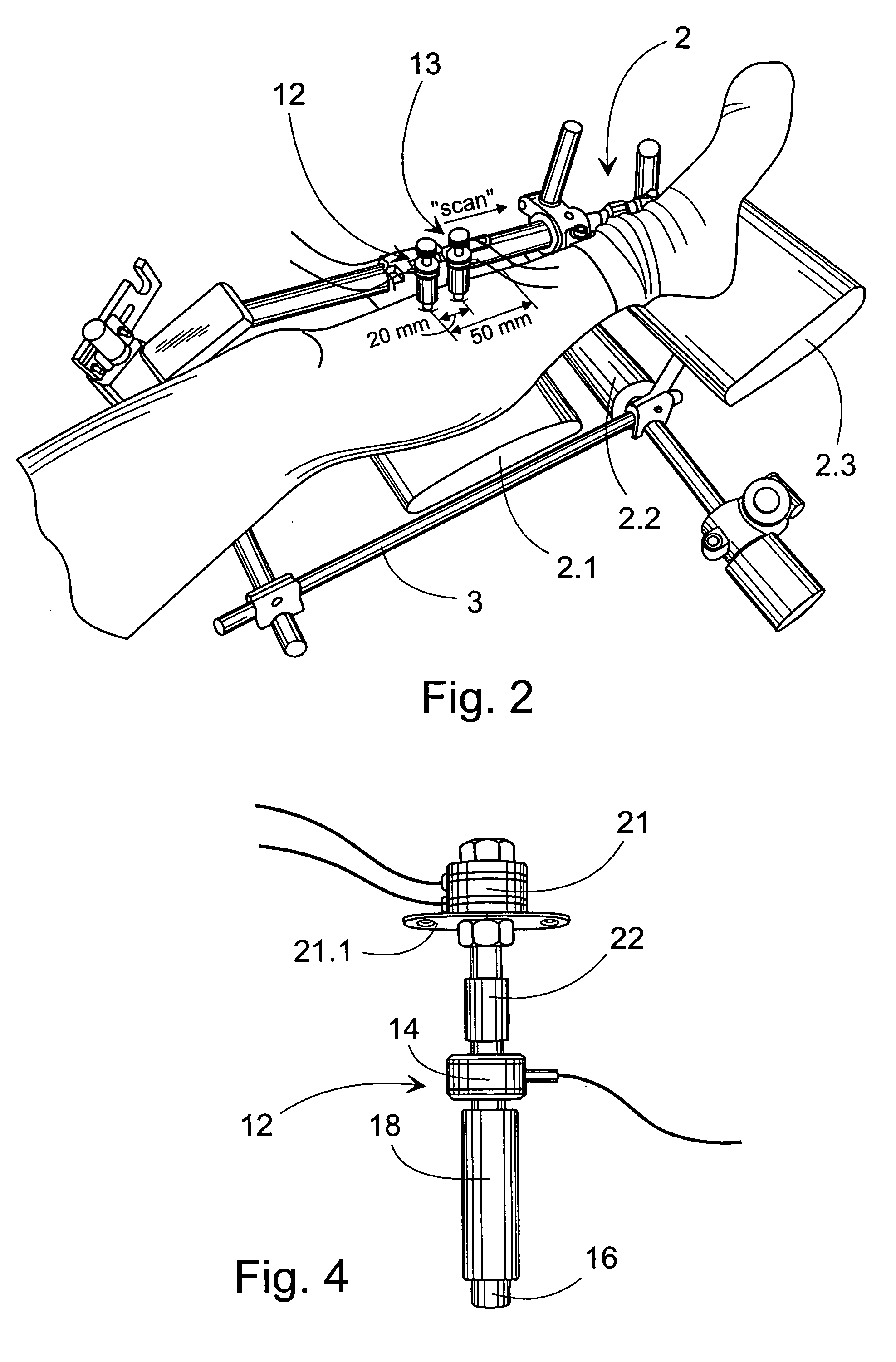
FIG. 1 illustrates the measurement system of the first embodiment of the invention. A pair of non-focused contact transducers 12, 13 with a center frequency of approximately 200 kHz and a diameter of 6 mm are used. The transducers are orientated perpendicularly to the surface of the object 20 to be measured and a coupling medium, which may be ultrasonic gel, a soft plastic, or some other fluid or solid medium or media is applied. The transmitter is kept at a fixed axial position during the measurement, but the receiver is moved progressively under computer control 34, 37, with the transmitter-receiver distance increased typically from r0=20 mm to r=50 mm by 0.5 mm steps. The main movement axis is automated by a stepper motor 30, 31 controlled linear actuator with a maximum line accuracy of 0.015 mm (RK Rose+Krieger trapezoid linear unit 303300 30 driven by bipolar Superior Electric stepping motor, model KLM091F13 with stepping module 430-T). Transducer contact pressures are determin...
PUM
 Login to View More
 Abstract
Description
Claims
Application Information
 Login to View More