[0029] The present invention has as another object to balance the torques produced by counter-rotating wind turbines of a wind energy conversion system to avoid net torque being exerted on a tower supporting the wind turbines in an elevated position above the ground.
[0032] Some of the advantages of the present invention are that the wind energy conversion system may include one or more than one wind turbine, each having a blade
assembly; the blade assemblies do not drive a
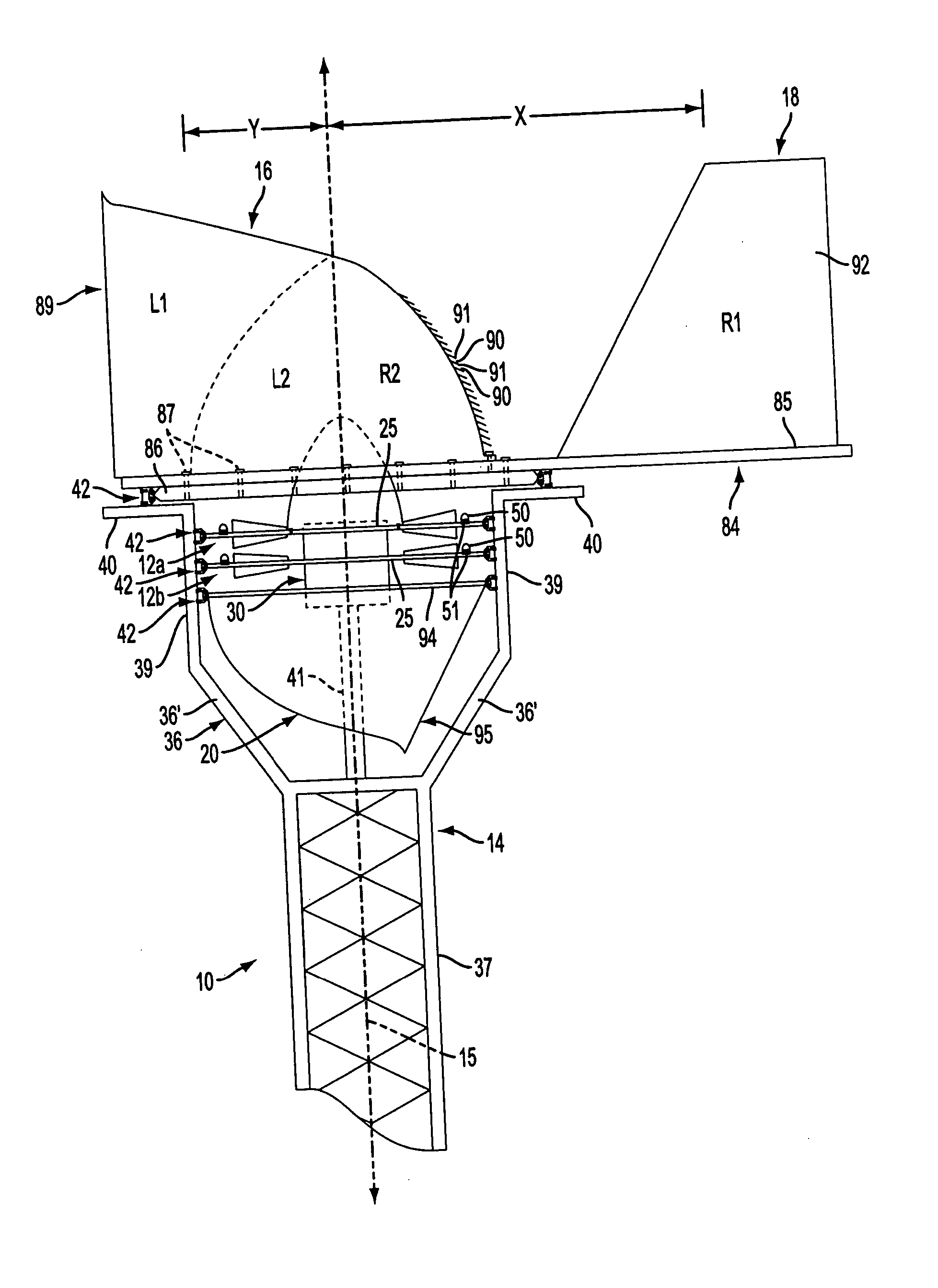
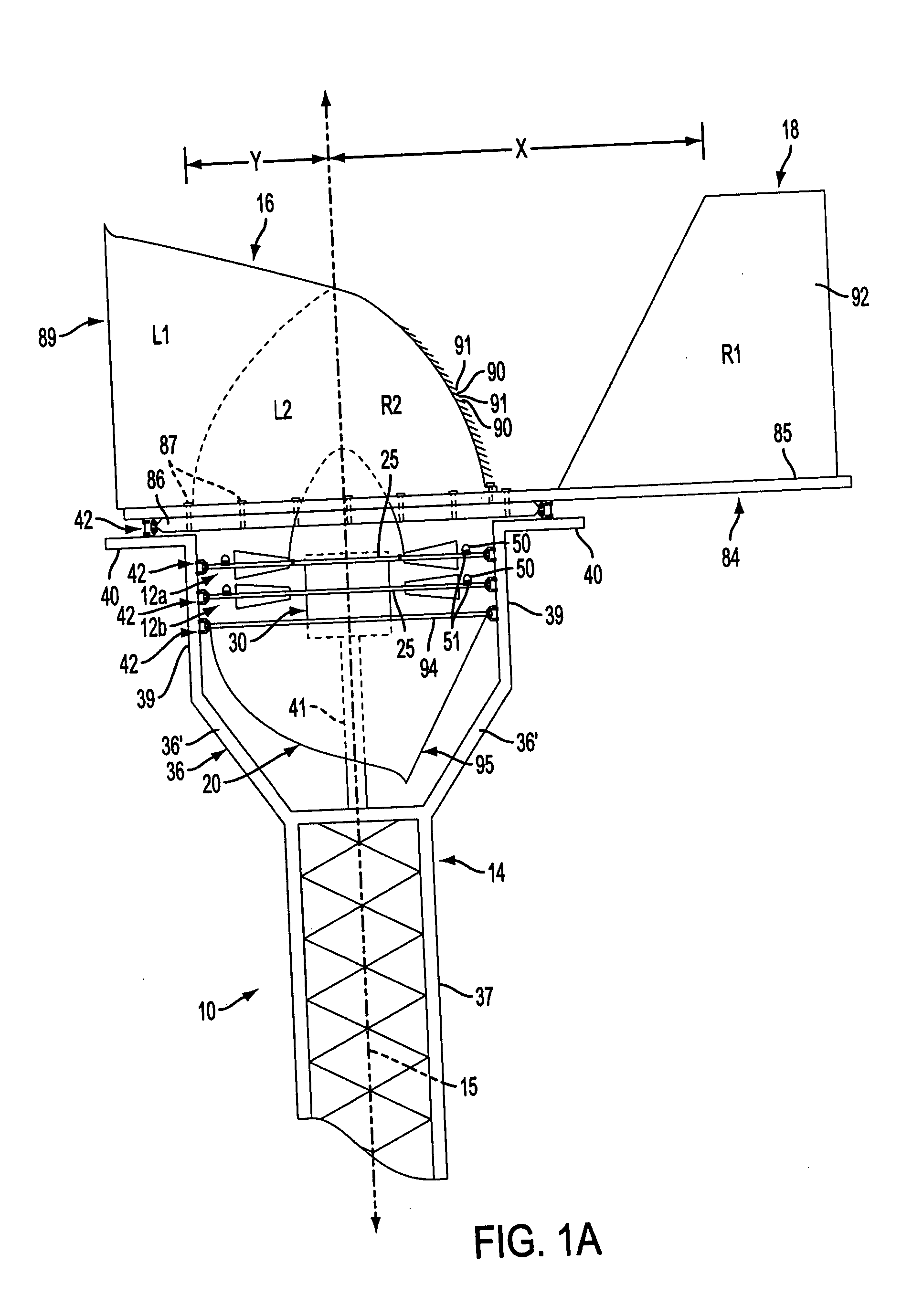
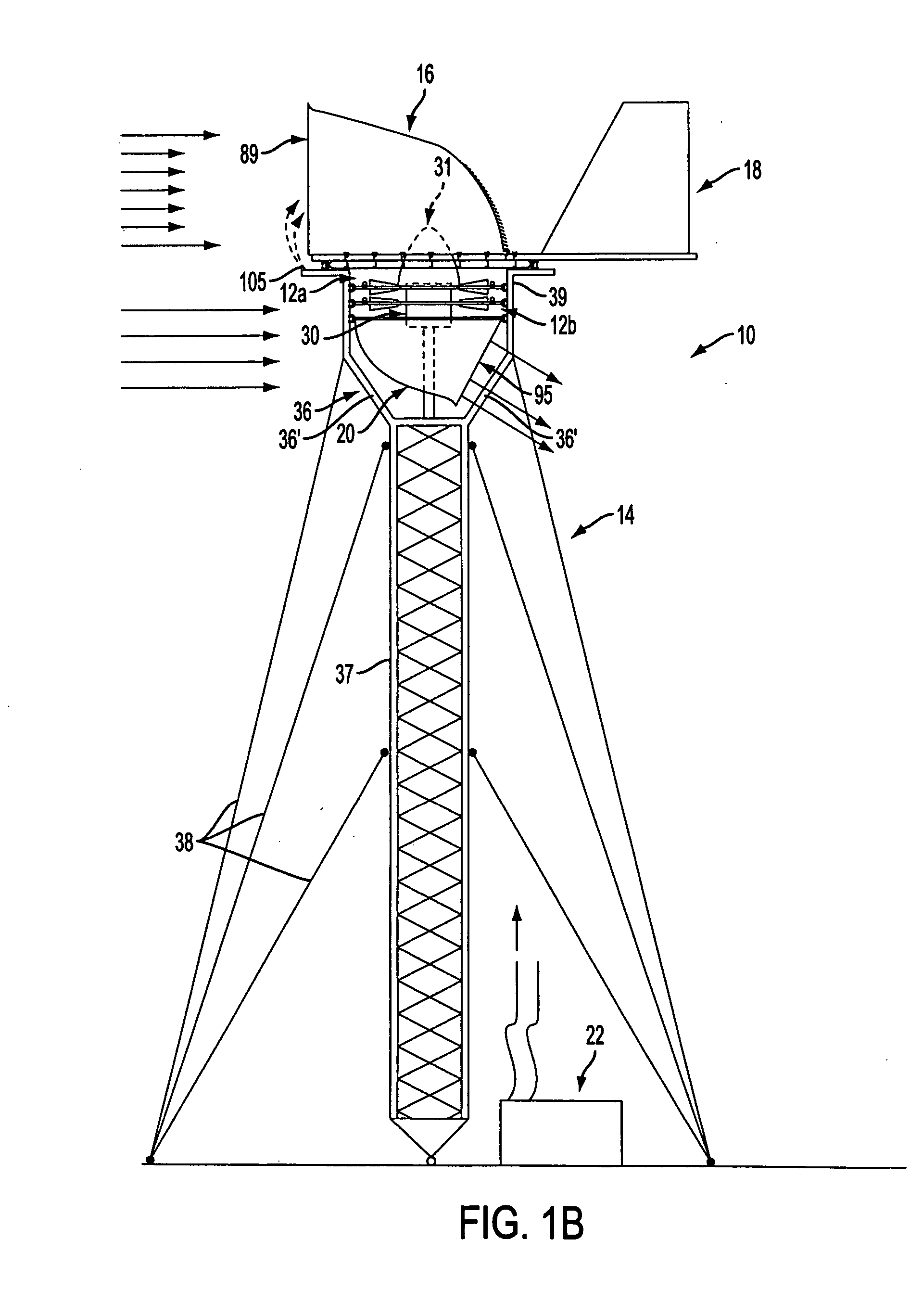
drive shaft as in prior wind turbine systems; the weight of the wind energy conversion system is greatly reduced permitting lighter and less expensive guyed towers, stabilized by guy cables, to be used to support the one or more wind turbines in an elevated position above the ground; optimum performance versus cost and weight may be accomplished by varying the size of a center void and spinner for the blade assemblies; the air intake opening is maintained facing into the oncoming wind without the need for power consuming equipment and / or computers to direct
yaw; intake air is deflected by the spinner toward the effective blade area of the one or more wind turbines; blade structure is eliminated from the
short radius, low torque position where virtually no power is produced, thusly resulting in greater efficiency and decreased weight; exhaust air is discharged from the one or more wind turbines with greater efficiency, less
back pressure on the one or more wind turbines and enhanced laminar air flow; the wind energy conversion system allows the commutators and brushes associated with conventional generators and which require maintenance and
downtime to be eliminated; wind turbines of larger generating capacities can be supported at higher elevations to the
advantage of greater wind speeds; greater
power output is obtained using less
air space than prior wind turbine systems; the wind energy conversion system can be used to generate DC or
AC power; a greater number of wind energy conversion systems can be deployed per acre of land than conventional wind turbine systems; each stator may comprise a continuous stator element or a plurality of individual stator elements; each rotor may comprise a
variable number of rotor elements; the blades of the blade assemblies have an airfoil configuration and are optimally sized in relation to spaces between the blades; a
rudder assembly operates in conjunction with the intake hood to produce positive
yaw on the hood; the exhaust plenum is configured to create a vacuum at the outlet opening; the outer rims of the blade assemblies are supported and positioned between cooperating rollers;
electric power produced by the one or more wind turbines may be stored in batteries, which may be charged under control of a charging controller; the torque created by each wind turbine can be monitored in various ways; mild compression in the hood increases the velocity of the air through the turbines, thereby enhancing output at lower input wind speeds; the exhaust plenum may be designed to assist directional
yaw; operation of the water misters may be controlled so that only water misters located adjacent the air intake opening are turned on; and output from the water misters may be controlled in accordance with the electrical output of the one or more wind turbines.


 Login to View More
  Login to View More