[0011] The second channels can exhaust directly to the outer circumference of the rotor. This provides a source of
cooling fluid to the gap between the rotor and
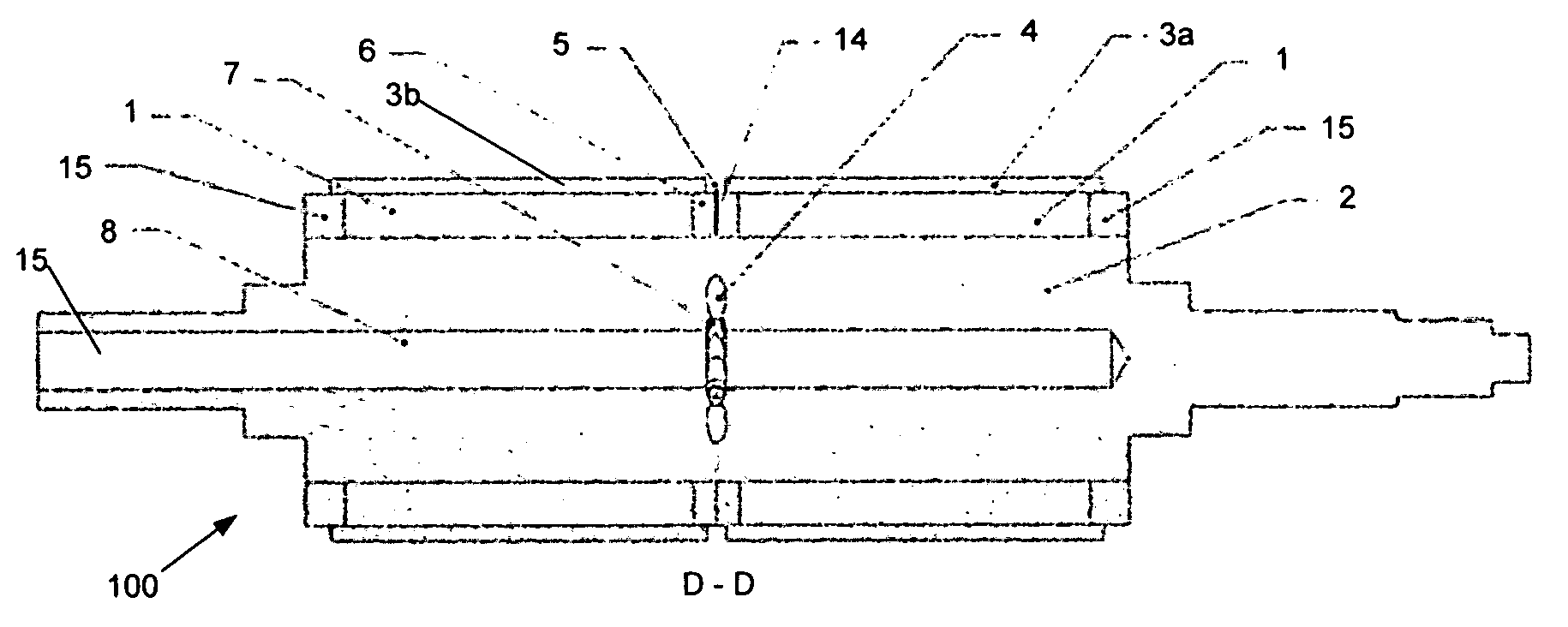
stator in the middle of the machine. The cooling fluid can then pass in both directions in the gap towards the end of the machine. This provides a dual cooling action along with the internal cooling of the magnets by the third and fourth channels to maximise the overall cooling of the machine. As the rotor may rotate at very
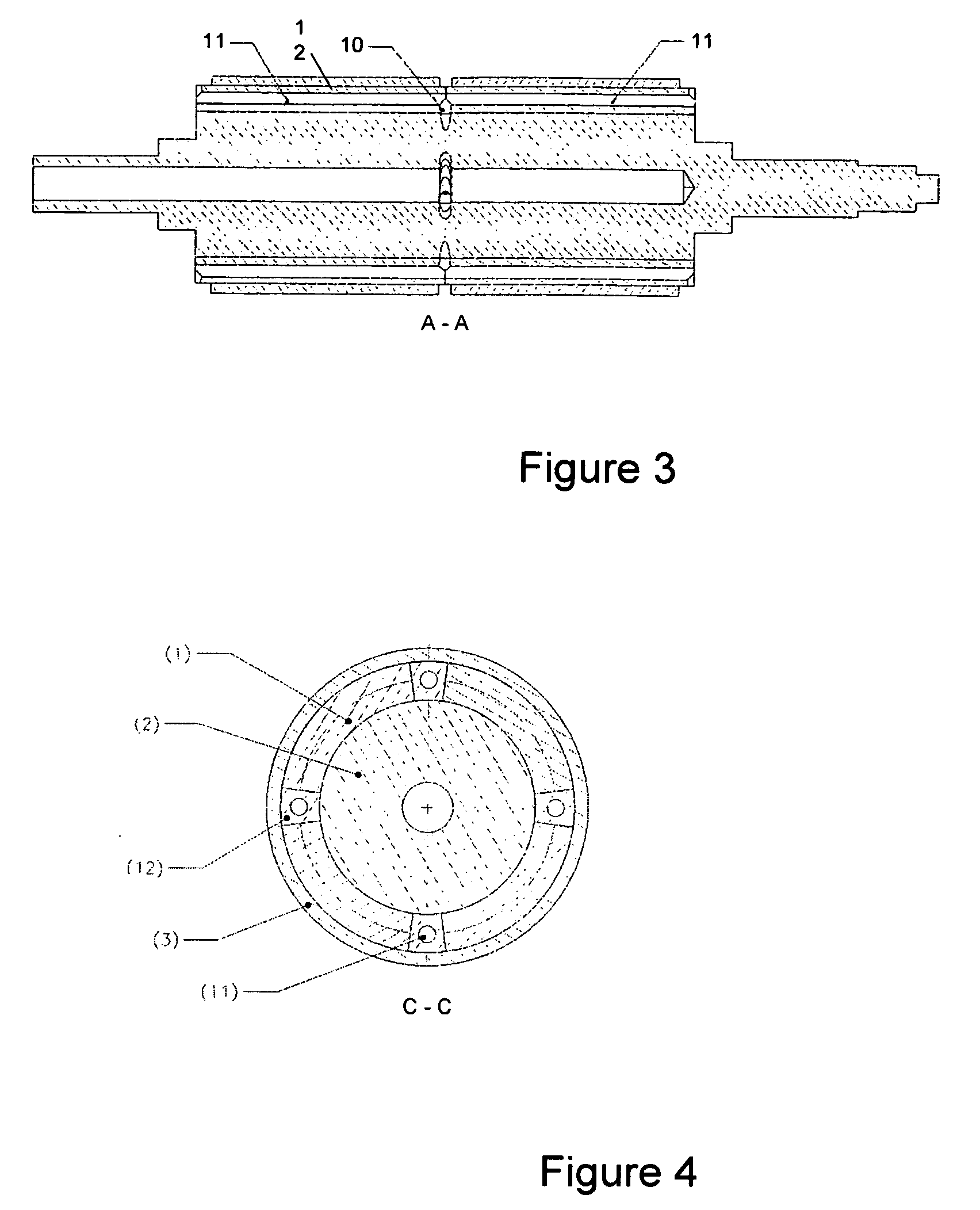
high surface speeds, the present invention allows a cooling fluid, such as air, to be drawn in at one end of the first channel and be conducted into the second channel and into the third channel via the fourth channel. This provides a cooling path for cooling fluid to enter the rotor internally, and then pass through the third channels to cool the
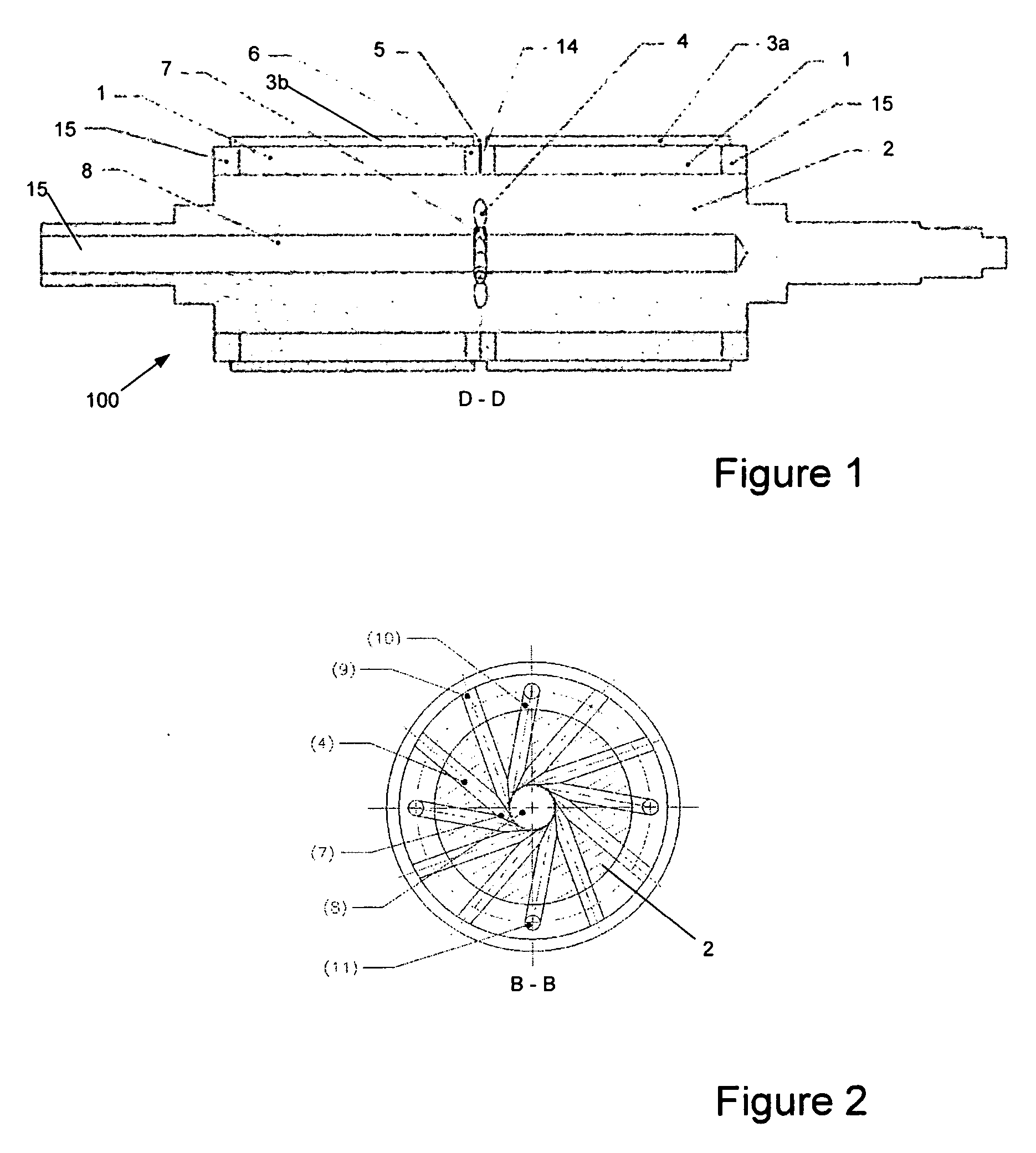
magnetic field generating means. The second and fourth channels preferably provide a pumping action to move the cooling fluid through the channels. The generally radial direction of the second and fourth channels and the rotation of the rotor cause the cooling fluid to be displaced outwardly. This pumping action may be improved by situating the channels in a plane of the rotor that is perpendicular to the longitudinal axis of the rotor and having the channels swept or angled to the radii of the rotor. This creates a central plenum, so that, upon rotation of the rotor, cooling fluid is forced outwards along the second and fourth channels.
[0012] By controlling the relative amount of cooling fluid flowing through the second and fourth channels, the cooling fluid can be divided between the two in a ratio to provide sufficient cooling to the rotor / stator gap without causing excessive
windage losses by passing too much cooling fluid through the gap. Hence, the cooling of the machine may be optimised according to the relative amounts of heat generated by the electrical and mechanical losses in the machine.
[0013] The fourth channels preferably lie in the same plane as the second channels and are angled in a similar manner. Preferably, the second and fourth channels are interspersed with each other to provide an even distribution of cooling fluid. If the channels are angled to the radii of the rotor, pumping of cooling fluid through the second and fourth channels by virtue of the rotational motion of the rotor can be improved. By optimising the angle for the desired speed of rotation, the pumping action can be optimised, preferably so that no additional external pump or fan is required.
[0014] The first channel preferably runs along the central longitudinal axis of the rotor. The second and fourth channels can join the first channel either at a point on the central longitudinal axis, so that the second and fourth channels are perpendicular to the first channel, or at a point offset from the central axis. If the second and fourth channels join the first channel at a point offset from the central axis, so that there is an angle between them and a line perpendicular to the first channel, a
plenum chamber is formed at the point where they coalesce. This provides a region for cooling fluids to pass from the first channel into the second and fourth channels. Sharp edges are formed where the inner ends of the second and fourth channels meet the
plenum chamber so these are chamfered to reduce losses where the cooling fluid changes direction flowing from the
plenum chamber into the channels.
[0015] The second and fourth channels can be connected to the first channel at a mid point of the longitudinal axis of the rotor so that cooling fluid is introduced to the
magnetic field generating means or outer surface of the rotor at a point halfway along the rotor and then exhausted at both ends. This helps to minimise the pressure and
temperature gradient along the rotor since fluid is only passed down half the length of the rotor. This is in comparison to feeding the fluid in at one end and out at the other end where the fluid is heated over the entire length of the rotor. As a result, the pressure and
temperature difference between the cooling fluid at the inlet compared to the outlet is much greater and hence the
cooling efficiency is poorer. This also means that the power out of the device is restricted by the temperature at the outlet end.
[0019] Thus, the present invention provides the
advantage of an internally cooled rotor for an
electric machine with little or no need for external pumping of rotor cooling air. The present invention also provides the
advantage that
high pressure and temperature gradients in the rotor are avoided, leading to
improved performance. In addition, the rotor of the present invention provides the
advantage that cooling due to mechanical and electrical losses takes place using separate parallel circuits, thereby allowing flow rates and temperature rises for each to be optimised separately.


 Login to View More
  Login to View More