
Method and system of coregistrating optical coherence tomography (OCT) with other clinical tests
a co-registration and optical coherence tomography technology, applied in the field of image processing and analysis, can solve the problems of lack of focal pathology annotation, inability to show relevant pathologies in svp technique, and inability to satisfy the method or system of localizing focal in vivo pathology
- Summary
- Abstract
- Description
- Claims
- Application Information
AI Technical Summary
Benefits of technology
Problems solved by technology
Method used
Image

Examples
Embodiment Construction
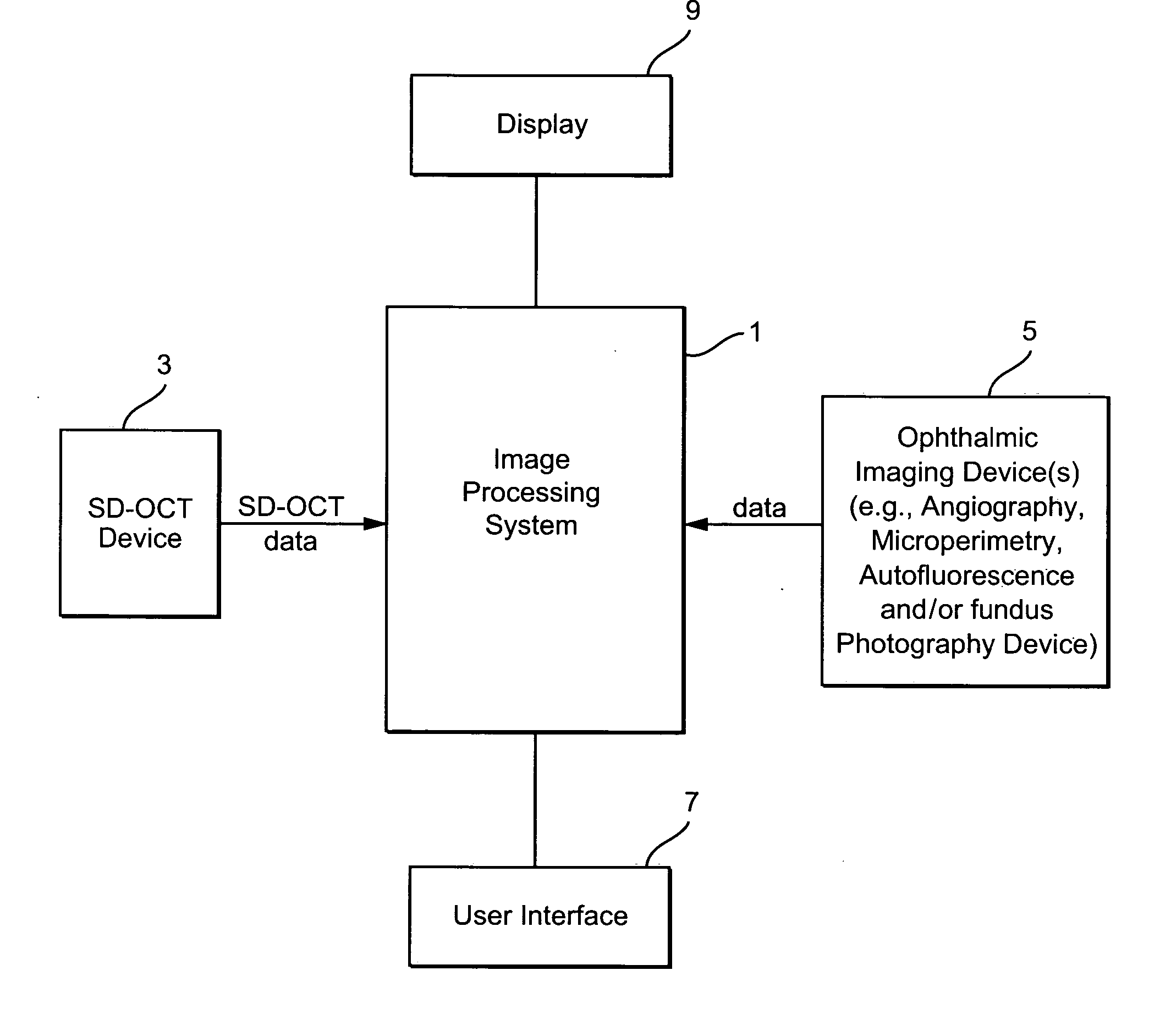
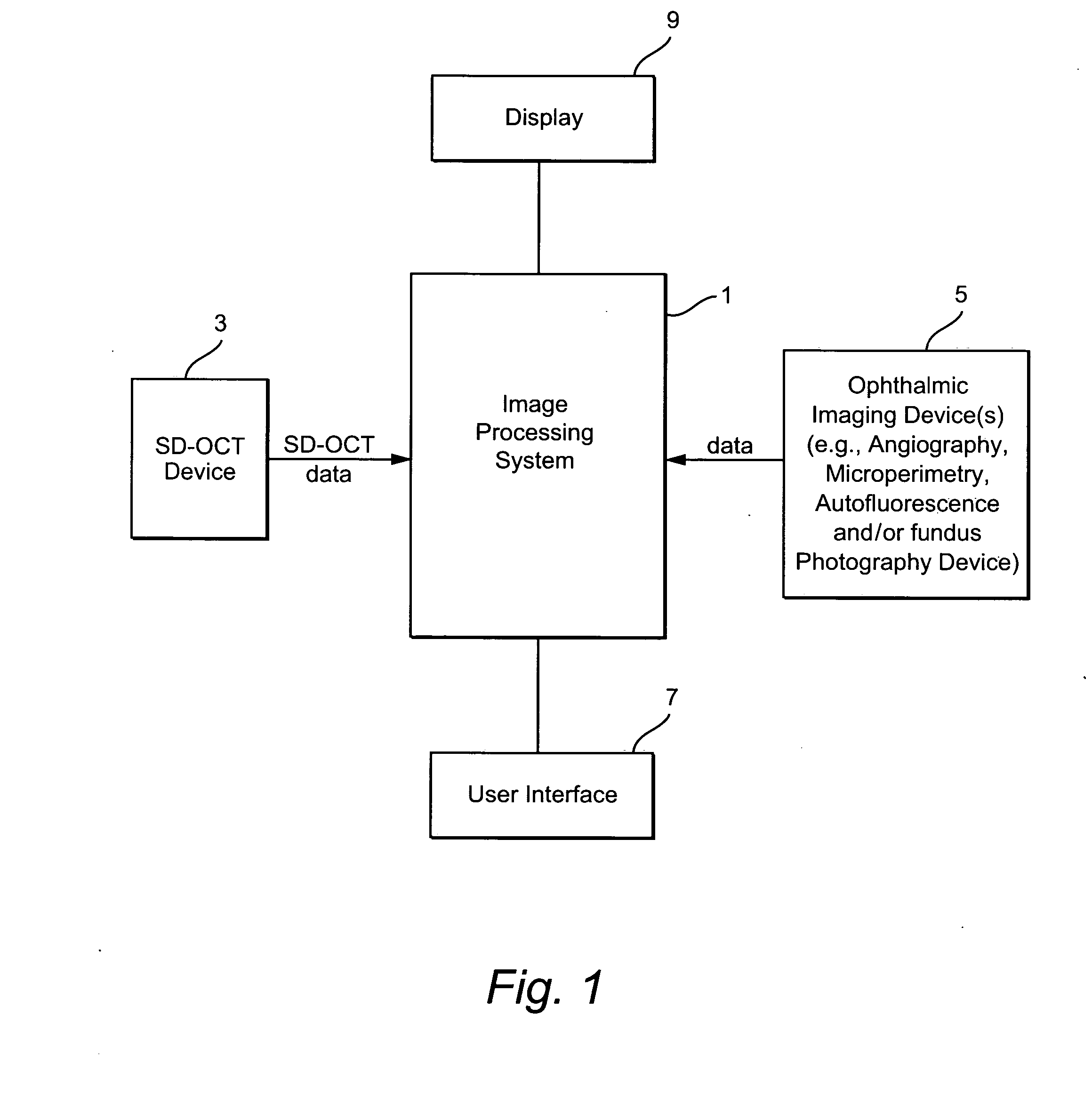
[0025]FIG. 1 illustrates an exemplary system having an image processing system 1. The image processing system 1 comprises a computer having processing components, storage memories, etc. The image processing system 1 receives imaging data from an SD-OCT scanning device 3 and from one or more ophthalmic device(s) such as an angiography, autofluorescence, fundal photography and / or microperimetry device 5. A user (e.g., ophthalmologist, radiologist, etc.) may provide input to the image processing system 1 through a user interface 7 (e.g., a keyboard and / or mouse). An output of the image processing system 1 is stored in for example a memory of the system 1 and may be displayed on display 9 or on a hard copy through operation of a printer (not shown). The processing performed by the image processing system may be partially or fully automated.
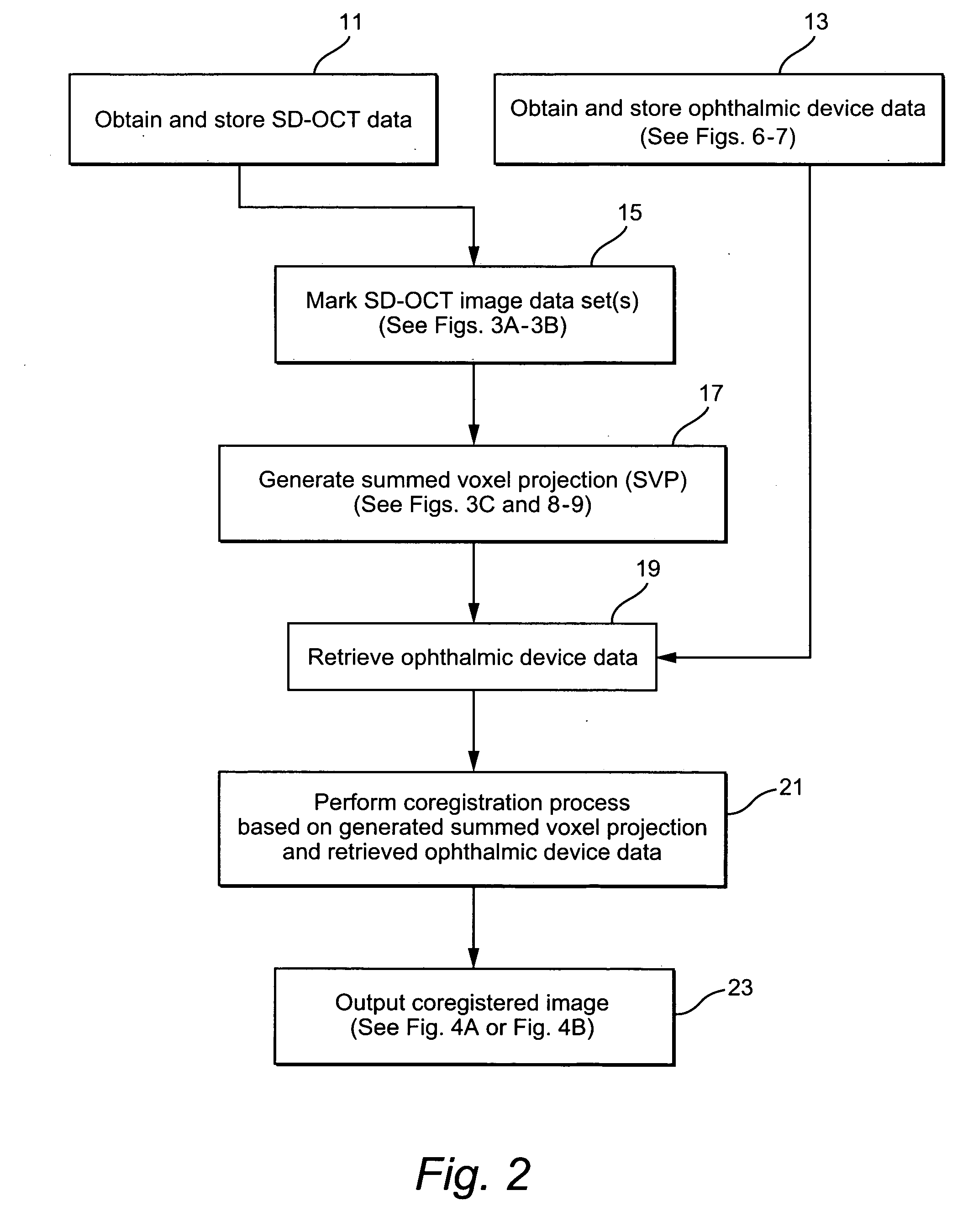
[0026]FIG. 2 illustrates an exemplary method which may be performed using the system illustrated in FIG. 1 to annotate, extract and / or preserve diff...
PUM
 Login to View More
 Abstract
Description
Claims
Application Information
 Login to View More