
Immunogenic composition and methods
a technology of composition and immunomodulatory response, applied in the field of immunomodulatory composition and methods, can solve the problems of virus disadvantage, difficult manufacturing of viruses, limited ability to accept foreign genes, etc., and achieve the effect of increasing the level of antigen-specific immune respons
- Summary
- Abstract
- Description
- Claims
- Application Information
AI Technical Summary
Benefits of technology
Problems solved by technology
Method used
Image

Examples
example 1
Preparation of DNA Plasmids
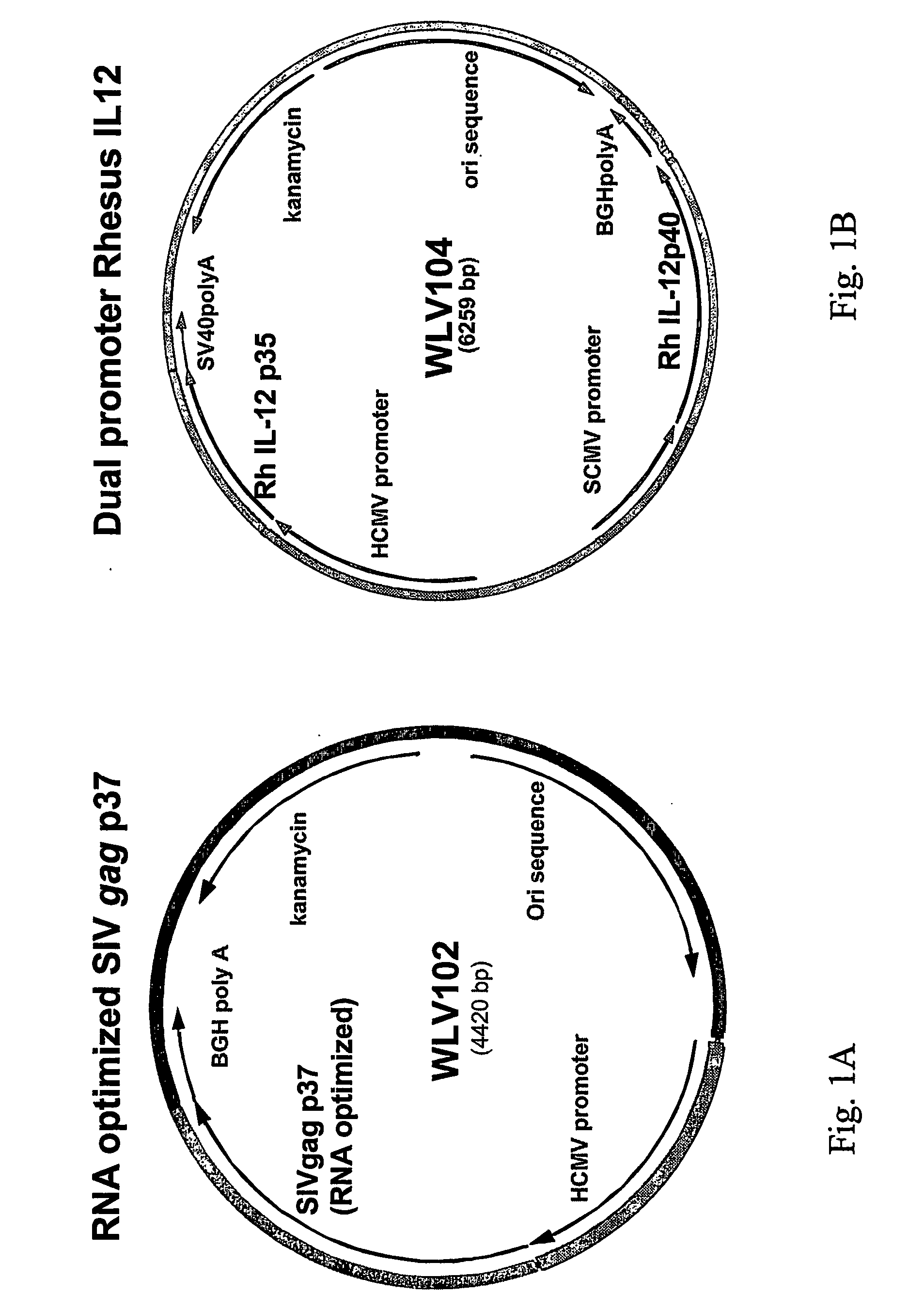
[0105] This example describes illustrative plasmids useful in one embodiment of this invention as set out in Examples 2 and 3. These plasmids are not a limitation on the present invention, but have been optimized for use in the subsequent experiments. The following DNA immunogenic compositions were designed utilizing standard recombinant DNA techniques. The DNA backbone vector expressing HIV or SIV gag genes utilizes the HCMV promoter, BGH poly A termination sequence, the ColE1 bacterial origin of replication (ori); and a kanamycin resistance gene for selection.
[0106] A. SIV gag p37DNA Plasmid
[0107] Plasmid WLV102 is a bacterial plasmid expressing as the selected antigen against which an immune response was desired, the SW gag p37. Plasmid WLV102 (4383 bp) consists of an RNA optimized truncated gag gene (p37) from SIV (Qiu et al, 1999 J. Virol., 73:9145-9152) inserted into the DNA plasmid expression vector WLV001. The gag gene was RNA optimized by inact...
example 2
Preparation of Recombinant VSV Vectors
[0115] A. VSV Genomic cDNA Cloning.
[0116] The genetic background for VSV genomic cDNA manipulation is pVSV-XN1 (Schnell, M. J., et al 1996 J. Virol., 70:2318-23). This clone contains a modified form of the VSV Indiana strain (VSVi) cDNA sequence. The modifications include the addition of two unique restriction endonuclease recognition sites (XhoI and NheI), and added copies of VSV gene-start and VSV gene-end signals. When foreign genes such as HIV-189.6p env gp160 or SIV gag p55 or HIV-1 gag, are conveniently inserted between the XhoI and NheI sites, they reside in a position suitable for expression controlled by VSV transcriptional control signals. Also, the VSV cDNA sequence is flanked by cis-acting DNA sequences required to promote rescue of the live virus replicates. The T7 RNA polymerase promoter directs transcription of a primary transcript across the viral cDNA. The ribozyme cleaves the primary transcript to form the end of the RNA geno...
example 3
Prime / Boost Immunization Regimen
[0135] A. Immunization Protocols
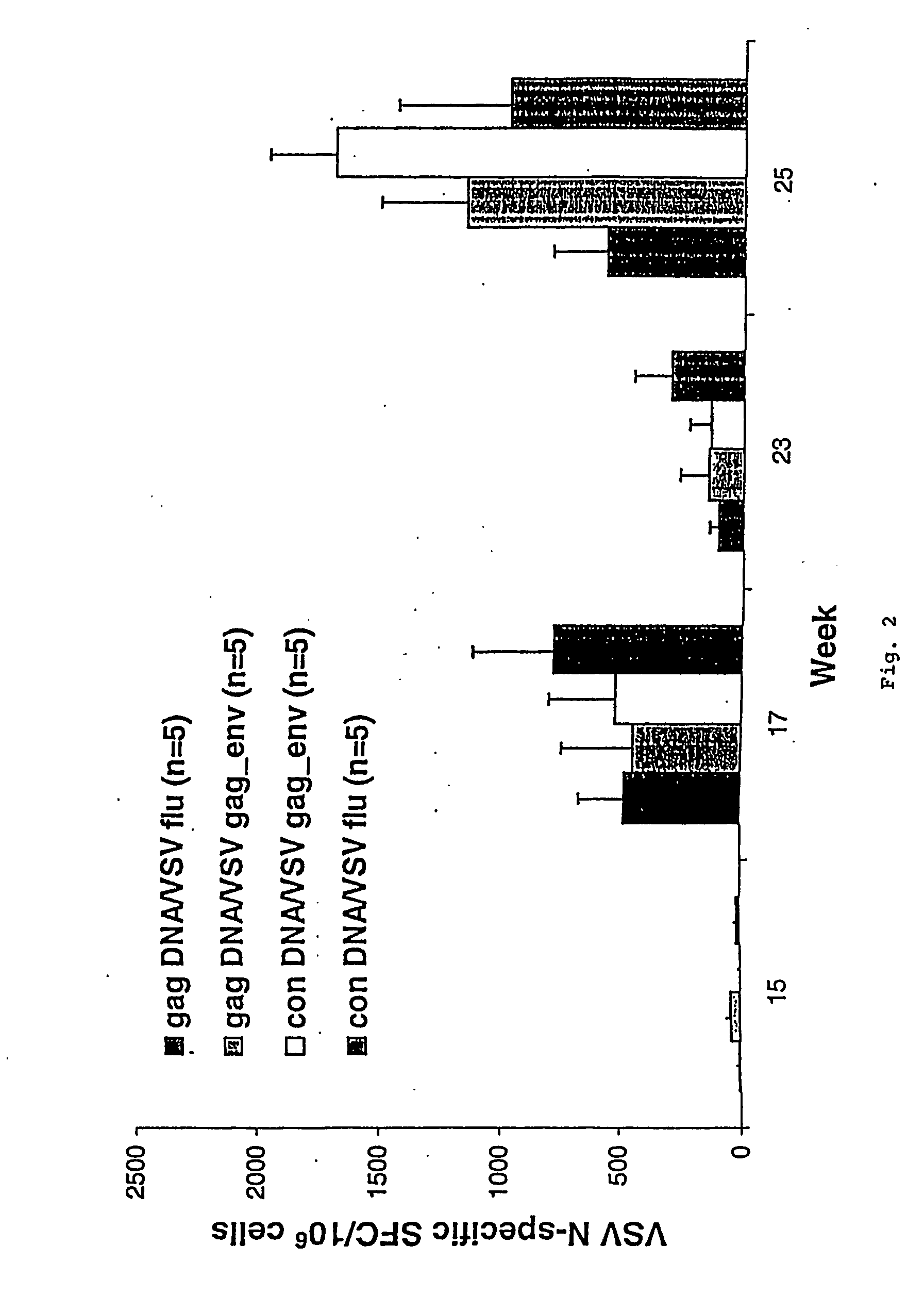
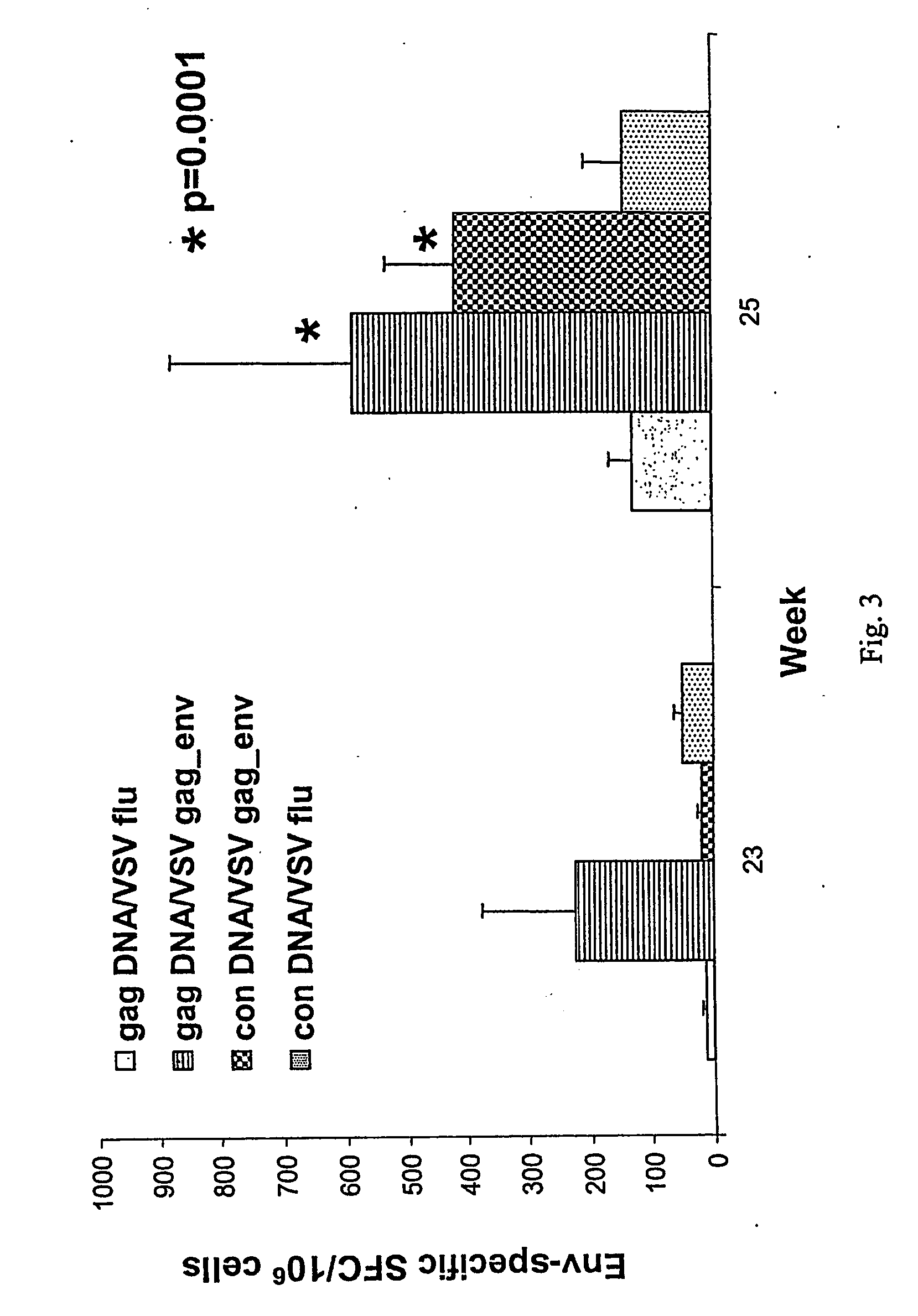
[0136] Rhesus macaques (5 per group) were immunized by intramuscular injection with 5 mgs of a bicistronic DNA plasmid encoding rhesus IL-12 p35 and IL-12 p40 in combination with 5 mgs of a DNA plasmid expressing SIV gag p37 polyprotein (Groups 1 and 2), or 10 mgs of an empty DNA plasmids (Groups 3 and 4). All these DNA plasmids and the formulations thereof are described in detail in Example 1. The DNA immunization schedule provided for an initial immunization at day 0, followed by a first and second booster immunization at week 4 and week 8. The injections were made at four sites in the deltoids and quadriceps with 1 cc per site using a needle and syringe.
[0137] The macaques were then boosted at week 15 by intranasal inoculation (0.4 cc / nostril with handheld pipetter) with either the recombinant vesicular stomatitus virus (rVSV) of serotype Indiana (1) based vector of Example 2 containing HIV-1 gp160 env gene (5×10⁶...
PUM
| Property | Measurement | Unit |
|---|---|---|
| Time | aaaaa | aaaaa |
| Composition | aaaaa | aaaaa |
| Immunogenicity | aaaaa | aaaaa |
Abstract
Description
Claims
Application Information
 Login to View More