
Solid Oral Dosage Form Containing an Enhancer
a technology of enhancer and oral dosage form, which is applied in the direction of biocide, cyclic peptide ingredients, non-active ingredients of pharmaceuticals, etc., can solve the problems of affecting the absorption and bioavailability of hydrophilic drugs such as peptides, affecting the absorption and bioavailability of pharmaceuticals, and affecting the absorption of hydrophilic drugs
- Summary
- Abstract
- Description
- Claims
- Application Information
AI Technical Summary
Benefits of technology
Problems solved by technology
Method used
Image

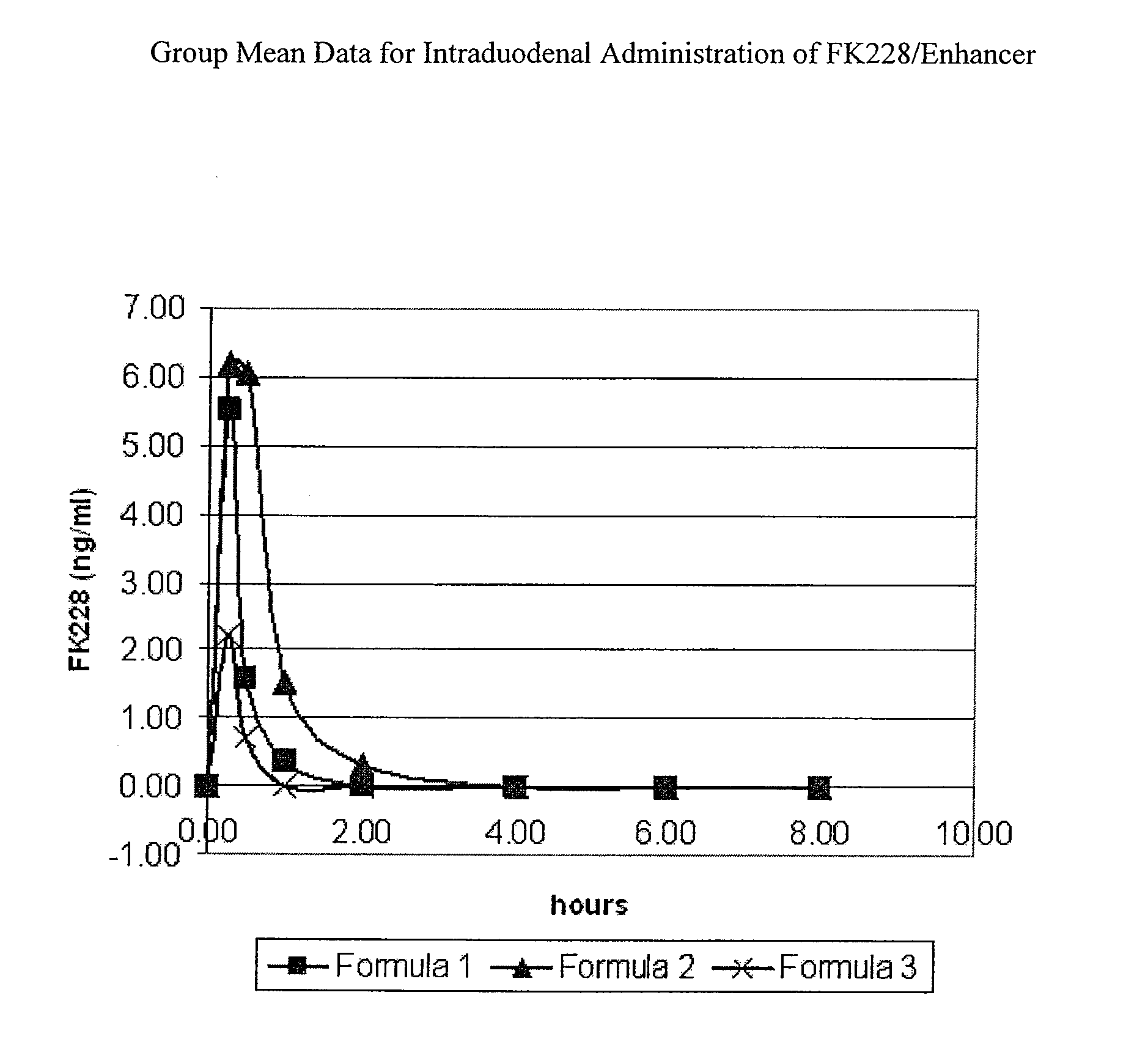
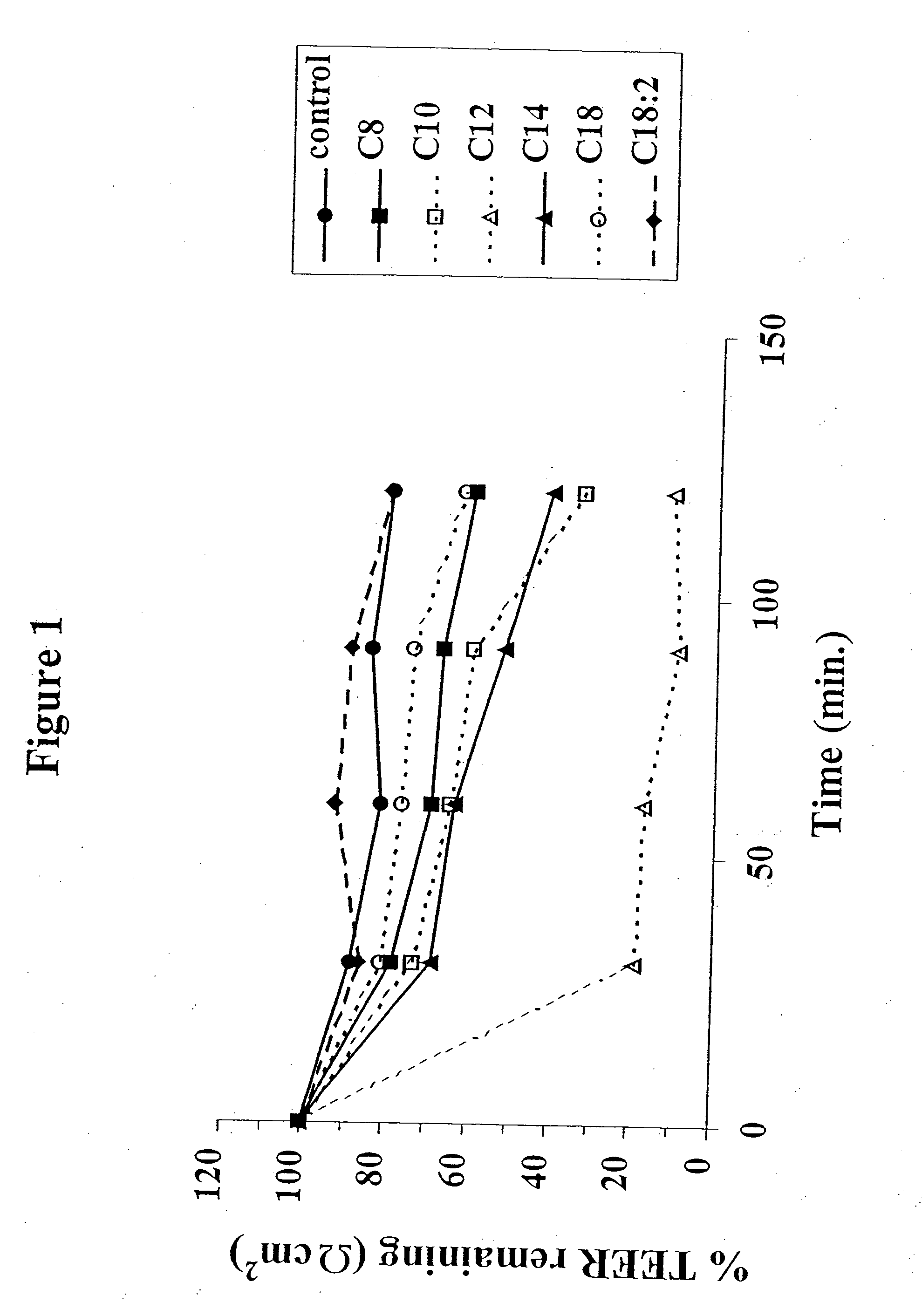
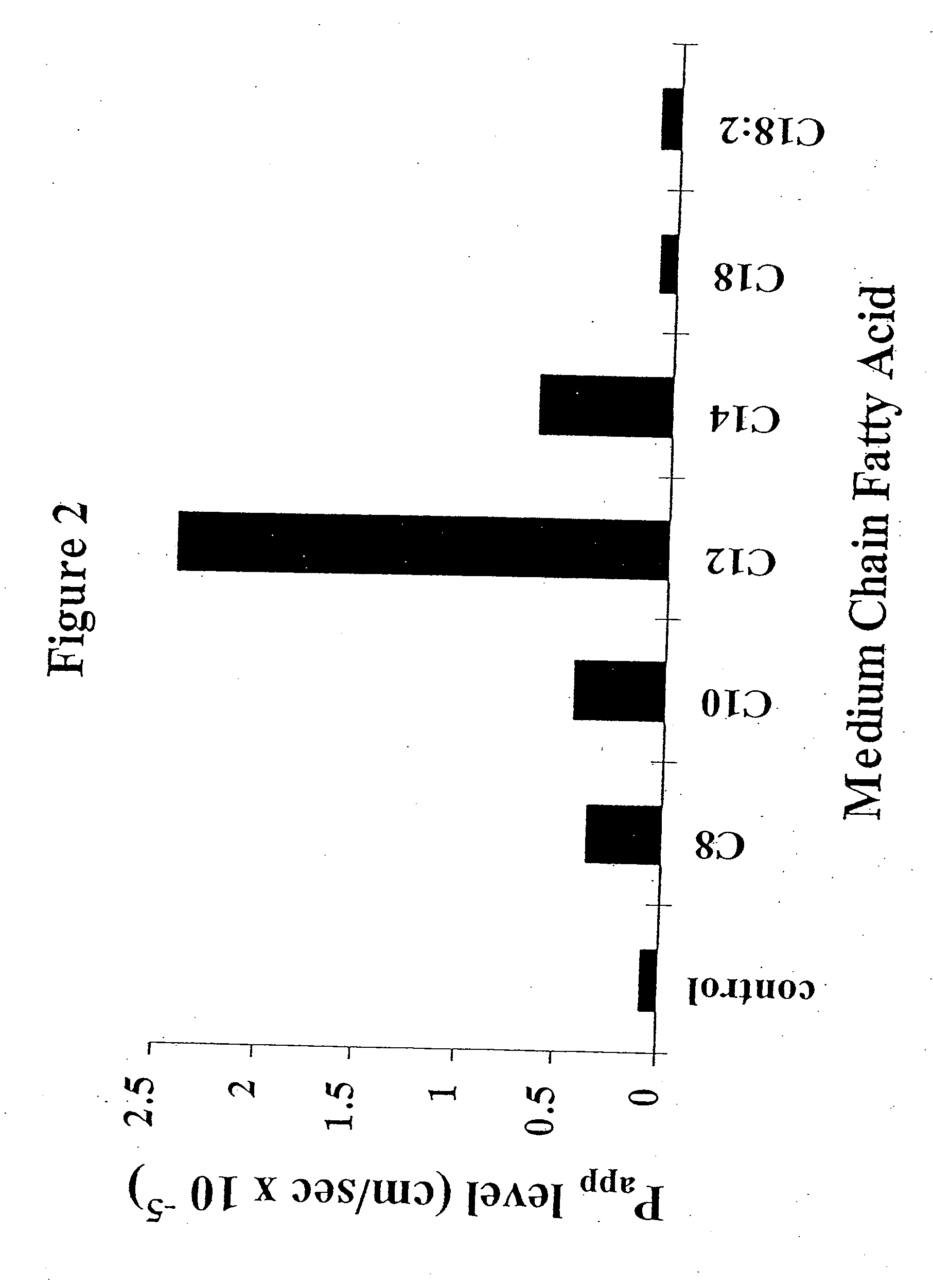
Examples
example 1
TRH Containing Tablets
[0064] (a) Caco-2 Monolayers.
[0065] Cell Culture: Caco-2 cells were cultured in Dulbecco's Modified Eagles Medium (DMEM) 4.5 g / L glucose supplemented with 1% (v / v) non-essential amino acids; 10% fetal calf serum and 1% penicillin / streptomycin. The cells were cultured at 37° C. and 5% CO2 in 95% humidity. The cells were grown and expanded in standard tissue culture flasks and were passaged once they attained 100% confluence. The Caco-2 cells were then seeded on polycarbonate filter inserts (Costar; 12 mm diameter, 0.4 μm pore size) at a density of 5×10⁵ cells / cm2 and incubated in six well culture plates with a medium change every second day. Confluent monolayers between day 20 and day 30 seeding on filters and at passages 30-40 were used throughout these studies.
[0066] Transepithelial Transport Studies: The effects of sodium salts of various MCFAs on the transport of 3H-TRH (apical to basolateral flux) was examined as follows: 15.0 μCi / ml (0.2 μM) 33H-TRH was...
example 2
Heparin Containing Tablets
[0077] (a) Closed-loop Rat Segment.
[0078] The procedure carried out in Example 1 (a) above was repeated using USP heparin in place of TRH and dosing intraileally rather than intraduodenally. A mid-line incision was made in the abdomen and the distal end of the ileum located (about 10 cm proximal to the ileo-caecal junction). 7-9 cm of tissue was isolated and the distal end ligated, taking care to avoid damage to surrounding blood vessels. Heparin absorption as indicated by activated prothrombin time (APTT) response was measured by placing a drop of whole blood (freshly sampled from the tail artery) on the test cartridge of a Biotrack 512 coagulation monitor. APTT measurements were taken at various time points. FIG. 5 shows the APTT response of USP heparin (1000 iu) at different sodium caprate (C10) levels (10 and 35 mg). Using APTT response as an indicator of heparin absorption into the bloodstream, it is clear that there is a significant increase in abso...
example 3
Effect of Enhancers on the Systemic Availability of Low Molecular Weight Heparin (LMWH) after Intraduodenal Administration in Rats
[0096] Male Wistar rats (250 g-350 g) were anaesthetized with a mixture of ketamine hydrochloride (80 mg / kg) and acepromazine maleate (3 mg / kg) given by intra-muscular injection. The animals were also administered with halothane gas as required. A midline incision was made in the abdomen and the duodenum was isolated. The test solutions, comprising parnaparin sodium (LMWH) (Opocrin SBA, Modena, Italy) with or without enhancer reconstituted in phosphate buffered saline (pH 7.4), were administered (1 ml / kg) via a cannula inserted into the intestine approximately 10-12 cm from the pyloris. The intestine was kept moist with saline during this procedure. Following drug administration, the intestinal segment was carefully replaced into the abdomen, and the incision was closed using surgical clips. The parenteral reference solution (0.2 ml) was administered sub...
PUM
| Property | Measurement | Unit |
|---|---|---|
| Molar density | aaaaa | aaaaa |
| Molar density | aaaaa | aaaaa |
| Molar density | aaaaa | aaaaa |
Abstract
Description
Claims
Application Information
 Login to View More