Wafer-level aca flip chip package using double-layered aca/nca

a technology of flip chip and aca, which is applied in the direction of basic electric elements, electrical apparatus, and semiconductor devices, can solve the problems of increasing manufacturing costs, requiring a long process time, and currently commercialized acp and ncp products cannot be coated in film form for dispensing, so as to achieve easy control of coating thickness, suppress effect of shadow effect, and improve the selectivity of electrical conduction and stability of connection process

US20090029504A1Inactive Publication Date: 2009-01-29KOREA ADVANCED INST OF SCI & TECH
5 Cites 31 Cited by

Patent Information

Authority / Receiving Office
US · United States
Patent Type
Applications(United States)
Current Assignee / Owner
Publication Date
2009-01-29
Estimated Expiration
Not applicable · inactive patent

Smart Images

  • Figure 1
    Figure 1
  • Figure 2
    Figure 2
  • Figure 3
    Figure 3
Patent Text Reader

Abstract

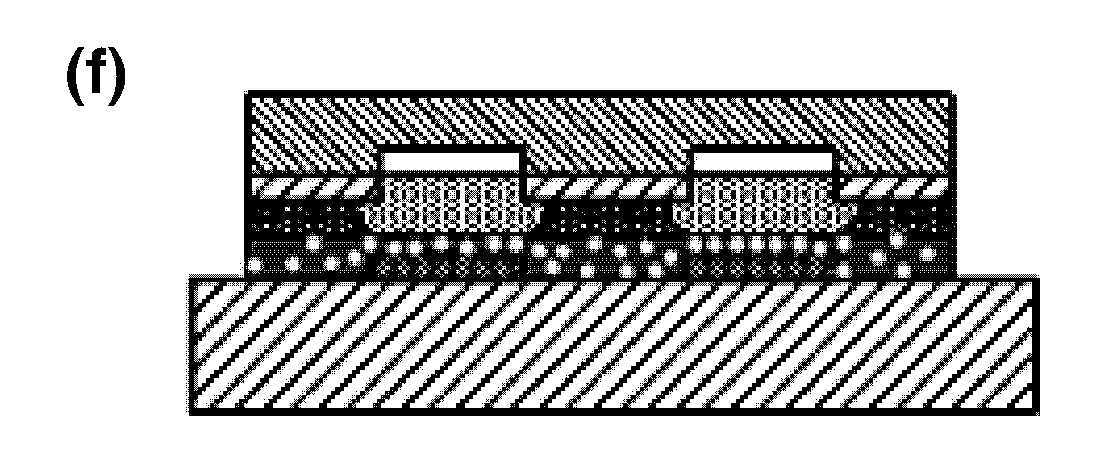
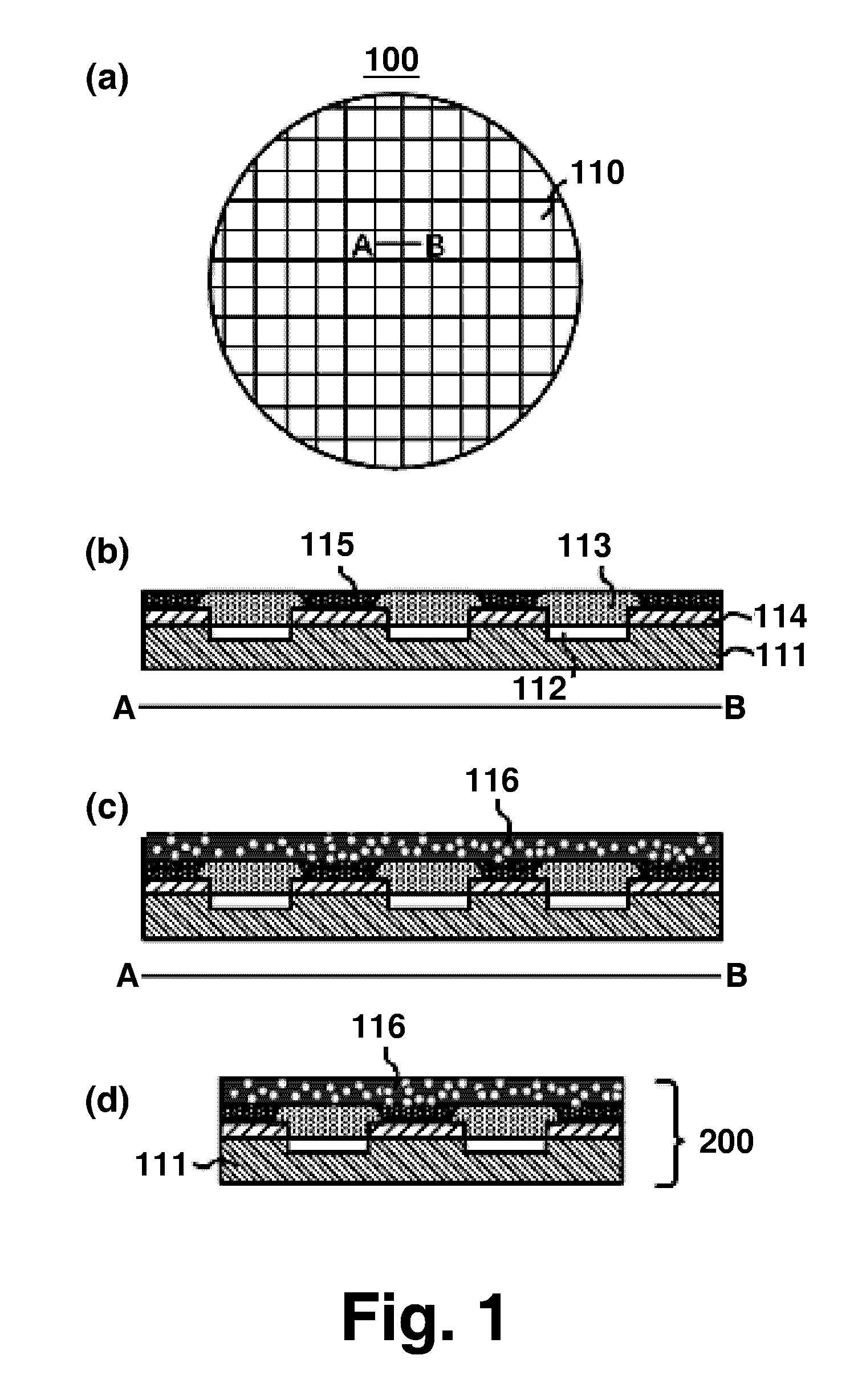
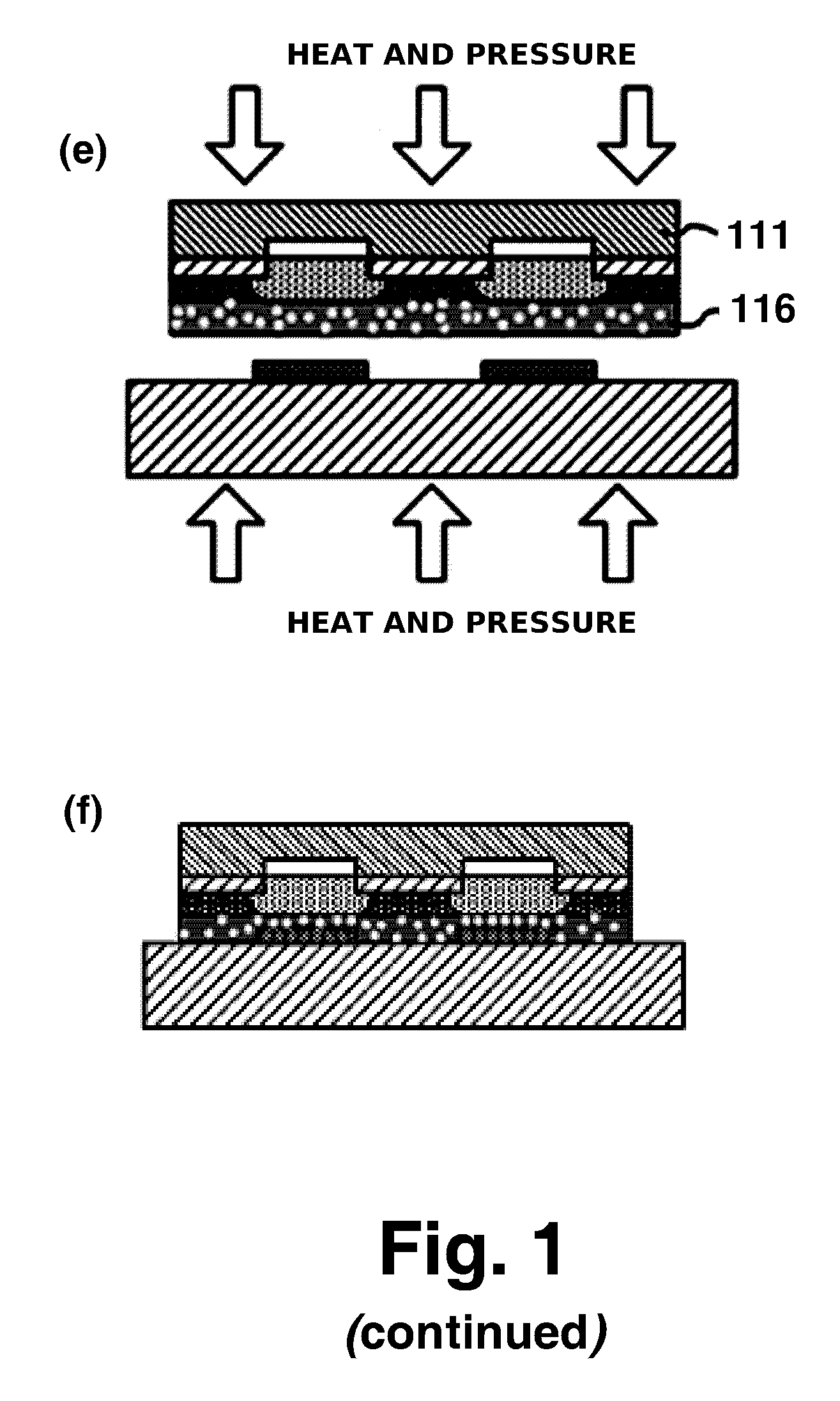
A method of manufacturing a wafer-level flip chip package is capable of being used to produce a flip chip package by directly coating a flip chip package using anisotropic conductive adhesives (ACA) and non conductive adhesives (NCA) in a solution state as a double layer on a wafer. The method can be used to manufacture a non-conductive mixed solution and a conductive mixed solution and directly coat them on a substrate, such that it is possible to: increase productivity; simplify a manufacturing process; suppress a shadow effect; easily perform thickness control that is difficult with the anisotropic conductive adhesive paste or the non-conductive adhesive paste; and obtain the non-conductive layer and the anisotropic conductive layer in an initial state of a B-stage with a level not losing latent of hardening through a simple drying process to volatilize an organic solvent. Above all, the non-conductive layer and the anisotropic conductive layer is sequentially stacked on the substrate formed with the non-solder bump, making it possible to make the selectivity of electrical conduction and the stability of a connection process excellent, shorten process time and costs, and dramatically reduce consumption of the conductive particles which account for a large portion of total production costs.
Need to check novelty before this filing date? Find Prior Art

Description

CROSS-REFERENCE TO RELATED APPLICATION

[0001] The benefit of priority is claimed to Republic of Korea Patent Application No. 2007-0073637, filed with the Korean Intellectual Property Office on Jul. 23, 2007, which is hereby incorporated by reference.BACKGROUND

[0002] 1. Introduction

[0003] The present discussion relates to a method of manufacturing a wafer-level flip chip package capable of being used to produce a flip chip package by directly coating a flip chip package using anisotropic conductive adhesives (hereinafter, referred to as ACA) and non-conductive adhesives (hereinafter, referred to as NCA) in a solution state as a double layer on a wafer.

[0004] 2. Related Art

[0005] An electronic package technology, which is a very broad and various system manufacturing technology including all steps from a semiconductor device to a final product, is a very important technology in achieving miniaturization, lightweight, and high performance of devices to meet a rapid development speed of elect...

Examples

first example

[0045]Manufacturing Thermoplastic Epoxy Resin Solution

[0046]Thermoplastic epoxy resin solution was manufactured by mixing 40 g of phenoxy based epoxy (KUKDO Chemical Co., Ltd. YP 50), 20 g of MEK, and 30 g of toluene and milling for three days at room temperature.

[0047]Manufacturing Thermosetting Epoxy Resin Solution

[0048]Thermosetting epoxy resin solution was manufactured by mixing 40 g of bisphenol A type epoxy (KUKDO Chemical Co., Ltd. YD020L), 20 g of MEK, and 20 g of toluene and milling for three days at room temperature.

[0049]Manufacturing Non-Conductive Mixed Solution

[0050]Non-conductive mixed solution was manufactured by mixing 25 g of the manufactured thermoplastic epoxy resin solution, 15 g of the manufactured thermosetting epoxy resin solution, and 60 g of benzimidazole based latent hardener (Asahi Kasei chemical, HX3941HP) and stirring for five minutes at room temperature.

[0051]Manufacturing Conductive Mixed Solution

[0052]The non-conductive mixed solution was manufacture...