Panoramic three-dimensional adapter for an optical instrument and a combination of such an adapter and such an optical instrument

a three-dimensional adapter and optical instrument technology, applied in the field of panoramic three-dimensional (3d) adapters for optical instruments, can solve the problems of large visible errors, complex and expensive setup, brightness and matching errors, etc., and achieve the effect of relatively easy manufacture of mirrors and easy operation

US20090034086A1Inactive Publication Date: 2009-02-05SHARP KK
1 Cites 51 Cited by

Patent Information

Authority / Receiving Office
US · United States
Current Assignee / Owner
Publication Date
2009-02-05
Estimated Expiration
Not applicable · inactive patent

Smart Images

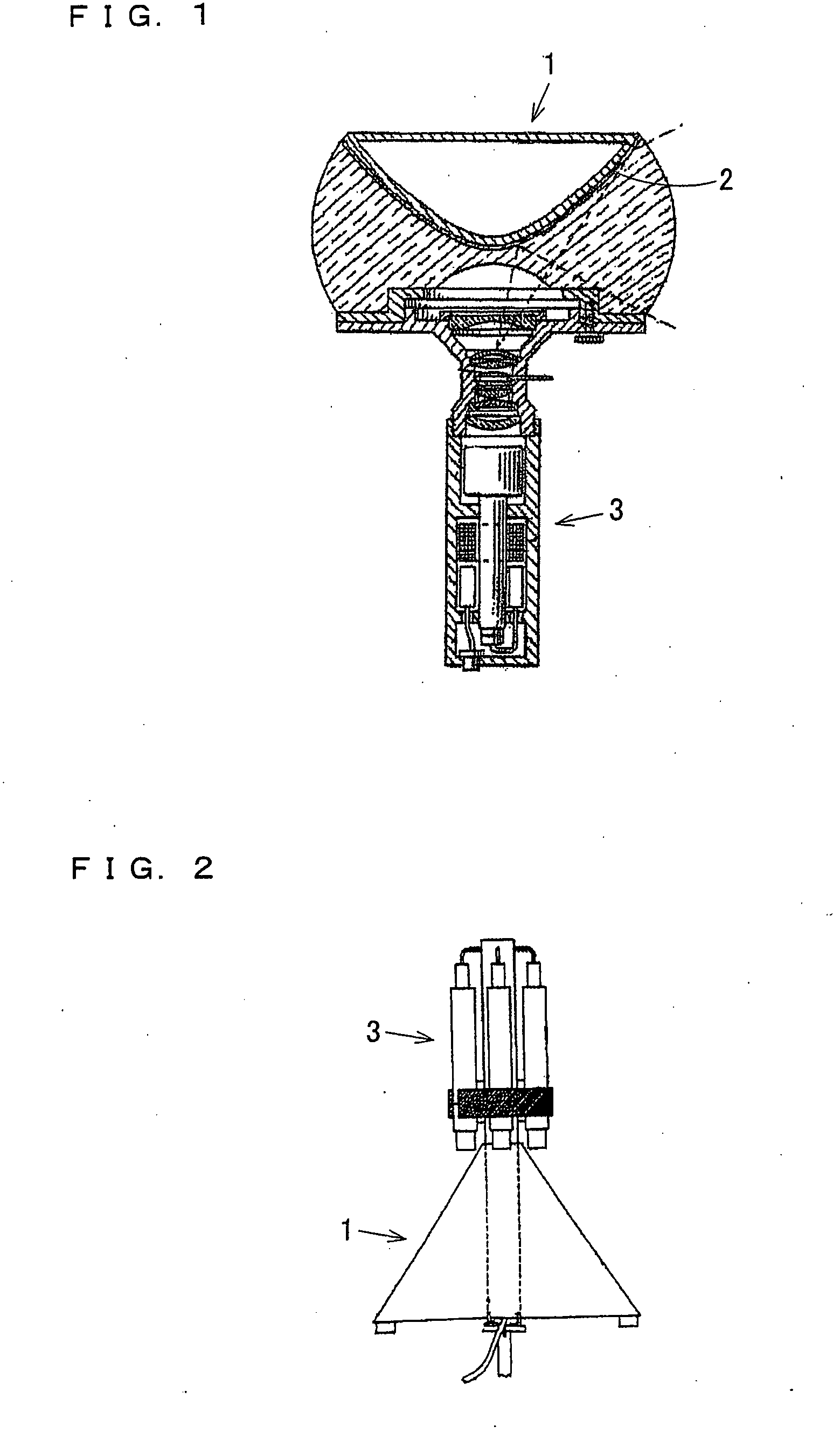
  • Figure 1
    Figure 1
  • Figure 2
    Figure 2
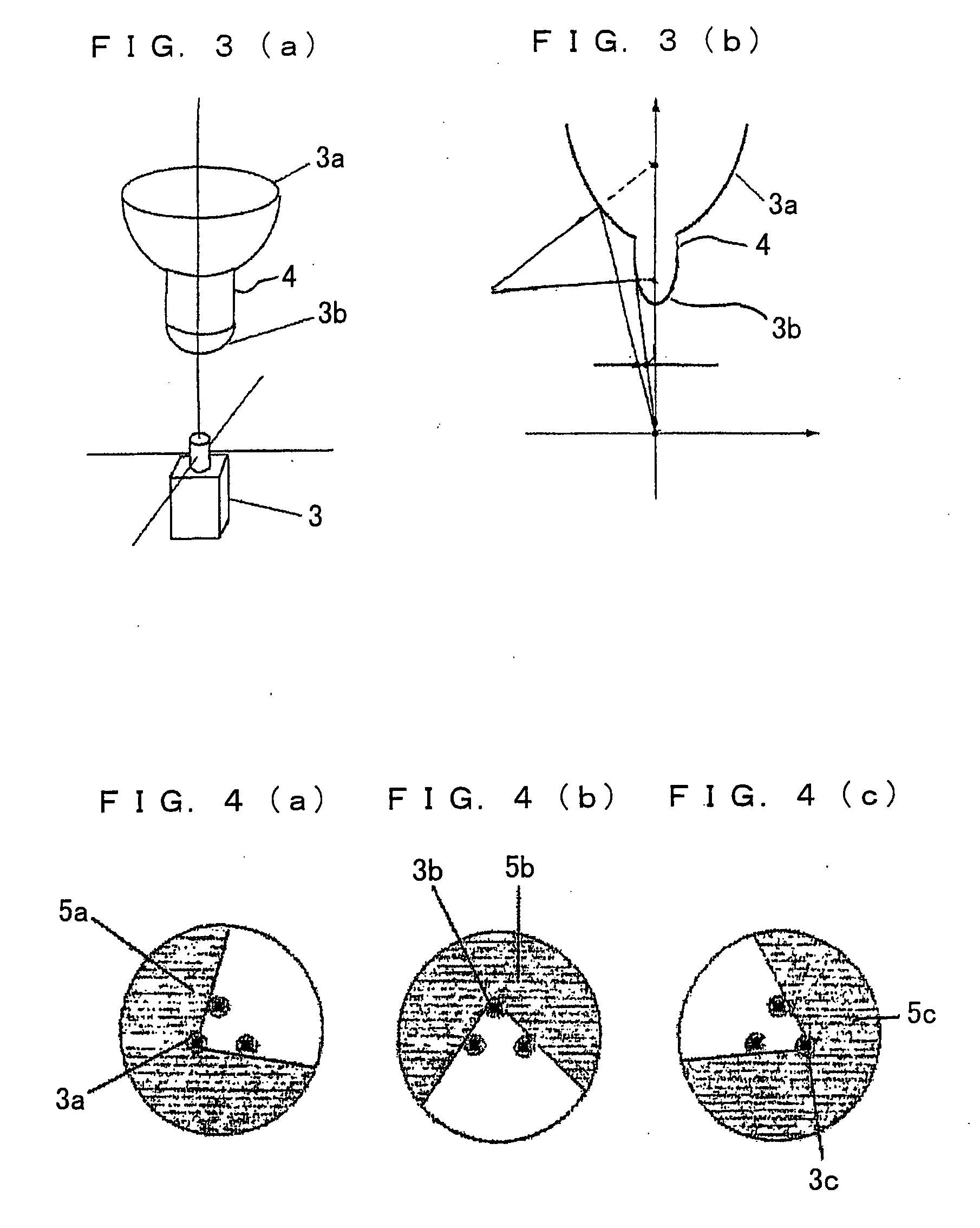
  • Figure 3
    Figure 3
Patent Text Reader

Abstract

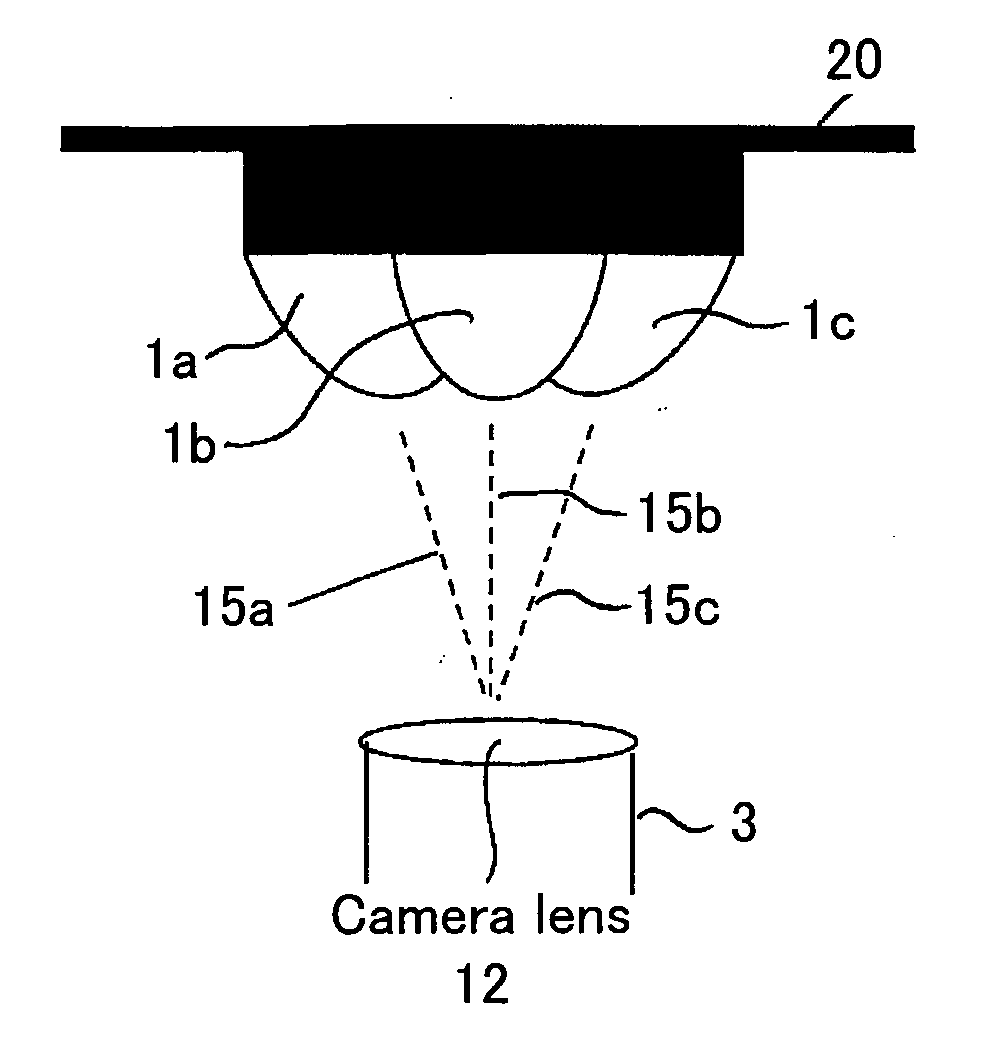
An adapter is provided for adapting an optical instrument, such as a camera (3) or a projector, to capture or display panoramic three-dimensional images. The adapter comprises a plurality of mirrors (1a, 1b, 1c), each of which has a reflective surface which is in the shape of a curved non-circular conic section rotated about an axis of symmetry (15a, 15b, 15c). The reflective surfaces have first foci which are spaced perpendicularly from a longitudinal axis of the adapter and which are angularly spaced around the longitudinal axis. For example, the conic section may be a hyperbola with first foci equidistantly spaced from the longitudinal axis and equiangularly spaced around 15b the longitudinal axis. The axes of symmetry (15a, 15b, 15c) of the mirrors (1a, 1b, 1c) converge to intersect the longitudinal axis at a point which is coincident with the front principal point of, for example, a camera lens (12). Thus, single shot capture of all the image data for the or each panoramic three-dimensional image may be performed.
Need to check novelty before this filing date? Find Prior Art

Description

TECHNICAL FIELD

[0001] The present invention relates to a panoramic three-dimensional (3D) adapter for an optical instrument and a combination of such an adapter and such an optical instrument. For example, such an optical instrument may comprise a camera which, when including or mounted to such an adapter, may be used as a stereoscopic panoramic camera.

[0002] As an alternative, the optical instrument may comprise a projector which, when mounted to or including such an adapter, may be used to form a panoramic stereoscopic projection display.BACKGROUND ART

[0003] There are several known types of wide field or panoramic stereoscopic cameras. A first type uses a plurality of cameras, usually a multiple of 6 cameras, disposed in a circular or spherical arrangement. Such an arrangement typically provides good quality images but is complex and expensive to set up. Also, because several cameras are used to capture the images, there may be brightness and matching errors when the panoramic stereo...

Examples

Embodiment Construction

[0070]FIG. 6 illustrates the derivation of an unwrapping equation in the case of a simple known type of catadioptric camera system with a convex hyperboloid mirror 1 for a 2D panoramic camera including a conventional or standard camera 3. Such an arrangement is disclosed, for example, in “Panoramic Vision, Sensors, Theory and Applications”, Ed. Benosman and Kang, Springer, 2001.

[0071]The system comprises a convex hyperbolic mirror 1 which is axisymmetric about an axis 9 and with a first focus of the hyperbola at 10. The mirror 1 is disposed above a camera 3 comprising a lens aperture 12 and a charge-coupled device (CCD) sensor 13. The second focus of the hyperbola is located at the principal point 11 of the lens aperture 12. The camera 3 thus “sees” a reflection from the mirror 1 of a scene extending through 360° around the camera axis, which is coincident with the axis of symmetry 9, and with a vertical field dependent on the design of the mirror 1.

[0072]It is necessary that the mi...