

Optical recording medium and method of recording visible information
a recording medium and optical recording technology, applied in the field of optical recording mediums, can solve the problems of low contrast and lack of visibility, difficult to form visible images of high contrast with dyes employed on the (digital) information recording surface of a conventional optical disk, etc., to achieve excellent toughness, high contrast, and excellent visibility.
Patent Information
- Authority / Receiving Office
- US · United States
- Current Assignee / Owner
- Publication Date
- 2009-03-05
- Estimated Expiration
- Not applicable · inactive patent
Smart Images
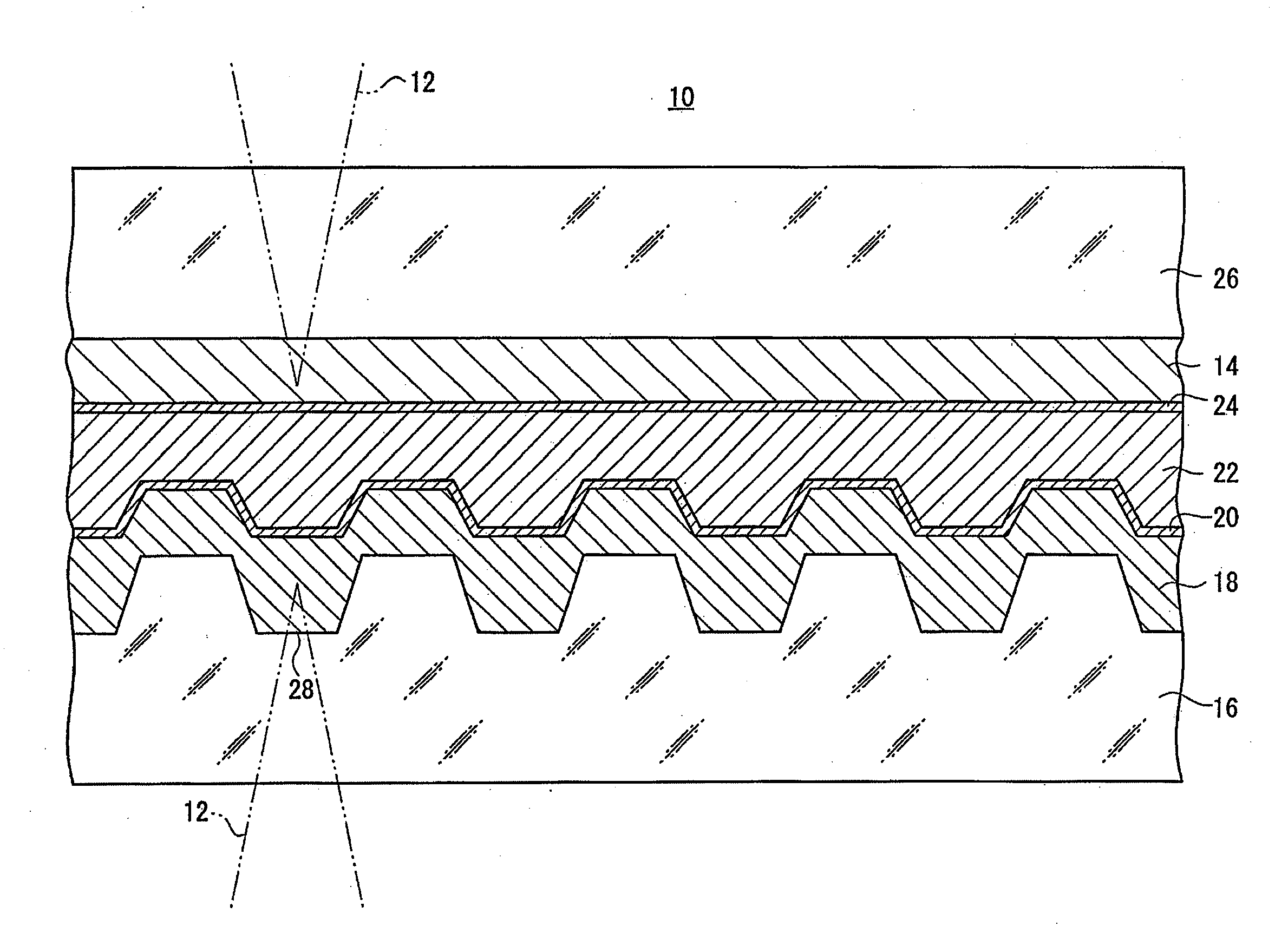
Figure 1 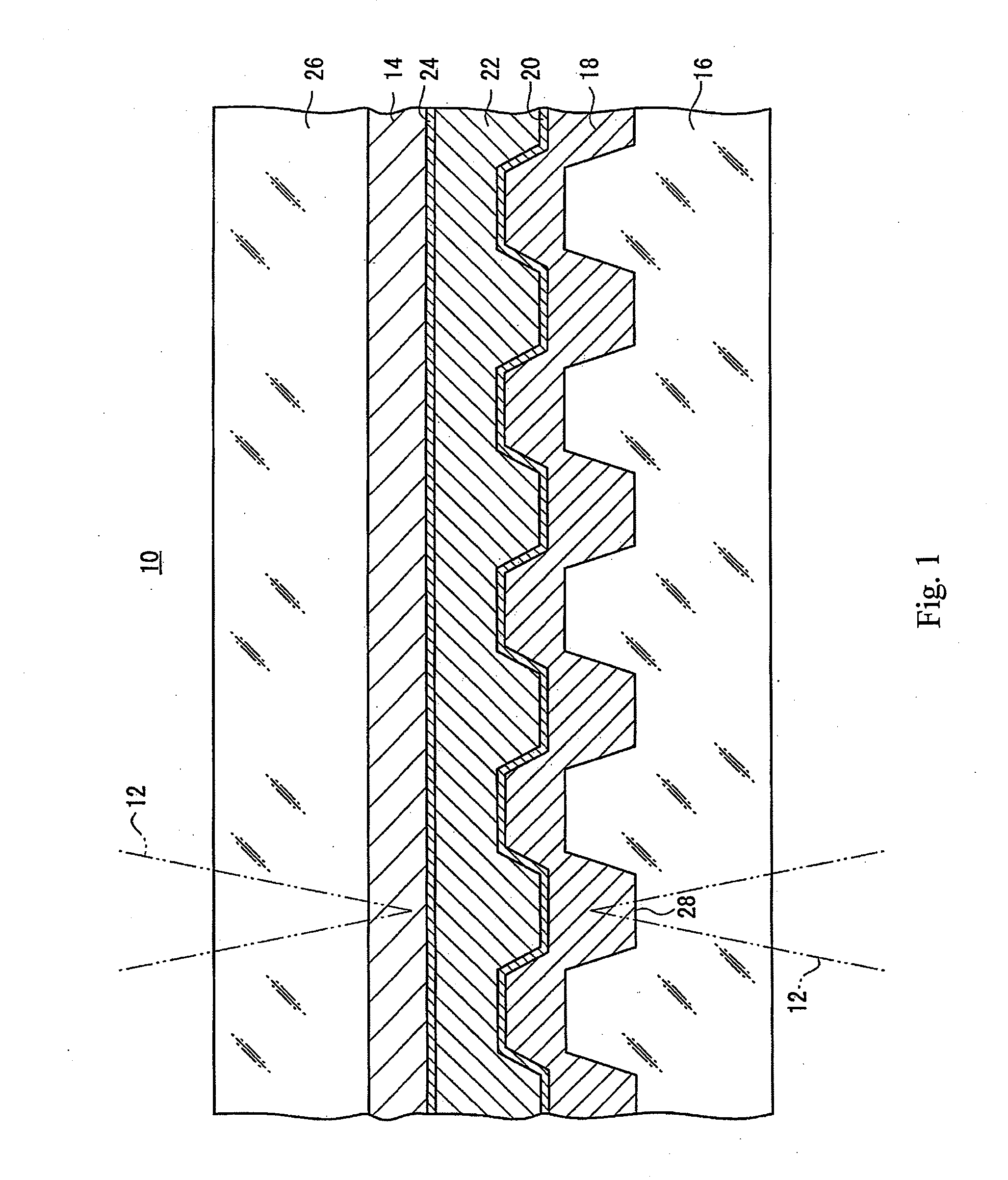
Figure 2 
Figure 3
Abstract
Description
CROSS-REFERENCE TO RELATED APPLICATIONS
[0001] This application claims the benefit of priority under 35 USC 119 to Japanese Patent Application No. 2007-014559 filed on Jan. 25, 2007, which is expressly incorporated herein by reference in its entirety.BACKGROUND OF THE INVENTION
[0002] 1. Field of the Invention
[0003] The present invention relates to an optical recording medium, and more particularly, to an optical recording medium having a recording layer for recording music data and the like, and a visible information recording layer for recording visible information to identify recorded data. The present invention further relates to a method of recording visible information on the optical recording medium.
[0004] 2. Discussion of the Background
[0005] Optical information recording media (optical disks) on which information can be recorded once by means of a laser beam are known. Such optical disks include recordable CDs (known as “CD-Rs”) and recordable digital versatile disks (known as “DV...
Examples
example 1
[0300]Example 1 of the optical information recording medium had the layer structure shown in FIG. 1. It was a DVD-R type optical recording medium comprised of two bonded disks. The method of manufacturing the optical recording medium of Example 1 will be described below.
[0301]A first support 16 that was 0.6 mm in thickness, 120 mm in diameter, and had spiral (helical) grooves (130 nm deep, 300 mm in width, with a track pitch of 0.74 micrometers) was formed out of polycarbonate resin by injection molding.
[0302]Subsequently, a coating liquid was prepared by dissolving 1.5 g each of the two oxonol dyes indicated below in 100 mL of 2,2,3,3-tetrafluoro-1-propanol. The coating liquid was coated by spin coating to the surface of first support 16 on which pregrooves 28 had been formed, yielding a recording layer 18 that was 80 micrometers thick.
[0303]Next, silver was sputtered onto recording layer 18 to form a first reflective layer 20 that was 120 nm in thickness, UV-curing resin (SD318, m...