[0011]In one aspect, a method for rapid analysis of charged metabolites or metabolites that contain, or may be induced to contain, a charge through the generation of suites of
analyte-matrix interactions that enable the performance of high
throughput metabolomics without the use of
chromatography is provided. As used herein, the “metabolite” refers to any metabolite known in the art, including, but not limited to, cellular signaling metabolites (e.g., cAMP, cGMP, IP3, eicosanoids, and combination thereof); lipid signaling metabolites (e.g., prostaglandins); metabolites involved in energy production; metabolites of intermediary
metabolism; oxidized metabolites; lipid metabolites; and metabolites produced by biologic
enzyme reactions as well as non-enzymatically produced chemical moieties present in biologic cells and fluids. As used herein “charge” or “charged” refers to both negatively and positively charged metabolites or metabolites that can be induced to have
charge separation. The method includes inactivating endogenous
enzyme activities using neutral organic solvents in conjunction with a matrix having minimal
background noise (i.e., preferably at least 20-50 fold greater S / N for the lowest signals of interest, but at least 5-fold greater in the mass range of interest).
[0013]In another aspect, a multiplexed MALDI-tandem
mass spectrometric method for analysis of charged metabolites or metabolites that can be induced to contain a charge in mammalian tissues or biologic fluids (also referred to jointly as biologic material) is provided. The method includes extracting metabolites from a
mammalian tissue through multiplexed extraction procedures providing a water-soluble component and a
chloroform soluble component. Other combinations of multiplexed extraction conditions including, without limitation,
chloroform,
methanol, isopropanol,
butanol,
ethyl acetate,
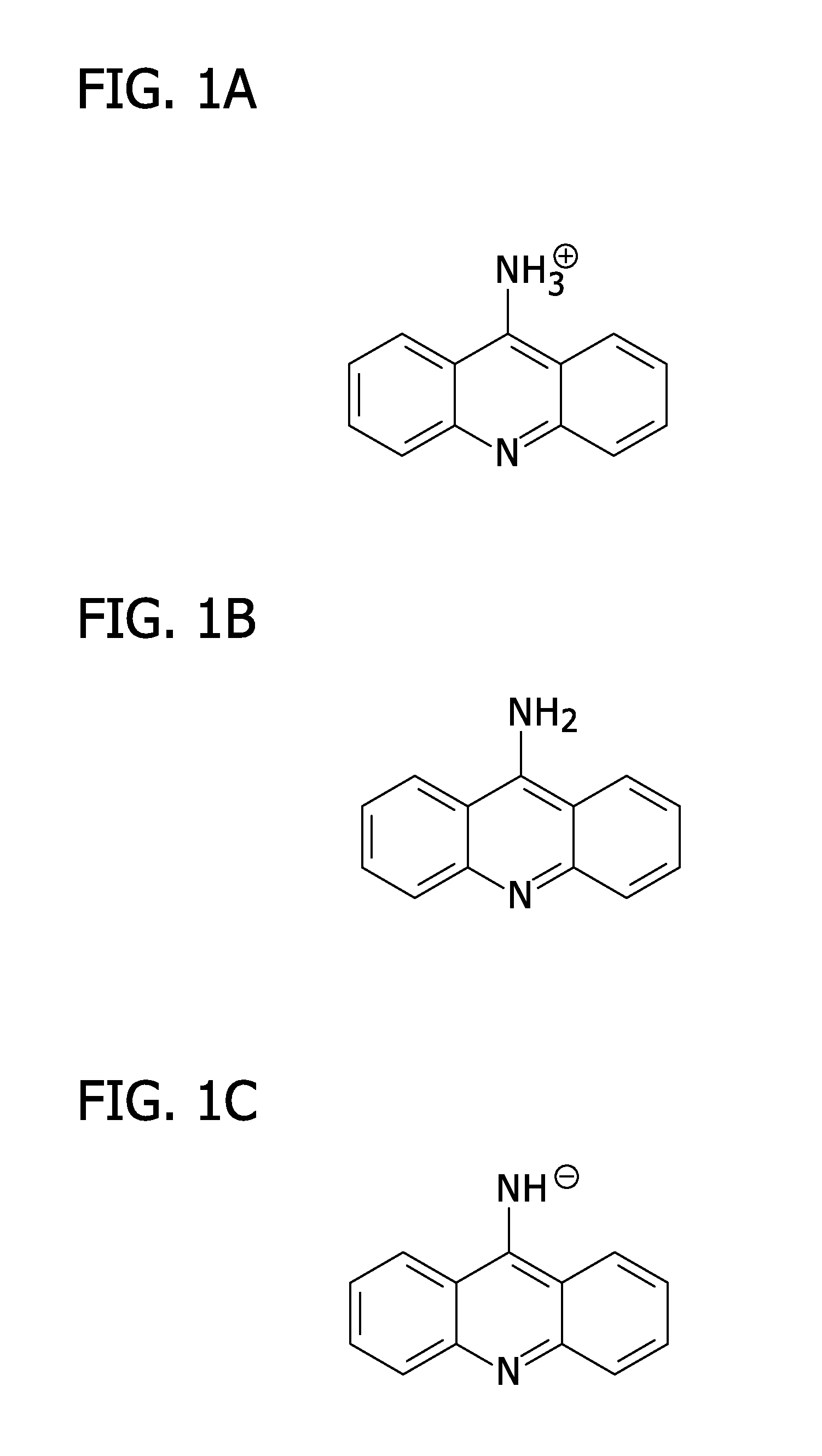
hexane have also been executed. A sample of the extracted metabolites in appropriate combinations of solvents is reconstituted and mixed with a set of multiplexed matrices (e.g., pH adjusted charge states of the matrix, altered
electron density and
electron delocalization in the matrix, matrix adjuvants) and optimized solvents.
Multiplexing these combinatorial alterations produce supramolecular assemblies with novel analyte / matrix pairs that promote ionization and
desorption from the matrix. Thus, through combinatorial variations of matrix stereoelectronic conformations, matrix-matrix interactions and analyte-matrix interactions metabolite classes can be effectively induced to undergo selective ionization thereby eliminating the need for prior
chromatographic separation and enabling MALDI-based
shotgun metabolomics. The information content from
multiplexing analyte-matrix interactions can also be augmented through the use of adjuvants, such as
glycerol or through inducing differential host-guest interactions by the introduction of alterations in pH, optimized mixtures of solvents, selected oxytropic ions, addition of adjuvants and alterations in
ionic strength which have been demonstrated. The
resultant mixture is analyzed using tandem
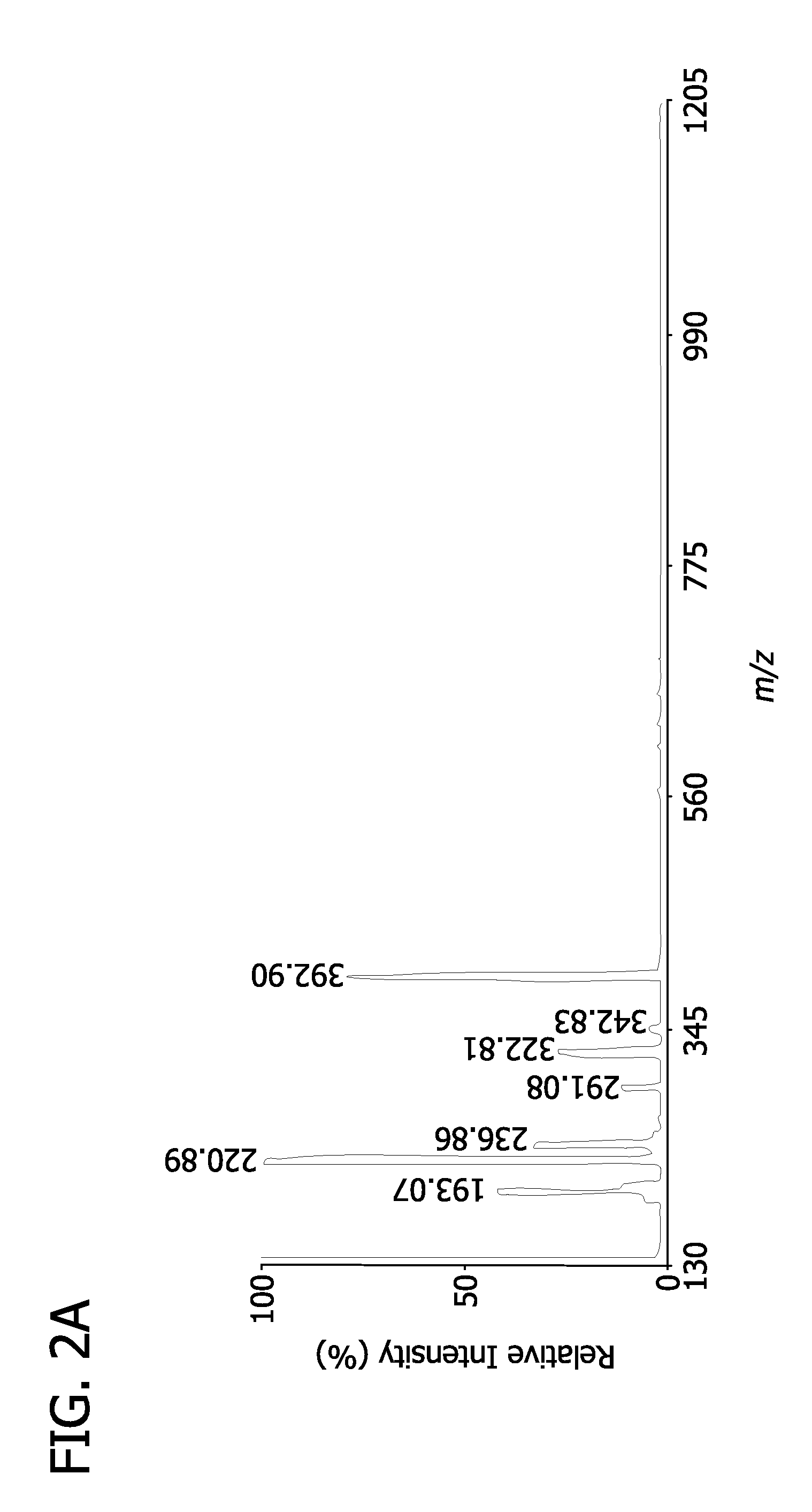
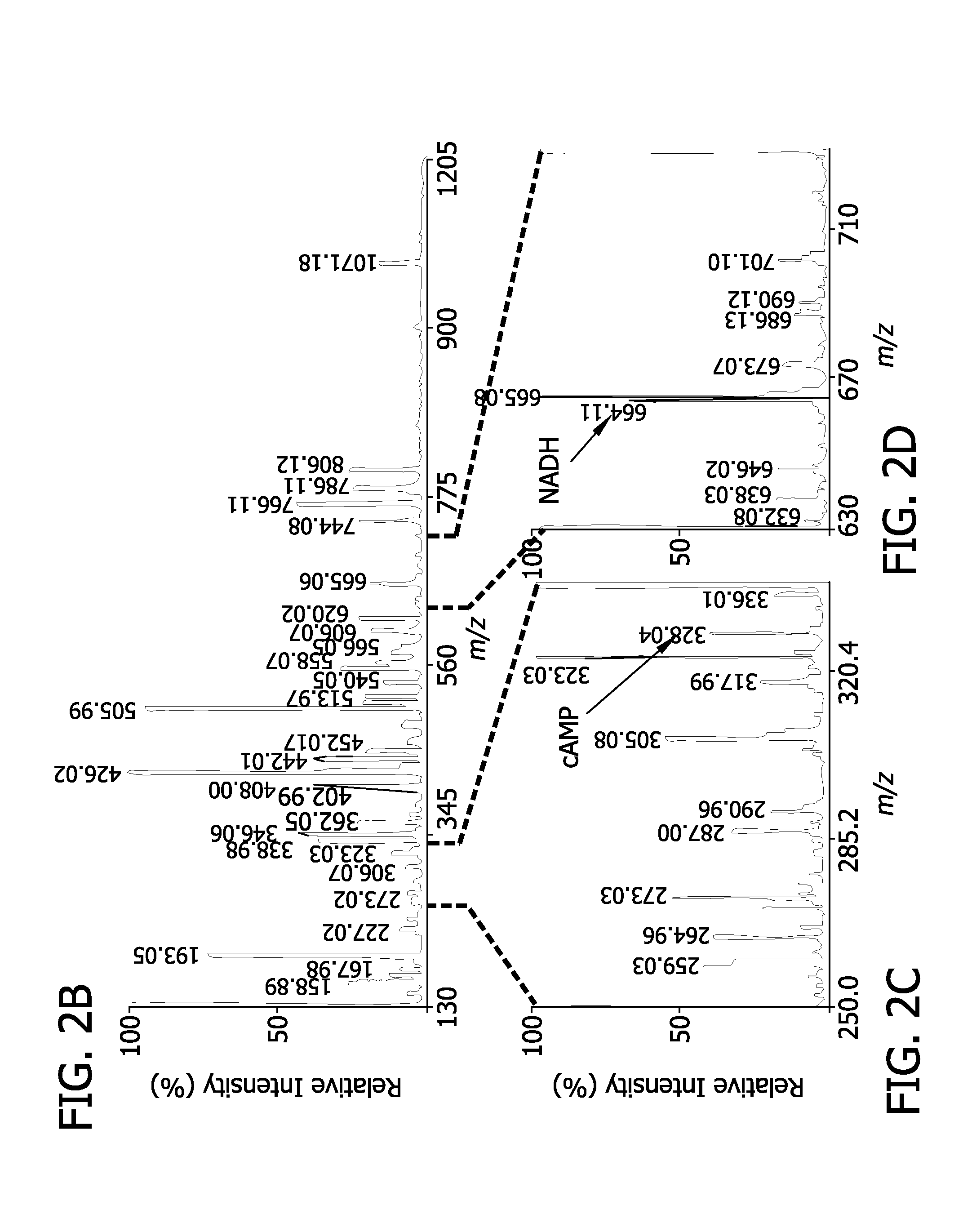
mass spectrometry. Metabolites are identified utilizing an iterative procedure including identifying the
chemical structure of the
ion from either
external data bases or internal accumulated data bases and confirming assignments of medium abundance (approximately 0.1-3 mol %) and high abundance (approximately at least about 3 mol %)
ion peaks by MALDI-tandem
mass spectrometry analyses. The spectra are recalibrated using the identified metabolites as internal standards of known mass for peak assignment and added isotopic labeled compounds as internal standards for quantitation. Structures for low abundance and extremely low abundance peaks are provisionally assigned and the identities are confirmed using MALDI-tandem
mass spectrometry analysis. The pH and solvents in the matrix are varied to facilitate combinatorial stereoelectronic states possessing a
repertoire of stereoelectronic interactions that lead to the formation of productive complexes facilitating
energy transfer and ionization /
desorption of the analyte of interest.



 Login to View More
  Login to View More