
Soluble Endoglin Compounds for the Treatment and Prevention of Cancer
a technology of endoglin and soluble endoglin, which is applied in the direction of animal/human proteins, peptides/protein ingredients, peptides, etc., can solve the problems of accelerate disease progression, and achieve the effect of reducing the size or extent of metastasis, preventing or reducing the likelihood of metastasis
- Summary
- Abstract
- Description
- Claims
- Application Information
AI Technical Summary
Benefits of technology
Problems solved by technology
Method used
Image

Examples
example 1
Characterization of Soluble Endoglin
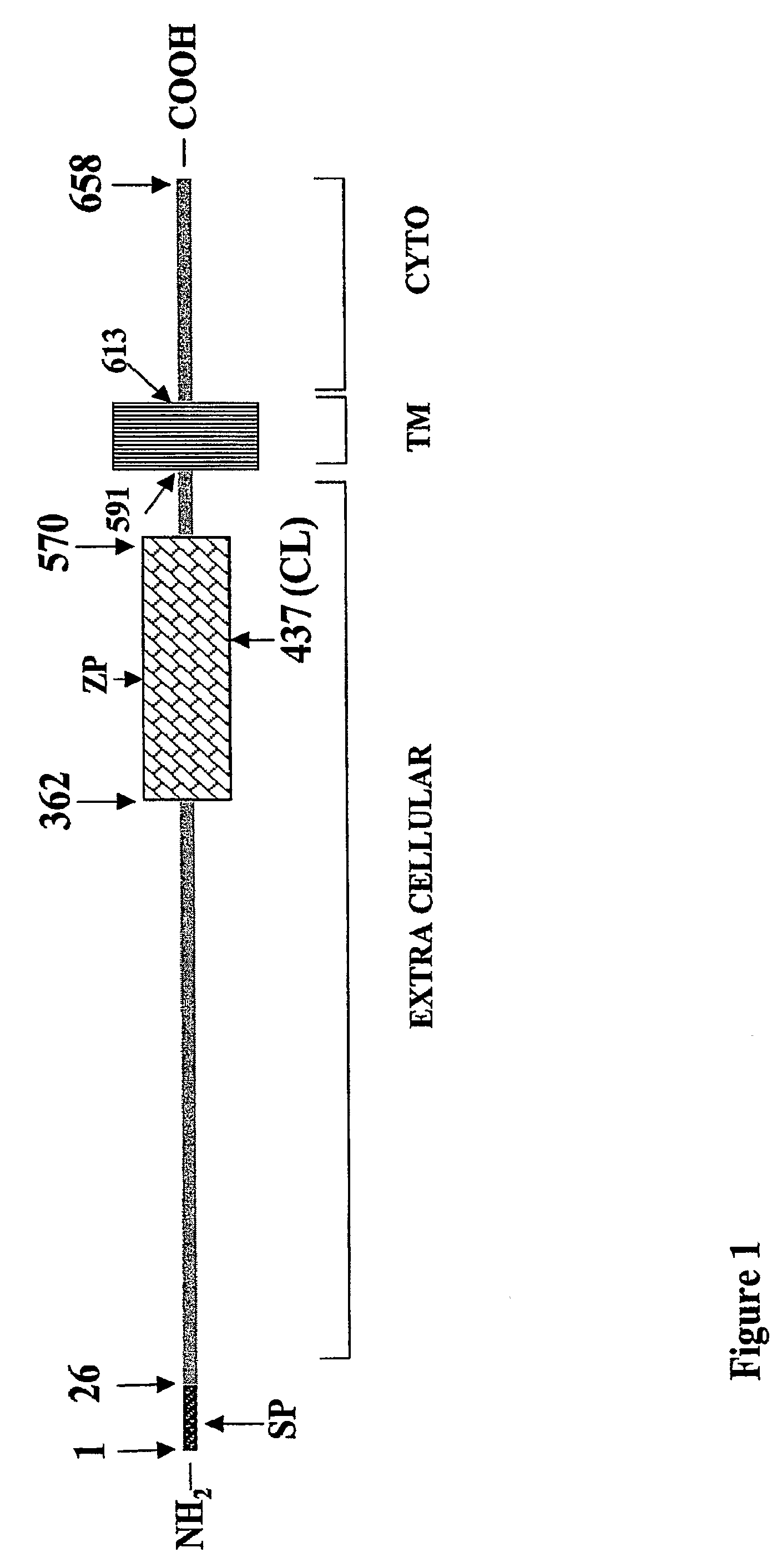
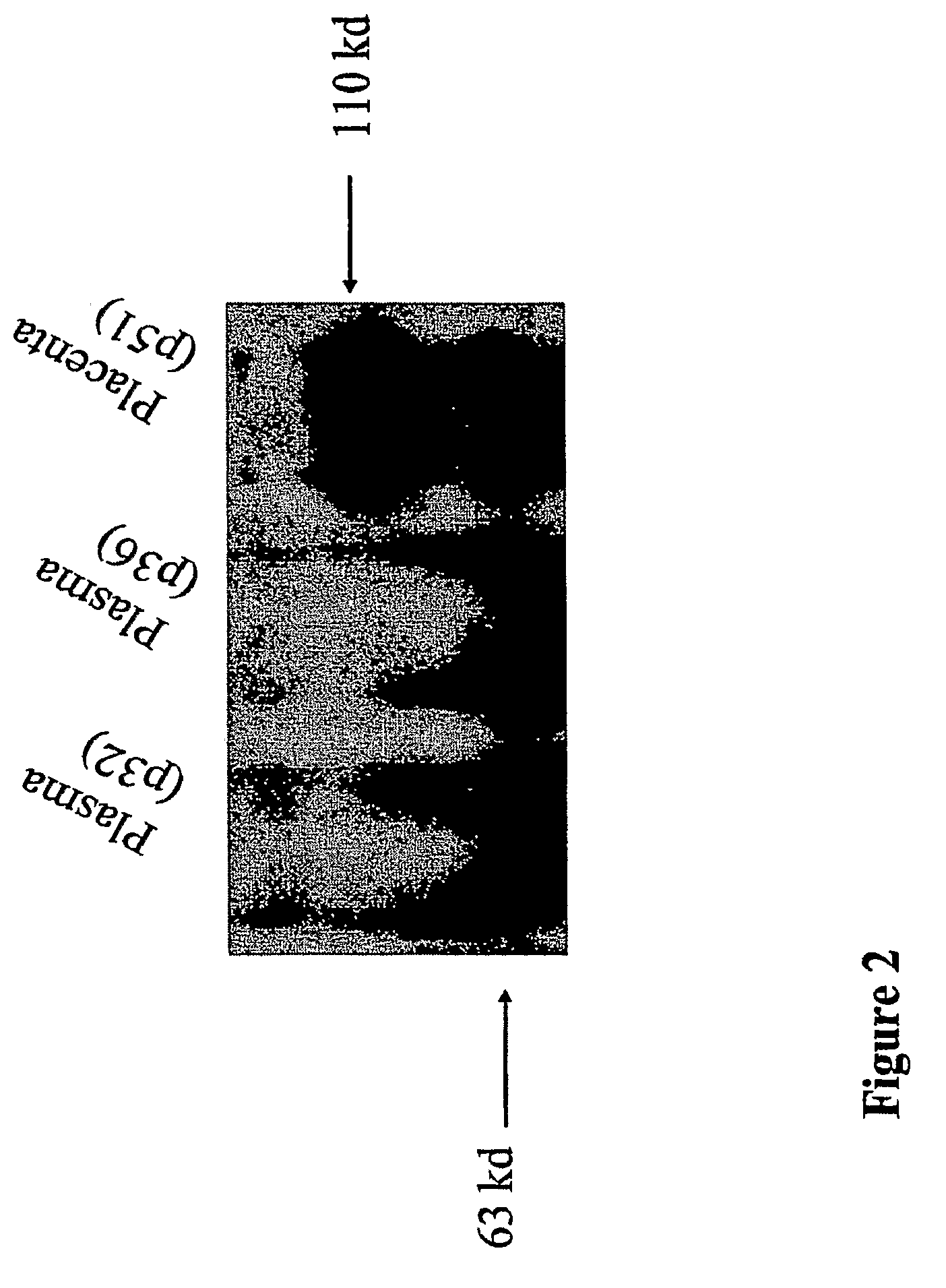
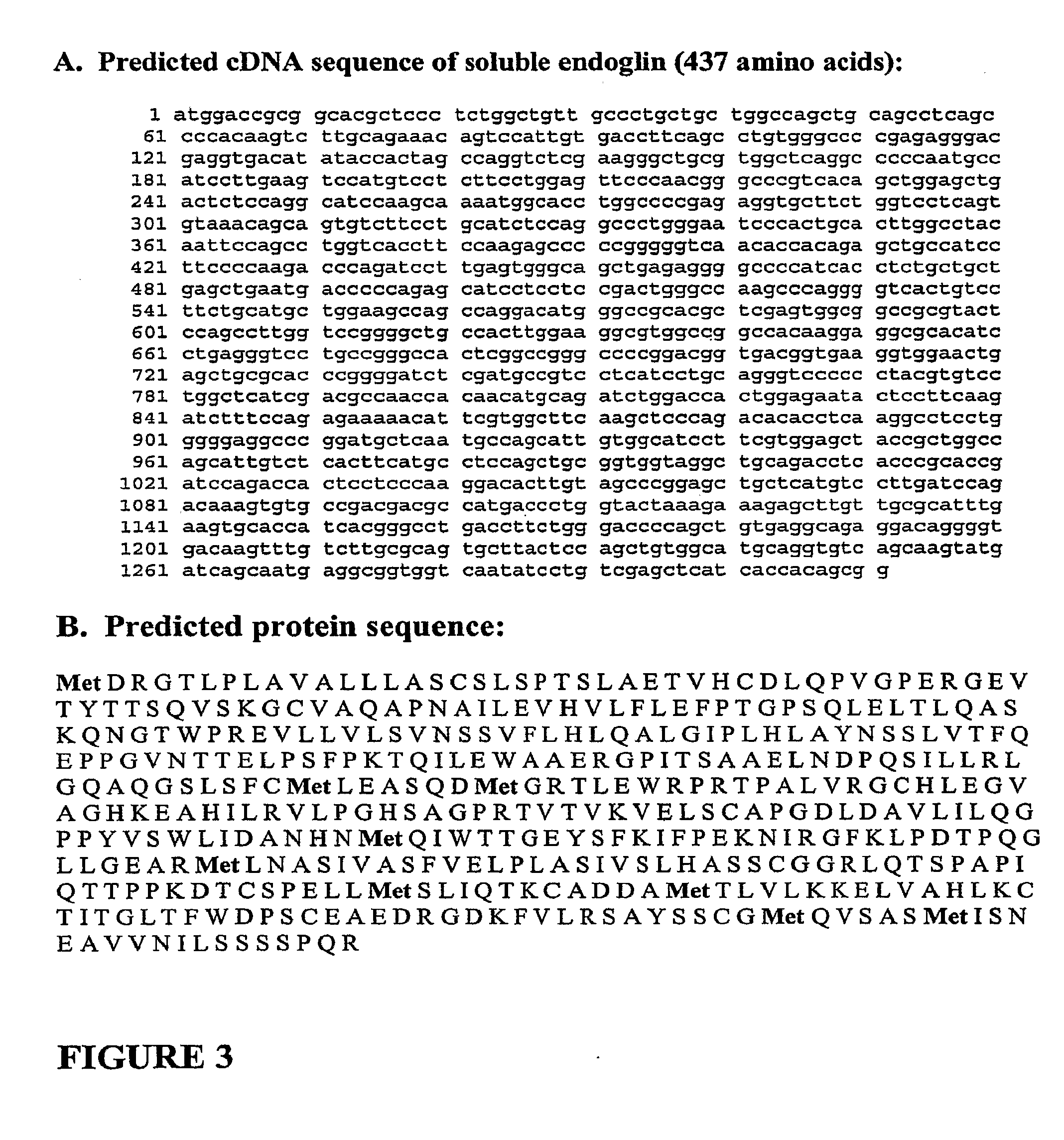
[0142]Placentas and serum from pre-eclamptic women were analyzed by Western blot using anti-endoglin antibodies. In these experiments, we detected a smaller protein, approximately 63 kDa in size, that was present in the placenta and serum of pre-eclamptic pregnant women (FIG. 2 and FIG. 4A). This protein was present at much lower levels in the sera of normal pregnant women and barely detectable in non-pregnant women. We have demonstrated that this smaller fragment is the extracellular domain of endoglin. The predicted cDNA and amino acid sequence of soluble endoglin are shown in FIGS. 3A and 3B, respectively. This soluble form of endoglin may be acting as an anti-angiogenic agent by binding to circulating ligands that are necessary for normal vascular health.
[0143]We purified the soluble endoglin protein from sera of pre-eclamptic patients and analyzed it by mass spectrometry. Serum (10 ml) from pre-eclamptic patients was sequentially applied onto...
example 2
Soluble Endoglin Inhibits TGF-β1 Binding and Signaling in Endothelial Cells
[0144]Given that endoglin is a co-receptor for TGF-β1 and -β3 isoforms, we hypothesized that soluble endoglin acts by interfering with cell surface receptor binding. Pre-incubating radio-labeled TGF-β1 with recombinant soluble endoglin significantly reduced its binding to TGF-β receptor type II (TβRII) at both 50 and 100 pM (FIG. 5). Thus, soluble endoglin competes for TGF-β1 binding to its receptors on endothelial cells. To test whether this leads to impaired signaling, the activity of a CAGA-Luc reporter construct was assessed in human endothelial cells. TGF-β1 induced the activation of the Smad 2 / 3-dependent CAGA-Luc reporter and this response was abolished by treatment with soluble endoglin (FIG. 6).
example 3
Soluble Endoglin is an Anti-Angiogenic Molecule and Induces Vascular Dysfunction
[0145]To assess the hemodynamic effects of soluble endoglin, a series of microvascular reactivity experiments in rat renal microvessels were performed.
[0146]The methods used for these experiments are described in detail in U.S. Patent Application Publication No. 2006 / 0067937 and PCT Publication No. WO 06 / 034507, herein incorporated by reference. Briefly, Evans blue avidly binds to albumin and has been used to quantify in vivo permeability in animals and humans (Green et al., J. Lab. Clin. Med. 111, 173-83, 1988). BALB / c mice were injected intravenously with 1×10⁸ pfu of adenovirus expressing Fc (Control), sEng, sFlt1 or sFlt1+sEng and microvascular permeability measured 48 hours later. One hundred μl of 2% Evans blue dye (in PBS) was injected intravenously. Forty minutes later, mice were perfused via heart puncture with phosphate buffered saline (PBS) containing 2 mM EDTA for 20 minutes. Organs (lung, li...
PUM
 Login to View More
 Abstract
Description
Claims
Application Information
 Login to View More