[0013]Generally, the
subject matter disclosed herein relates to
semiconductor devices and techniques in which a
strained silicon / germanium
alloy with a moderately high germanium concentration may be used without requiring significant overfill, while also reducing process irregularities during the formation of a
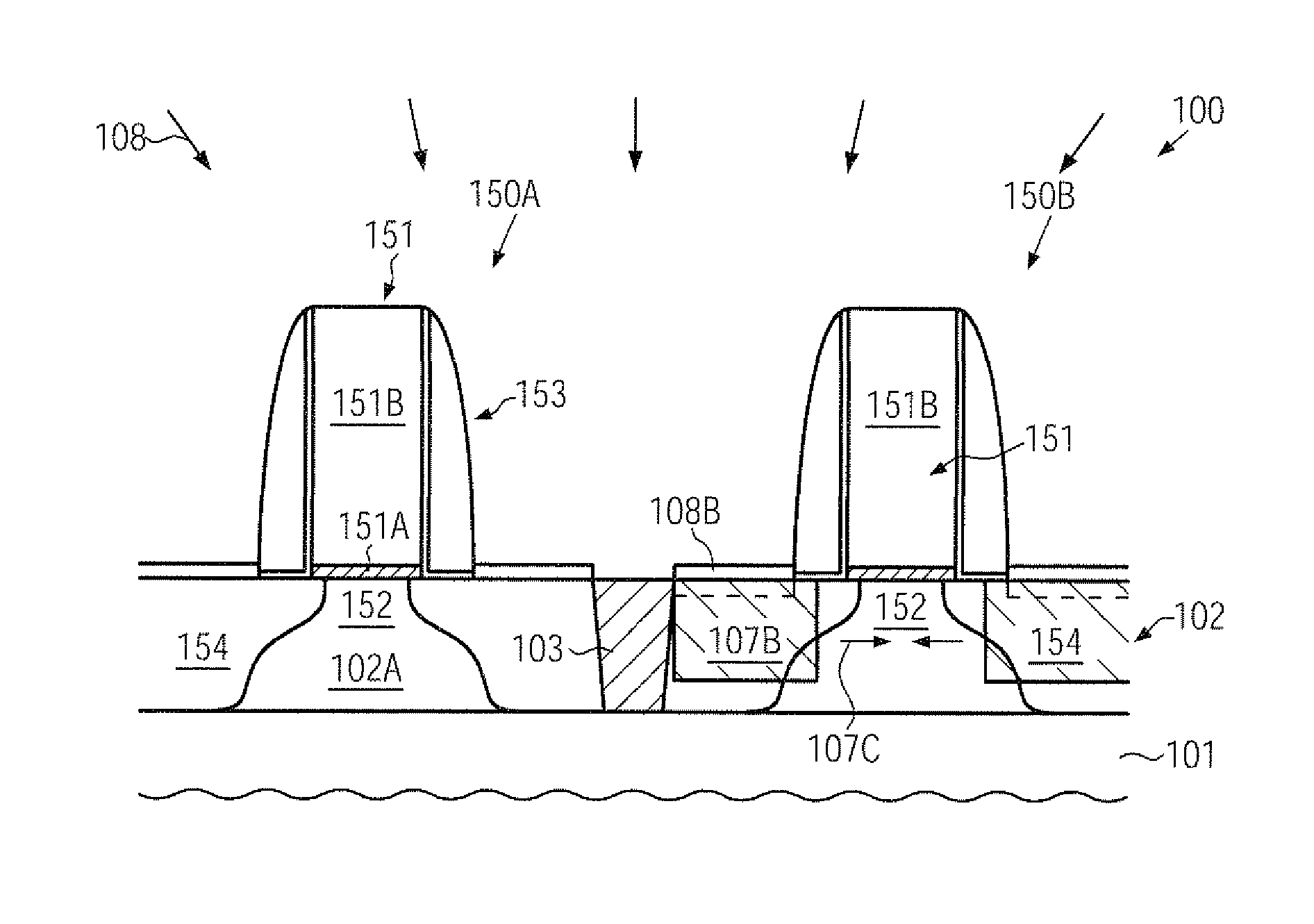
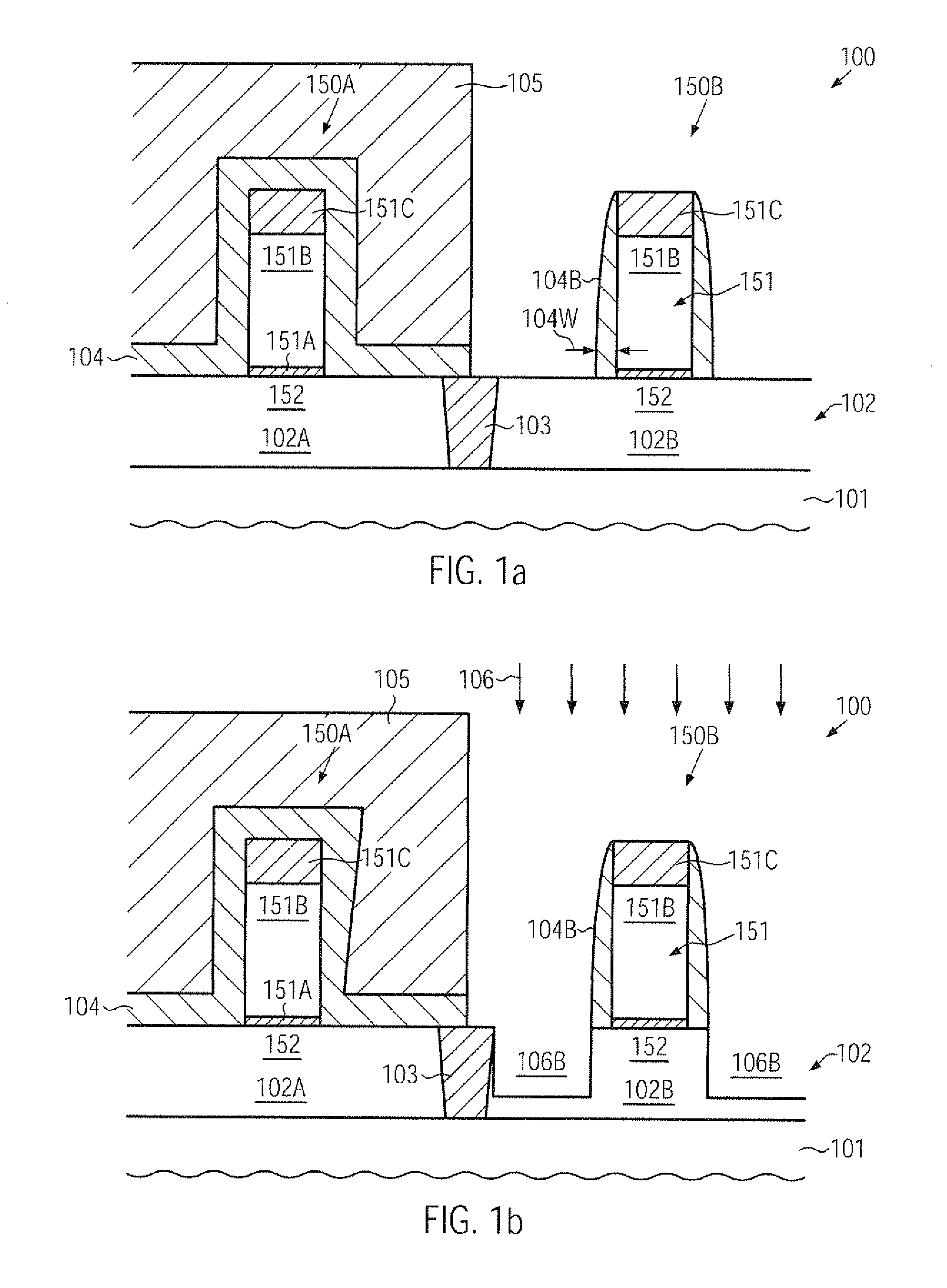
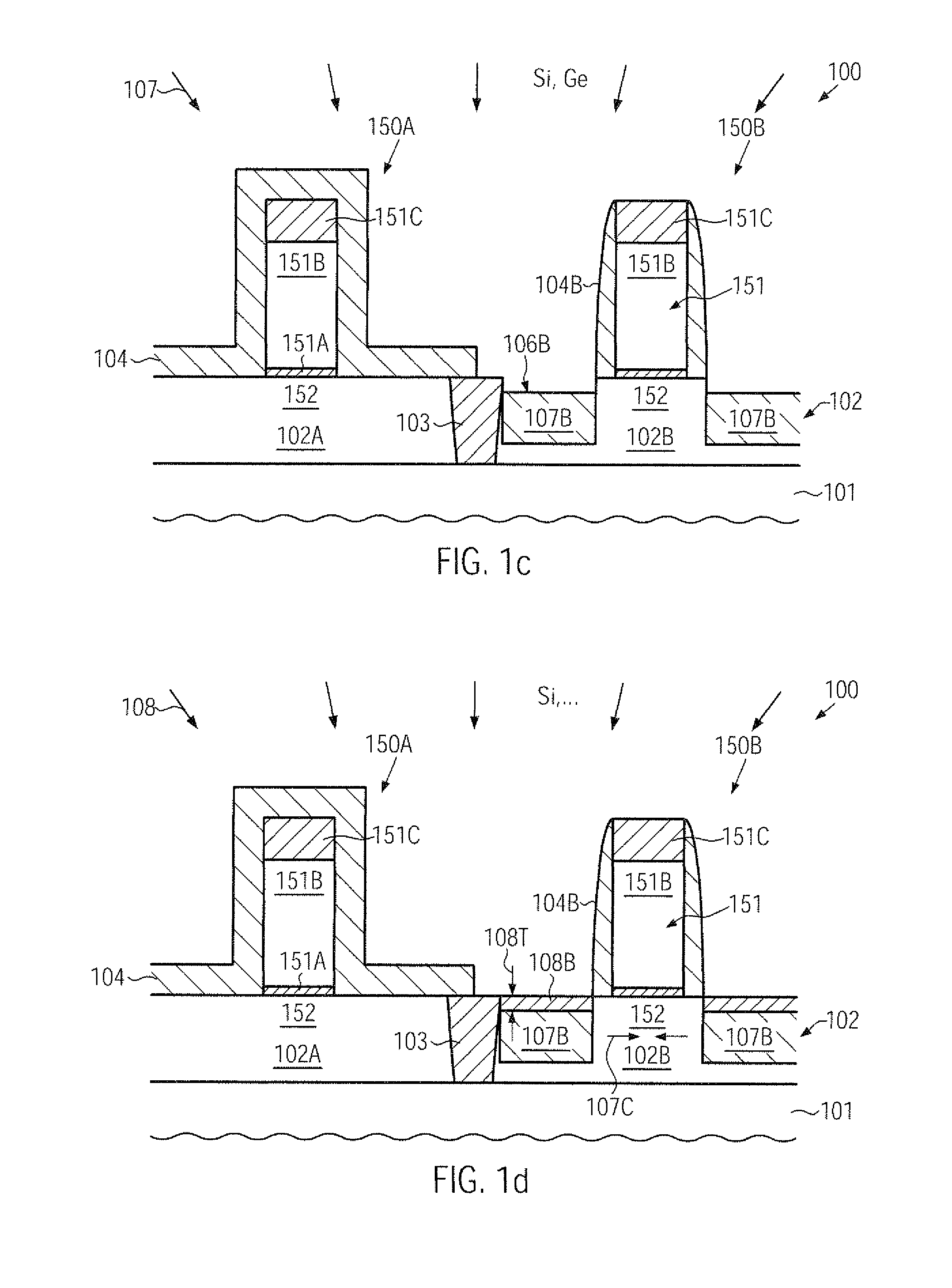
metal silicide material. For this purpose, a
semiconductor material having a significantly reduced germanium concentration may be formed on the silicon / germanium alloy at an appropriate manufacturing stage so as to provide a silicon-containing semiconductor material for the formation of
metal silicide, thereby significantly reducing the probability of creating unstable
metal silicide materials, which may frequently be encountered in conventional strategies in which high germanium concentration may be required. The silicon-containing semiconductor material may be provided in the form of a substantially “pure” silicon material, i.e., a silicon material including a
dopant species in accordance with a corresponding
dopant concentration, while substantially avoiding the incorporation of other
atomic species, such as germanium, so as to provide similar
process conditions in semiconductor areas having formed therein a silicon / germanium alloy and other semiconductor areas without a strain-inducing silicon / germanium alloy. In other illustrative embodiments disclosed herein, at least a significantly reduced germanium concentration may be provided in the silicon-containing semiconductor material, for instance with an amount of approximately 5 atomic percent germanium and less, thereby also contributing to significantly enhanced overall
process conditions during the formation of a
metal silicide. In still other aspects disclosed herein, a desired degree of compressive strain may nevertheless be generated on the basis of the silicon-containing semiconductor material by incorporating an atomic species having a greater covalent
radius compared to germanium so that a moderately high compressive strain may be induced without requiring a germanium component. Moreover, due to the increased covalent
radius of the specific atomic species, a moderately low concentration thereof may also be sufficient, thereby not causing irregularities during the formation of a metal silicide in the drain and source regions. In some illustrative embodiments, the silicon-containing semiconductor material may be provided in a late manufacturing stage, for instance immediately prior to the deposition of a
refractory metal, thereby contributing to a high degree of compatibility to conventional strategies performed on the basis of a reduced germanium concentration, while at the same time achieving superior characteristics of the metal silicide due to the presence of the silicon-containing semiconductor material.



 Login to View More
  Login to View More