
Improved on/off ratio for non-volatile memory device and method
a non-volatile memory and on/off ratio technology, applied in the direction of bulk negative resistance effect devices, basic electric elements, electrical equipment, etc., can solve the problem of prohibitively high cost of fabricating such masks, and achieve the effect of a broader range of applicability and fast switching
- Summary
- Abstract
- Description
- Claims
- Application Information
AI Technical Summary
Benefits of technology
Problems solved by technology
Method used
Image

Examples
Embodiment Construction
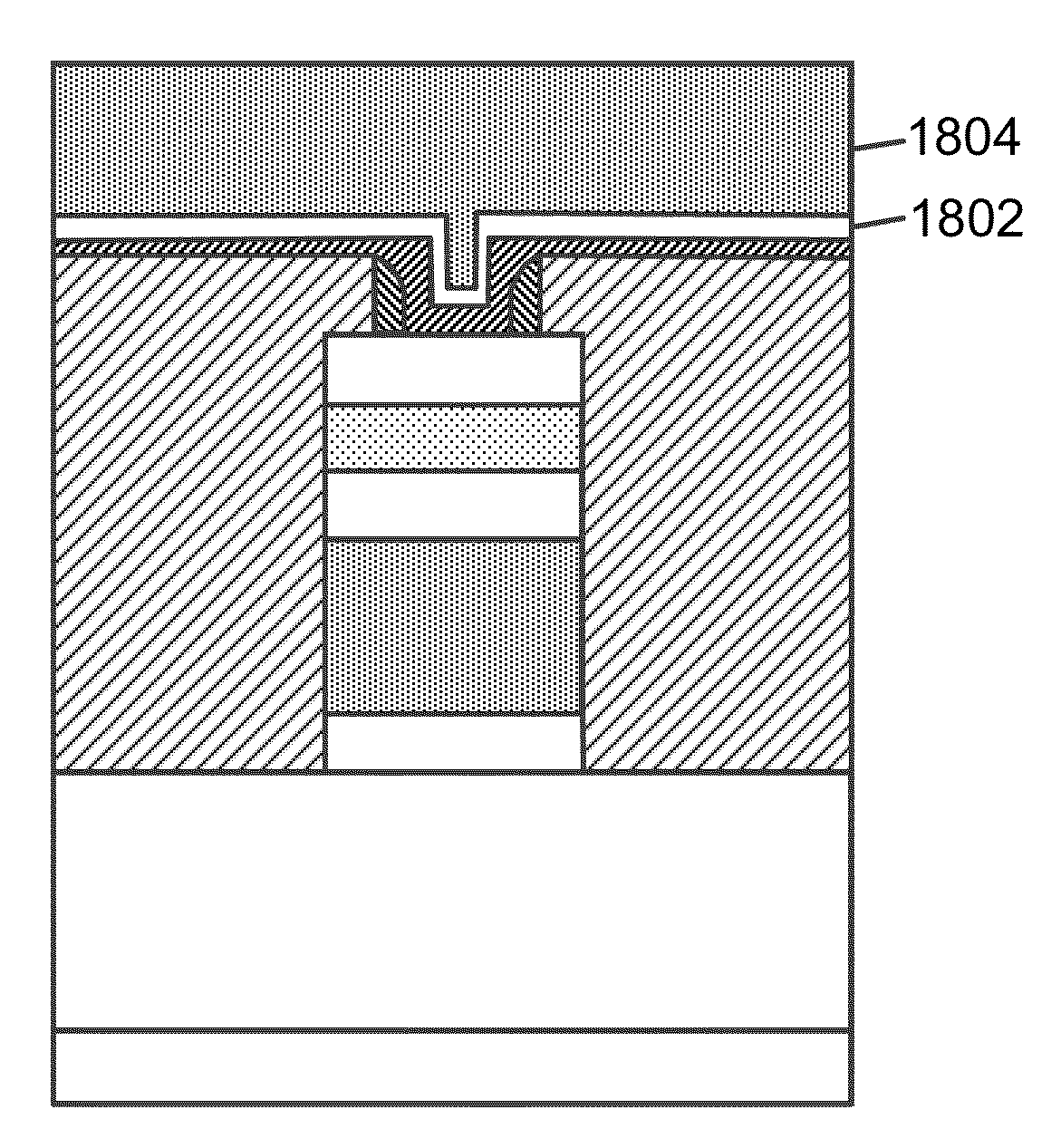
[0012]The present invention is in general related to switching devices. More particularly, embodiments of the present invention provide a method and a structure for a resistive switching device. The resistive switching device may be used in non-volatile memory devices that provide for random access, fast switching, and are scalable to very small sizes. But it should be recognized that the present invention can have a much broader range of applicability.
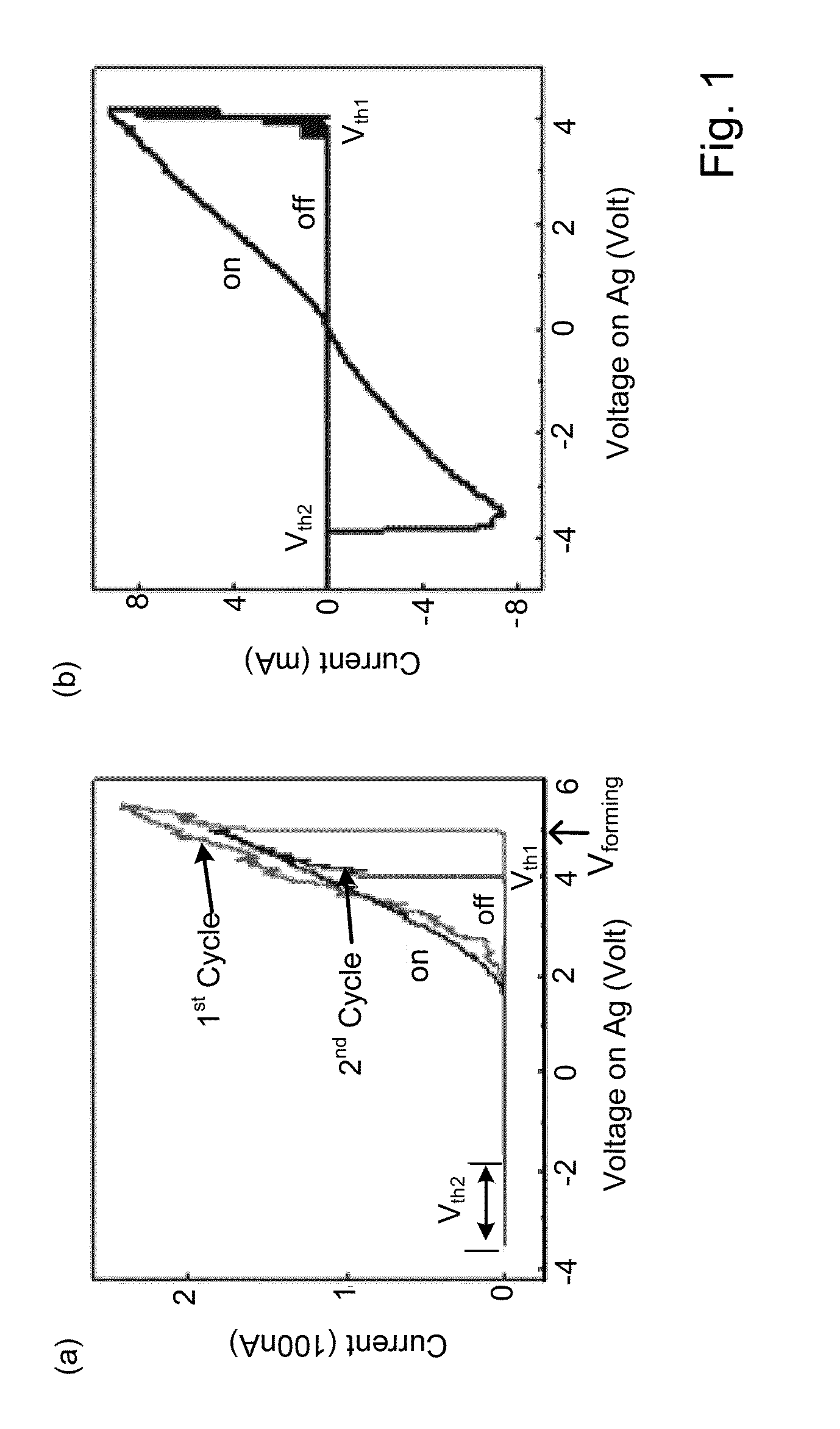
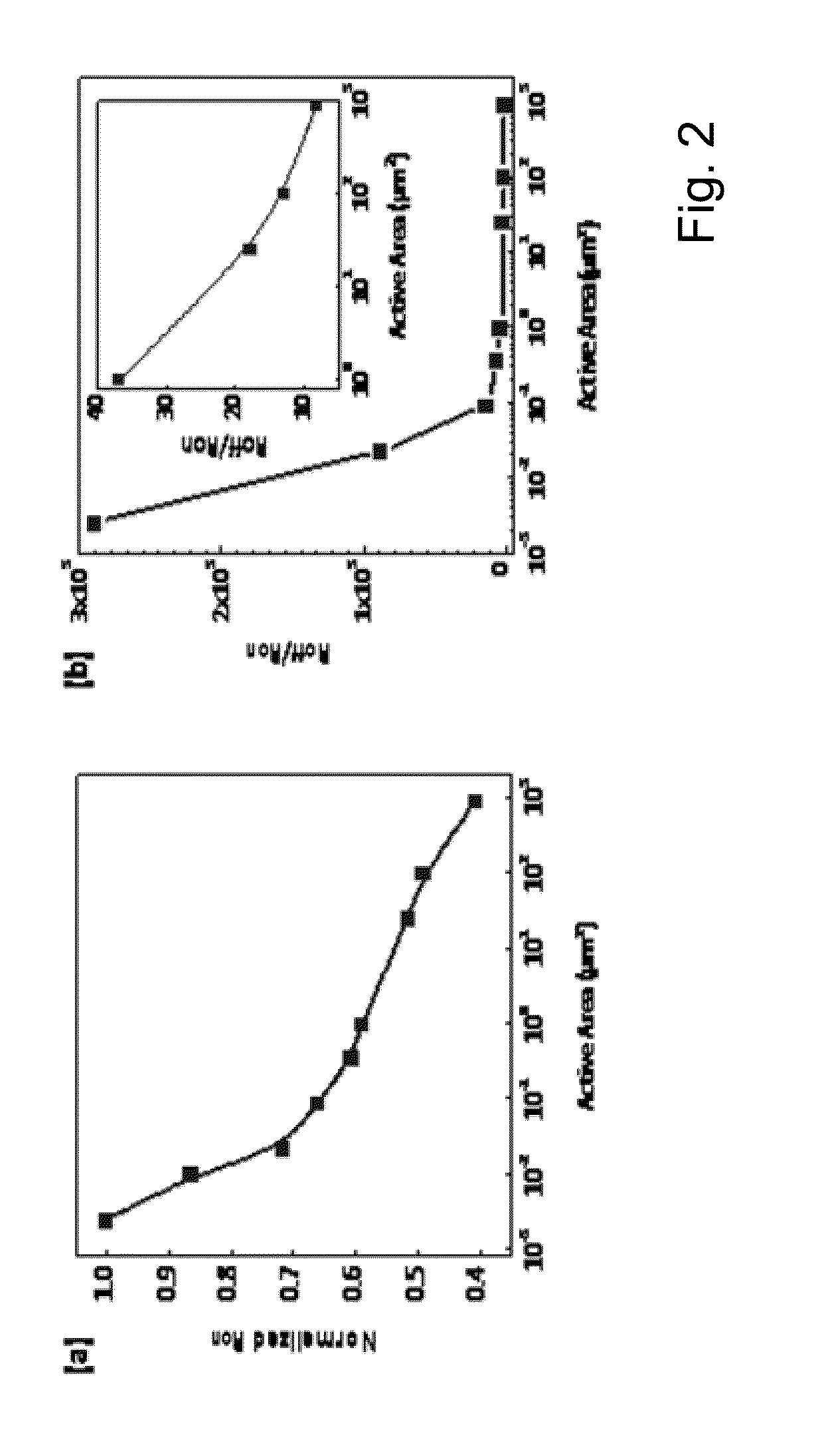
[0013]Resistive switching behavior has been observed and studied in micrometer-scale amorphous silicon (a-Si) devices since the 1980s. A typical device consists of a pair of metal electrodes sandwiching an amorphous-Si layer in a so-called Metal / a-Si / Metal (M / a-Si / M) structure, in which the voltage applied across the pair of metal electrodes may cause changes in the a-Si resistance. These conventional M / a-Si / M based nonvolatile switching devices have the advantages of high Ion / Ioff ratios, and can be fabricated with a CMOS compatible ...
PUM
 Login to View More
 Abstract
Description
Claims
Application Information
 Login to View More