
Azetidine Derivatives
Patent Information
- Authority / Receiving Office
- US · United States
- Current Assignee / Owner
- Publication Date
- 2013-07-04
Smart Images
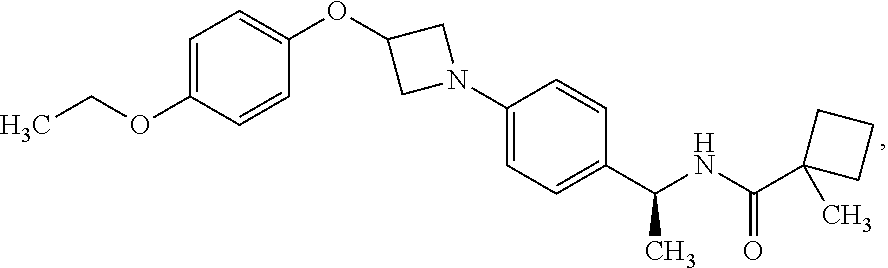
Figure 1 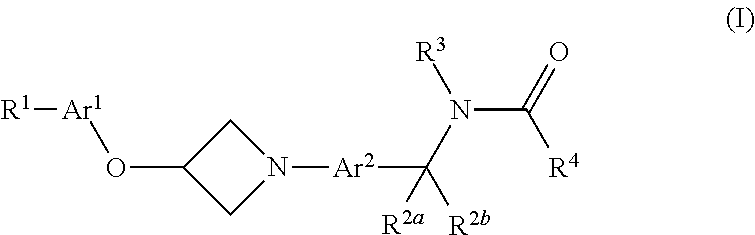
Figure 2 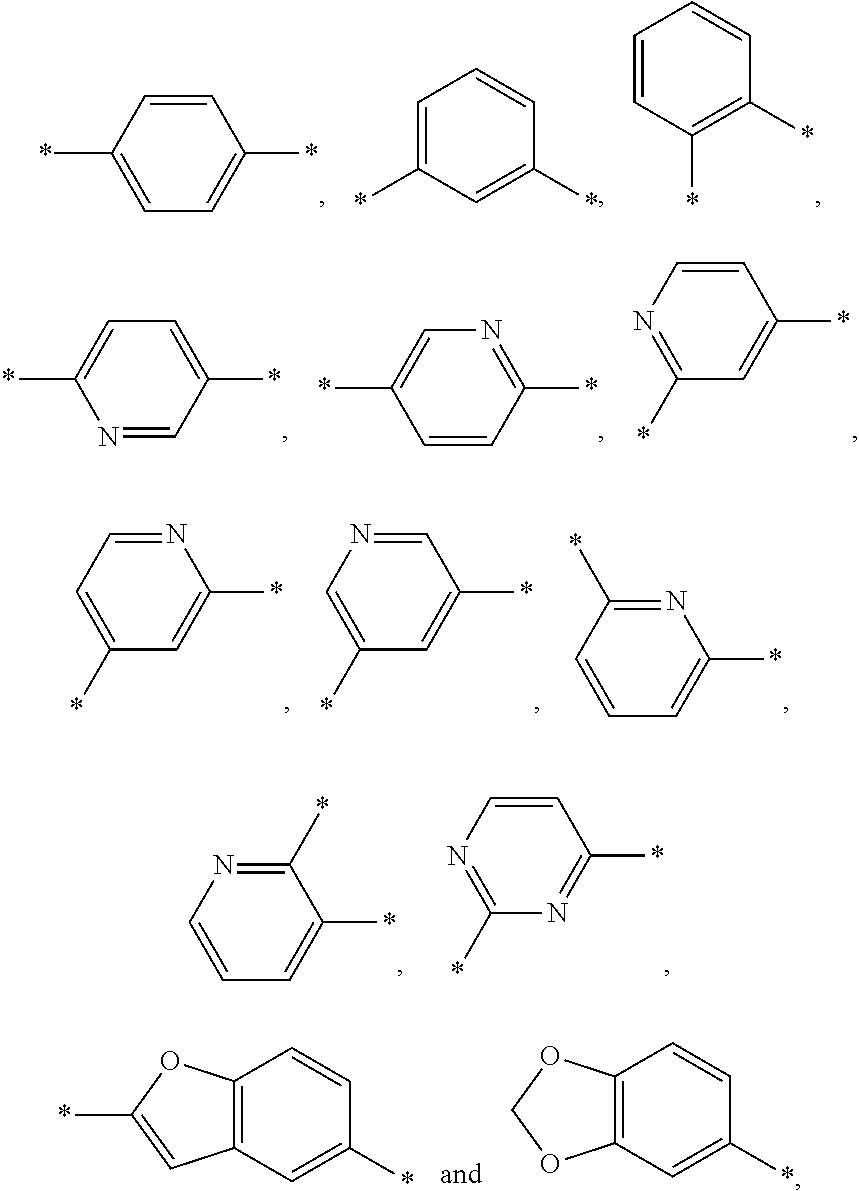
Figure 3
Abstract
Description
FIELD OF THE INVENTION
[0001] This invention relates to new compounds, in particular azetidine derivatives, to processes for preparing such compounds, to their use as inhibitors of acetyl-CoA carboxylase(s), to methods for their therapeutic use, in particular in diseases and conditions mediated by the inhibition of acetyl-CoA carboxylase(s), and to pharmaceutical compositions comprising them.BACKGROUND OF THE INVENTION
[0002] Obesity is a major public health issue not only for the EU, USA, Japan but also for the world in general. It is associated with a number of serious diseases including diabetes, dyslipidemia, hypertension, cardiovascular and cerebrovascular diseases. Although the underlying mechanisms are not yet fully understood, the impairement of insulin action in target tissues by accumulation of excess lipids is generally regarded as a key mechanism linking obesity to secondary pathologies (G. Wolf, Nutrition Reviews Vol. 66(10):597-600; D B Savage, K F Petersen, G I Shulman, P...
Examples
examples
[0336]The Examples that follow are intended to illustrate the present invention without restricting it. The terms “ambient temperature” and “room temperature” are used interchangeably and designate a temperature of about 20° C.
Preliminary Remarks:
[0337]As a rule, 1H-NMR and / or mass spectra have been obtained for the compounds prepared. The Rf values are determined using Merck silica gel 60 F254 plates and UV light at 254 nm.
Experimental Part
[0338]The following abbreviations are used above and hereinafter:
aq. aqueous
ACN acetonitrile
Boc tert-butoxycarbonyl
CDI N,N-carbonyldiimidazole
[0339]CDT 1,1′-carbonyldi(1,2,4-triazole)
DBU 1,8-diazabicyclo[5.4.0]undec-7-ene
DCM dichloromethane
DIPEA N,N-diisopropylethylamine
DMA N,N-dimethylacetamide
DMF N,N-dimethylformamide
[0340]EtOAc ethyl acetate
FA formic acid
MeOH methanol
NMP N-methyl-2-pyrrolidone[0341]PE petroleum ether
RP reversed phase
rt room temperature (about 20° C.)
sat. saturated
TEA triethylamine
THF...
example i
Example I.1
(S)-N-[1-(4-Bromo-phenyl)-ethyl]-acetamide
[0343]
[0344]23.6 mL (250 mmol) acetic anhydride are added to 50.0 g (250 mmol) (S)-1-(4-bromophenyl)-ethylamine in 200 mL DCM while keeping the reaction temperature below 30° C. Stirring is continued for 12 h at rt. After that time, saturated NaHCO3-solution is added. The organic layer is separated, washed with water, dried over magnesium sulphate and the solvent is removed by evaporation.
[0345]C10H12BrNO (M=242.1 g / mol), ESI-MS: 242 / 244 [M+H]+
[0346]Rt (HPLC): 1.03 min (method A1)
[0347]The following compounds are prepared analogously to Example I.1:
example i.2
(S)-Cyclopropanecarboxylic acid [1-(4-bromo-phenyl)-ethyl]amide
[0348]
[0349]Reagent: cyclopropylcarbonyl chloride
[0350]C12H14BrNO (M=268.2 g / mol), ESI-MS: 268 / 270 [M+H]+
[0351]Rt (HPLC): 2.76 min (method B1)